Showing posts with label Paul Davis. Show all posts

Wednesday, December 21, 2011

My Crime Beat Column: A Look Back At Joseph Wambaugh's Classic TV Series 'Police Story'


In my first online Crime Beat column in 2002 I wrote about my attending the Philadelphia Police Department’s pilot Civilian Police Academy Program. 
 
I attended the 11-week program as a reporter on assignment for a Philadelphia weekly newspaper and I wrote a 12-part series on police training and operations. 
 
As I noted in my Crime Beat column, the academy instructors sought to disabuse us of our notions of police work gleaned through television. 
“It’s not like you see on TV,” was the often heard comment from the police instructors. 
“Police recruits are chomping on the bit when they first come here,” one instructor told us. “They want to be just like the cops on TV, but we bring the reins in on them.” 
The instructors hated TV cop shows. But there were a couple of shows about cops that cops liked. One was the comedy Barney Miller. Real cops told me they got a kick out of the show. 
Another TV program that real cops liked was Police Story, the realistic and gritty anthology series that aired from 1973 to 1978. Joseph Wambaugh, then a working detective sergeant with the LAPD and a best-selling novelist, was the creator and a story consultant on the series, which was produced by David Gerber. 
Season one of the innovative TV series is now out on a Shout! Factory DVD.
As a bonus feature, the DVD’s producer, Brian Blum, interviewed Joseph Wambaugh about the origins of the TV series.
“David Gerber contacted me because I was the writing cop,” Wambaugh recalls. “I was an LAPD detective sergeant who had written two best-selling novels, The New Centurions, which became a movie with George C. Scott, and The Blue Knight, which was I think was the first miniseries produced in the United States, with William Holden and Lee Remick. So David thought I would be the ideal person to create the first truly authentic and gritty cop show in the history of television – those were his words.” 
Wambaugh said Gerber contacted him in 1972 when he had 12 years of service on the LAPD. He remained a working cop, even though he had published two best-sellers. Wambaugh said that he and his detective partner, Richard Kalk, drove to the Burbank Studios to talk to David Gerber and his team. 
Wambaugh and Gerber agreed that they wanted to make an anthology series. 
“We would use different actors each week so we can do whatever we wanted to the self-contained drama. If we wanted to kill off the actors, we could kill them off,” Wambaugh explained. 
Wambaugh said that their program wouldn’t be a continuing family of actors, as television was used to. They encountered the argument that anthology television was dead, but Wambaugh and Gerber stuck to their guns. 
“The stars are no longer as important as the story,” Wambaugh said. “ I’m a writer. I wanted the story to be the star, not the actors. That’s how Police Story was conceived by David and myself.” 
Wambaugh noted that in addition to being an innovative, creative, terrific producer, David Gerber was a great salesman, and he sold the idea of Police Story.  
I was a fan of the Emmy-Award-winning program during its run on TV in the 1970s and I enjoyed watching the shows again on DVD. Hearing the Jerry Goldsmith theme song and the clever use of the static radio calls from police dispatchers that framed the beginning and end of the drama brought back good memories. 
The 6-DVD set offers 21 episodes from the 1973-74 season, including the pilot. The pilot starred several veteran TV actors, including Vic Morrow, who starred in the TV series Combat, Ed Asner from Mary Tyler Moore and Chuck Conners from The Rifleman.  
In later shows, Police Story featured other fine actors like Tony Lo Bianco, James Farentino, Angie Dickinson and Kurt Russell. 
Like the cops in Wambaugh’s novels, the LAPD officers in Police Story are not super cops or cartoon heroes. They are often average men and women and flawed characters who suffer from divorces, alcoholism and other family and personal issues. 
They are human.  
That is not to say that Police Story lacks action. The cops chase, hunt and fight the bad guys. The series offers ample gunfights, fistfights and car chases. 
But Police Story’s main emphasis was on character.      
Clearly, Police Story influenced later award-winning TV police dramas, such as Hill Street Blues, NYPD Blue and Homicide: Life On The Street. 

Police Story makes an ideal holiday gift and the DVD makes a fine addition to one’s DVD library. 

Sunday, August 14, 2011

My Philadelphia Inquirer Review Of Michael Harvey's 'We All Fall Down'


The Philadelphia Inquirer published my review of Michael Harvey's crime thriller We All Fall Down this morning.

You can read the review below:


Tuesday, March 29, 2011

FX's Crime Drama Justified Hits The Mark

I've long been a fan of crime writer Elmore Leonard and I'm also a fan of Justified, the television program based on one of Leonard's characters, U.S. Deputy Marshal Raylan Givens.

I recently reread Riding the Rap, a Leonard crime novel that features Raylan Givens, and I saw how well actor Timothy Olyphant is portraying the Givens character.

Elmore Leonard is fond of Olyphant and the TV program as well (Leonard appears in the above photo with Olyphant).

TVGuide.com published an interesting piece on Justified and offered the below: 

It's clear to the nearly four million Oly-fans who tune in to FX's adaptation of crime-novel mastermind Elmore Leonard's work each week that everybody involved is having a blast. "Elmore doesn't know how to write anything that's not cool," Olyphant raves of the Get Shorty/Be Cool/Out of Sight author. "When it really cooks, it's just a great job."

You can read the rest of the piece via the below link:

http://www.tvguide.com/News/FX-Justified-Story-1031198.aspx

You can also read my online column on Elmore Leonard via the below link:

http://pauldavisoncrime.blogspot.com/2009/05/return-to-elmoreland-elmore-leonards.html

Wednesday, February 2, 2011

The Genius Of Raymond Chandler

David Blackburn at The Spectator wrote about the late, great crime writer Raymond Chandler and why his novels endure.

Blackburn also reports that BBC Radio 4 will air four radio plays from Chandler's novels this month.

You can read the piece via the below link:

http://www.spectator.co.uk/books/6665918/the-genius-of-raymond-chandler.thtml

You can also read my column on Raymond Chandler's influence on crime novels and films via the below link:

http://pauldavisoncrime.blogspot.com/2009/11/on-raymond-chandlers-influence-on-crime.html

Friday, January 21, 2011

Another Case Of Chinese Espionage In The United States

In my last post, I reported on the U.S. Justice Department announcement that Glenn Duffie Shriver was sentenced to 48 months in prison for conspiring to spy for the Communist Chinese.

I wrote a piece on the rise of Chinese espionage in the United States for Counterterrorism magazine. You can read the piece via the below link:

http://pauldavisoncrime.blogspot.com/2010/11/chinese-espionage-is-on-rise-in-united.html

Spy For Communist China Sentenced To 48 Months In Prison

In the wake of a White House state dinner for the Communist Chinese president, the U.S. Justice Department announced that Glenn Duffie Shriver, 28, of Grand Rapids, Mich., was sentenced to 48 months in prison for conspiring to provide national defense information to Chinese intelligence officers.

Neil H. MacBride, U.S. Attorney for the Eastern District of Virginia, and David Kris, Assistant Attorney General for National Security, made the announcement after sentencing by U.S. District Court Judge Liam O’Grady.

On Oct. 22, 2010, Shriver pleaded guilty to a one-count criminal information charging him with conspiracy to communicate national defense information to a person not entitled to receive it.

“Mr. Shriver sold out his country and repeatedly sought a position in our intelligence community so that he could provide classified information to the People’s Republic of China (PRC),"
said U.S. Attorney MacBride. “Attempts to gain access to sensitive information are a serious threat to our national security. We are doing everything in our power to find and punish those who seek to betray our country.”

According to a statement of facts filed with his plea agreement, Shriver is proficient in Mandarin Chinese and lived in the PRC both as an undergraduate student and after graduation. While living in Shanghai in October 2004, Shriver developed a relationship with three individuals whom he came to learn were PRC intelligence officers.

At the request of these foreign agents, Shriver agreed to return to the United States and apply for positions in U.S. intelligence agencies or law enforcement organizations.

Shriver admitted in court that he knew that his ultimate objective was to obtain a position with a federal department or agency that would afford him access to classified national defense information, which he would then transmit to the PRC officers in return for cash payments.

From 2005 to 2010, Shriver attempted to gain employment as a U.S. Foreign Service Officer with the Department of State and as a clandestine service officer with the Central Intelligence Agency. Shriver admitted that, during this time, he maintained frequent contact with the PRC intelligence officers and received more than $70,000 in three separate cash payments for what the officers called his “friendship.”

In December 2009, Shriver received notice that he was to report to Washington, D.C., in May 2010 for employment processing activities with the CIA.

Shriver admitted that he communicated with a PRC intelligence officer that he was “making some progress” in obtaining a position with the CIA and that he would not be free to travel to PRC for another meeting because it could raise suspicion with federal agents conducting his background investigation.

Shriver admitted that he made false statements on the CIA questionnaire required for employment stating that he had not had any contact with a foreign government or its representative during the last seven years, when in fact he had met in person with one or more of the officers approximately 20 times since 2004.

He also deliberately omitted his travel to PRC in 2007 when he received a $40,000 cash payment from the PRC for applying to the CIA. In addition, Shriver made false statements during a series of screening interviews at the CIA, and he admitted he made each of the false statements to conceal his illicit relationship with the PRC intelligence officers.

This case is being investigated by the FBI’s Washington Field Office. Assistant U.S. Attorney Stephen M. Campbell of the U.S. Attorney’s Office for the Eastern District of Virginia and Trial Attorney Brandon L. Van Grack of the Counterespionage Section in the National Security Division are prosecuting the case.

Monday, December 13, 2010

British Royal Marine Unit Renamed After a World War II Commando Group Founded by James Bond Creator Ian Fleming

The BBC reports that a British Royal Marine unit in Devon was renamed after a World War II intelligence gathering commando group, 30 Assault Unit, which was founded by Royal Navy Commander Ian Fleming (seen in the below photo).
*
Fleming, of course, went on to write Goldfinger, From Russia With Love, Dr No and other James Bond thrillers after the war.
*
*
You can read the BBC report via the below link:
*
*
*
You can also read my GreatHistory.com two-part interview with Craig Cabell, the British author of Ian Fleming's Secret War (Pen & Sword Books), which is about Fleming and his 30 Assault Unit, via the links below:
*
*
*
An upcoming film about the intelligence gathering commando unit, starring Sean Bean and called Age of Heroes, will soon be released. Below is the film's poster.
*


*
You can also visit an earlier post about Age of Heroes and other films that feature Ian Fleming via the below link:
*

Sunday, November 28, 2010

My Piece On The Rise Of Chinese Espionage In The United States


Counterterrorism magazine published my article on the rise of Chinese espionage in the United States.

As I noted in the magazine piece, the U.S. Justice Department has prosecuted more than 40 espionage cases involving the Communist Chinese, including the case that was profiled on 60 Minutes a while back.

In that case, a Chinese spy handed a Defense Department official cash for classified information and the feds caught the transaction on video.

You can read my magazine piece via the below and below:


Wednesday, November 17, 2010

My Crime Beat Column: Martin Scorsese's Film World of Crime

 
In the opening scene of The Departed, Martin Scorsese’s Academy Award-Winning film, Jack Nicholson gives a speech to his young criminal aspirants. With facial expressions and motions perhaps more suited to a warlock than a South Boston hoodlum, Nicholson tells his students that when he was a kid he was told that he could become a cop or a criminal. He then asks them, when someone is facing you with a loaded gun, what’s the difference?

Well, Scorsese himself noted the difference in his 1990 film Goodfellas. When Ray Liotta, portraying small-time hood Henry Hill, is backing out of his driveway, a loaded gun is placed behind his head and a man yells for him not to move or he’ll get his head blown off.

In the voice-over narration, Hill relaxes and says it must be a cop, because if it were a criminal – a Goodfella - he would not have heard a thing. He would be dead.

That, Mr. Nicholson, is the difference between a cop and a criminal with a loaded gun. The cop arrested Hill, whereas the criminal would have given Mr. Hill the proverbial two behind the ear.

It is insulting to believe that working class kids from neighborhoods like Irish South Boston, or South Philly’s Little Italy, where I grew up, have only the two choices in life. Although it’s true that most of the mob guys as well as many cops come from South Philly - including one who went on to become the police commissioner and mayor of Philadelphia, Frank Rizzo - there were and are many other job paths available.

Including, I might remind The Departed's screenwriter, Bill Monahan, writing and filmmaking.

The stereotype, I suppose, is that cops and criminals are both violent and gun-crazy, but that notion is pure nonsense. I grew up with guys who went on to become criminals and guys who went on to be cops (as well as electricians, doctors and postal workers). Those who became criminals never stood at a fork in the road asking themselves if they should apply for the police department or rob a warehouse. Usually, they already had criminal records that would preclude them from becoming cops. But beyond that, the criminal, unlike a cop, has a bent mind. They are generally sociopaths who have no empathy for their victims.

Cops, on the other hand, generally have a sense of justice and duty, and/or they like the idea of a good job with benefits and a pension. Cops rarely use their guns and when they do, they are buried in an investigation that will determine their future as a police officer. Cops and criminals may come from the same working class neighborhoods (as well as from the suburbs) and there have been aberrant cases of bent cops, to be sure, but the two groups are as different as night and day.

That criticism aside, I’m genuinely happy that Martin Scorsese finally received an Oscar for one of his films. But I don’t think The Departed is in the same league as Goodfellas, which I rank as one of the greatest crime films ever made. Scorsese’s Casino (1996) and Raging Bull (1980) are also superior films in my view.
I enjoyed The Departed when it came out last year and I recently watched it again on cable TV. I think it is a good film. Scorsese offered a grand showcase for some fine acting from Matt Damon, Alec Baldwin and Mark Walberg. Ray Winstone (who was also brilliant in Sexy Beast) energizes the film as a criminal henchman and Martin Sheen gave a fine, understated performance as the police captain who oversees the undercover cop portrayed by DiCaprio. His calm demeanor is a counterpoint to Walberg’s angry young police Sgt.

Understated is not exactly the word I’d use to describe Nicholson’s performance, although to be fair, he was portraying a flamboyant crime boss based in part, I’m sure, on Boston’s own Whitey Bulger, a vicious murderer and FBI informant who is now one of the FBI’s 10 Most Wanted.

James "Whitey" Bulger was a notorious Boston criminal that ruled in the 1980s and early 1990s. He went on the lam in 1994 after he was tipped off to an arrest warrant for a variety of crimes including murder. Bulger, who is suspected of 21 murders, was the leader of the Winter Hill gang. The gang included a cold-blooded killer named Stephen "the Rifleman" Flemmi and an assortment of demented and violent criminals.

Bulger’s Irish-American gang competed with the Italian-American Patriarca crime family. In this joust, Bulger was aided by his brother, William "Billy" Bulger, who was president of the Massachusetts State Senate, and an FBI agent named John Connolly.

Although Billy Bulger was never convicted of a crime in connection to his brother, local observers believe that the brothers used each other’s power and influence to get ahead. Connolly, who grew up in South Boston and had a long connection to Whitey Bulger, placed him on the FBI’s payroll.

The FBI was hot to bring down the Patriarca crime family and Bulger, despite the "Southie Code," became an informant – a rat, in criminal parlance – for Connolly and the FBI. Bulger cleverly used the FBI to wipe out his competitors and to shield him from prosecution from federal and commonwealth authorities.

As the Italian mob guys were rolled up thanks to Bulger’s inside information, Bulger assumed their criminal enterprises. Connolly, thanks to Bulger, looked good to his FBI bosses.

Eventually, Bulger’s murders, narcotics dealing, extortion and other crimes became so vast and violent that he went beyond the protection of his brother and the FBI. Connolly was later convicted and sentenced to 10 years in prison for crossing the line in aiding Bulger.

I’ve visited Boston many times and I know the city fairly well. Boston reminds me in many ways of my own city, Philadelphia.

If you would like to know more about Boston crime and Bulger, there are several good books on the subject and I recommend Black Mass: The True Story of an Unholy Alliance Between the FBI and the Irish Mob by Dick Lehr and Gerard O’Neill, and The Brothers Bulger: How They Terrorized and Corrupted Boston for a Quarter Century by Howie Carr.

Although the Bulger/FBI storyline is an added twist to the story, Scorsese's film is based on the Hong Kong film Infernal Affairs, which in a way, I wish I had not seen before I saw The Departed.

Infernal Affairs, which I saw in Chinese with English subtitles, was an interesting film. I visited Hong Kong many years ago when I was in the Navy and I vividly recall the crowded streets, the neon lights with Chinese symbols and the hustle of the people. When I read that Scorsese was filming a remake, I wondered what his vision of this story would be.

Like the original film, The Departed tells the tale of two young men who go undercover. The story is very similar, merely exchanging Chinese gangs in Hong Kong for Irish-American gangs in Boston. One of the undercover cops is portrayed by Leonardo DiCaprio, who goes undercover to infiltrate Nicholson’s Irish mob and the second, portrayed by Matt Damon, is a criminal protégé of Nicholson’s who becomes a cop and infiltrates the Massachusetts State Police.

I’m not too crazy about DiCaprio. I did not buy him as a street tough in Scorsese’s Gangs of New York and although I loved the film and the otherwise stellar cast of Daniel Day Lewis (who was also brilliant in The Last of the Mohicans) Liam Neelson (also brilliant in Batman Begins), Jim Broadbent, Brendan Gleeson and John C. Reilly, DiCaprio’s unbelievable performance lessened my enjoyment of the film. I also think DiCaprio stunk up Scorsese’s The Aviator. I just could not buy him as Howard Hughes.

DiCaprio, thankfully, was not nearly as front and center in The Departed, and I have to admit that he gave a good performance. His performance sucking up to former Vice President Al Gore at the Academy Awards ceremony is another matter.

I’ve been a Scorsese fan since Mean Streets came out in 1973. I was a young aspiring writer at the time, hanging out at a bar in South Philly that was the same type of bar that Scorsese portrayed in Mean Streets.

The characters in the film, based on people he knew from the Lower East Side of New York, had their counterparts in South Philly. Replace New York’s tenements with South Philly’s row homes, and you had the same type of neighborhood and people.

One weeknight at the bar, the bar’s owner called me over. He had seen Mean Streets and knowing that I was a film buff as well, asked me if I had seen the film. I said that I had and that I loved it. We laughed as we pointed out our own "Johnny Boy," "Michael" and the other characters from the film.

Inspired by our conversation, he promptly closed the bar, told customers to come to the movies or go home. About a dozen of us went to see Mean Streets.

I later read The Playboy Interview with Scorsese and he mentioned a story about another crew that had flocked to see Mean Streets. He said that while filming Goodfellas, Henry Hill told him that he and Paul Vario’s son had seen Mean Streets and loved it. They saw Paul Vario, who was a capo in the Lucchese crime family, and urged him to see the film. Vario, who rarely went to the movies, gave in and saw the film.

Vario, who would years later be portrayed by Paul Sorvino in Scorsese’s Goodfellas, called his crew together and instructed them to see Mean Streets. Vario, a man of few words, simply told his astonished crew, "It’s about us."

If you have not caught The Departed yet, I recommend that you see the film on DVD or on cable. It is not Goodfellas, but it is still a pretty good crime film. You might also want to revisit Scorsese’s other great crime films.

Bulger is still at large today, walking around with his millions. There have been sightings of Bulger leaving movie theaters showing The Departed.

Note: The column originally appeared in the Orchard Press Online Mystery Magazine in 2007.

Thursday, October 14, 2010

Michael Connelly, Author of The Reversal, Hits the L.A. Streets


Scott Bowles has an interesting piece on Michael Connelly, author of the new crime novel The Reversal, in The Desert Sun.

You can read the piece vai the below link:

http://www.mydesert.com/article/20101010/LIFESTYLES0105/10090365/Michael-Connelly-hits-the-L-A-streets

You can also read my interview with Michael Connelly about killers, cops and crime reporters via the below link:

http://pauldavisoncrime.blogspot.com/2010/04/killers-cops-and-crime-reporters-q-with.html  

Wednesday, October 13, 2010

73 Members and Associates of Organized Crime Indicted On Health Care Fraud Crimes Involving More than $163 Million

WASHINGTON – Seventy-three defendants, including a number of alleged members and associates of an Armenian-American organized crime enterprise, were charged in indictments unsealed today in five judicial districts with various health care fraud-related crimes involving more than $163 million in fraudulent billing, announced Acting Deputy Attorney General Gary G. Grindler, FBI Assistant Director of the Criminal Investigative Division Kevin Perkins and Health and Human Services Inspector General Daniel R. Levinson.

In this national, multi-agency investigation, 52 were arrested today by FBI agents in the largest Medicare fraud scheme ever perpetrated by a single criminal enterprise and charged by the Department of Justice.

The defendants are charged with engaging in numerous fraud activities, including highly-organized, multi-million dollar schemes to defraud Medicare and insurance companies by submitting fraudulent bills for medically unnecessary treatments or treatments that were never performed. According to the indictments, the defendants allegedly stole the identities of doctors and thousands of Medicare beneficiaries and operated at least 118 different phony clinics in 25 states for the purposes of submitting Medicare reimbursements.

“The emergence of international organized crime in domestic health care fraud schemes signals a dangerous expansion that poses a serious threat to consumers as these syndicates are willing to exploit almost any program, business or individual to earn an illegal profit,” said Acting Deputy Attorney General Gary G. Grinder. “The Department of Justice is confronting this evolving threat here and abroad through a number of initiatives including a strengthened Attorney General’s Organized Crime Council and the creation of the International Organized Crime Intelligence and Operations Center (IOC-2) to ensure that we are focused and coordinated in our efforts to combat international organized crime.”

“The international organized crime enterprise known as the Mirzoyan-Terdjanian, fleeced the health care system through a wide-range of money making criminal fraud schemes. The members and associates located throughout the United States and in Armenia, perpetrated a large-scale, nationwide Medicare scam that fraudulently billed Medicare for more than $100 million of unnecessary medical treatments using a series of phantom clinics,” said Kevin Perkins, FBI Assistant Director of the Criminal Investigative Division. “We want to restore the confidence in the nation’s health care system and assure practitioners we will not stand by and let their identities be used for criminal gain.”

“Today, special agents of the Office of Inspector General working in tight coordination with our federal law enforcement partners made 52 arrests across the nation—from New York to Los Angeles—on charges including Medicare fraud and medical identity theft totaling more than $163 million,” said Daniel R. Levinson, Inspector General of the Department of Health and Human Services. “Criminals stealing from Medicare needn’t look over their shoulders to know that we are in hot pursuit.”

Forty-four defendants were charged in two indictments unsealed today in the Southern District of New York with racketeering conspiracy and conspiracy to commit the following acts: health care fraud, bank fraud, money laundering, fraud in connection with identity theft, credit card fraud and immigration fraud. In addition, seven defendants were charged in the District of New Mexico with health care fraud, mail fraud, wire fraud, money laundering conspiracy, money laundering, forfeiture and aggravated identity theft.

Six defendants were charged in the Southern District of Georgia with health care fraud, conspiracy to commit health care fraud, money laundering conspiracy and aggravated identity theft. Six defendants were charged in the Northern District of Ohio with health care fraud, mail fraud, conspiracy to commit mail fraud, wire fraud, conspiracy to commit money laundering and aggravated identity theft.

Lastly, 10 defendants were charged in two indictments in the Central District of California with conspiracy to commit bank fraud, bank fraud, money laundering, conspiracy to launder monetary instruments, criminal forfeiture, aggravated identity theft, aiding and abetting, and causing an act to be done.

According to the charges filed in U.S. District Court in the Southern District of New York, the Mirzoyan-Terdjanian Organization is named for its principal leaders, Davit Mirzoyan and Robert Terdjanian. The leadership of the organization is based in Los Angeles and New York, and its operations extend throughout the United States and internationally. Among the defendants charged with racketeering is Armen Kazarian, who is alleged to be a “Vor,” a term translated as “Thief-in-Law” and refers to a member of a select group of high-level criminals from Russia and the countries that has been part of the former Soviet Union, including Armenia. This is the first time a Vor has ever been charged for a racketeering offense, and the first time since 1996 that a known Vor has been arrested on any federal charge.

The racketeering charges carry a maximum penalty of life in prison and a $250,000 fine. The health care fraud and conspiracy to commit health care fraud charges each carry a maximum penalty of 10 years in prison and a $250,000 fine. The conspiracy to commit bank fraud charges each carry a maximum penalty of 30 years in prison and a fine of $1 million. The conspiracy to commit money laundering charges each carry a maximum penalty of 25 years in prison and a $500,000 fine. The conspiracy to commit money laundering charges each carry maximum penalties of 20 years in prison and a $500,000 fine. The conspiracy to commit fraud in connection with identity theft charges carry a maximum penalty of five years in prison and a $250,000 fine. The aggravated identity theft charges each carry a required two-year consecutive prison sentence to any other sentence imposed, the conspiracy to commit credit card fraud charges carry a maximum penalty of 10 years in prison and a $250,000 fine. The conspiracy to commit immigration fraud charges carry a maximum penalty of five years in prison and a $250,000 fine.

The charges announced today are merely allegations, and defendants are presumed innocent unless proven guilty in a court of law.

The defendants charged in each district will be prosecuted by Assistant U.S. Attorneys from each of the respective districts in which the cases were charged. The cases were investigated by special agents from the FBI’s Los Angeles and New York field offices.

Today’s arrests are an example of the FBI’s ability to conduct cross-program, multi-divisional investigations targeting a national level threat. In recent years, the department has undertaken a series of steps to modernize its organized crime program and enable federal law enforcement to take a unified approach to combating international organized crime. The Attorney General’s Organized Crime Council brings together the leadership of the FBI and eight other federal law enforcement agencies or offices with the department’s prosecutors, focusing high-level attention on these issues. The IOC-2 provides support in the form of information and intelligence to the member agencies that enhance efforts to identify, penetrate and dismantle the most dangerous organized crime groups through investigations and prosecutions.

The creation of the International Organized Crime Targeting Committee and the Top International Criminal Organizations Target (TICOT) List, directs investigators and prosecutors to concentrate their limited resources on those international organized crime groups that pose the greatest threat to the United States.

The department’s Criminal Division, through the Health Care Fraud Unit, Organized Crime and Racketeering Section and the Asset Forfeiture and Money Laundering Section, has created new training programs to educate investigators and prosecutors on the intricacies of international organized crime and financial investigations.

*
Some years ago I interviewed the FBI's squad supervisor in Philadelphia about health care fraud.

You can read my newspaper column via the below link:

http://home.comcast.net/~pauldavisoncrime/pwpimages/FBIHealthFraudJPG.jpg

Friday, October 1, 2010

My Inside The Philadelphia Police Academy Series, Part One

I was recently discussing police actions with a friend and I mentioned my time at the Philadelphia Police Academy.

In 1994 I was asked by the editor of The South Philadelphia Review if I would like to be the first reporter to attend the Philadelphia Police Department's new Civilian Police Academy.

The editor wanted me to attend the academy course and write a series of articles on police training and operations for the weekly newspaper. I agreed.

Below is the piece:


Note: You can click on the above to enlarge.

Tuesday, September 21, 2010

My Crime Beat Column: Agents Of Treachery - A Collection Of Superb Spy Fiction


I’ve been a fan of spy fiction since I was a teenager in the 1960s. The 1960s was a time of spy mania in novels, films and on TV.

I read Ian Fleming, Len Deighton, Eric Ambler, Graham Greene, John le Carre and many other spy thriller writers. I went to the movies and saw the Sean Connery-James Bond films and I watched Patrick McGoohan on TV in Secret Agent and The Prisoner. I also liked the early Mission Impossible TV show and I loved the TV spy satire Get Smart.

I went on to do security work as a young sailor in the U.S. Navy and later as a Defense Department civilian. Over the years I met, worked and trained with, and was briefed by the sort of people I had read about and watched on the small and large screen as a teenager.

As a writer I’ve also met and interviewed a good number of retired and active duty intelligence officers and special warfare operators. Some these men and women are as extraordinary and as interesting as their fictional counterparts.

I still like a good spy story, so I was pleased to read Agents of Treachery: Never Before Published Spy Fiction From Today's Most Exciting Writers (Vintage Crime/Black Lizard), edited by Otto Penzler.

Penzler, an author, editor and owner of The Mysterious Bookshop, one of the oldest, largest and finest specialty bookstores in the country, was able to enlist 14 good writers to donate an original spy story for the book.

“The international thriller is one of the most successful literary genres in the world, its primary practitioners becoming household names, insofar as any author’s level of fame can compete with an entertainer, sports figure, or world-class criminal,” Penzler wrote in his introduction to the book.

“Ian Fleming, John le Carre, Graham Greene, Lee Child, Nelson DeMille, Frederick Forsyth, Robert Ludlum, Ken Follet, and Eric Ambler, among many others, are familiar to readers around the world,” Penzler explained. “It will come as little surprise to learn that for many years, one of every four novels sold in the United States fell into the espionage or international adventure category.”

But, Penzler added, it may come as a surprise that there has never been, until now, a collection of original stories devoted to this highly respected and challenging genre.

As Penzler noted, there have been a modest number of collections of spy stories by individual authors, such as Ian Fleming’s For Your Eyes Only, but most are reprint collections or excerpts from novels.

In Agents of Treachery, Penzler offers original short stories from the top writers of spy novels.

“The assignment given to the contributors to this unique collection was deceptively straightforward and simple,” Penzler wrote. “Write an international espionage or thriller story and set it anyplace in the world you like, in any era. No subject was forbidden, no word length specified or hindered. The wide range of styles and focus contained herein will attest to the fact that the men and women who labored over these stories and produced such masterly tales accepted the invitation in the proper spirit.”

I especially liked Charles McCarry’s story, The End of the String. McCarry is perhaps America’s best spy novelist. His Tears of Autumn is one of the best spy thrillers I’ve read.

McCarry served in the U.S. Army as a correspondent for Stars and Stripes and later worked as a newspaper reporter and speechwriter in the Eisenhower administration.

McCarry also worked as a deep cover CIA officer from 1958 to 1967. He CIA work took him to Europe, Asia and Africa. McCarry later became an editor-at-large for National Geographic and he went on to write several outstanding novels, such as Christopher's Ghosts, The Better Angels and Shelly's Heart.

In The End of the String, McCarry offers a suspenseful and atmospheric tale of the birth of a coup in an African nation. McCarry’s narrator, a man called Brown, is an American operative who is approached by the head of the national police, a man Brown simply identifies as “Benjamin.” Benjamin is about to overthrow the county’s dictator and he wants Brown to observe the coup and then report the events back to the U.S.

I also enjoyed Andrew Klavan’s clever tale of a Soviet sleeper agent from the Cold War who finds himself activated in the war on terrorism, and I enjoyed Stephen Hunter’s World War II story of espionage and behind the lines combat.

John Weisman’s Father's Day is a suspenseful story set during the Iraq War and Stella Rimington, the former head of the British Security Service MI5, provides an interesting story about a British counterintelligence operation.

There are other fine stories in this collection as well.

So if you like a good spy story, I suggest you read Agents of Treachery.

Monday, August 30, 2010

Unrequited Love: Fidel Castro Turns On Former Woodstock Performers

 
Unrequited love is often the theme of popular songs, so perhaps Stephen Stills' next song will be about Fidel Castro's lack of love for him and the other people who gathered at Woodstock in 1969.

Cuban-American Humberto Fontova reports that Fidel Castro (seen in the above photo) is quoting a favorite book that is highly critical of Woodstock.

Yet some the Woodstock performers, like Stills, visited Cuba and wrote glowingly supportive songs about Communist Cuba and the island's strongman Communist dictator, Fidel Castro.

The irony here is that while American rock performers like Stills (seen in the above photo), along with Kris Kristofferson and others, wrote loving songs about Cuba, Castro and Che Guevara, Cuban performers were suffering in Cuban prisons.

You can read Fontova's piece via the below link:

http://bighollywood.breitbart.com/hfontova/2010/08/29/castros-dumps-on-his-own-useful-idiots-from-woodstock/

I interviewed Fontova a while back about his critical book on Che Guevara for Counterterrorism magazine.

You can read my piece via the below link:

http://home.comcast.net/~pauldavisoncrime/pwpimages/Fontovache1.jpg

http://home.comcast.net/~pauldavisoncrime/pwpimages/Fontovache2.jpg

http://home.comcast.net/~pauldavisoncrime/pwpimages/Fontovache3.jpg

http://home.comcast.net/~pauldavisoncrime/pwpimages/Fontovache4.jpg

Below is a photo of Humberto Fontova:

Sunday, August 22, 2010

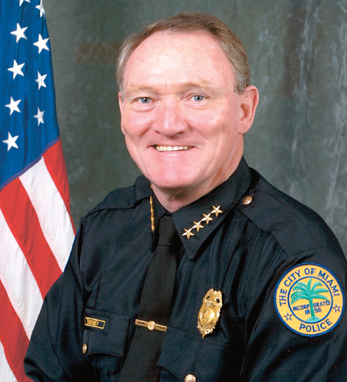
America's Top Cop: My Q & A With John Timoney, Author of 'Beat Cop to Top Cop'


The latest issue of Counterterrorism magazine offers my Q&A with former Miami Chief of Police John Timoney.

Timoney has published a good book called Beat Cop to Top Cop: A Tale of Three Cities.

The book covers his more than 40 years in law enforcement. Prior to serving as Miami's Chief of Police, Timoney was the Philadelphia Police Commissioner and previous to that he was the New York First Deputy Police Commissioner.

Esquire magazine called Timoney "America's Top Cop."


You can read my interview with Timoney below:


Note: You can click on the above to enlarge.

http://www.independent.ie/lifestyle/independent-woman/celebrity-news-gossip/tough-irish-cop-written-all-over-the-face-of-legendary-police-chief-2114913.html

Connecting the Dots at the Local Level: Fusion Centers Make Homeland Security a State, City and County Affair

The new issue of Counterterrorism magazine offers my piece on fusion centers.

Robert Riegle from the Department of Homeland Security describes fusion centers as force multipliers. "They leverage financial resources and the expertise of numerous public safety partners to increase information awareness and help our law enforcement agencies more effectively protect our communities."

My piece focuses on the new fusion center being built at the old Defense Department compound locally called the "Quartermaster" (seen in above photo).

According to Philadelphia's Deputy Mayor of Public Safety, Everett A. Gillison, the new fusion center will be called the Delaware Valley Intelligence Center.

"We are set up to begin our process of pulling all the assests together for counterterrorism, crime and all hazards," Gillison said.

You can read my magazine piece below:


You can also read my earlier post on the history of the Philadelphia Quartermaster via the below link:

http://pauldavisoncrime.blogspot.com/2010/06/philadelphia-quartermaster-revisited.html

Monday, August 16, 2010

Up in Michigan: Picturing Hemingway's Michigan

Mark Wedel from The Kalamazoo Gazette wrote an interesting piece about a new book on author Ernest Hemingway.
*
The book, written by Central Michigan Professor Michael R. Federspiel, is called Picturing Hemingway's Michigan.
*
You can read about the book, view some of the photos from the book, and learn a bit about Hemingway's time in Michigan via the link below:
*
http://www.mlive.com/entertainment/kalamazoo/index.ssf/2010/08/hemingways_michigan_a_place_of.html *
*
You can also view other photos from Hemingway's life and link to my On Crime & Thrillers column on Hemingway and crime via an earlier post of mine:
*
http://pauldavisoncrime.blogspot.com/2010/07/happy-birthday-ernest-hemingway-his.html

Tuesday, August 10, 2010

My Philadelphia Inquirer Review Of James Lee Burke's 'The Glass Rainbow'


James Lee Burke's Cajun Cop, Dave Robicheaux, deals with a gusher of violence in the 18th installment in the series of crime thrillers featuring the New Iberia, Louisiana detective.

You can read my review in of the novel in The Philadelphia Inquirer below:


Friday, August 6, 2010

Nonsense Sells: Bad Spy Thriller, Good Spy Thriller

*
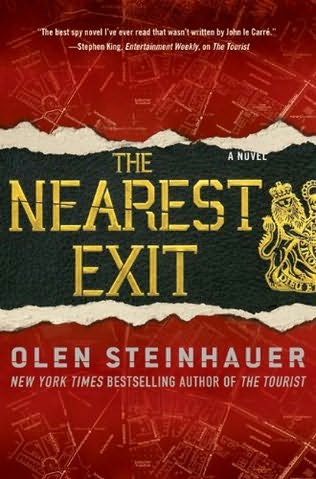
Joseph C. Goulden, the author of The Death Merchant, wrote an interesting review of two spy thrillers in The Washington Times.
*
Goulden dismisses Olen Steinhauer's The Nearest Exit and calls the poor novel "a truly odious piece of political pornography."
*
Goulden laments Steinhauer's (and a good number of other spy thriller writers') lack of knowledge about the real world of espionage.
*
"Unfortunately for reality, publishers dote on writers adept at concocting off-the-wall "thrillers" that read like rantings from a psychiatric ward. Why? Nonsense sells," Goulden (seen in the below photo) wrote in his review.
* *
There are, however, Goluden notes, writers in the intelligence genre who make a point of knowing something about their subject mater before siting down at the word processor.
*
A King of the pack is Frederick Forsyth (seen in the below photo).
*
*
"The difference between Mr. Forsyth and the aforementioned imaginative hacks is that he does his homework and relies on factual research, not simply whatever nutty conspiracy nonsense should waft his way," Goulden wrote.
*
Goulden goes on to highly praise Forsyth's latest thriller, The Cobra.
*
You can read Goulden's review via the below link:
*
*
*
I interviewed Goulden for my piece on the International Spy Museum and the myth, the mystique and the history of espionage for Counterterrorism magazine.
*
You can read the piece via the below links:
*
*
*

Wednesday, July 21, 2010

Happy Birthday, Papa. Ernest Hemingway's Life In Photos/Hemingway On Crime

*
Happy Birthday, Papa. The great American writer Ernest Hemingway was born on this date in 1899. Below is his life in photos:
*
*
*
*
*

* *
*

Below is a link to my online column Hemingway:

http://pauldavisoncrime.blogspot.com/search?q=Hemingway+on+crime