Showing posts with label The International Spy Museum. Show all posts

Wednesday, March 2, 2022

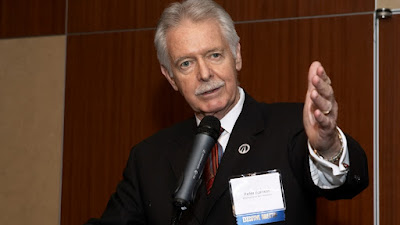
My Threatcon Column On Peter Earnest, Retired CIA Officer And Founding Executive Director Of The International Spy Museum

The Journal of Counterterrorism and Homeland Security International published my online Threatcon column on the late Peter Earnest.

You can read the column below:

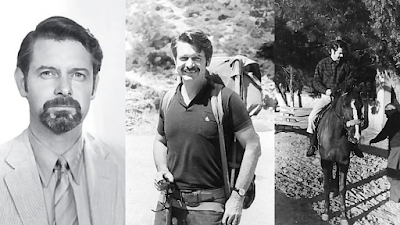
I was saddened to learn of the recent death of Peter Earnest, a retired CIA officer and founding executive director of the International Spy Museum.

He was 88.

The International Spy Museum announced the death of Peter Earnest on February 14th.

“We are heartbroken to announce the passing of our long-serving founding executive director and dear friend Peter Earnest. Peter was a defining voice in the development of the Spy Museum more than 20 years ago. His incomparable leadership and enthusiastic determination guided us to create a new kind of institution,” the announcement stated.

“Peter’s career as a public servant spanned 36 years with the Central Intelligence Agency (CIA), including over 20 years in the Clandestine Service. In his final posting with the Agency, he served as principal spokesman, developing and implementing a strategy of greater openness with the media and the public to promote better understanding of the CIA’s vital role in protecting national security.

After his retirement from government, it was a natural transition to lead the Spy Museum where he continued to shed light on the shadow world of intelligence increasing public understanding of its crucial impact on world events. During his 16-year tenure, the Museum launched an acclaimed temporary exhibition and a groundbreaking immersive experience, transitioned to a non-profit institution, and broke ground on a purpose-built structure in DC’s L’Enfant Plaza.

Upon his retirement in 2017, Peter transitioned to the Board of Directors continuing to support the Museum and its educational mission. His steadfast devotion to the Museum and its staff was an inspiration to all. He was kind, highly intelligent, curious minded, and had a captivating charisma about him. Peter was a cornerstone of our organization, and he will live on in everything that we do. His family, including his incredible wife Karen, will forever be a part of our Spy Museum family, too. We will miss him immeasurably.”

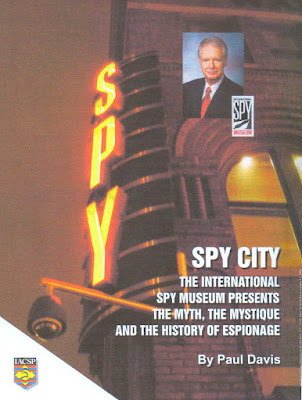
I interviewed Peter Earnest on several occasions for Journal articles. I first interviewed Peter Earnest when I wrote a piece for the Journal called “The Myth, The Mystique and The History of Espionage.”

“The museum contributes greatly to the public’s understanding of the critical role of intelligence in the world throughout history,” Earnest told me. “The museum contributes to the research, publication and public discussion about the world of intelligence, including espionage, counterintelligence, covert action, counterterrorism, and the breakthrough developments in science and technology which so characterizes our times.” 

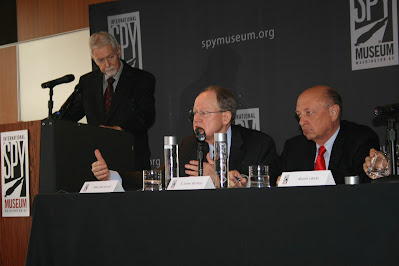
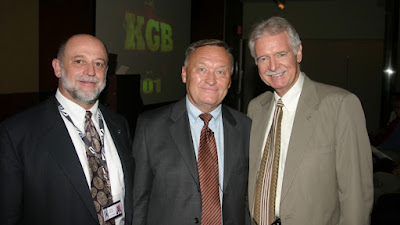
While covering the opening of the Spy Museum’s “Weapons of Mass Disruption” exhibit in Washington D.C. for the Journal in 2010, Peter Earnest introduced me to a good number of current and former intelligence officials, including former Director of National Intelligence Admiral Mike Mullen, former CIA Director R. James Woolsey, former KGB General Oleg Kalugin, former senior FBI counterterrorism and counterintelligence executive David Major, and former Director-General of the British MI5 Stella Rimington. There was a lot of history in that room that day.

Earnest introduced the speakers and explained that exhibit imagines what a cyber-attack on America’s power gris would do the country. Police and military communication systems would be crippled. There would be an uncontrollable spread of epidemic diseases, a near-total cessation of economic activity and wide-spread civil unrest.

Through the use of multi-media, the exhibit illustrated the devastating impact of a coordinated attack. The exhibit showed how terrorists, spies and criminals could turn power lines into battle lines.

I met Peter Earnest again 2011 at the National Constitution Center in Philadelphia at the press opening of the “Spies, Traitors & Saboteurs: Fear and Freedom in America” exhibition. The exhibit was created by the International Spy Museum in 2006 and then went on the road.

“Through artifacts, multimedia elements, and interactive exhibits, visitors will uncover stories of espionage, treason, and deception in the United States from 1776 to today,” the center announced. “Visitors will discover little-known accounts of foreign agents, militias, and radicals, and learn how responses to domestic attacks have driven counterintelligence measures that continue to affect our everyday lives.”

“Our purpose in doing the exhibit was primarily educational,” Earnest told the reporters. “We want to have people visit this exhibit, and for those who might be older, remind them of our past, remind them of what has gone on before us. And for those who are younger, we wanted to say that these are the things that have happened and now it is your generation that will deal with today’s threats. History has a way of repeating.”

In my dealings with Peter Earnest, I always found him to be intelligent, interesting, gracious and knowledgeable about espionage, terrorism, crime and other national security issues. He shall be missed. 

Paul Davis’s Threatcon column looks at crime, espionage and terrorism. He is a longtime contributor to the Journal.
Monday, February 19, 2018

A Look Back At FBI Agent And Russian Spy Robert Hanssen


The International Spy Museum in Washington D.C. offers a look back at former FBI agent and Russian spy Robert Hanssen

Was the son of a Chicago police officer and a housewife. Howard Hanssen was part of a special division called the Red Unit, created to ferret out communist sympathizers during the Red Scare.

Attended Knox College in Galesburg, Illinois, majoring in chemistry while also taking Russian as a foreign language. After being rejected for a position as a cryptographer with the NSA, enrolled in the Dental School of Northwestern University in 1966. At Northwestern, Hanssen became known for his penchant for wearing Black suits to class every day. In 1968, halfway through the Dental program, Hanssen grew tired of it and decided he would rather become a psychiatrist. After growing tired of this pursuit he returned to Northwestern and earned an MBA in accounting and information systems.
  
 Met Bonnie Wauck, a student nurse at a state mental facility in Chicago in 1965. The two married on August 10, 1968. Wauck was the daughter of a University professor and a practicing Catholic, and member of the Opus Dei organization. Four years later Robert enrolled in the Chicago Police Department and was soon assigned to a special training class for a new division of the department that focused on police corruption.

Was distrusted by many within the division, including his boss, John Clarke. Was considered a devoted family man in his community, spending time with his children, teaching them to excel at academics. He also became an enthusiastic member of Opus Dei, which was deemed a cult by many. The organization instructed its members to attend Catholic church services every day and confession once each week. Applied twice to the FBI and was accepted the second time in January 1976. Was assigned to the Bureau’s Gary, Indiana office but was transferred two years later to New York City. Living with his wife and four children in Scarsdale, New York, Hanssen was having a tough time making ends meet and decided to exploit his position with the FBI.

 Disenchanted by the lackadaisical attitude of fellow FBI agents, Hanssen approached Russian agents and offered to sell secret documents. He was rewarded famously for his efforts but was caught by his wife while counting $20,000 and writing a letter to the Soviets in his basement. Thinking he was writing a love letter to a girlfriend, she demanded to know what was going on. He admitted to her where he had gotten the money but claimed that he had only given the Soviets useless information. Instead, he had actually provided the Soviets with very valuable information , including the identity of Dmitri Polyakov, a top-level Soviet double-agent. Rather than turn him into the authorities, she convinced him to confess his actions to an Opus Dei priest. The priest instructed him to give up his activities and to donate the money he received to Mother Theresa’s charities.

Was considered a highly intelligent agent, but his tepid interpersonal skill as well as his continued preference for black suits caused many to tag him with the nickname “the Mortician.” Unfortunately, the perception that he was an aloof, introverted worker hindered his upward mobility within the Bureau. Was transferred to the FBI headquarters in Washington, DC where he was initially assigned to develop a budget for the Bureau that was to be presented to Congress. Was moved to the Soviet Analytical Unit in 1983 and given a high security clearance. After a four year stint, was transferred back to New York.

Decided to re-establish his link to the Soviets. Knew that the FBI was not conducting surveillance on Victor Degtyar, a KGB Colonel living in Alexandria, Virginia. Hanssen therefore sent a letter to Degtyar, with instructions to pass another letter on to Victor Cherkashin, the head of Soviet espionage efforts in Washington. In this letter, Hanssen offered to turn over classified and highly sensitive information to the Soviets in return for $100,000. He also provided the name of three Russian agents who were working for the United States. Two of the agents were executed and one was imprisoned.

You can read the rest of the piece via the below link:


Note: To Learn more about the Robert Hanssen case I suggest you read David Wise's outstanding book Spy: The Inside Story of How the FBI's Robert Hanssen Betrayed America.   

Saturday, February 17, 2018

Ace Of Spies: A Look Back At The Late, Great Spy Sidney Reilly


Sidney Reilly is one of the most interesting characters in the history of espionage. 

I've read several books on the late, great spy, including Robin Bruce Lockhart's Ace of Spies. 


Lockhart, a British naval intelligence officer in World War II, was the son of R.H. Bruce Lockhart, a British spy who worked with Sidney Reilly in Russia.

Lockhart's book was the basis for the outstanding TV series Reilly: Ace of Spies, staring Sam Neill as Sidney Reilly.  


 The International Spy Museum in Washington D.C. offers a look back at Sidney Reilly.

Considered by many the greatest spy in history. His heroic missions, quick thinking and love for the ladies made him the prototype for spies.

Born Sigmund Georgievich Rosenblum in Odessa, Russia in 1874, the son of a rich Jewish landowner. Was educated briefly through grade school but was largely self-taught from thereon. Over the years, became proficient as a linguist, learning to speak at least seven languages fluently.

Left Russia at the age of 19, stowing away on a ship and traveling to Brazil. Worked in Brazil in various occupations, including as a dishwasher, a cook and a bouncer.

Served as part of an expedition through the jungle in Brazil, working as a cook for a group of British explorers. The group was attacked by cannibals and Reilly bravely grabbed a revolver and shot several of the attackers dead, driving off the rest. The grateful explorers invited Reilly to return with them to England. Impressed with his language skills, they steered him in the direction of the intelligence community.

Received training in espionage and was dispatched by the British back to Russia to gather information. Returning successfully, Reilly was given a permanent position with the British Naval Intelligence Department (NID).

Was very popular with the ladies. carrying on several affairs. Had a brief affair with noted author Ethel Voynick. Later began an affair with Margaret Callahan, the young wife of Reverend Hugh Thomas. Reilly had met Reverend THomas advising him on cures for his kidney information. When Thomas was found dead in his room at the Newhaven Harbour Station hotel. Apparently, a person claiming to be a doctor named T.W.Andrew, who bore a strong resemblance to Reilly, certified the death as a result of generic influenza and ordered no inquest be held. Despite the fact that there was no record of a doctor by that name in Great Britain at the time, Thomas’ wife Margaret inherited about £800,000. Reilly subsequently married her on August 22, 1898. At this time, he discarded the name Sigmund Rosenblum and became known as Sidney George Reilly. Was granted British citizenship soon thereafter.

Was sent by NID to Holland during the Boer War where he was to gather information on the armaments shipments being sent to South Africa. Used his innate ability for disguise to assume identities and assumed the role of a Russian arms purchaser. Under this guise, he put himself in a position to inspect the arms development at certain Dutch facilities. Once again, he returned to Britain with valuable information, impressing his superiors. He enjoyed similar success on a number of other assignments and became known within NID as one of the top agent within the agency.

Had a natural flair for his assignments, cool-headed, creative and brave. A master of disguise, he also possessed remarkable acting skills, allowing him to don almost any persona. He also possessed a confidence and bravery that prompted him to accept even the most dangerous and impossible assignments.

… Was executed by firing squad on November 5, 1925 outside of Moscow and buried in an unmarked grave.

You can read the rest of the piece via the below link:

You can also read my Counterterrorism magazine piece on the International Spy Museum and the myth, the mystique and the history of espionage, via the below link 

Thursday, February 11, 2016

My Threatcon Column: Spies, Traitors & Saboteurs: International Spy Museum's Traveling Exhibit Explores Terrorist Motivations, Public Response


I saw "Spies, Traitors, Saboteurs: Fear and Freedom in America" when the exhibit appeared at the National Constitution Center in Philadelphia.

I liked the International Spy Museum's exhibit, but I had a few questions about the lack of a mention of al-Qaeda or a photo of Osama bin Laden anywhere in the 9/11 portion. The exhibit did however offer a row of photos of white supremacists nearby.

So, as I noted in my column for Counterterrorism magazine at the time, if one did not know better, a visitor might assume the KKK attacked the World Trade Center and the Pentagon.

One hopes the traveling exhibit has corrected that omission.

The exhibit is now appearing in St. Louis, Missouri and Alex Siegman at the St. Louis Post-Dispatch offers a piece on the exhibit.

A renowned traveling exhibition from the International Spy Museum in Washington, D.C., made its debut Saturday at the Missouri History Museum.
“Spies, Traitors, Saboteurs: Fear and Freedom in America” opened in 2004 and has been touring since 2005. St. Louis is the final planned stop for the 6,000-square-foot exhibit, which explores nine major terrorist events in U.S. history — the motivations for the attacks, public and government response, and more.
“They want to show that terror and sabotage and espionage — they’re not new things,” says Adam Kloppe, writing and research fellow at the Missouri History Museum. “This isn’t something that started on 9/11 or with the Oklahoma City bombing, but it’s something that’s been with us since the very beginning.”
You can read the rest of the piece via the below link:

http://www.stltoday.com/entertainment/arts-and-theatre/culture-club/traveling-exhibit-explores-terrorist-motivations-public-response/article_04a56e7c-1734-516f-83e7-065c6c0ac03f.html

You can also read my Threatcon column on the "Spies, Traitors, Saboteurs: Fear and Freedom in America" exhibit via the below link:

http://www.pauldavisoncrime.com/2011/05/history-of-spies-traitors-saboteurs-on.html

Saturday, April 27, 2013

The Grid Is Vulnerable To Attack, Warns Former CIA Director R. James Woolsey

 
Jeff McMahon at Forbes.com offers a piece on former CIA Director R. James Woolsey and the vulnerability of the grid.
 
The electric power grid in the United States is vulnerable to attacks that have already begun, former CIA Director R. James Woolsey said in Chicago Thursday night, and America needs distributed generation as backup—primarily in the form of natural-gas cogeneration and solar power.
 
... The problem mainly with the grid is that everything depends on it, and it itself has some very substantial vulnerabilities,” said Woolsey, a co-founder of the U.S. Energy Security Council, at an appearance sponsored by the Chicago Council on Global Affairs. “We need to move as quickly as possible to generating power where the load is.”
 
The grid is vulnerable because it is controlled via the World Wide Web, said Woolsey, who directed the Central Intelligence Agency under President Bill Clinton from 1993-95.

The grid is under attack already, according to Woolsey, and regularly fending off hacking attempts. To illustrate the possible consequences of a successful attack, Woolsey plugged the NBC series Revolution, which explores “what happened to America when the power went out.”

You can read the rest of the piece via the below link:

http://www.forbes.com/sites/jeffmcmahon/2013/04/26/former-cia-director-the-grid-is-vulnerable/

I met R. James Woolsey briefly and heard him speak on the vulnerability of the grid when I covered the opening of the Weapons of Mass Disruption exhibit at the International Spy Museum for Counterterrorism magazine a few years back.

You can also read my Counterterrorism piece via the below links:

http://home.comcast.net/~pauldavisoncrime/pwpimages/WeaponsMassDisruption1.jpg

http://home.comcast.net/~pauldavisoncrime/pwpimages/WeaponsMassDisruption2.jpg

http://home.comcast.net/~pauldavisoncrime/pwpimages/WeaponsMassDisruption3.jpg

Thursday, October 11, 2012

Inside The Ring: New WMD Threats


Bill Gertz, the Washington Times' veteran military and national security reporter, offers a piece on a Pentagon-sponsored report on WMD threats.

A Pentagon-sponsored report warns that the United States faces new threats from mass destruction weapons in the form of cyber, electronic and financial attacks, in addition to more well-known dangers from nuclear, chemical and biological WMD arms.

“In addition to the prolific conventional [weapons of mass destruction] threats posed by a vast network of state and non-state actors, the U.S. must also contend with emerging threats that are not conventionally recognized as WMD,” said the report produced last month for the office of the Undersecretary of Defense for Intelligence.

“Very few of America’s adversaries will attempt to challenge the unmatched strength of the U.S. military in a traditional conflict, but they may employ alternative asymmetric approaches.
“It is therefore necessary to consider emergent, nontraditional threats, such as cyber, electromagnetic pulse (EMP), and economic attacks, in a comprehensive discussion of WMD threats.”

You can read the rest of the piece via the below link:

http://www.washingtontimes.com/news/2012/oct/10/inside-the-ring-new-wmd-threats/

You can also read my Counterterrorism magazine piece on how criminals, spies and terrorists can cause chaos by cyber warfare attacks via the below links:

http://home.comcast.net/~pauldavisoncrime/pwpimages/WeaponsMassDisruption1.jpg

http://home.comcast.net/~pauldavisoncrime/pwpimages/WeaponsMassDisruption2.jpg

http://home.comcast.net/~pauldavisoncrime/pwpimages/WeaponsMassDisruption3.jpg

You can also read my interview with the International Spy Museum's historian on the history of cyber warfare via the below links:

http://home.comcast.net/~pauldavisoncrime/pwpimages/QAThomasBoghardt1.jpg

http://home.comcast.net/~pauldavisoncrime/pwpimages/QAThomasBoghardt2.jpg

http://home.comcast.net/~pauldavisoncrime/pwpimages/QAThomasBoghardt3.jpg