Monday, May 19, 2025

My Crime Beat Column: My Q&A With The Late Ralph Natale, The Former Boss Of The Philadelphia Cosa Nostra Organized Crime Family

Back in 2017, I reviewed Last Don Standing: The Secret Life of Mob Boss Ralph Natale and interviewed Ralph Natale for the Washington Times. 

I expanded my interview with Ralph Natale in my online Crime Beat column.

You can read the column below:

On March 27th my review of Last Don Standing: The Secret Life of Mob Boss Ralph Natale appeared in the Washington Times. 

The book was written by Dan Pearson, the executive producer of the Discovery Channel’s I Married a Mobster, and Larry McShane, a crime reporter and author of The Chin: The Life and Crimes of Mafia Boss Vincent Gigante. The book covers the life of Ralph Natale, the boss of the Philadelphia-South Jersey Cosa Nostra organized crime family in the 1990s, and the first mob boss to become a government witness.               

As I wrote in the review, I grew up in South Philly, not far from where Natale was raised a generation earlier. I contacted him and we talked about his life and the book. I noted that he didn’t appear to be particularly remorseful or repentant in the book. I asked him if had any regrets about his past criminal life? 

“I have regrets about one thing, I broke my marriage vows,” Natale replied. “That’s the only thing I regret in my life. When I was 12 years old, I was a hoodlum. I was a born killer, that’s what I did and why I rose to the top so easily. But I never touched an innocent man or a woman or a child. I just clipped the guys who were supposed to get clipped. And they went. It was a simple thing for me.” 

Below is my interview with Ralph Natale: 

Davis: Why did you write the book? 

Natale: It was very simple. When I “went away,” the second time, I did 13 years. I told my friends to make sure every month that my wife has enough until I come home. Oh, yeah, yeah, they said. When I asked her every month, she said no, I said OK, maybe something happened. Then I said, OK, how about these punks? 

Davis: That made you bitter? 

Natale: When I first came home from the first bit - I did 16 on that because I didn’t want to be a witness - they were living in their mother’s homes and they were driving other people’s cars. Forty-five months later when they arrested me for a parole violation, they were now driving Mercedes, BMW’s and they bought their own homes. Forty-five months! Before that they didn’t know how to get out of their own way. This is all a matter of fact. Everybody in South Philly knows and everybody in the mob knows. And now when I go away and this thing happens, I said I want to see those punks. I got indicted for helping my son-in-law and his drug business, I leant him some money, and this and whatever. He got arrested with everybody else and my name came up. So I got indicted on this. Now this was the third time around. I was facing life. I would have gladly done it, gladly, because I did 16 when I really was in trouble. But they didn’t come up with a dime. And that’s why I wrote every word, and every part of it. You have to believe it because they never denied it. They couldn’t deny anything. 

Davis: Did you have any difficulty testifying against your former criminal associates in court? 

Natale: I saw them in the courtroom when I think did eleven or twelve days on the stand. In fact even the marshal said, we never seen nothing like it, you ripped the lawyers up. We never saw a man answer like you. I was telling the truth. It’s easy to tell the truth. The FBI agents when they arrested me in Florida, they said we’ll get you on the big one, I said you guys are crazy. It all came out later in the trial when I was a witness. That’s the reasons why I did this. Throughout the mob, every mob leader at that time could not believe it, but then they said we know why Ralphy did it, because these bastards kept everything for themselves and didn’t give me a dime. 

Davis: Can you briefly describe what it was like to be the boss of the Philadelphia-South Jersey Cosa Nostra family? 

Natale: Well, first of all, I always loved the guy who ran it, Angelo Bruno. When I went to work under “Skinny Razor,” John DiTullio, I saw what it was like to be admired and respected by “men,” and to tell men what to do and they would do it. I loved the ways, the world, everything was in place. I like things in order. I don’t like any disorder. When it gets disordered you see what happens in the world, in politics, in everything. It was like being dead and then all at once I became alive when I became a boss. I loved every moment of it. There is nothing like it in this world. I once saw a movie, a great sports movie, The Hoosiers. Did you see it?       

Davis: Yes, good film, with Gene Hackman. 

Natale: OK. When the woman in the movie was talking about her brother she said around here if a guy plays basketball, he’s treated like a God. Hackman said, listen, he told her, anybody, if he’s treated like a God for 15 seconds, then that’s well worth anything in the world. That’s true.     

Davis: That’s the way you felt when you were the boss? 

Natale: Yeah, that’s the way I felt. To be a part of La Cosa Nostra, when things meant something, you had to at least make a kill on your own. In my time, I committed, I think I pled to eight of them when I had to plea. I love my peace, I love my family, I love whatever I do, but if it comes time, I’m still mobster Natale. That’s all I know. The reason I speak so plainly is because I want you to understand what men like me are like. We don’t look any different. I don’t act like a mobster, I never did.          

Davis: I’m half-Italian, I grew up and live in South Philly and I’ve covered organized crime for a good number of years. I know the Cosa Nostra culture. 

Natale: The culture is this, if you can’t do it and then go home to sleep, then you shouldn’t do anything. I was brought up at 6th and Wharton in South Philly. I was born and raised in that area. My mother family comes from there. My father’s family died early in their lives when they came from the other side. They got caught up in that flu epidemic. I was still see the same stores, the same houses and the same people. And I love every one of them with my heart. 

Davis: How were things different from when you were the boss and, say, from when Angelo Bruno was the boss in the 1960’s and 1970’s?    

Natale: Well, when Ang was the boss, money was around. Gambling, and this and that, but when I became boss, we had to go out and make our money. There was a lot of punks around. It was tough. Two weeks after I came home I called one big meeting. I said I want everybody to go get these guys taking all the action and tell them to meet us. When we were through with this meeting at a banquet hall we all became partners with the guys that were there. That’s what I did. We started to make money. 

Davis: Did you meet any resistance from other ethnic gangs, like the Russians or biker gangs? 

Natale: Everybody else knew that I was home and they knew what kind of man I was on the street before and when I was in prison. Once I called them in and had something to say, they all knew I kept my word. And they had to keep their word. I wasn’t Superman. You could put two in my head. But so far, I’m OK. I’m here. 

Davis: How different is today’s mob, as I guess you’re watching it from afar, and from your day and era? 

Natale: They don’t keep the rules. The watch too many movies. They watch The Godfather, they watch Casino. I was with those people, I knew those people. It was a joke. And these guys want to walk and talk like that. It was not like it was when we were young. We had men on the street. The few men that are left are the men that did time with Scarfo. They all did their time like men and they all came home like men. I didn’t know them because I was much older than them and I was away, but I admired men who did their time and came home. They are the only men who are left in South Philadelphia. 

Davis: Scarfo recently died in prison. What did you think of him and how he ran the crime family? 

Natale: He destroyed it. Nicky Scarfo was a man who had a hole inside him. He had no soul, no heart. You know, he didn’t have one true friend? Not one. I knew him very well. Many years ago when we were working in Atlantic City I wanted to kill Nicky Scarfo. It came out. I asked Angelo Bruno. No, Ang said, his uncles are my friends, and he’s this, he’s that. I said he’s going to give us trouble. But Ang said, with half a smile, don’t do this. It can’t be done. He put all those guys, all men, in prison. 

Davis: There is some question of who is the South Philly and South Jersey boss today. Do you know who it is? 

Natale: There is no boss! There is no more mob there. They are not recognized anywhere in the country because of what they did and who they were. They don’t even know how to walk on Passyunk Avenue. The men who came home can and I wish them all well. It’s not like before. 

Davis: Can you describe your homecoming when you became the boss? 

Natale: When I came home the first thing I did was walk from Jefferson Hospital, where I arranged to have a hernia operation later, to South Philly. I wanted to see South Philly again. When I went down Ninth Street at the Italian Market, all the guys working behind the stands came and we hugged and kissed. They already had the word because the news media had me as the new boss. It was so warming for me. And then we stopped at the Villa de Roma and we had a little drink – it was in the afternoon – and then we went home. That’s what South Philly was to me. I lived my life pretty good in South Philadelphia. Walk up and down every street and find out how I treated my friends and other people that I barely knew, and then you’ll know what kind of man I was. Then you’ll understand me. 

Davis: How difficult was it to become a government witness after a lifetime in Cosa Nostra? 

Natale: It wasn’t difficult for me. I’m not going to cry like other people. I wanted to get those punks. When my wife and family had nothing and I gave those punks everything? It was so easy. Done and done. 

Davis: If you look back in crime history, Cosa Nostra took pains to support the families of guys who went away to prison. This was key, along with a threat of death, that there is no record of any Cosa Nostra member becoming a government witnesses prior to Joe Valachi, and not many afterwards until much later, when greed, along with the RICO statute, changed all of that. 

Natale: It was like that. When I was away at Lewisburg I got subpoenaed to appear before a Senate Investigation Committee On Organized Crime. This was in 1982 and I had the first three years of a 23-year sentence. When they took me there they told me if you give us the right answers you’ll have your sentence reduced and you’ll be home within three months from today. I said you got the wrong guy. There were just three guys there. There was Nicky Scarfo, who had just become the boss, and the old man from Chicago, Anthony "Joe Batters,” Accardo. and me. I was the only one in prison and I was in jeopardy of getting another sentence for perjury, for this, for that. I did what I had to do. It was on C-Span and I still got the clip. I didn’t say a word about anybody. I could have put in prison half of New York, half of Chicago and all of Philadelphia. And you know who went to jail? Me. And that’s the truth. That I’m proud of. 

Davis: What do you think of Ron Previte, the man who wore an FBI wire, recorded you and testified against you? 

Natale: Anybody who testifies against me was what he was. I have no ill feeling about anything or anybody. I look at him, and say, well, you know, he did what had he had to do to save his ass. That’s what kind of name he’s got and that’s it. I ain’t got time for hate. I intend to live to be a hundred, but if I die tomorrow, I don’t have any hate in my body for anybody that did anything against me. 

Davis: Are you concerned about your personal safety? Is there an open contract on you? 

Natale: Who’s going to come after me (laughs)? I’m still a man. I was always known as a dangerous, dangerous man. That’s all I can tell you. 

Davis: There is that interesting story of “Harry the Hunchback” Riccobene, an elderly man, who took a couple of bullets but still managed to take the gun away from the hit man who was a young guy. Did you know him? 

Natale: Let me tell you a story about Harry Riccobene. You’re the first guy I’m going to tell it to, a South Philly guy. When I was home and I was the boss, I was down at 8th and Tasker, at Frankie’s bar and I had to see him about something. I ran into a couple of my old school chums from Bartlett Junior High and one of them came over and said can I speak to you? Yeah, what is it? He said he gets a call every week from a man who praises you and loves you. He said if I ever ran into you I should arrange for you to come to my home and talk on the phone to him. What’s his name, I asked? Harry Riccobene. Little Harry? I love him. You make the arrangements and we’ll get it done. I did go over the week after. That was a real man. You know what he told me? He was glad I got it. He said I deserved it more than anybody. I said thanks Harry. He said he was fine - he had a ton of money. You remember I love you, ever since I was a boy, I said, and he said he loved me too. He died at 93-years-old, I think. 

Davis: He was a tough old guy. 

Natale: Harry Riccobene was a notorious killer. He used to drive Skinny Razor around and they were the men that I knew and they watched me grow up. I loved and respected them with all my heart. 

A group of men in suits

AI-generated content may be incorrect.

Davis: You write about Teamster boss Jimmy Hoffa in you book. Are you aware that Martin Scorsese is making a film about Frank Sheeran, the former Teamster and hit man who claimed to have murdered Hoffa as well as “Crazy Joe” Gallo in New York? 

Natale: Let me tell you about Frank Sheeran. He’s nothing but a drunk and he imagines things. He begged for me to see him when I was home and I did. I went over to South Philly and I met him there. He was half-drunk and that was it. He said he killed Jimmy Hoffa. I know who killed Hoffa. I have a picture in the book with me and a few of the guys from Lewisburg and one of the guys in the photos was one of the three guys who killed Hoffa. His name was Tommy Andretta. His brother was with him and there was the other guy they killed in New York, Salvatore Briguglio. This was a hit squad from “Tony Pro” Provenzano, who was my dear friend. He was a capo. I get a little angry. You know how guys claim to killed Jimmy Hoffa? I think 15. 

Davis: And he’s buried here, there and everywhere. 

Natale: I just gave you the three guys. It will come out. 

Davis: Why do you believe he was he murdered? 

Natale: Because he wanted to come back and take over the union. I got a whole chapter in there. He asked me to help him and it explains it in the book. He was killed because he made the first major mistake in his life. If a man is a gambler, a drinker, a womanizer, he’s got other things to do when he’s retired, you know. Hoffa had only thing – the union. He loved it. He was a rich man but he wanted that union back. I met Hoffa and told him if Ang wants me to help you, fine but if not, I can’t serve two masters. Sorry. That was the last time I saw Jimmy Hoffa and then he was dead. 

Davis: In your book you debunk the idea that Cosa Nostra was against drugs. You write that everybody sold drugs. But why did some bosses like Paul Castellano in New York prohibit them in such a strong way? 

Natale: Listen to me. Let me break that fable. Every mob in New York, Chicago, Philly, always has a man who sells drugs. Everybody handles drugs. There was Joe Bonnano, who in the beginning said no drugs, no drugs, meanwhile he became the biggest rat in the world. You get the bosses’ money, and that’s it. 

Davis: After Bonanno was exiled from New York to Arizona he was suspected of running a major heroin operation from Mexico. 

Natale: Listen to me. There is no crime that cannot be done if you belong to the mob. 

Davis: You spent a good many years in prison and your descriptions of prison life in the book seem almost nostalgic. Was prison life for you like the scenes from the movie Goodfellas? Did you live fairly well inside? 

Natale: That’s another thing they overdid. It’s all bullshit. You go to prison and you got time to do. You do it and it’s hard. Some guys can do it and some guys can’t. I did almost 30 years in prison. So I know what prison is about. 

Davis: Are there plans to make a film from your book? 

Natale: We’re ready to make one. Dan Pearson will be leaving in a couple of weeks to go to Hollywood and sit down and talk turkey with some real big people. You’ll hear about it in two or three weeks. We’re going to make a beautiful movie. 

Davis: Are they going to shoot the film in South Philly? I hope they don’t film it in Pittsburgh or Scranton like they did the film 10th and Wolf. I grew up near 10th and Wolf. 

Natale: It is going to be filmed in South Philly and Jersey. 

Davis: Who was the most impressive man you came across? 

Natale: I would have to say that the most impressive man I ever been around was John DiTullio, Skinny Razor. He was the most feared man in the United States, you know. He was number one. And I give you the Chicago guy, Anthony Accardo. When I met him, I thought I was meeting God. 

Davis: What is your life like now? 

Natale: I love my family. I enjoy my wife and all my children. I had five children and they had ten children and now we have 12 great-grandchildren. Can you image that? They are all beautiful and smart and entertaining. They are great looking people.   

Davis: Thanks for talking to me. 

Note: You can read my Washington Times review of Last Don Standing via the below link: 

http://www.washingtontimes.com/news/2017/mar/27/book-review-last-don-standing-the-secret-life-of-m/      

Saturday, May 17, 2025

Mexican National And Alleged Alien Smuggler Indicted On First Material Support Of Terrorism Charges Against CJNG Member

The U.S. Justice Department released the above and below photos and the below information on May 16th:

An indictment unsealed today in the Western District of Texas is the first in the nation to charge a Mexican national with providing material support to a designated foreign terrorist organization based on her involvement with the Cartel de Jalisco Nueva Generación (CJNG), including providing the cartel with grenades and engaging in alien smuggling, firearms trafficking, bulk cash smuggling, and narcotics trafficking on its behalf.

“Cartels like CJNG are terrorist groups that wreak havoc in American communities and are responsible for countless lives lost in the United States, Mexico, and elsewhere.” said Attorney General Pamela Bondi. “This announcement demonstrates the Justice Department’s unwavering commitment to securing our borders and protecting Americans through effective prosecution.”

According to court documents, Maria Del Rosario Navarro-Sanchez, 39, of Mexico, conspired with others to provide and did attempt to provide grenades to CJNG, a designated foreign terrorist organization. Additionally, Navarro-Sanchez, is charged with conspiracy to smuggle and transport aliens in the United States, straw purchasing and trafficking in firearms, bulk cash smuggling conspiracy, and conspiracy to possess a controlled substance with intent to distribute. Co-defendant Luis Carlos Davalos-Lopez, 27, of Mexico, is charged with conspiracy to smuggle illegal aliens into and transport aliens in the United States, straw purchasing and firearms trafficking. Co-defendant Gustavo Castro-Medina, 28, of Mexico, is charged with straw purchasing and firearms trafficking, conspiracy to possess a controlled substance with intent to distribute, and possession of a controlled substance with intent to distribute.

On Feb. 20, the U.S. Department of State announced the designation of eight international cartels, including CJNG, as Foreign Terrorist Organizations (FTOs) and specially designated global terrorists. This designation makes available much stronger criminal charges in the fight to secure our nation’s borders. CJNG is a transnational criminal organization that controls a significant portion of the narcotics trafficking trade and has a presence in nearly every part of Mexico and dozens of other countries, including the United States. In addition to trafficking fentanyl, CJNG engages in money laundering, bribery, extortion of migrants, taxing of migrant smugglers, and other criminal activities, including acts of violence and intimidation. According to the State Department, CJNG has conducted attacks on Mexican military and police with military grade weaponry, the use of drones to drop explosives on Mexican law enforcement, and assassinations or attempted assassinations of Mexican officials.

On Jan. 20, President Trump directed the Justice Department and other agencies to pursue total elimination of cartels and transnational criminal organizations because they pose extremely serious threats to the United States, including by jeopardizing a stable and secure border. These and other criminal organizations commit brutal and intolerable violent crimes related to narcotics and firearms trafficking, money laundering, extortion, and other criminal acts. They also are responsible for huge flows of illegal immigration into the United States. They organize and facilitate all manners of illicit travel and immigration into the United States through the southern and northern borders and rely on co-conspirators and organization members operating in various countries throughout North and South America. This situation is untenable and threatens our national security. The Department of Justice and its law enforcement partners are committed to protecting the United States against invasion, working urgently toward the goal of total elimination of cartels and transnational criminal organizations, aggressively enforcing our immigration laws, and maximizing the impact and effectiveness of all available law enforcement tools.

“We will never allow criminal gangs and cartels to terrorize American communities,” said Secretary of Homeland Security Kristi Noem. “The days of unchecked gang and cartel violence are over.”

“As alleged, the defendant engaged in multiple of the most insidious kinds of criminal activity: firearms trafficking, narcotics trafficking, human and bulk cash smuggling, and even providing grenades to CJNG,” said Matthew R. Galeotti, Head of the Justice Department’s Criminal Division. “Today’s announcement demonstrates the Criminal Division’s hard work and commitment to eliminate cartels and foreign terrorist organizations like CJNG."

“The slew of federal charges we have brought against Navarro-Sanchez sends a monumental message through the ranks of cartels like CJNG—now designated as a terrorist organization—along with those who support them in various capacities, that U.S. law enforcement is turning up the pressure to crack down on unlawful immigration practices and to dismantle the smuggling of illicit drugs and firearms,” said Acting U.S. Attorney Margaret Leachman for the Western District of Texas. “These crimes, all included as allegations in the indictment, do nothing but place human lives on both sides of the border in grave danger, while loading the pockets of criminals who profit off of them.”

“The arrest of Maria Del Rosario Navarro-Sanchez should send a clear message to people who wish to align themselves with terrorist groups that they will be sought out and held to the highest extent of the law,” said FBI Director Kash Patel. “I'm extremely proud of the dedicated men and women of the FBI and its law enforcement partners who work tirelessly every day to protect Americans and keep our communities safe.”

“The brutality and destruction inflicted by cartels and terrorist organizations is devastating communities across the United States and around the world,” said Bureau of Tobacco, Firearms and Explosives (ATF) Acting Director Dan Driscoll. “The capture and arrest of Maria Del Rosario Navarro-Sanchez demonstrates what international law enforcement cooperation can achieve when united against the threat posed by these violent networks. ATF and our partners will use every tool at our disposal to relentlessly hunt down, dismantle, and bring to justice every trafficker, every cartel operative, and every individual who dares to threaten the safety and sovereignty of our communities.”

“This case lays bare the true nature of the threat we face,” said Drug Enforcement Administration Acting Administrator Robert Murphy. “A cartel associate providing support to a designated foreign terrorist organization is not just a criminal threat—it is a national security threat. DEA will use every tool of law enforcement to dismantle CJNG and its network that floods our streets with poison, traffics in human lives, and wages violence against law and order. We are not just keeping our communities safe from dangerous, illegal drugs—we are fighting a national security crisis.”

“Supplying grenades to a designated terrorist organization—while trafficking firearms, narcotics, and human beings—is not just criminal; it’s a direct assault on the security of the United States,” said Acting U.S. Immigration and Customs Enforcement (ICE) Director Todd M. Lyons. “Sanchez acted as a key enabler of violence who empowered cartels and terrorist organizations. Her crimes extended beyond smuggling; she was involved in firearms trafficking, bulk cash smuggling conspiracy, and a conspiracy to distribute controlled substances. Her actions endangered countless lives and undermined our efforts to protect the nation’s borders and communities. Confronting this level of criminality demands more than resolve—it requires a unified, all-of-government response, and that’s exactly what we demonstrated today: a coordinated effort to identify, disrupt, and bring to justice those who profit from violence and human suffering.”

Since its establishment, Joint Task Force Alpha’s (JTFA) work has resulted in increased coordination and collaboration between both domestic and foreign law enforcement; precedent setting indictments, extraditions and prosecutions; more than 365 domestic and international arrests of leaders, organizers, and significant facilitators of these crimes; more than 334 U.S. convictions; more than 281 defendants sentenced, including significant jail sentences imposed; and substantial seizures and forfeitures of assets and contraband including millions of dollars in cash, real property, vehicles, firearms and ammunition, and drugs.

The FBI, ATF, DEA, and Homeland Security Investigations in El Paso, assisted by the U.S. Border Patrol, investigated the case. ATF Legal Attachés in Mexico City and the Mexico Attorney General’s Office also known as Fiscalía General de la República (FGR) Firearms Trafficking Unit provided substantial assistance. The CBP’s National Targeting Center, and ICE HSI’s Human Smuggling Unit in Washington, D.C. also provided assistance with the investigation.

The case announced today is being prosecuted by Assistant U.S. Attorney Kyle Myers and JTFA Associate Director Ian Hanna of the Western District of Texas, and Trial Attorney Marie Zisa of the Criminal Division’s Human Rights and Special Prosecutions Section. The Justice Department’s Office of International Affairs and Judicial Attachés in Mexico provided substantial assistance. The Justice Department thanks its Mexican law enforcement partners, who arrested Navarro-Sanchez on May 4, during an enforcement operation.

This case is part of Operation Take Back America, a nationwide initiative that marshals the full resources of the Department of Justice to repel the invasion of illegal immigration, achieve the total elimination of cartels and transnational criminal organizations (TCOs), and protect our communities from the perpetrators of violent crime. Operation Take Back America streamlines efforts and resources from the Department’s Project Safe Neighborhood (PSN).

This case is also part of an Organized Crime Drug Enforcement Task Forces (OCDETF) Strike Force Initiative, which provides for the establishment of permanent multi-agency task force teams that work side-by-side in the same location. This co-located model enables agents from different agencies to collaborate on intelligence-driven, multi­ jurisdictional operations to disrupt and dismantle the most significant drug traffickers, money launderers, gangs, and transnational criminal organizations. The OCDETF El Paso / Las Cruces Strike Force is comprised of agents and officers from CBP, HSI,  DEA, FBI, IRS Criminal Investigation, the U.S. Marshals Service, ATF, the El Paso County Sheriff's Office (EPSO), and the El Paso Police Department (EPPD).

The charges contained in an indictment are merely allegations. All defendants are presumed innocent until proven guilty beyond a reasonable doubt in a court of law.

Note: The top photo shows 20 AK-47 type firearms and two .50 caliber rifles seized on August 21, 2023, in the Western District of Texas.

The below photos are of a man-made tunnel used to smuggle aliens from Mexico to the United States, an.AM-15, multi-caliber AR-15 variant aka “El Dorado” recovered from Navarro-Sanchez’s possession during her arrest in Mexico on May 4, 2025, and a photo of three packages of meth and multiple packages of blue fentanyl pills seized in March 2023.


Friday, May 16, 2025

FBI Honors Fallen Law Enforcement 'Brothers And Sisters' And Two Of Its Own During National Police Week

The FBI released a piece on National Police Week and the loss of two FBI special agents.

As the names of fallen law enforcement officers are read aloud in solemn gatherings for National Police Week, the FBI paused to honor its law enforcement partners and remember two of its own who made the ultimate sacrifice.

"It's an important time to honor the extraordinary courage and commitment of our brothers and sisters in law enforcement and to recognize those who have laid down their lives protecting the communities they served," FBI Director Kash Patel said in a video commemorating Police Week.

The annual observance dates to 1962 when President John F. Kennedy signed a proclamation designating May 15 as Peace Officers Memorial Day and the week in which the date falls as Police Week.

You can read the rest of the piece via the link below:

FBI Honors Fallen Law Enforcement During National Police Week — FBI 

Once A Prince Of The City: A Look Back At Robert Leuci, Crime Writer & Former NYPD Detective

In a recent conversation with a Philadelphia detective, I mentioned Prince of the City, a fine police drama directed by Sidney Lumet. 

The detective, who is much younger than I, did not know about the 1981 film, or the true story of Robert Leuci (seen in the above and below photos). The former NYPD detective died in 2015.

Back in 2009, I interviewed Robert Leuci, the subject of the film and Robert Daley’s true crime book. 

You can read my Crime Beat column on Robert Leuci below:     

A person standing on a rooftop

AI-generated content may be incorrect.

Robert Leuci, the former New York City detective who was the subject of the book and film Prince of the City, is a crime writer who lives in Rhode Island, far from the mean streets of New York City.

Robert Daley’s Prince of the City: The True Story of a Cop Who Knew Too Much, was a first-rate true crime book and Sidney Lumet’s film based on the book with Treat Williams portraying Leuci when he was a young detective, and a member of the elite narcotics Special Investigating Unit (SIU), was brilliant and haunting.

A book cover of a book

AI-generated content may be incorrect.

The SIU narcotics detectives had city-wide jurisdiction and little supervision over their selected cases, which was unusual in a bureaucracy like the New York Police Department (NYPD). These “Princes of the City” were the most aggressive and talented detectives in the war on drugs in the 1960s and 1970s. And some of them were corrupt.

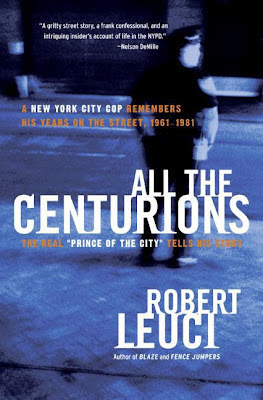
Leuci, as he recounts in his memoir All the Centurions: A New York Cop Remembers His Years On the Street - 1961-1981 (Harper), committed acts of corruption, but he came forward and volunteered to make cases for the prosecutors (including a young Rudolph Giuliani) against corruption in the criminal justice system.

He was not, he stresses, caught in a criminal act and forced to do so, which is the path taken by so many crooked cops and assorted criminals.

And he says he was not an oddball and outcast like Frank Serpico, the NYPD undercover narcotics cop who was the subject of both the book and film Serpico. Leuci said he was all cop. He belonged.

He wanted to go after corrupt lawyers, political fixers and judges, but tragically for Leuci; he was ultimately forced by prosecutors to also testify against his former partners and other cops. 

Leuci, now 68, retired from the NYPD in 1981. In addition to his memoir, he writes crime novels.

A person walking on a street

AI-generated content may be incorrect.

I contacted Leuci and talked to him about drugs, organized crime, crime fiction, and his life as a cop and a writer. Below is my Q&A with him:

Davis: I read two of your novels, Odessa Beach and Captain Butterfly and I read your memoir All the Centurions. I thought they were very good. 

LeuciOdessa Beach and Captain Butterfly are my early books. My later books are much better.

Davis: I’ll have to read them as well.

Leuci: My favorite is Fence Jumpers. It’s a bit autobiographical. For Odessa Beach I spent about nine months at Brighten Beach among the Russian immigrants. That was fun.

Davis: Was that as a detective or later as a writer?

Leuci: It was after I retired. I wanted to write something about these Russian immigrants, whom I found fascinating. I lived down there and wrote the book. Russian guys have been around since 1979. They left the old Soviet Union and were allegedly going to Israel, but they never got there. They are mostly Jews, but they were not Jewish in any sense. They knew nothing about Judaism and they knew nothing about Karl Marx. They were not communists, they were just Russians. They were tough guys. A lot of them were ex-prisoners who had been in jail for all sorts of different reasons. The first wave that first came here were some of the toughest guys you would want to meet. They are very violent and they are into almost everything. They are much more powerful today than the Italians.

Davis: Have the Russians become the bigger organized crime element in the country?

Leuci: For a hundred years, Italian organized crime held sway in the streets in all the big cities, especially in eastern cities, and some in the west. New York alone had five major crime families. They were all over the place and they controlled drugs, gambling, prostitution, and a lot of stuff. But they’re done, pretty much.

Davis: Italian organized crime is still active around the country, including here in Philadelphia – I’m half-Italian and I live in South Philly - but you’re right, their influence has greatly diminished. 

Leuci: I know a lot of people like to say that organized crime kept crime down, and without organized crime, disorganized crime would take over the streets, but these guys were responsible for most of the drugs that were in the streets. They were responsible for a lot of that street crime. I write about this in Fence Jumpers

Davis: Have you written about anything other than crime?

Leuci: No, I’ve thought about it, but crime is what I know. 

Davis: I find crime to be one of the most interesting of human endeavors. 

Leuci: There can be a lot of really good things in a crime novel.

Davis: I truly liked Prince of the City, both the book and the film. Were the book and film accurate? Is there anything that you would change if you could?

Leuci: I had a certain amount of input there, but not a whole lot. The book was written by Bob Daley, who is a wonderful writer and a good friend, and then it was turned into a film by Sidney Lumet, who is a wonderful film director who made Serpico and Network and other wonderful movies. 

But you know it was not exactly an uplifting movie. I’ve never sat through the entire movie, but I saw bits and pieces of it - it’s too hard for me. People still say to me why did you do this? What was the reason? It’s not really explained very well in the book, and it’s not explained at all in the movie. I mean it sort of gives you an idea of why I got involved in that investigation, but it was hard to do it, I suppose. In All the Centurions, I really do explain what brought me to that place and why I did what I did. I’m not sure it was a great decision, by the way. 

Davis: That’s my next question. Do you think you did the right thing by coming forward?

Leuci: Certainly, at the time. I was probably on the verge of a nervous breakdown, and I didn’t even realize it. I was a bit loony and all kinds of things were going on in my life. I was very depressed about the work I was doing in the police department. I went into the police department because I very much wanted to be a cop. 

I found myself within a short period of time, after five or six years, behaving in ways that were foreign to my nature. I was behaving in ways that were much like the people I was investigating. It made me sick, and it started to make me crazy. The people I cared most about were the other cops I worked with, and most of them were great guys, but they were crooks. We all rationalize our behavior. It made sense to me at the time, but when I really thought about it and really took it all apart, I realized it was so hypocritical and so opposed to anything I believed in. I should have quit or transferred to another unit, but I didn’t do that and I got caught up in this crazy investigation that was a horror in many ways. It was a decision that changed my life certainly, and maybe changed it for the better in some ways, but the price I paid and the price that other people paid for my fucking feeling sorry for myself, was way too high.

Davis: Are there different levels of corruption? Is there a difference between a cop taking a meal and a cop taking drug money?

Leuci: For years many cops believed there was “clean money” like gambling, and “dirty money” like drugs, but the problem with that kind of mentality is that most of the money really comes out of drugs. It ends up in one big circle. I would never sell drugs. I would never sell to an informant. I had a line that said I would never cross. A lot of guys I worked with said they would never cross that line, but a lot of guys did. You can’t draw those lines; it’s beyond your control. You shouldn’t do that. Once you do it you’ve screwed yourself. It’s a sensual world you’re working in. It really rubs off on you. There is no cop born, ever, that changed the street. But the street has changed every single cop.

Davis: Drugs are rampant today, and they fuel many other crimes. Can you tell us what it was like to a narcotics detective in your day in New York?

Leuci: There was a heroin epidemic in the 1960s, 1970s, and part of the 1980s. The drug of choice was heroin, not cocaine or crack cocaine. Heroin killed thousands of drug addicts. The 60s and the 70s were a crazy time, and when you added this drug, it made the whole world seem topsy-turvy. But there was less violence as that drug doesn’t produce violence. People go out and rob to get the drug, but heroin is an opiate. It makes people tired, it makes them sleep. Heroin addicts are not threatening people. When the drug of choice changed to crack cocaine it became extremely violent. That drug produces violence and paranoia. Meth is another violent drug. 

Davis: I’ve long been interested in your era, as I was a young guy then, and I read Robin Moore’s The French Connection in 1969 and went on to read a lot of books and see a lot of films about crime in New York, including Prince of the City, and your books. In your era the SIU produced many legendary detectives like Eddie Egan, Sonny Grosso, and Joe Nunziata. Nunziata was an interesting man who came to a tragic end with his suicide. Even though he was apparently corrupt, my heart went out to him and his family when I saw Prince of the City.

Leuci: Joe Nunziata looked like Dean Martin. He was a very handsome, a very gregarious guy. He was all those things. There were a lot of good things about him, and I was one of his big admirers. Joe made some big mistakes. We all did. I think the film did him justice. I talk to his son every now and again. Papa's Game is a great book that tells the story of that time and the French Connection rip-off. That was the most horrendous thing imaginable.

Davis: Yes, after confiscating all that heroin in the French Connection case, the biggest drug bust at the time, someone simply stole it from the NYPD property room. Did you know the people written about in Papa's Game, the criminal Vincent Papa and Detective Frank King?

Leuci: I knew Frank King pretty well. Frank King was a good cop in a lot of ways, but he was thoroughly corrupt. He was a gangster as a cop. 

Davis: How are you treated by law enforcement officers today? 

Leuci: It depends on where they are and who they are, what generation they are from. I lecture at every police department in the country, with the exception of New York, on corruption, ethics and morality. The cops are very nice. But what old school guys say, and it’s true, is that you violated something that can’t be forgiven. When you turn in a cop for whatever reason, it’s unforgivable. I understand it as I come from that generation. That has changed nowadays. It exists in cases of police brutality, but I think that if there is a cop out there who is going off on his own and doing corrupt things, other cops will report it. Police today have different kinds of education, background and world views. I don’t think you can get away with that kind of stuff today.

Davis: I have one last question about your era. Did you see the film American Gangster? It has been reported that the corrupt detective was based on you.

Leuci: I won’t go see it. I read the magazine piece and this guy has got to be kidding. Josh Brolin called me up and said he was playing me in a movie. I said you’re not playing me.

Davis: Did you know the Black heroin dealers Frank Lucas or Nicky Barnes?

Leuci: I never worked in Harlem, and I didn’t know Lucas. I worked in Brooklyn.

Davis: I talked to a retired DEA agent who worked in New York at the time, and he said the movie was false and Lucas is a liar. Lucas never did any of that stuff he claimed. When he was caught, he ratted out his gang and family members, but he never made any cases against corrupt cops or DEA agents. The writers and filmmakers naively believed everything Lucas told them. 

Leuci: The people who wrote that spent no time doing any kind of research on it. They had this great story and they turned it into a movie. This guy Jacobson, who wrote the magazine piece and wrote the screenplay, is totally full of shit. I had federal protection during the time he was talking about. I know the detective he was talking about, a guy named Albano. He was a real bad guy who worked Harlem. He was involved with the French Connection case. But if they didn’t spend any time trying to get it straight, if they didn’t get my story straight, how can they get the rest of that movie straight?

Davis: Do you think Lucas used your name because you are known? 

Leuci: Yes, of course. My daughter wanted to sue, but I said no.

Davis: They didn’t use your name, but they used your street name “Babyface.”

Leuci: No, when he gives Lucas his card, that’s my name on it. 

Davis: I didn’t catch that.

Leuci: I’ve never seen it, but people told me about it. I was working for Giuliani at the Southern District of New York, and if any of that was true, Giuliani would have crucified me. Those guys should be ashamed of themselves. It’s all bullshit. 

Davis: One of the things I liked in your memoir was your portrayal of Sean Connery, one of my favorite actors. You wrote that at a party people were smoking pot and Connery told them to respect you and stop. “This man is a police officer.” I can hear his commanding voice.

Leuci: Sean Connery is a very straight shooter. He was very kind to me when I was out of my level in Hollywood with these characters. He was very supportive. Some guys started smoking pot in front of us and he got pissed off.

Davis: Who influenced you as a writer?

Leuci: Robert Stone is a big influence, and he is my mentor. I like Joseph Wambaugh, Dennis Lehane, Richard Price. There are so many writers that I really like.

Davis: Any last thoughts? 

Leuci: I’ve written seven books, taught at the University of Rhode Island for ten years, and I’ve lectured around the world. I’m a much more complicated character than you see in the movie. 

Note: Below are photos of Treat Williams from the 1981 film Prince of the City

A person in a leather jacket

AI-generated content may be incorrect.

A poster of a movie

AI-generated content may be incorrect.

A group of men standing in a courtroom

AI-generated content may be incorrect.

A group of men standing in a room

AI-generated content may be incorrect.

A person pointing an object to another person

AI-generated content may be incorrect.