Wednesday, September 13, 2023

The Short Stories Of Ernest Hemingway: The Hemingway Library Edition

I’m reading Michael S. Reynolds’ Hemingway: The Paris Years, having previously read his other outstanding five books on the late, great American writer. 

In this book, we see the young writer living in Paris after WWI and developing his first short stories. I believe his short stories are more powerful than his novels.


The Reynolds’ book makes me want to go back and reread Hemingway’s short stories.


Back in 2017, I reviewed The Short Stories of Ernest Hemingway: The Hemingway Library Edition, edited by his grandson Sean Hemingway, for the Washington Times.


You can read the review via the below link or the below text:


BOOK REVIEW: 'The Short Stories of Ernest Hemingway: The Hemingway Library Edition' - Washington Times


I’ve been an Ernest Hemingway aficionado since I was a teenager and read all of his novels, but it was not until a few years later that I discovered his short stories, which were even more powerful than his great novels.


In the mid-1970s I was in my early 20s and serving on a U.S. Navy tugboat at the nuclear submarine base at Holy Loch, Scotland when I came across several paperback collections of his short stories in a Glasgow bookstore.


Like his novels, the interesting and insightful stories were about crime, hunting, fishing, boxing, bull-fighting, rugged individualism, grace under pressure, and love and war. To use a simile that Hemingway, a boxing aficionado, might approve of, his short stories deliver like a right cross.


While traveling throughout the United Kingdom and Europe during those years, visiting Italy, France and Spain, the settings of many of Hemingway’s stories, I always carried one or two of the books and read and reread the stories.


With the publication of “The Short Stories of Ernest Hemingway: The Hemingway Library Edition,” I was able to reread many of his short stories once again.

This collection, edited by Hemingway’s grandson, Sean Hemingway, with a foreword by Hemingway’s son Patrick, is the fourth in a series of annotated editions of his work. The book offers some of his best known stories, such as “The Killers,” “Fifty Grand,” and “The Short Happy Life of Francis Macomber” (three of my favorites), as well as a few unpublished stories and his early drafts and notes.


“Ernest Hemingway is widely recognized as one of the greatest writers of the 20th century. His writing, with its powerful, understated prose and economy of words, has influenced countless writers,” Sean Hemingway writes in his introduction to the collection. “More than any other writer of his time, Hemingway changed the course of literature and furthered the written expression of the human condition. His novels, such as ‘The Sun Also Rises,’ ‘A Farewell to Arms’ and ‘For Whom the Bell Tolls,’ have entered into the canon of world literature, but it is arguably his contributions to the art of the short story that are his greatest literary achievement.”


Sean Hemingway goes on to explain that this volume offers a selection of Ernest Hemingway’s short stories from 1916 to 1938, the period that the late writer mastered the short story.


The short stories are paired with Hemingway’s drafts and notes. This material originates for the most part from the Ernest Hemingway Collection at the John F. Kennedy Presidential Library and Museum in Boston, where most of Hemingway’s manuscripts are held.


Sean Hemingway notes that journalism was an early and important influence on his grandfather’s short stories. As an 18-year-old cub reporter at the Kansas City Star, Ernest Hemingway said he learned to write simple, declarative sentences and avoid superfluous words. Later, as a foreign correspondent for the Toronto Star, Hemingway cabled his dispatches to the newspaper and he had to pay by the word. Another trade discipline, Sean Hemingway tells us, that reinforced his belief that every word counted.


As a newspaper reporter, Hemingway visited Turkey, Greece, Italy, France and Spain. His experiences in those countries weave throughout his stories.


In the book is an early draft of “Fifty Grand.” The story has a beginning that Hemingway removed prior to publication based on a recommendation from fellow novelist and friend, F. Scott Fitzgerald. Hemingway later regretted the cut.


“Up at the gym over the Garden one-time somebody says to Jack, “Say, Jack, how did you happen to beat Leonard anyway?” and Jack says, “Well, you see Benny’s an awful smart boxer. All the time he’s in there he’s thinking and all the time he’s thinking I was hitting him.”


And in “The Snows of Kilimanjaro,” the early draft offered this:


“The rich were dull and they drank too much, or they were repetitious. He remembered poor Scott Fitzgerald and his romantic awe of them and how he had started a story once that began, The very rich are very different from you and me. And how he had said to Scott, Yes, they have more money. But that was not humorous to Scott. He thought they were a special glamorous race and when he found out they weren’t it wrecked him just as much as any other thing that wrecked him.”


This was a dig at his former mentor and early supporter. After Fitzgerald asked his friend to lay off him in print, Mr. Hemingway removed Mr. Fitzgerald’s name from the story, but kept the put down.


This book offers a behind the curtain look at the development of a great writer and serves as a fine introduction to readers unfamiliar with Hemingway. The book also makes a fine addition to the libraries of Ernest Hemingway’s many admirers.


• Paul Davis is a writer who covers crime, espionage and terrorism.


Monday, September 11, 2023

A Look Back At The 9/11 Attack On The Pentagon

I recall vividly the horrific 9/11 terrorist attack on the World Trade Center and the Pentagon. 

On September 11, 2001, I was the civilian administrative officer of a Defense Department command in Philadelphia, where I oversaw security, safety and other programs.

I was sitting in my office that morning on a naval base in Philadelphia when one of our people stopped in and told me a plane had crashed into the World Trade Center.

"Accident or terrorism?" I asked.

When we later learned that a second aircraft crashed into the World Trade Center, we knew we were under attack. Our commander, a U.S. Army colonel, sent all of our military and civilian employees home, as he didn’t know if, when or where another attack might occur.  

I remained at the base, along with the colonel and his deputy, and the three of us monitored the situation via the media and the classified communication equipment in my office. 

I remember the shock and dismay we felt when we learned that our headquarters, the Pentagon, was also attacked.  

My security job more than doubled from that day until the day I retired from the Defense Department in 2007.

I wrote a piece for Counterterrorism magazine on the 9/11 attack on the Pentagon in August of 2011.

You can read the piece below:


Note: You can click on the above to enlarge.

A Look Back At A New York Cop's 9/11 After-Action Report

 Below is my Crime Beat column on 9/11, which originally appeared in the Orchard Press Online Mystery Magazine:  

I covered the Police-Security Expo in Atlantic City in June and heard Joseph Dunne, who served as the New York City deputy police commissioner during 9/11, speak to the attendees.  

Sponsored by the New Jersey Association of Chiefs of Police, the theme of the expo was to prepare to act and respond to terrorism. Previous to 9/11, counterterrorism was largely a federal responsibility, but now police officers have become front line soldiers. 

I sat in on a seminar conducted by Joseph Dunne (seen in the below photo), who retired from the NYPD. He gave what we used to call in the military a commander’s "after-action report" on the 9/11 attack. 

Dunne played tapes of some of the 911 emergency calls, one of which had the voice of a young woman on the 110th floor pleading with the operator to tell her what she should do. The woman paused and told the operator that she was pregnant. 

The audience was a tough group of cops and security people, but most of them were touched by the woman’s frantic call for help.

While standing near the towers, Dunne said he thought debris was falling around him, but he discovered that it was people. This, he said, left an indelible image in his mind.

"Consider the state of mind of the people who elected to jump and end their lives," Dunne said. "What awful choices these poor people had." 

Dunne said that the Port Authority and NYPD quickly closed tunnels and bridges and kept the lines open for rescue personnel. This quick action saved countless lives, he said.

Dunne recalled hearing a plane overhead and tensed up, "Don’t worry," someone told him. "It’s one of ours." Before 9/11, a conversation like that took place only on a foreign battlefield.

"The people in the buildings were innocent victims and rescue officers voluntarily rushed in," Dunne said, proud of his officers.

Dunne spoke of one officer who was filling out his retirement papers when the call came in. He left the retirement papers on his desk and rushed out to help. Like 22 other NYPD officers, he lost his life that day.

Dunne rolled out some gruesome stats: 19,000 body parts were signed into the morgue, and they collected 12,622 DNA samples.

"No one signs on to policing to deal with the collection of bodies and body parts," Dunne said sadly. 

By Dunne’s account, 25,000 lives were saved thanks to the NYPD’s rapid and skilled response. 

"As memories of September 11th fade, we have to remain resolved," Dunne advised. "It’s going to happen again."

9/11 was perhaps America’s worst disaster, but the acts of heroism and humanity that followed the attack led me to believe that we have the resolve to win the war on terrorism. 

Note: The above FBI.gov photo shows the Statute of Liberty and beyond it the World Trade Center on fire on 9/11. 

Sunday, September 10, 2023

Latest James Bond Novel Mocked As Woke For Having Anti-Trans, Trump-Associated Villain

 Alexander Hall at Foxnews.com offers a good piece on the new James Bond continuation “Woke: novel by Charlie Higson. 

Multiple conservative critics condemned a recent James Bond novel for vilifying former President Trump and other conservative politicians in a story about a dastardly international plot against King Charles III.


Author Charlie Higson had been authorized by Ian Fleming Publications, who own the rights to the James Bond franchise, to write a new book to celebrate King Charles III’s coronation. Higson touted that his new book, "On His Majesty’s Secret Service," would feature "sex, violence, cars, a colorful villain with a nasty henchman, and of course, Bond himself, so well-known and yet so unknowable."


But in early September, conservative culture critics from multiple outlets condemned the novel as yet another beloved franchise that has been corrupted by modern "woke" political messaging.


 The New York Times opinion columnist Ross Douthat scorched the novel in a piece headlined "How America Made James Bond ‘Woke,’" warning that it juxtaposes a progressive version of the globetrotting spy against a caricature of conservatism, "007 is charged with protecting King Charles III from a dastardly plot hatched by a super villain," Aethelstan of Wessex, who can be described as a "Brexiteer, a right-wing populist, apparently the true and natural heir to Goldfinger and Blofeld."


You can read the rest of the piece via the below link:


 Latest James Bond novel mocked as woke for having anti-trans, Trump-associated villain | Fox News


Note: What was the Ian Fleming Foundation thinking when they approved this? Would the late Ian Fleming have approved? I doubt it.

Friday, September 8, 2023

Felony Convictions Vacated For 4 Former Navy Officers In Sprawling 'Fat Leonard' Bribery Scandal

The Associated Press reports that the felony convictions of four former U.S. Navy officers in the Francis Leonard “Fat Leonard” Glenn (seen in the above photo) bribery scandal were vacated.

SAN DIEGO (AP) — The felony convictions of four former Navy officers in one of the worst bribery cases in the maritime branch's history were vacated Wednesday following allegations of prosecutorial misconduct, the latest setback to the government's yearslong efforts in going after dozens of military officials tied to a defense contractor nicknamed Fat Leonard.

U.S. District Judge Janis Sammartino called the misconduct “outrageous” and agreed to allow the four men to plead guilty to a misdemeanor and pay a $100 fine each. Last year after the trial, Sammartino had ruled the lead federal prosecutor committed “flagrant misconduct” by withholding information from defense lawyers but said at the time that it was not enough to dismiss the case.

 You can read the rest of the piece via the below link:

Felony convictions vacated for 4 former Navy officers in sprawling 'Fat Leonard' bribery scandal (msn.com) 

You can also read my Counterterrorism magazine piece on the Fat Leonard scandal via the below link:

Paul Davis On Crime: My Piece On The 'Fat Leonard' U.S. Navy Bribery And Fraud Case 

Thursday, September 7, 2023

A Look Back At The Late, Great American Writer Ernest Hemingway

I recently had a discussion with a friend about the late, great writer Ernest Hemingway. 

My friend was not particularly fond of Hemingway, but he admitted that he had only read a novel or two of his many years ago. 

I told him I’ve been a Hemingway aficionado since I was a teenager, and I suggested several novels and short stories that he ought to read.

He agreed to read them and reevaluate his view Hemingway.  

I also sent my friend a link to my 2009 Crime Beat column on Hemingway and crime. 

You can read the column below:

In Ellery Queen's Book of Mystery Stories, first published under the title The Literature of Crime, the crime stories presented in the collection are written by writers generally not recognized as crime, mystery or thriller writers.

Edited by Ellery Queen, the pseudonym of the writing team of Frederic Dannay and James Yaffe, as well as the name of their fictional detective character, the book offers crime stories by Mark Twain, Charles Dickens, Robert Louis Stevenson and a dozen other writers.

Included in the collection is a classic crime story by Ernest Hemingway called The Killers. The short story is one of my favorites and it is perhaps Hemingway’s best short story.

“Ernest Hemingway’s The Killers is one of the best known short stories ever written and no volume dedicated to the literature of crime would be complete without it,” the editors wrote in the introduction to the story.

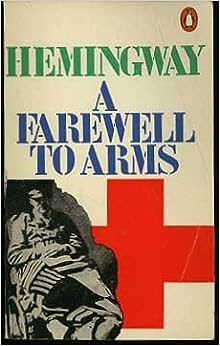
“It is revealing nothing new about Hemingway to point out that essentially he is preoccupied with doom - more specifically, with death. It has been explained this way: ‘The I in Hemingway stories is the man that things are done to’ - and the final thing that is done to him, as to all of us, is death. No story of Hemingway illustrates this fundamental thesis more clearly than The Killers; nor does any story of Hemingway’s illustrate more clearly why he is a legend in his own lifetime. Here, in a few pages, is the justly famous Hemingway dialogue - terse, clipped, the quintessence of realistic speech; here in a few pages, are more than the foreshadowings of the great literary qualities to be found in A Farewell to Arms and For Whom the Bell Tolls.”"


Hemingway covered crime as a young reporter for the Kansas City Star in 1917. The following year he volunteered to be an ambulance driver on the Italian front during World War I after being rejected by the U.S. Army due to poor eyesight.

He was wounded, returned home and he soon after began covering crime and other subjects for The Toronto Star Weekly. Hemingway credited his sparse, tough style of writing to his working for those newspapers with their quick deadlines. Hemingway By-Line offers a good collection of his newspaper and magazine pieces.

In his journalism, novels and short stories, Hemingway covered crime, love and war, hunting, fishing and bullfighting. In addition to The Killers, he wrote other short stories about crime, and he also wrote a good, tough crime novel called To Have and Have Not.

Humphrey Bogart portrayed Hemingway’s tough-guy hero, Harry Morgan, in the film version of the novel. Bogart, of course, also portrayed crime fiction’s iconic characters Philip Marlowe in Raymond Chandler’s The Big Sleep and Sam Spade in Dashiell Hammett’s The Maltese Falcon.

I heard Elmore Leonard, one of our best contemporary crime writers, tell his audience at the Philadelphia Free Library some months ago that Hemingway had been a main influence on him (although he lamented that Hemingway lacked a sense of humor). Many other crime writers, as well as writers of all stripes, list Hemingway as a major influence. 

I do as well.

I devoured crime fiction and thrillers as a teenager. I read Ian Fleming, Raymond Chandler, Dashiell Hammett and Ed McBain, to name but a few. I also read literary fiction and Hemingway’s novels were a favorite of mine.

After serving two years on an aircraft carrier during the Vietnam War, I was stationed on a Navy tugboat at the U.S. nuclear submarine base in Holy Loch, Scotland for two years. I was in my early 20s then and I discovered Hemingway’s short stories, which I liked even better than his novels. 

I was pleased that some of them, like The Killers and The Battler were first-rate crime stories.


I traveled throughout the United Kingdom and Europe during those years. I visited Italy, France and Spain, which were the settings for many of Hemingway’s stories. While traveling across Europe I always carried what we called in the Navy an “AWOL” bag. In the small carry-all bag, among my toilet articles and a change or two of clothes, were several Penguin paperbacks books.

I loved those classic orange and white paperbacks and I still have many of them today. I bought and read Penguin’s Evelyn Waugh and Anthony Burgess novels, Mark Twain’s travel books, and many other classic books. I carried several of these paperbacks in my AWOL bag, along with Hemingway’s Penguin paperback short story collections, such as Men Without Women and The Short Happy Life of Francis Macomber. I read and reread these great stories. 

Except for his tragic end, Hemingway led what many writers consider the ideal writer’s life. He was successful, wealthy and popular. He had the freedom to travel the world and hunt and fish, drink and talk in bars, and cover what interested him.

Hemingway covered wars, crime, sporting events and other happenings - and then returned home to write about his adventures.

Hemingway truly loved the sea, and he lived near the ocean in Key West, Florida and later in Cuba. I visited his home in Key West some years back and I hope to one day visit his home in Cuba once the communists are finally kicked off the island.

Hemingway died by his own hand in 1961, but he lives on with his novels and stories. His family is releasing a newly edited version of A Moveable Feast and there are two major film productions in the works about his work and his life.

Hemingway is influencing yet a new generation of writers and readers.

“Courage is grace under pressure,” Hemingway once wrote.

He also wrote “A man can be destroyed but not defeated." 


Note:  You can read my Washington Times review of Hemingway at War via the below link or the below text:


HEMINGWAY AT WAR: ERNEST HEMINGWAY’S ADVENTURES AS A WORLD WAR II CORRESPONDENT

By Terry Mort

Pegasus, $27.95, 304 pages


By Paul Davis, January 23, 2017.


As a Hemingway aficionado since my early teens, I’ve read all of Ernest Hemingway’s novels, short stories, his letters and most of the biographies written about him. I’ve also read collections of his journalism, including the six articles he wrote as a war correspondent for Collier’s magazine during World War II.


Since his suicide in 1961, there has been a steady stream of books about Hemingway, whom many suggest may be the greatest and most influential writer of the 20th century.


Of course, Hemingway has his detractors. Hemingway weaved his real life through his fiction, thus creating the Hemingway persona and the quintessential macho fictional Hemingway hero. This has made it easy for the Hemingway haters to zero in on his personal life and disparage both his life and his work by emphasizing his bragging, bullying and boozing. They have also delighted in deflating his tough guy image by zeroing in on his time as a World War II combat correspondent, branding him a coward, a liar and a fake journalist.


Terry Mort, a writer who has written seven novels and six nonfiction books, including “The Hemingway Patrols: Ernest Hemingway and His Hunt for U-Boats,” offers an evenhanded look at Hemingway’s wartime role in “Hemingway at War.”


“Hemingway had a talent for being at the center of important events. Those events — and some of the people connected with them — are a large part of this story. He was with the Allied landings on D-Day. He flew with the RAF on at least one bombing mission. He flew with them during an attack of V-1 flying bombs. He operated with the French Resistance and the U.S. Office of Strategic Services (OSS) as the Allies advanced to Paris.


And he was present and indeed active during the horrendous carnage of the battle for the Hurtgenwald in Germany’s Siegfried Line. As such he provides a useful lens to examine these events and also some of the people, both the troops who fought and the civilian journalists who covered the fighting,” Mr. Mort writes in his introduction. “Inevitably and understandably, his exposure to people and events affected his journalism, and later his fiction. This book attempts therefore to place him in the context of this history and in so doing expand understanding of those events and their effect on him, personally and professionally.”


I believe Mr. Mort largely succeeded in his goal.


At the outbreak of World War II, Hemingway was a world-famous author basking in the critical and commercial success of his Spanish Civil War novel, “For Whom the Bell Tolls,” and living in Cuba with his third wife, journalist Martha Gellhorn. She took off to cover the war for Collier’s, while Hemingway remained in Cuba. With his fishing boat and friends he joined the “Hooligan Navy,” the hundreds of volunteer yachtsmen, fisherman and civilian pilots who took to the sea to provide intelligence to the Navy about Nazi German U-boat submarines.


He later contacted Collier’s editors and arranged to become their European frontline correspondent. Hemingway was nothing if not competitive, so perhaps he was in competition with his wife, who thought he was stealing her plum assignment.


Mr. Mort offers fine sketches of Hemingway’s fellow war correspondents, A.J. Liebling, Ernie Pyle and others, as well as the military people Hemingway accompanied throughout the war, such as OSS Col. David Bruce, Private Archie “Red” Pelkey and Col. Charles “Buck” Lanham, who commanded Hemingway’s favorite infantry outfit, the 4th Division’s 22nd Regiment.


In a letter Lanham wrote to his wife, he described Hemingway: “He is probably the bravest man I have ever known, with an unquenchable lust for battle and adventure.” So much for Hemingway being a coward. Lanham also confirms that Hemingway did indeed fight alongside his troops while under heavy attack.


But as a former naval officer during the Vietnam War, Mr. Mort disputes some of Hemingway’s piece on the D-Day landings, noting that Hemingway got some of the command terminology wrong and Hemingway’s descriptions of the actions of the landing craft’s officer and coxswain ring false.


I was disappointed in Hemingway’s World War II novel, “Across the River and Into the Trees,” thinking he ought to have written a war novel more akin to his short story, “Black Ass at the Crossroads,” but Mr. Mort’s book makes me think differently about the novel and I plan to reread it.


“Hemingway at War” is about much more than Hemingway, offering what some might think of as padding, but I found Mr. Mort’s character sketches and descriptions of momentous events that were the backdrop to the Hemingway story to be interesting and informative.


This is a well-written and well-researched book that will interest admirers of Hemingway, as well as those interested in the war in Europe.


• Paul Davis is a writer who covers crime, espionage, terrorism and the military. 


And you can also read my Philadelphia Inquirer review of The Letters of Ernest Hemingway 1926-1929 below:


Wednesday, September 6, 2023

My Threatcon Column: Juvenile in Philadelphia Arrested On Terrorism-Related Charges


Counterterrorism magazine posted my Threatcon column on their website. 

You can read the column via the below link or the below text:

 IACSP - ThreatCon Articles 

Quaker William Penn named the city he founded between the Delaware River and the Schuylkill River in his Pennsylvania colony “Philadelphia,” as the name means “brotherly love” in Greek.

But one young Philadelphia resident stands accused of feeling more hate than love with his alleged crimes of storing weapons of mass destruction and being in contact with foreign terrorist organizations.

On August 14th, Philadelphia District Attorney Larry Krasner announced the arrest of the 17-year-old suspect. The unnamed juvenile was charged with Weapons of Mass Destruction, Criminal Conspiracy, Arson, Causing/Risking Catastrophe, Attempt to Commit Criminal Mischief, Possession of an Instrument of Crime, and Recklessly Endangering Another Person.

The juvenile was arrested by FBI agents at his home in West Philadelphia after an investigation by the FBI Joint Terrorism Task Force.

“The work of the FBI Joint Terrorism Task Force potentially thwarted a catastrophic terrorist attack in the name of a perverted ideology that in no way, shape, or form represents the beliefs of the overwhelming majority of peace-seeking people of faith, including Muslims,” Philadelphia District Attorney Larry Krasner said. “The charges we have filed against this individual represent the most serious alleged terrorist activity prosecuted in Philadelphia County court in recent history.

We intend to pursue full accountability for these crimes and will continue to work vigilantly with our law enforcement partners to protect all of our communities from hateful, ideologically driven acts of violence.”

Jacqueline Maguire, the FBI Special Agent in Charge of Philadelphia Office, added, “Protecting the United States from terrorist attacks is the FBI’s number one priority, and I think it’s very fair to say that lives were saved because of this investigation.

“Investigations like this one – with the amazing work that continues and the successful mitigation of such a significant threat – are exactly why we do what we do, and yet another reminder of what a privilege it is to serve with such dedicated colleagues. I’m so proud of my team for their incredible work on this case, and thankful to our partners for their significant and continued assistance.”

The law enforcement officials went on to state that the juvenile is alleged to have been in contact with individuals and groups designated by the U.S. State Department as global terrorists, including Katibat al Tawhid wal Jihad (“KTJ”), which is believed to primarily operate in Syria and is responsible for attacks including the deadly April 2017 attack on the St. Petersburg, Russia, metro and the 2016 suicide car bombing of the Chinese Embassy in Bishkek, Kyrgyzstan.

According to the law enforcement officials, the FBI Joint Terrorism Task Force investigators were able to connect a social media account to that communicated with an account affiliated with KTJ in March and April of 2023 to the juvenile.
 

The juvenile’s phone number was also found by investigators to have a banner of Riyad-us-Saliheen Martyrs’ Brigade, a Chechnya-based terrorist group, as its profile photo. On August 6, according to the Task Force, the juvenile’s WhatsApp profile photo was changed to the image of the ISIS banner.

“Self-radicalization by young people via the internet is a threat to all families. Parents: Keep an eye out for violent cults that would lure in your kids under the guise of politics or religion,” Krasner stated. “The juvenile is further alleged to have received messages related to construction of improvised explosive devises (IEDs) and to have purchased materials online such as chemical cleaners that are used to construct IEDs, as well as outdoor or tactical gear.”

The juvenile was observed by investigators as he purchased materials that can be used to make IEDs, and recovered from his household trash materials including electric wiring that can be used to construct IEDs. U.S. Customs and Border Protection also provided records revealing 14 international shipments of military and tactical gear to the juvenile’s address.

The juvenile is the son of a prominent Muslim criminal defense attorney in Philadelphia who ran unsuccessfully for a judge in the last election.

The attorney, Qawi Abdul-Rahman, told the Daily Beast that he was shocked and devasted to discover that his 17-year-old son was arrested for by the FBI for terrorist activity.

He told the Daily Beast that neither he nor his wife were home during the raid. Only the 17-year-old and his two siblings were present. The attorney rushed home, where he found a pair of armored FBI vehicles and members of the press outside his home. The FBI then handcuffed and led the son out and into the FBI vehicles.

Sources say the feds may indict the parents in the near future. The suspect’s mother co-signed her son's passport application and took her son to Lowe's to shop for chemicals that might be used in a homemade bomb. The father gave the suspect access to 60 or more guns and must have known that their son was blasting homemade bombs in their yard.

Sources say a judge will soon permit the juvenile to be prosecuted as an adult.

Paul Davis, a longtime contributor to the Journal, covers crime, espionage and terrorism in his Threatcon column.