Saturday, June 14, 2025

Celebrating Flag Day 2025

When the American Revolution broke out in 1775, the colonists weren’t fighting united under a single flag, notes History.com. 

Instead, most regiments participating in the war for independence against the British fought under their own flags. In June of 1775, the Second Continental Congress met in Philadelphia to create the Continental Army—a unified colonial fighting force—with the hopes of a more organized battle against its colonial oppressors. This led to the creation of what was, essentially, the first “American” flag, the Continental Colors.

For some, this flag, which was comprised of 13 red and white alternating stripes and a Union Jack in the corner, was too similar to that of the British. George Washington soon realized that flying a flag that was even remotely close to the British flag was not a great confidence-builder for the revolutionary effort, so he turned his efforts towards creating a new symbol of freedom for the soon-to-be fledgling nation. 

On June 14, 1777, the Second Continental Congress took a break from writing the Articles of Confederation and passed a resolution stating that "the flag of the Unted States be 13 stripes, alternate red and white," and that "the union be 13 stars, white in blue field, representing a new constellation." 

Over 100 years later, in 1916, President Woodrow Wilson marked the anniversary of that degree by officially establishing June 14 as Flag Day. 

Note: My beautiful and wonderful daughter pleased her patriotic father by being born on June 14th, Flag Day, in 1987.  

Above is the Jasper John painting Three Flags.  

Friday, June 13, 2025

ICE Arrests Russian National Accused Of Being Member Of Al Qaeda In Philadelphia

Broad & Liberty ran my piece on ICE arresting a Russian national with Al Qaeda ties in Philadelphia. 

You can read the piece via the link below or the text below:

Paul Davis: ICE arrests local Russian national accused of al Qaeda membership

Back in June of 2015, Donald Trump, launching his presidential bid, criticized the Obama administration for allowing illegal immigrants to swarm across the southern border. He noted that Mexico was not sending the U.S. its best people.   

“They’re bringing drugs, they’re bringing crime, they’re rapists, and some, I assume, are good people,” Trump said. “But I speak to border guards and they’re telling us what we’re getting,” he said.

President Trump, then and now, has been condemned by many for calling some of the illegal aliens drug traffickers, criminals and rapists. 

But looking at the U.S. Immigration and Customs Enforcement (ICE) roundup of illegals these days, one can clearly see that President Trump was right. ICE has arrested many illegals with criminal records both here and in their home countries. The crimes range from murder to child rape to armed robbery.

As well as one illegal alien and accused terrorist who used a makeshift flame thrower and Molotov cocktails to attack Jews in Boulder, Colorado. Boulder, incidentally, is a sanctuary city.

On June 2, the Justice Department filed charges against illegal alien Mohammed Sabry Soliman, the alleged perpetrator of the antisemitic terrorist attack in Colorado.

“The Department of Justice has swiftly charged the illegal alien perpetrator of this heinous attack with a federal hate crime and will hold him accountable to the fullest extent of the law,” said Attorney General Pamela Bondi. “Our prayers are with the victims and our Jewish community across the world.

“This vile anti-Semitic violence comes just weeks after the horrific murder of two young Jewish Americans in Washington DC. We will never tolerate this kind of hatred. We refuse to accept a world in which Jewish Americans are targeted for who they are and what they believe.”

Assistant Attorney General Harmeet K. Dhillon also weighed in, stating “No American should experience violence motivated by hatred based on their faith or national origin, and the Civil Rights Division of the Department of Justice will act swiftly and decisively to bring the perpetrators of such crimes to justice. There can be zero tolerance for such acts in our great nation.”

According to the Justice Department, Soliman is being charged with a federal hate crime in addition to facing state charges for attempted murder in Colorado.

And on June 3, ICE announced the arrest of another illegal alien, a Tajikistan-born Russian national who is wanted overseas, and who is suspected of ties to the terrorist organization Al-Qaeda, right here in Philadelphia. 

ICE announced that ICE Enforcement and Removal Operations (ERO) Philadelphia, in partnership with the FBI, arrested a 39-year-old male, born in Tajikistan and a citizen of Russia, in the early morning hours on May 23. His name was not released.  

“Arresting individuals linked to terrorist organizations such as Al-Qaeda reaffirms our unwavering commitment to safeguard the homeland. Through close collaboration with our outstanding partners at the FBI, we have taken decisive action to make our communities safer and prevent potential threats to the American people,” said ERO Philadelphia acting Field Office Director Brian McShane. “I commend the dedicated men and women of ICE and the FBI for their tireless efforts and steadfast resolve in protecting this great nation.

“This individual was first encountered at San Ysidro Pedestrian West point of entry in California March 21, 2023, where he was charged as an inadmissible alien under the Immigration and Nationality Act because he didn’t have an immigrant visa. He was served a notice to appear before an immigration judge and paroled into the United States. Tajikistan officials declared this individual a fugitive, wanted for organization of a criminal community. It is alleged that he is or was a member of Al-Qaeda. After his arrest, this individual was detained in ICE custody, where he will remain pending removal from the U.S.”

I wonder if the illegal alien with suspected ties to Al-Qaeda was planning a terrorist attack here in Philadelphia. Thankfully, ICE has rounded him up.

According to ICE, Enforcement and Removal Operations (ERO) officers enforce immigration laws within the interior to preserve national security and public safety.

“ERO manages all aspects of the immigration enforcement process, including the identification, arrest, detention and removal of aliens who are subject to removal or are unlawfully present in the United States.

“Like all law enforcement agencies, ERO officers prioritize their enforcement actions based on agency and department priorities, funding and capacity. ERO operations are flexible enough to allow its officers to respond to events such as spikes in border crossings, modifications to U.S. laws, pandemics, and natural disasters at home and abroad.”

ICE’s ERO is super busy locking up the illegal alien drug traffickers, criminals and rapists that President Trump spoke of back in 2015, both here in Philadelphia and across the nation.    

Paul Davis, a Philadelphia writer and frequent contributor to Broad + Liberty, also contributes to Counterterrorism magazine and writes the “On Crime” column for the Washington Times. He can be reached at pauldavisoncrime.com.  

Thursday, June 12, 2025

My Crime Fiction: 'Missing Muster'

The story below is another chapter from my novel, Olongapo, which I hope to soon publish. 

The story originally appeared in American Crime Magazine. 

Missing Muster

 By Paul Davis

As we were nearing the end of our WESTPAC (Western Pacific) 1970-1971 cruise, the aircraft carrier USS Kitty Hawk was on station in the Gulf of Tonkin, launching aircraft that performed combat sorties against the North Vietnamese. 

On the deck just below the flight deck, I was shifting through copies of message traffic at my small desk in the Message Processing Center. I came upon a copy of a message to the carrier’s captain that solved a mystery that had haunted the officers and men aboard the carrier since the beginning of the cruise in November of 1970. What happened to Seaman Moore? 

Seaman Martin Moore was one of only a few casualties we had suffered on the cruise. Thankfully, all of pilots had returned safely to the aircraft carrier after bombing raids over North Vietnam. Unlike some of the pilots from our sister carriers, our pilots hadn’t been shot down and killed or taken prisoner. 

As I read the message, I recalled the frantic search for Seaman Moore as we sailed from Hawaii to the Philippines prior to reporting on “Yankee Station” in the Gulf of Tonkin off the coast of North Vietnam. 

Aboard the ship at sea, sailors were gathered periodically in groups and attendance was taken in what was called “musters.” Musters were held at various times to account for all of the nearly 5,000 crew members and airwing personnel. On the third muster at sea, it was reported that Moore was missing. He had been accounted for in the first two musters held while the carrier was at sea.   

On the assumption that he had fallen accidentally overboard into the sea, aircraft was launched to scan the Pacific Ocean and look for the missing sailor. The ship was also searched, compartment by compartment, looking for the sailor. It was thought that he was perhaps dead or dying somewhere or he was hiding on the carrier to avoid work. 

When two Marines showed up at the Message Processing Center, Chief John Helm would not allow them into the center to search for Moore. Despite the order from the carrier’s captain to search all spaces aboard the ship, the chief stopped the Marines from entering the center as they did not possess the proper clearances to do so. The chief was backed up by LTJG Albert Moony. 

As the Marines, Chief Helm and LTJG Moony had a standoff in the passageway outside of the top-secret center, a call was put into the Marine commanding officer, who in turn called the ship’s captain. Commander Thomas Larkin, an officer on the captain’s staff, showed up along with the Marine commanding officer. 

Chief Helm was adamant. 

“These Marines are not cleared to enter the Message Processing Center,” Helm said. “We can’t allow them in.” 

“The chief is right, Sir,” Moony added. “This is a high security area.”  

Larkin told Helm and Moony that he was cleared to enter the center. He offered to go in and search in lieu of the Marines. Helm, Moony and the Marine commanding officer agreed. Chief Helm punched in the four digits on the security panel that opened the door to the center.    

Larkin entered the Message Processing Center and walked around with Moony and Helm, holding a photo of Moore. He showed the photo to the sailors in the center and asked us if we had seen him. 

I glanced at the photo and noted that Moore looked a lot like Alfred E. Neuman, MAD magazine’s goofy cartoon character who sprouted “What me worry?” 

Moore, like Neuman, had a mop of reddish-brown hair, gap buck teeth, big ears and a silly grin. 

Satisfied that the missing sailor was not in the center, Larkin thanked Helm and Moony and left the center. 

As the captain ordered, the entire aircraft carrier was searched. Moore was not found, so he was reported as missing at sea and presumed dead from drowning.


But according to the Naval Investigative Service report I was reading, Moore was alive and well in Honolulu.                       

According to the NIS report, Moore had deserted the ship when the carrier sailed from Pearl Harbor in Hawaii to Subic Bay in the Philippines. 

With images of World War II naval combat in his head, with sailors being killed from Imperial Japanese fire and sailors drowning as ships were sunk, Moore was frightened that he would die aboard the carrier in devastating combat with the North Vietnamese. 

Apparently, he didn’t know that the 7th Fleet aircraft carriers operated in the Gulf of Tonkin off the coast of North Vietnam in a battle group. The carrier was not only protected by the ship’s aircraft, the carrier was also protected by destroyers, a submarine and other defenses. The North Vietnamese shot at the carrier pilots flying over North Vietnam, but they didn’t dare try to attack the aircraft carriers at sea. 

Moore did not discuss his great fears with anyone. If he had, they might have told him this. By all accounts, Moore was a dim lad. 

The NIS report stated that as Moore was a loner and did not have much of a social life, so he was able to save a good bit of money. As the Kitty Hawk was preparing to leave Pearl Harbor, Moore failed to report back onboard. Wearing civilian clothes, he checked into a cheap Honolulu hotel and hid out. 

For many months, he ate little, bought little, and spent his days on the Waikiki beach, watching the pretty girls in bikinis. He watched the girls, but he was far too shy to approach them or dare to speak to them. 

Moore had not contacted his family back in Boulder, Colorado. He didn’t know that the Navy had reported his presumed death to his parents, as he had not given a thought to how the Navy would respond to his missing status.  

Moore’s stay in Honolulu ended after two local thugs beat and robbed him. The thugs punched and kicked him and ripped his well-worn shirt. They took the money he had in his shirt pocket. They left him on the beach unconscious. The police took him to a hospital and as he lay unconscious, the police checked his pocket and found his Navy ID. 

The Honolulu police reported the incident to the NIS and the NIS ran his ID and discovered that Moore was listed as missing at sea. When Moore awoke, he saw two NIS special agents at his hospital bedside. They questioned him, and he confessed that he had not reported aboard the Kitty Hawk prior to the ship's sailing out for the Philippines.  

When he was released from the hospital, Moore was taken into custody by the NIS and charged with desertion.  

Who reported Moore present in the first two musters, or why, remained a mystery.   

 © 2025 Paul Davis 


Note: You can read other chapters via the below links: 

Paul Davis On Crime: My Crime Fiction: 'Butterfly'

Paul Davis On Crime: My Crime Fiction: 'Salvatore Lorino'

Paul Davis On Crime: My Crime Fiction: The Old Huk

Paul Davis On Crime: My Crime Fiction: Join The Navy And See Olongapo

Paul Davis On Crime: My Crime Fiction: 'Boots On The Ground'

Paul Davis On Crime: My Crime Fiction: 'The 30-Day Detail'

Paul Davis On Crime: My Crime Fiction: 'Cat Street'

Paul Davis On Crime: Chapter 12: On Yankee Station 

Paul Davis On Crime: My Crime Fiction: 'The Cherry Boy'

Paul Davis On Crime: My Crime Fiction: 'The Hit'

Paul Davis On Crime: My Crime Fiction: Welcome To Japan, Davis-San

Paul Davis On Crime: A Look Back At Life Aboard An Aircraft Carrier During The Vietnam War: 'The Compartment Cleaner'

Paul Davis On Crime: My Crime Fiction: 'Murder By Fire'

Paul Davis On Crime: My Crime Fiction: 'Admiral McCain'

Paul Davis On Crime: My Crime Fiction: 'Hit The Head' 

Paul Davis On Crime: My Crime Fiction: 'A Night At The Americano'  

Paul Davis On Crime: My Crime Fiction: 'The Barracks Thief'

Paul Davis On Crime: My Crime Fiction: 'The City of Bizarre Happenings'

Paul Davis On Crime: My Crime Fiction: 'The Refrigerator Thieves'

Paul Davis On Crime: My Crime Fiction: 'Go Forth, Goforth'


Former CIA Analyst Sentenced To Over Three Years In Prison For Unlawfully Transmitting Top Secret National Defense Information

The Justice Department released the below information yesterday:

A former CIA analyst was sentenced today to 37 months in prison for unlawfully retaining and transmitting Top Secret National Defense Information to people who were not entitled to receive it, information which was publicly posted on social media platforms in October 2024.

According to court documents, Asif William Rahman, 34, of Vienna, was an employee of the CIA since 2016 and had a Top Secret security clearance with access to Sensitive Compartmented Information (SCI) until his employment was terminated after his arrest.

“For months, this defendant betrayed the American people and the oaths he took upon entering his office by leaking some of our Nation’s most closely held secrets,” said John Eisenberg, Assistant Attorney General for National Security. “As this case demonstrates, the Department of Justice will continue to protect our nation by vigorously investigating and prosecuting leakers who compromise our nation’s security.”

“Asif Rahman violated his position of trust by illegally accessing, removing, and transmitting Top Secret documents vital to the national security of the United States and its allies,” said Erik S. Siebert, U.S. Attorney for the Eastern District of Virginia. “The urgency with which Mr. Rahman was identified, arrested, charged, and prosecuted is a testament to the commitment and professionalism of the investigators and prosecutors who brought him to justice. This case should serve as a stern warning to those who choose to place their own goals over their allegiance to our nation.”

“By stealing and divulging classified information and then attempting to conceal his crimes, Asif Rahman not only violated the law; he also betrayed his oath as a government employee and his responsibility to the American people,” said Assistant Director Roman Rozhavsky of the FBI’s Counterintelligence Division. “Now he will pay the price for putting American lives and U.S. national security at risk. Let this be a warning to all clearance holders: The FBI will exhaust all avenues to find and bring to justice anyone — no matter who they are — who endangers our nation by disclosing sensitive information without authorization."

On Oct. 17, 2024, Rahman accessed and printed two Top Secret documents containing National Defense Information regarding a U.S. foreign ally and its planned actions against a foreign adversary. Rahman removed the documents, photographed them, and transmitted them to individuals he knew were not entitled to receive them.  By Oct. 18, 2024, the documents appeared publicly on multiple social media platforms, complete with the classification markings. After Oct. 17, 2024, Rahman engaged in a deletion campaign of work product on his Top Secret work station.

In 2024, continuing through November, Rahman repeatedly accessed and printed classified National Defense Information, including documents classified up to the Top Secret and further compartmented levels, that he learned in the course of his employment and transmitted to multiple individuals he knew were not entitled to receive it.

Rahman was indicted by a grand jury on Nov. 7, 2024, and was arrested by the FBI as he arrived to work on Nov. 12, 2024. On Jan. 17, Rahman pleaded guilty to two counts of willful retention and transmission of classified information related to the national defense. He has remained in custody since his arrest.

The FBI Washington Field Office investigated the case.

Assistant U.S. Attorney Troy A. Edwards Jr. for the Eastern District of Virginia and Trial Attorney Christopher Cook of the National Security Division’s Counterintelligence and Export Control Section prosecuted the case. 


Tuesday, June 10, 2025

'Day Of the Jackal’ Author Frederick Forsyth Dies At 86

The Associated Press announced the death of the great thriller writer Frederick Forsyth:

LONDON (AP) — Frederick Forsyth, the British author of “The Day of the Jackal” and other bestselling thrillers, has died after a brief illness, his literary agent said Monday. He was 86.

Jonathan Lloyd, his agent, said Forsyth died at home early Monday surrounded by his family.

“We mourn the passing of one of the world’s greatest thriller writers,” Lloyd said.

Born in Kent, in southern England, in 1938, Forsyth served as a Royal Air Force pilot before becoming a foreign correspondent. He covered the attempted assassination of French President Charles de Gaulle in 1962, which provided inspiration for “The Day of the Jackal,” his bestselling political thriller about a professional assassin.

Published in 1971, the book propelled him into global fame. It was made into a film in 1973 starring Edward Fox as the Jackal and more recently a television series staring Eddie Redmayne and Lashana Lynch.

n 2015, Forsyth told the BBC that he had also worked for the British intelligence agency MI6 for many years, starting from when he covered a civil war in Nigeria in the 1960s.

Although Forsyth said he did other jobs for the agency, he said he was not paid for his services and “it was hard to say no” to officials seeking information.

“The zeitgeist was different,” he told the BBC. “The Cold War was very much on.”

He wrote more than 25 books including “The Afghan,” “The Kill List,” “The Dogs of War” and “The Fist of God” that have sold over 75 million copies, Lloyd said.

His publisher, Bill Scott-Kerr, said that “Revenge of Odessa,” a sequel to the 1974 book “The Odessa File” that Forsyth worked on with fellow thriller author Tony Kent, will be published in August.

You can read the rest of the obit via the link below:

Frederick Forsyth, 'Day of the Jackal' author, dies at 86 | AP News

You can also read my friend Joseph C. Goulden’s Washington Times review of Frederick Forsyth’s memoir The Outsider: My Life in Intrigue via the link below:  

Paul Davis On Crime: Book Review: Frederick Forsyth's 'The Outsider" My Life In Intrique'

And you can read my Washington Times review of Frederick Forsyth’s The Fox via the link below:

Paul Davis On Crime: My Washington Times Piece On Frederick Forsyth's 'The Fox' - Cyberspace Is The New Crime Zone, The New Battlefield

And you can read my online Crime Beat column on Frederick Forsyth’s The Cobra via the link below:

Paul Davis On Crime: My Crime Beat Column: Frederick Forsyth Offers a Fact-Based Story of An All-Out War On the Drug Lords In 'The Cobra'


Monday, June 9, 2025

My Counterterrorism Magazine Q&A With David McCloskey. Former CIA Analyst And Author Of The CIA Thriller 'The Seventh Floor'

Counterterrorism magazine published my Q&A with David McCloskey, former CIA Analyst and author of the CIA thriller, The Seventh Floor. 

You can read the interview via the pages above and below, or the text below: 


The IACSP Q&A With David McCloskey, Former CIA Analyst

and Author of the CIA Thriller “The Seventh Floor.” 

By Paul Davis 

David McClosky, the author of three fine CIA spy thrillers, “The Seventh Floor,” “Moscow X,” and “Damascus Station,” is a former CIA analyst and former consultant at McKinsey & Company. While at the CIA, he wrote regularly for the President’s Daily Brief, delivered classified testimony to Congressional oversight committees, and briefed senior White House officials, ambassadors, military officials, and Arab royalty. 

McCloskey worked in CIA field stations across the Middle East throughout the Arab Spring and conducted a rotation in the Counterterrorism Center focused on the jihad in Syria and Iraq. During his time at McKinsey, he advised national security aerospace and transportation clients on strategic and operational issues. 

David McCloskey holds a M.A. from the Johns Hopkins School for Advance International Studies, where he specialized in energy policy and the Middle East. 

David McCloskey lives in Texas with his wife and children. 

He was interviewed by Paul Davis.        

IACSP: I've read all three of your thrillers and I've enjoyed them. Have you always wanted to write novels, or did you get the notion while serving as a CIA analyst? 

McCloskey: The answer is actually neither. I grew up reading extensively and reading a lot of spy thrillers. My dad's a big fan of spy thrillers and that kind of genre in general, so I grew up reading it. I never thought that I would write it, never really imagined it as a possibility. When I was at the CIA, it's kind of the same answer. I did not think that I would end up writing spy novels. When I left, I started to write something really for me, kind of reflecting on my time at Langley and the war in Syria, which accounts for most of my time in the CIA. It wasn't a novel or even a draft about anything, but it was a journal, I found I liked the process of sitting down to write it. It helped make sense of the world, how I felt about it, and I would get into a flow of 6, 7, 8 hours, and the time flies by. It happened sort of organically, one step at a time.

IACSP: Former CIA directors General David Petraeus and Leon Panetta, as well as Washington Times columnist and former CIA Chief of Middle East Operations, Daniel N. Hoffman, have all praised your first spy thriller “Damascus Station” for being a realistic portrayal of CIA overseas operations. Was “Damacus Station” based on your personal experiences there? 

McCloskey: No, it was not based on any of my personal experiences, but it was based on two things I wanted to do, neither of which had anything to do with me. One of them was how do I tell a story about the Syrian Civil War that's authentic to that conflict in that period of time, 2011 to 2013, which is when I was covering it day in day out. How do I weave in real dynamics, real war, real events, maybe sometimes even real people, and write something that people will read and come away knowing something about Syria and become more interested in Syria.? The second bit was how do I deal authentically with the CIA as much as possible in the scope and span of a spy novel?  That part for me was not about my experiences, but as I'm writing characters who are CIA case officers or CIA chief of station, how do I render those people accurately and authentically to the kind of people that I knew and worked with when I was inside? And can I say something realistic, or true rather, about not just the operations or the tradecraft of CIA, which are I think fascinating, but also the kind of moral ethics and sort of the code of the place. For me, those two things were guiding lights as I wrote. 

IACSP: How do you write a realistic CIA novel without giving away too much classified information. I know you have the review board, but is it difficult to write about the CIA without touching on your tradecraft and the stuff that you shouldn't be talking about? 

McCloskey: I found that it's not that challenging to write what I hope is a really interesting and authentic spy thriller and brush up against anything that's really sensitive. I don't think it's that difficult to do, and I believe a lot of the information that's really sensitive is more technical in nature and has no place in a spy novel. In most cases, the really sensitive stuff that I might consider including would just gum up the story. My priority is always to have a great story that has readers turning the page. I send everything to the CIA’s Publication Review Board. 

IACSP: How would you describe your CIA characters Artemis Aphrodite Proctor and Sam Joseph?


McCloskey: Artemis Aphrodite Procter is a mildly deranged CIA case officer with a foul mouth, zero patience, a deeply ingrained code of honor and personal loyalty, and a bit of a drinking problem. In “The Seventh Floor,” she is wrestling with what she owes CIA, having given it her career, and, arguably, her life, before being cast aside. Must she remain loyal to a place that does not love her back? What’s clear, though, is her unwavering loyalty to her friends. She has many in this novel, and quite a few enemies, too, but first among equals is her old friend from Damascus, Sam Joseph, a stellar case officer whose career fell off the rails after he made a terrible mistake. Sam is a Minnesota boy, a talented reader of people and assessor of risk who’s also, perhaps like Procter, impulsive and prone to thinking with parts of his body that are not his brain.


IACSP: Is Sam Joseph autobiographical or is he based on someone you knew?


McCloskey: I hope he is not autobiographical in any way. I certainly didn’t intend him to be. What I was thinking was about case officers I knew, and the different traits they had, different ticks, their life experiences and how they dressed. I started building characters that way, not from one person, but from a composite. Other characters have, like Proctor, probably based off of one person I knew.


IACSP: What years did you serve in the CIA and why did you become a CIA analyst?


McCloskey: I was in the CIA from 2006 to 2014. I got into it by accident. The guy who ran the Middle East analytic shop at the CIA came to my undergrad college and gave a talk to my International Relations 101 class about the CIA. I thought this was really cool, and it was probably not more complicated than that. It sounded like a really interesting job, and I've always been fascinated with the world and how it works. The CIA felt like a pathway to understand it. I was 20 and I was applying for an undergrad internship, and all my friends were going home for the summer to mow lawns or something like that. I get to go work at the CIA. That’s pretty cool. I never thought I would get in, but here I am.


IACSP: Why did you leave the CIA?


McCloskey: I wanted to try something else. It wasn’t like I didn’t like this job anymore. I think I have this sense of wanderlust, and I wanted to see what else is out there and it was no more complicated than that. Let me put it this way, I was definitely at a point with what was going on Syria where I wanted to do something else, because that conflict was going horribly and it was very grim. But I was for the most part, a really happy trooper, and I look back on that time, look back on that job, with credible affection for the people I was working with, and overall, for the organization itself.


IACSP: I read that you often prepared the president’s daily brief, and you often briefed White House and other senior government officials, and you testified before Congress. What were your briefings mostly about? 

McCloskey: Mostly about Syria, both from a political and security perspective, and also occasionally, a counterterrorism perspective too. 

IACSP: I read in your bio that you worked in the CIA’s Counterterrorism Center. What was the CTC’s mission and what did you do there? 

McCloskey: The CTC runs operations to penetrate and potentially target terrorist groups around the world. The CTC writes the analysis on those groups for policymakers in DC. I was doing an analytic role in CTC, focused on the jihad in Syria and Iraq. 

IACSP: What do you think of novels, TV and movies about the CIA? I hate when CIA officers are called agents. 

McCloskey: I was going to say that. It shows that someone didn’t do their homework. I don't really have any actual pet peeves because I approach any CIA story with the presumption that it's just entertainment, and it's not targeted at me as a former officer. They are targeted at a population of people that want a good spy story and the authenticity part of it is just not paramount. But I will say that the thing that I think is almost always wrong is that the spies, the intelligence officers, are always portrayed as superheroes. 

IACSP: The intelligence officers in most fiction stories tend to act like special operators rather case officers. Has Hollywood called about your novels? 

McCloskey: We sold the rights to “Damascus Station,” which is development as a TV series, and “Moscow X” is also in development. But Hollywood being Hollywood, I'm not holding my breath. We sold it to people I trust, and we'll see where it goes. 

IACSP: Are you working on a fourth CIA novel? 

McCloskey: The fourth book will be out in September. It is an Israel and Iran story called “The Persian.” 

IACSP: You spent a good part of your life in Syria. Are you following the situation in Syria today? 

McCloskey: I have been trying to follow it. I mean it's there's a lot going on. It's obviously immensely complicated, and you know I'm not a Syria analyst day-to-day anymore, so put that caveat in there. As a former Syria hand, I'm cautiously optimistic about the transition and the current government. I think Syrians now have an opportunity to build something for themselves, which they've not had for much of their recent history. 

IACSP: Is it a case of one bad guy taking over from another bad guy? 

McCloskey: I don't think that's the right way to look at it. I mean I think the level of power industrialized outside sort of oppression had become, how immiseration the country had become under Assad’s rule, how predatory his regime was. I don't think Jeffersonian democracy is in the cards for Syria, but I think it is quite possible and maybe even likely that the new regime with Ahmed al-Sharaa ends up being a better deal for the Syrian people than Bashar al-Assad was. 

IACSP: In your view who is the biggest threat to the United States? 

McCloskey: That's a big question. We’re a probably a threat to ourselves right now. I think we are deeply polarized. I think we're losing faith in really important institutions that form the backbone of much of our political system and the way of governance and life. We're increasingly sort of atomized and sold as a society. So, I think we probably our own worst enemy. 

IACSP: I had an editor that I once went back and forth with on email and he said that out current time is the most contentious time in our history. Really? More contentious than the Civil War? Who do you think is the greatest external threat to the United States? 

McCloskey: I would probably say China, which is our closest strategic competitor and the country that has a system of government that I think is sort of potentially in opposition with our own. And China has a perspective on its role in Asia that is at odds with our role in Asia.

IACSP: Thank you for your service and I look forward to reading your next CIA spy thriller.


Raven Pleads Guilty: My Counterterrorism Magazine Piece On The Former Navy Sailor Who Planned An Attack On The Great Lakes Naval Station

Counterterrorism magazine published my piece on the former sailor who planned to attack the Greak Lakes Naval Station.  

You can read the piece via the pages above and below or the text below:   


Raven Pleads Guilty: Former U.S. Navy Sailor Planned Attack

On Naval Station Great Lakes

By Paul Davis

On February 27, 2025, the U.S. Justice Department announced that a former U.S Navy sailor had pleaded guilty in federal court in Chicago to plotting to attack the Naval Station Great Lakes in North Chicago, Illinois, purportedly on behalf of Iran’s Islamic Revolutionary Guard Corps (IRGC).

According to the Justice Department, Xuanyu Harry Pang, 38, who also went by the name “Raven,” of North Chicago, Illinois, pleaded guilty to conspiring to and attempting to willfully injure and destroy national defense material, national defense premises, and national defense utilities, with the intent to injure, interfere with, and obstruct the national defense of the United States.

According to court records, in 2021, “Pang communicated with an individual in Colombia about potentially assisting with a plan involving Iranian actors to conduct an attack against the United States to avenge the death of Qasem Soleimani, a general of the IRGC Quds Force who was killed by the U.S. military in 2020.”

In a January 2, 2020 press release, the U.S. Defense Department stated, “At the direction of the President, the U.S. military has taken decisive defensive action to protect U.S. personnel abroad by killing Qasem Soleimani, the head of the Islamic Revolutionary Guard Corps-Quds Force, a U.S.-designated Foreign Terrorist Organization. 

“General Soleimani was actively developing plans to attack American diplomats and service members in Iraq and throughout the region. General Soleimani and his Quds Force were responsible for the deaths of hundreds of American and coalition service members and the wounding of thousands more. He had orchestrated attacks on coalition bases in Iraq over the last several months – including the attack on December 27th – culminating in the death and wounding of additional American and Iraqi personnel. General Soleimani also approved the attacks on the U.S. Embassy in Baghdad that took place this week. This strike was aimed at deterring future Iranian attack plans. The United States will continue to take all necessary action to protect our people and our interests wherever they are around the world. The Quds Force is a branch of the IRGC that conducts unconventional warfare and intelligence activities outside of Iran.”

The Justice Department noted that a covert FBI employee, posing as an affiliate of the Quds Force, subsequently communicated online with the individual in Colombia about conducting an attack.

“The individual in Colombia put the covert FBI employee in touch with Pang, who at the time was stationed and residing at Naval Station Great Lakes. The pair communicated online through an encrypted messaging application about possible targets for the attack, including Naval Station Great Lakes and other locations in the Chicago area. Pang and the individual in Colombia agreed to help the covert FBI employee and his purported associates with their operation to conduct the attack in the United States, court records state.

“On three occasions in the fall of 2022, Pang personally met with another individual working with the FBI who was posing as an associate of the covert FBI employee. The first meeting took place outside of the Ogilvie Transportation Center in downtown Chicago, and the two other meetings were held at a train station in Lake Bluff, Illinois. During the meetings in Lake Bluff, as the plot coalesced into an attack on the Naval Station, Pang displayed photos and videos on his phone of multiple locations inside the Naval Station. He also provided two U.S. military uniforms – for operatives to wear inside the base during the attack – and a cell phone that could be used as a test for a detonator.”

In a sworn affidavit, FBI Special Agent Thomas Mata stated, “I am a Special Agent with the Federal Bureau of Investigation (“FBI”) and have been so employed since approximately June 2021. I am currently assigned to the Joint Terrorism Task Force, and my responsibilities include the investigation of criminal violations relating to international terrorism. As part of my duties as an FBI Special Agent, I investigate criminal violations relating to terrorism offenses, including, but not limited to, Title 18, United States Code, Sections 2332a and 2339B. I have also participated in numerous terrorism training courses throughout my law enforcement career. I am familiar with and have used common methods of investigation, including, but not limited to, visual and electronic surveillance such as court-authorized intercepts, debriefing and questioning of witnesses and defendants, and the use of search and arrest warrants, pen registers, and undercover agents. 

“This affidavit is submitted in support of a criminal complaint alleging that XUANYU HARRY PANG, also known as Raven, violated Title 18, United States Code, Section 2339B by attempting to provide material support and resources, namely, property and services, to a designated foreign terrorist organization, namely, the Islamic Revolutionary Guard Corps-Quds Force (IRGC-QF) and Kata’ib Hizballah (KH). 1 3. 

“According to government records, PANG is a 36-year-old naturalized U.S. citizen who was born in Changchun City, China and relocated to the United States in June 1998. On or about February 1, 2022, PANG enlisted in the U.S. Navy and is currently in training at the U.S. Navy’s Great Lakes Naval Station. Based on physical surveillance and PANG’s U.S. Navy enlistment documents, PANG also resides at the Great Lakes Naval Station in North Chicago, Illinois. As described below, PANG attempted to provide material support and resources to designated foreign terrorist organizations, specifically an Iraqi-based Hizballah group acting on behalf of and at the direction of the Iranian Islamic Revolutionary Guard Corps Quds Force (IRGC-QF) as part of a purported plot to attack the Great Lakes Naval Station in North Chicago, Illinois. PANG was informed that the purpose of the attack was to seek revenge for the death of IRGC General Qasem Soleimani, who was killed in a strike conducted by the U.S. military in January 2020. 

“PANG provided logistical assistance, such as taking surveillance photos and videos of the outside and inside of the base, and agreed to provide military uniforms and a phone that could be used as a detonator for an explosive device to an FBI confidential human source (CHS) in support of this planned attack.”

Pang is currently detained without bond, and he is scheduled to be sentenced at a later date. He faces a maximum penalty of 20 years in prison. A federal district court judge will determine any sentence after considering the U.S. Sentencing Guidelines and other statutory factors.

Sue Bai, head of the Justice Department’s National Security Division, Acting U.S. Attorney Morris Pasqual for the Northern District of Illinois, Assistant Director David J. Scott of the FBI's Counterterrorism Division, and Special Agent in Charge Douglas S. DePodesta of the FBI Chicago Field Office announced the guilty plea.

“The FBI Chicago Joint Terrorism Task Force – which is comprised of multiple federal, state, and local law enforcement agencies – is investigating the case, with valuable assistance provided by the Naval Criminal Investigative Service,” the Justice Department stated. “Assistant U.S. Attorneys Aaron Bond, Vikas Didwania, and Brandon Stone for the Northern District of Illinois and Trial Attorneys John Cella and Charles Kovats of the National Security Division’s Counterterrorism Section are prosecuting the case.”

According to the U.S. Navy, the U.S. Naval Station Great Lakes (NSGL) opened in 1911. The base is the Navy’s largest training installation and the home of the Navy’s only Boot Camp. Located on over 1,600 acres overlooking Lake Michigan, the installation includes 1,153 buildings with 39 on the National Register of Historic Places. NSGL supports over 50 tenant commands and elements as well as over 20,000 Sailors, Marines, Soldiers, and DoD civilians who live and work on the installation. 

NSGL operations, along with area military retirees and educational aid payments, increased Illinois' gross domestic product by $4.6 billion. Naval Station Great Lakes’ mission is to enable and sustain Fleet, Family and Fighter by providing superior, integrated Base Operating Support for all tenant commands and elements on the installation. 

Paul Davis, who attended U.S. Navy Boot Camp in 1970 at the Great Lakes Training Center, is a longtime contributor to The Journal and writes the online Threatcon column.

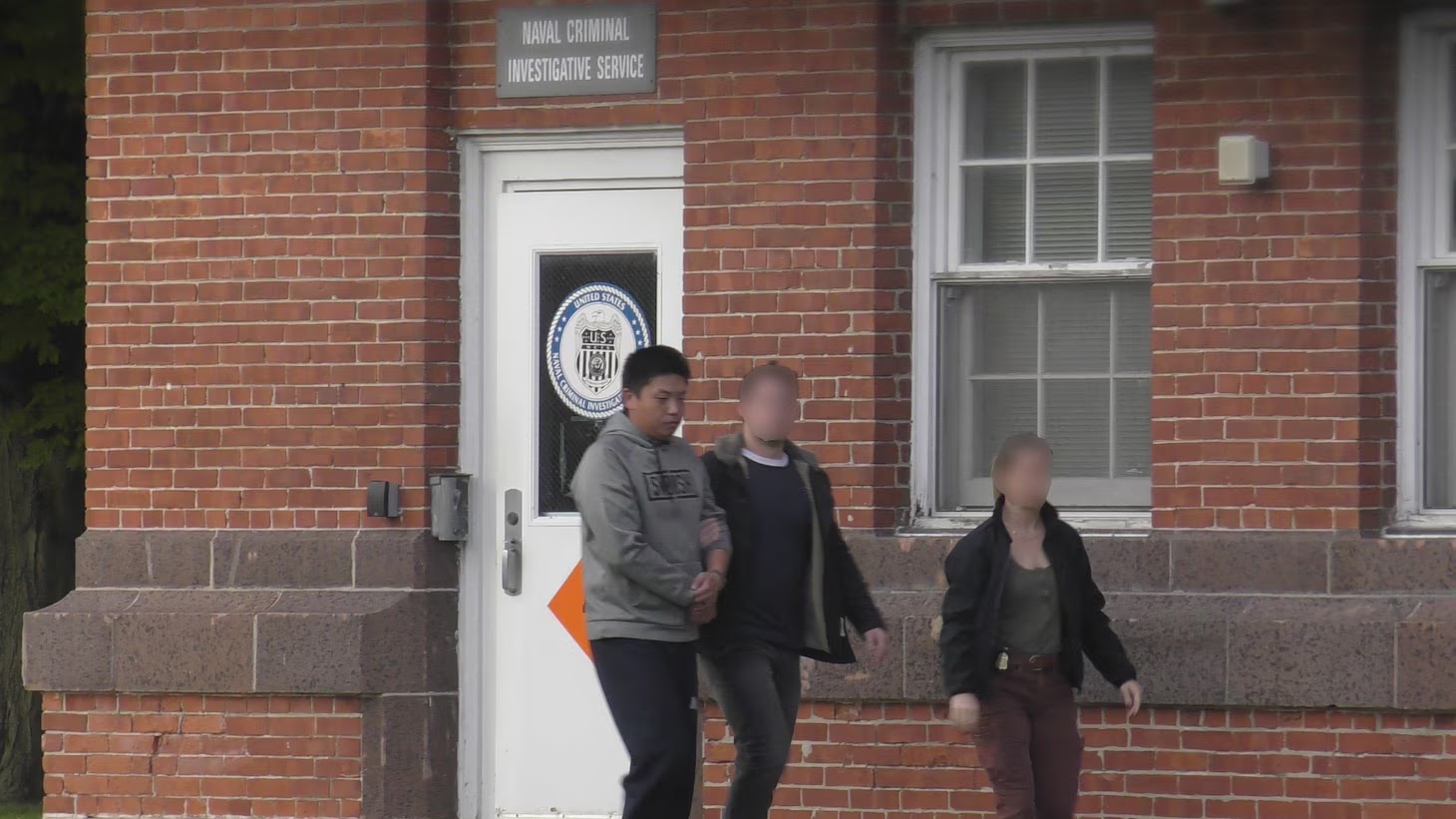
Note: The above article shows Xuanyu Harry Pang with two NCIS special agents.