Showing posts with label classified information. Show all posts

Monday, June 19, 2023

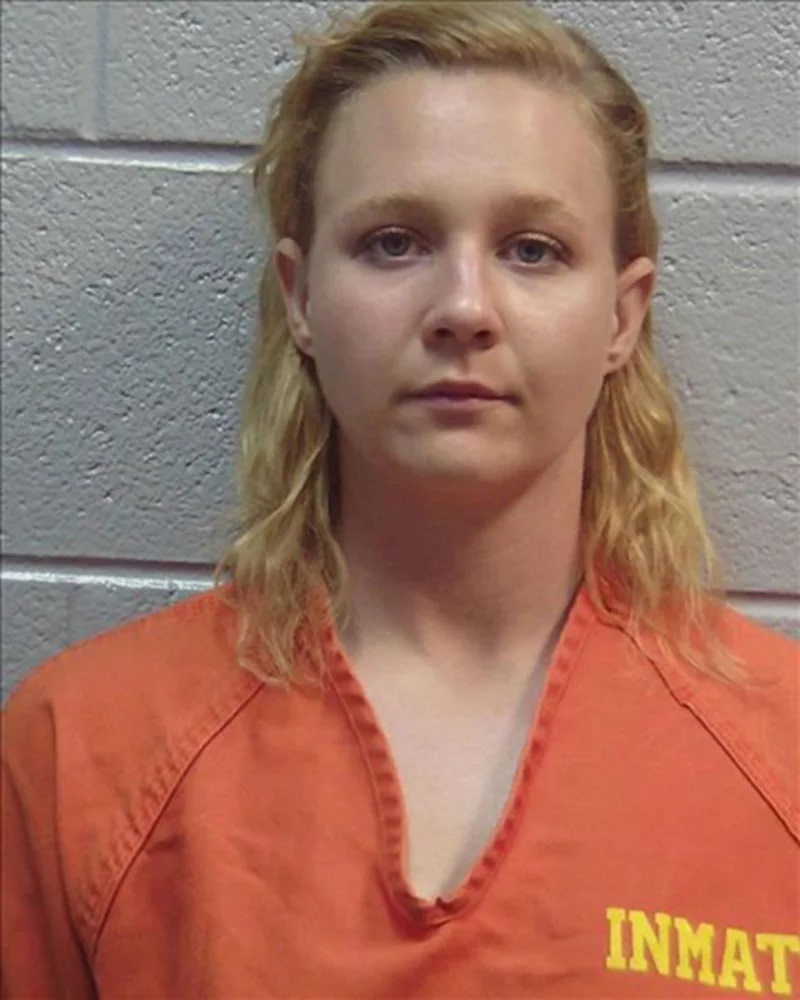
The Reality Of Convicted Leaker Reality Winner

Broad + Liberty posted my piece on the reality of convicted leaker Reality Winner.

You can read the piece via the below link of the below text:

Paul Davis: The reality of convicted leaker Reality Winner (broadandliberty.com)


With former President Trump pleading not guilty to a 37-count indictment in court on Tuesday, June 13, many commentators have weighed in with their view of the historical and contentious upcoming trial, and reporters have reached out to numerous others for comment.

NBC News reached out to Reality Winner, a former National Security Agency contractor and Air Force veteran who was the first person prosecuted by the Trump administration for leaking a top-secret document on Russian hacking to an internet publication. She was subsequently convicted and sentenced to five years in federal prison.

Now out of prison, Winner, 31, told an NBC reporter she was “blown away” by the Trump indictment. “This is probably one of the most egregious and cut-and-dry cases,” Winner, who is not a lawyer, told a reporter in a phone interview with NBC News.

Even if Trump is found guilty of all counts, his case is very different from Winner’s. She released a classified document to The Intercept, which in turn published the document as they received it, with sensitive sources and methods attached.

Revealing sources and methods have gotten people killed in the past.

Among other charges, Trump is charged with willful retention of national defense information, which is part of the Espionage Act. There is no evidence that Trump released the classified information to the press or to a foreign nation.

Coincidentally, I watched the HBO Max film “Reality,” which is about the interrogation and subsequent arrest of Reality Winner, only days before I read her comments on Trump’s case. 

The film is interesting, as it covers the 104-minute interrogation of the 25-year-old translator by two FBI special agents in her home before they arrested her. The FBI agents suspected Winner of having released a classified document about Russian interference in the 2016 election to The Intercept. Having known and interviewed many FBI agents, I found their portrayal to be believable and fair. 

The film is based on writer-director Tina Satter’s 2019 play “This is a Room,” which like the film, features dialogue pulled directly from the transcript of the FBI interrogation of Winner.

The film and the good actress who portrayed Reality Winner almost made me feel sorry for her. 

Almost.

Having spent a good part of my life protecting classified information and briefing, debriefing and training others on protecting classified information, first as a young sailor in the U.S. Navy and later as a civilian Defense Department employee, I felt that Reality Winner got what she deserved. 

I followed the Winner case closely as it unfolded. Winner, a former U.S. Air Force translator, was employed as a National Security Agency contractor in May 2017 when she decided to print out a classified document and sneak it out of the federal building in Georgia. She then mailed the classified document to The Intercept. Winner later said she was motivated as she believed the American people were being misled. She said she meant no harm.

Intelligence is a complicated business, and no military, Defense Department civilian employee, or contractor has the right to decide what classified information can be released to the press and the public, unless they have the proper declassification authority to do so.

When I was an eighteen-year-old sailor serving on an aircraft carrier off the coast of North Vietnam in 1970 and 1971, I had a top-secret security clearance and I handled highly sensitive wartime messages. Like many senior and junior military people at the time, I didn’t agree with the way the Vietnam War was being conducted, with restricted rules of engagement, a war of attrition with the enemy and the containment of the communist North Vietnamese Army. Like many of the military people I served with, I felt we should go all out and win the war, using the massive air power of the aircraft carrier and other military means.


But my strong personal views did not propel me to take a seabag full of classified documents off the warship at Hong Kong or other ports of call and sell them, like Michael Walker (son of Navy spy John Walker) did in 1985, or release them to the press, like Reality Winner did in 2017.

Reality Winner was sentenced to five years and three months in prison on August 23, 2018.

“This defendant used her position of trust to steal and divulge closely guarded intelligence information,” said U.S. Attorney Bobby L. Christine at the time of the sentencing. “Her betrayal of the United States put at risk sources and methods of intelligence gathering, thereby offering advantage to our adversaries.”

“When obtaining Top Secret clearance as a government employee or contractor, the handling of top-secret information is clearly spelled out along with the ramifications of mishandling such information,” added Special Agent in Charge of the Atlanta Filed Office J.C. Hacker. “Revealing sources and methods to the advantage of our adversaries and to the detriment of our country will never be acceptable.”

While others may regard classified leakers like Reality Winner, former NSA contractor Edward Snowden, and former Army Private Manning as heroic whistleblowers, I regard them as criminals who recklessly endangered American lives and national security. 

Paul Davis, a Philadelphia writer and frequent contributor to Broad + Liberty, also contributes to Counterterrorism magazine and writes the On Crime column for the Washington Times.

Thursday, January 28, 2016

U.S. Navy Commander Pleads Guilty To Accepting Cash And Prostitutes In International Bribery Scheme


The U.S. Justice Department released the below information:

A U.S. Navy Commander pleaded guilty today to bribery charges, admitting that he accepted cash, gifts, travel expenses, entertainment and the services of prostitutes from foreign defense contractor Glenn Defense Marine Asia (GDMA) in exchange for classified U.S. Navy information, including ship schedules that contained information related to the U.S. Navy’s ballistic missile defense operations in the Pacific.
Assistant Attorney General Leslie R. Caldwell of the Justice Department’s Criminal Division, U.S. Attorney Laura Duffy of the Southern District of California, Deputy Inspector General for Investigations James B. Burch of the Defense Criminal Investigative Service (DCIS) and Director Andrew Traver of the Naval Criminal Investigative Service (NCIS) made the announcement.
Michael Vannak Khem Misiewicz, 48, of San Diego, pleaded guilty before U.S. Magistrate Judge Jan Adler of the Southern District of California to one count of conspiracy and one count of bribery.  Sentencing is scheduled for April 29, 2016, before U.S. District Judge Janis L. Sammartino of the Southern District of California.
“In exchange for luxury vacations, gifts and other expenses, Commander Misiewicz betrayed his oath, the men and women of the U.S. Navy, and American taxpayers by directing lucrative government contracts to his financial patron,” said Assistant Attorney General Caldwell.  “Working with our law enforcement partners, the Department of Justice’s Criminal Division is committed to prosecuting corrupt officials who abuse positions of public trust.”
“Commander Misiewicz provided information to a foreign contractor that, in the wrong hands, could’ve had a devastating impact on national security,” said U.S. Attorney Duffy.  “By giving in to greed, he put his Navy shipmates and fellow Americans in harm’s way.  This guilty plea is an important step in ensuring that all those who violated their duty of trust to the United States in this affair are held accountable.” 
“Today's guilty plea of Commander Misiewicz is yet another example of a U.S. Navy officer who sought to enrich himself at the expense of U.S. taxpayers,” said Director Burch.  “This type of reprehensible behavior will not be tolerated.  Those who serve in the U.S. Navy have an obligation to uphold the public's trust or suffer the consequences.  DCIS, the Naval Criminal Investigative Service and the Department of Justice will vigorously pursue this investigation wherever it may lead us.”
“Commander Misiewicz chose personal gain and gratification over sacrifice and service to our country," said Director Traver.  “His actions are antithetical to the Navy’s core values of honor, courage and commitment.  Along with DCIS, we will continue vigorously pursuing all aspects of the investigation.”
According to admissions in his plea agreement, from January 2011 until September 2013, Misiewicz provided classified U.S. Navy ship schedules and other sensitive U.S. Navy information to the defense contractor Leonard Glenn Francis, CEO and owner of Singapore-based GDMA.  GDMA provided port services to U.S. Navy ships and submarines when they arrived at ports throughout the Pacific.
Misiewicz admitted that when he was stationed in Japan, on the USS Mustin and in Colorado Springs, Colorado, he used his position and influence within the U.S. Navy to advance the interests of GDMA, including by providing Francis with classified ship schedules and other proprietary U.S. Navy information.  In return, Misiewicz admitted that Francis gave him cash, paid for luxury travel on at least eight occasions for Misiewicz and his family, provided his wife with a designer handbag and provided Misiewicz with the services of prostitutes on multiple occasions.  Throughout the conspiracy, Misiewicz admitted that he and his conspirators took steps to avoid detection by law enforcement by, among other means, using clandestine email accounts, which they periodically deleted.  
To date, nine individuals have been charged in connection with this scheme; of those, eight have pleaded guilty, including Misiewicz, Captain Daniel Dusek, Commander Jose Luis Sanchez, NCIS Special Agent John Beliveau and U.S. Navy Petty Officer First Class Daniel Layug.  Former Department of Defense (DoD) civilian employee Paul Simpkins awaits trial.  On Jan. 21, 2016, Layug was sentenced to 27 months in prison and a $15,000 fine; the others await sentencing.
The NCIS, the DCIS and the Defense Contract Audit Agency are conducting the ongoing investigation.  Assistant Chief Brian R. Young and Trial Attorney Lawrence Atkinson of the Criminal Division’s Fraud Section and Assistant U.S. Attorney Mark W. Pletcher of the Southern District of California are prosecuting the case. 
Those with information relating to fraud, corruption or waste in government contracting should contact the NCIS anonymous tip line at www.ncis.navy.mil or the DoD Hotline at www.dodig.mil/hotline, or call (800) 424-9098.

Monday, January 25, 2016

Why The Justice Department Won't Work With The FBI On Clinton's Email Case


Former prosecutor Andrew C. McCarthy offers a piece at National Review on the U.S. Justice Department and the FBI's investigation of Hillary Clinton's email.

The latest shoe in the investigation of Hillary Clinton’s scandalous mishandling of classified information dropped heavily this week. It had already been reported that, contrary to her denials, hundreds of secret intelligence communications were transmitted over the private, unsecured e-mail system on which the former secretary of state recklessly conducted government business. It is now clear that some of these contained “top secret/SAP” information. (SAP is “special access programs.”) This indicates defense secrets of the highest order, the compromise of which can destroy vital intelligence programs, get covert agents killed, and imperil national security.

... The FBI may not have a Justice Department prosecutor convening a grand jury, but it so happens that Director James Comey (whom I have known since we were pup prosecutors under Rudy Giuliani nearly 30 years ago) is a more accomplished government lawyer than anyone at the Justice Department. In fact, his own decorated DOJ career includes a term as deputy attorney general of the United States under President George W. Bush. Besides working under administrations of both parties, he has overseen prosecutions of both Republicans and Democrats. I’ve known no one in law enforcement more capable of navigating through a political maelstrom. Jim is tough, he is smart, and if there is a case to be made here, he will make it. And if he makes it, it will be bulletproof.

You can read the rest of the piece via the below link:

http://www.nationalreview.com/article/430211/hillary-clinton-email-fbi-department-justice-obama

Tuesday, January 19, 2016

Inspector General: Clinton Emails Had Intel From Most Secretive, Classified Programs


Catherine Herridge and Pamela Browne at Fox News offers an exclusive report on Hillary Clinton's email scandal.

EXCLUSIVE: Hillary Clinton's emails on her unsecured, homebrew server contained intelligence from the U.S. government's most secretive and highly classified programs, according to an unclassified letter from a top inspector general to senior lawmakers.
Fox News exclusively obtained the unclassified letter, sent Jan. 14 from Intelligence Community Inspector General I. Charles McCullough III. It laid out the findings of a recent comprehensive review by intelligence agencies that identified "several dozen" additional classified emails -- including specific intelligence known as "special access programs" (SAP).  
That indicates a level of classification beyond even “top secret,” the label previously given to two emails found on her server, and brings even more scrutiny to the presidential candidate’s handling of the government’s closely held secrets.
“To date, I have received two sworn declarations from one [intelligence community] element. These declarations cover several dozen emails containing classified information determined by the IC element to be at the confidential, secret, and top secret/sap levels,” said the IG letter to lawmakers with oversight of the intelligence community and State Department. “According to the declarant, these documents contain information derived from classified IC element sources.”

You can read the rest of the piece and watch a news video clip via the below link:

http://www.foxnews.com/politics/2016/01/19/inspector-general-clinton-emails-had-intel-from-most-secretive-classified-programs.html?intcmp=hpbt2

Saturday, October 20, 2012

Classified Information Plays Central Role In Both 9/11 And WikiLeaks Cases


Donna Miles at the American Forces Press Service offers the below piece:

FORT MEADE, Md. - Pretrial hearings for two major court cases – one involving the alleged perpetrators behind the 9/11 terror attacks and the other involving the soldier charged with the largest intelligence leak in U.S. history – are converging this week as attorneys operating in two very different legal systems focus on the issue of classified information in the courtroom.

The pre-trial hearing for Khalid Sheik Mohammed (seen in the above photo), who has confessed to planning the 9/11 attacks "from A to Z," and four others who allegedly trained, financed or arranged transportation for the 19 hijackers entered its fourth day today at Naval Air Station Guantanamo Bay, Cuba.

Mohammed's codefendants in the case are his nephew, Ali Abdul Aziz Ali; Walid Muhammad Salih Mubarak bin Attash, charged with selecting and training some of the hijackers; and Ramzi Binalshibh and Mustafa Ahmed Adam al Hawsawi, accused with helping finance the attacks.

 
Meanwhile, here at Fort Meade, the second day of pre-trial hearings continued for Army Pfc. Bradley Manning (seen in the above photo). He is an Army intelligence specialist accused of downloading and transmitting classified information to the whistle-blowing group WikiLeaks while he was deployed to Iraq.

The legal systems being used to prosecute these cases are significantly different.

Manning, as a member of the U.S. military, is subject to the Uniformed Code of Military Justice. This system has roots dating back to the Revolutionary War to promote good order and discipline in the armed forces. The 9/11 defendants, on the other hand, will be tried through a military tribunal governed by the Military Commissions Act of 2009.

Manning is charged with aiding the enemy; wrongfully causing intelligence to be published on the Internet, knowing that it is accessible to the enemy; theft of public property or records; transmitting defense information; and fraud and related activity in connection with computers. The charges against him also include violation of Army Regulations 25-2 "Information Assurance" and 380-5 "Department of the Army Information Security Program."

If found guilty, Manning could receive up to life in prison. He also could be reduced to E-1, the lowest enlisted grade, and face a total forfeiture of all pay and allowances and dishonorable discharge.

Military commissions, on the other hand, apply to "an alien unprivileged enemy belligerent who has engaged in hostilities, or who has purposefully and materially supported hostilities against the United States, its coalition partners or was a part of al Qaeda."

The 9/11 defendants were captured in Pakistan between 2002 and 2003 and have been confined at Guantanamo Bay since 2006.

They were charged during their arraignment in May with terrorism, conspiracy, attacking civilians, attacking civilian objects, intentionally causing serious bodily injury, murder in violation of the law of war, destruction of property in violation of the law of war, hijacking or hazarding a vessel or aircraft. If found guilty, they could receive the death penalty.

A casual peek into the courtrooms gives a glimpse into one of the most obvious differences between the UCMJ and military commission processes.

By law, Manning is not required to attend proceedings regarding his case, but a military lawyer with more than 20 years experience said on background that he's never seen a service member not attend. Photographers outside the courtroom yesterday captured images of Manning being escorted from the courtroom in his Army dress blue uniform with gold-colored private first class rank on his sleeves.

Army Col. James Pohl, the judge presiding over the 9/11 case, ruled earlier this week that the defendants don't have to attend their court sessions, as long as they sign a waiver form each morning they choose to skip. When they do elect to attend, they can dress as they choose – as long as their attire doesn't include U.S. military uniform items or prisoner garb in a color that would misrepresent their security status at the detention facility.

Mohammed quickly took advantage of both rulings. He opted out of court the first day after Pohl ruled that he could – the day the judge also took up the wardrobe issue. Yesterday, Mohammed initially elected not to attend the third day of pre-trial hearings, then showed up later that morning wearing a camouflage vest over his traditional white tunic.

Most of the distinctions between the UCMJ and military commission legal processes are less obvious to those without legal training, and the discussion could fill textbooks. One big question being debated during the 9/11 hearings, for example, is whether the defendants have constitutional rights.

However, a central concern in both the Manning and 9/11 cases is the issue of how classified information is dealt with in court.

Today, the fourth day of pretrial hearings for the 9/11 suspects continued to focus on the balance between protecting classified information that, if made public, could jeopardize U.S. national security, and the constitutional mandate that court proceedings be open to the public.

The prosecution and U.S. government lawyers say protections are needed to prosecute the case without disclosing classified information that would threaten U.S. national security.

In contrast, the defendant's defense teams accused prosecutors of using an overly broad banner of national security to safeguard information vital to providing a solid defense. Echoing them were lawyers representing the American Civil Liberties Union and media groups, who said the government wants to squelch information the public deserves to know.

Pohl is expected to rule this week on a protective order the prosecution has requested to spell out what provisions are protected and what aren't.

A central issue in both the 9/11 and Manning cases involves information regarding the defendants' detention. For Manning, that involves time when he was allegedly mistreated while being held in a Marine Corps brig at Quantico, Va. Of primary concern regarding the 9/11 defendants is time they spent in the hands of the CIA before being transferred to Guantanamo Bay.

Both cases also require hammering out details about witnesses who can be called. In Manning's case, for example, some witnesses' names have been redacted from the motion and are considered to be classified as secret. At Guantanamo Bay, the issue involves whether the defense is required to give the prosecution a heads up about what the witnesses it calls are likely to say –something the government would weigh in deciding whether to fly a witness to the courtroom.

Meanwhile, Army Col. Denise Lind, the judge hearing he Manning case, ordered the prosecution yesterday to release hundreds of emails about his incarceration to the defense team. Lind's ruling covered all but 12 of about 600 emails covering a range of issues: from Manning's visitor list and provisions to ensure he had proper uniforms to plans for responding to protesters and media queries. These emails, added to ones already in the possession of Manning's defense attorneys, bring to 1,200 the total number of emails that will presumably be used to argue that their client was treated illegally.

Lind also issued rulings that would allow parts of CIA, FBI and Department of Homeland Security documents used in the case to be redacted.

Ironically, the only concrete decision made during the 9/11 hearing today had nothing to do with the court proceedings. Rather, it involved the cleanup of administrative space the defense teams have complained are plagued with rat droppings and mold. Although base officials had declared them safe, a defense lawyer told Pohl the space is making her staff sick.

A Navy officer promised a comprehensive cleanup before the next series of pre-trial hearings, assuring the court that occupational health experts will verify that they they're up to standards.