Showing posts with label aircraft carrier. Show all posts

Monday, March 30, 2026

My Crime Fiction: 'The Old Huk'

The below story is Chapter Four of a crime thriller that I hope to publish this year. 

The character of Salvatore Lorino was introduced in Chapter Two. You can link to Chapter Two and other chapters below.  

The below chapter originally appeared in American Crime Magazine.

You can read the story below:

The Old Huk

By Paul Davis 

When the USS Kitty Hawk returned to Subic Bay for repairs and replenishment, Lorino went aboard. He reported to sick bay, where he handled over his medical records from the Subic Bay base hospital to the ship’s doctor. He was examined by the doctor, and he determined that Lorino was fit enough for a return to duty. 

He then walked back to the deck division and handed over the doctor’s report to his chief. The chief, who liked Lorino, said he was glad to have him back aboard. 

“The watch bill has already been posted,” the chief said. “So go hit the beach and enjoy liberty in Olongapo.” 

“Thanks, chief,” Lorino said. 

“Unless you’re tired of Olongapo…” the chief said with a grin.

“Nah, chief. I love Olongapo.”  

“We all do, son.”   

Before Lorino shoved off, he hunted down Winston. He found Winston lounging in the Deck Department’s berthing compartment. Winston was smoking a cigarette and drinking a Coke. “Hey, welcome back,” Winston said. 

Winston laid down his Coke can on the deck and got up from his chair. He took Lorino by the arm and went to his rack in the middle of a three-tier stack of bunks. He lifted the mattress and the lid to the locker underneath his mattress and pulled out the meth in the paper bag. 

Lorino made Winston a junior partner in his new shabu venture As Lorino’s immediate supervisor, Winston agreed to assign him to nonexistent tasks, which allowed Lorino to wander freely about the ship and sell the meth. 

Lorino laid in his rack beneath Winston’s and pulled the gray curtain shut across the rack for privacy. He filled small plastic bags with the meth. He then got up and traversed about the carrier from the galley to the bridge and sold the bags of meth to a good number of enlisted sailors who wanted to be up and “wired” on meth as they drank, danced, and partied with the bar girls in Olongapo. Lorino quickly sold all of the meth and he turned a good profit. He gave Winston a small percentage of the profits. 

Lorino and Winston left the carrier that evening and walked into Olongapo to buy more shabu. They entered the Americano and walked up to the bar. 

“Hey, Chief,” Lorino called out to Walker who was at the other end of the bar. “Can we get a couple of San Miguels over here?” 

Walker laughed and brought over two bottles of beer. He called over a short, muscular Filipino with a round face. The Filipino was clad in a cowboy hat, a leather vest over a t-shirt, tight jeans and cowboy boots. 

“This is Cearro Valle, my bouncer,” Walker said as they all shook hands. “We call him “Duke,” like John Wayne the cowboy movie star.”   

 Valle grinned. “Howdy, pardner,” he said with a high pitch voice and a thick Filipino accent, which made the Americans laugh. 

“Duke, Duke, do your John Wayne impression,” Walker said. 

“Well, listen and listen good, Pilgrim,” Valle said as he pulled his cowboy hat down just above his eyes. 

Everyone laughed. It was the worst John Wayne impression Lorino had ever heard, but it was the funniest. Walker slapped the short bouncer on the back. 

“I love this guy.” 

As they were laughing at Valle’s John Wayne impression at the bar, a sailor and a Marine began punching and grappling with each other on the dance floor. The other servicemen and bar girls moved back as tables and chairs were knocked over by the two fighters. Lorino thought Valle less a comical figure when he saw the bouncer break up the fight. 

Valle easily pulled the two drunk servicemen apart. The two Americans looked down on the much shorter Valle and began throwing punches again. Valle kicked the sailor behind his left knee and the sailor fell to the floor. Valle threw his open right hand at the Marine’s throat, and he too fell to the floor. 

Valle reached down and grabbed both Americans in a head lock under each of his muscled arms. Speaking softly to them, he dragged the two kicking and screaming servicemen to the bar’s door and tossed them out into the street. 

The sailor and the Marine resumed fighting in the street until petty officers from the Navy shore patrol pulled up to the bar. They hopped out of their jeep and broke the two servicemen apart and placed them in handcuffs. The two inebriated combatants were tossed into a jeep and taken back to the Subic Bay base. 

After things settled down in the bar, Lorino pulled Walker aside and asked him if he could buy more shabu. 

“I was hoping you’d come back in,” Walker said. “I told “the Old Huk” about you and he wants to meet you. 

“Who? The Hook?” 

“The Old Huk, pronounced hook, but spelled H-U-K,” Walker explained. 

“Camama is the big boss around here. He was impressed with your beat-down of the two cops and the shooting of Reeinald. He wants to meet you.” 

Walker told Winston to stay at the bar and he beckoned a girl to come over to keep the petty officer company. He told Lorino to follow him and the two walked out of the Americano and into the hotel next door to the bar. They walked past the reception desk, and Walker knocked on the door of a back room. 

Walker and Lorino entered the back room and Lorino saw two Filipinos sitting on a couch. Walker introduced Lorino to Amado Camama, a small, elderly, and wizened man, who wore a white Barong Tagalog shirt with detailed embroidery and a mandarin collar. 

Walker introduced Lorino to Jackie Sicat, a young skinny career criminal with long black hair. Sicat wore flashy “mod” clothing from the 1960s and large sunglasses. Lorino’s first thought was that Sicat was trying too hard to appear as a tough guy gangster. He knew wannabe guys like this who posed as gangsters in South Philly. Lorino instantly respected the Old Huk, but he disliked Sicat on first sight. 

Sicat took a long drag on his cigarette and then told Lorino that the boss, who sat there impassively, liked his style. Reeinald Bulan, who was a Camama gang competitor, was confined to a wheelchair due to Lorino shooting him. 

“Those two cops you beat up work for us now,” Sicat said. “They no bother you no more, and you no bother them. Understand?” 

“Yeah, sure” Lorino replied. 

“You deal with the chief, and you only buy shabu with us. No one else,” Sicat said. “Got it?” 

“I got it,” Lorino said. 

They all shook hands and Walker and Lorino left the room. 

Back at the Americano, Walker told Lorino about Camama and Sicat. 

Walker explained to Lorino that Amado Camama, known in Olongapo as “the Old Huk,” was the leader of the Camama gang. The gang controlled most of the crime in Olongapo. They were into drug trafficking, extortion, black marketeering, and other crimes. Camama was both feared and respected. 

Walker said that Camama grew up in a rural village and joined the Hukbalahap, the Communist guerillas who fought the Japanese after they invaded and occupied the Philippines during World War II. Often armed only with a Bolo knife, Camama was an effective assassin. 

“What’s a Bolo knife,” Lorino asked Walker. 

Walker explained that the Bolo was a long knife with a curved blade that was similar to a machete and was a common tool, as well as a weapon, in the Philippines. 

Walker said that during World War II, Camama was sent out by the Communist guerilla group to murder selected Japanese soldiers, villagers who defied the Communists, and rival guerillas that were led and organized by Americans.   

After the war, Camama became a leader with the Hukbong Mapagpalaya ng Bayan, the Communist People’s Liberation Army, known as the Huks, who fought the Philippine Government. 

After the Huks were defeated by the Philippine government, with help from the United States, a fellow Huk guerilla named Oscar Sicat, who grew up in Olongapo, brought Camama back to the city with him. The two former Huks became feared armed robbers, and they later expanded their strongarm criminal activity and became a prominent organized crime group in Olongapo.     

The two gang leaders later had a falling out and Sicat’s teenage son Jackie sided with Camama against his own father. He volunteered to set up his father for Camama. When the elder Sicat met his son at a bar, Camama came out from the back of the bar and attacked his former partner in crime with a razor-sharp Bolo knife. The son sat there quietly as his father was hacked to death. 

Jackie Sicat rose in the Camama gang and became the Old Huk’s chief lieutenant. Camama, Walker told Lorino, was intelligent, prone to violence, good with a gun and a Bolo knife, and was totally ruthless. This skill set served Camama well as a Huk communist guerilla, and it served him well as he transitioned into a criminal gang boss. 

Lorino, Winston and a bar girl named Marie sat at a table, drinking and listening to the Americano’s country & western band. Marie, a perky, cherubic young woman, hugged Winston and giggled. Walker sat down at the table and called his wife over. He spoke into her ear. She smiled and walked away. She returned briefly with a tall, beautiful girl in tow. 

“This is Jade,” the mama-san said to Lorino. “She like you big-time.” 

“Oh, yeah? You wanna drink?” Lorino said as he pushed out a chair for the bar girl. 

Jade, dressed in a tight light blue dress, had long dark hair and an innocent pretty face, although she was a veteran hostess. She sat down next to Lorino as the mama-san called over a waiter. The waiter came over with beers for Walker and Lorino and a glass of whiskey for the girl. 

“I love you, no bullshit,” Jade said with a throaty laugh as she snuggled up to Lorino.

Her use of the oft repeated Olongapo bar girl phrase that Americans got a kick out of, made Lorino, Winston and Walker laugh.     

“Hey Jade,” Lorino said. “Like the Beatles’ song.” 

 “That was Hey Jude, Winston said. 

Lorino shrugged. “What’s the difference?” 

Although most young American sailors went wild over the pretty Filipinas in Olongapo, Lorino was more interested in business. He pursued his business opportunities rather than the company of bar girls. But now that he had secured a meth connection and began his drug dealing enterprise on the Kitty Hawk, he felt he could at last relax and have some fun with a bar girl. 

Later that evening, Lorino saw Sicat enter the bar with an entourage of four other Filipino gangsters. He’s acting like royalty, or a Cosa Nostra capo, Lorino thought to himself. The chief rushed up to Sicat and guided him and his cronies to a table at the rear of the bar. Walker hailed a waiter, and motioned to his wife, the mama-san, who was already rounding up girls to sit with Sicat and his associates. 

Lorino’s dislike for Sicat grew as he watched the little crime prince act like a big shot, a pezzonovante. He smiled to himself as he thought about smacking Sicat and knocking his sunglasses clear off his face. 

An hour or so later, a short and wiry Filipino police officer in uniform entered the bar, followed by the biggest Filipino Lorino had ever seen. The Filipino cops headed for Sicat’s table. 

“Who are they?” Lorino asked Walker. 

“That’s an Olongapo cop, Lieutenant Colonel Cesar Rosa and his sergeant,” Walker told Lorino. “Rosa’s the worst kind of cop – fucking honest.” 

“Yeah. We got some of those pricks in South Philly too.” 

Lorino initially thought the cops were there to collect bribes, but he chuckled to himself as he saw Sicat visibly upset as Rosa pointed his finger in the gang leader’s face. Rosa spoke harshly to him in Tagalog.

“Some big shot gangster,” Lorino scoffed. “Afraid of a cop, even if the cop is a pint-sized Frank Rizzo.” 

Lorino saw the puzzled look on Walker’s face. 

“Rizzo. He’s a big, tough son of a bitch South Philly cop who’s now the police commissoner of Philadelphia,” Lorino explained.        

As the bar was closing, Walker gave Lorino a key to a room in the Old Huk’s hotel next door to the Americano. Arm-in-arm, Lorino and Jade staggered to the hotel. He waved to the desk clerks in the hotel lobby, and they waved back. Lorino and Jade took the stairs to the second floor and to the room that the chief arranged for him. Once in the room, Lorino took Jade in his arms and pulled off her dress. They kissed and laid across the bed. 

In the morning, Lorino was famished. He wanted an American breakfast of bacon and eggs. Jade took him to a small cafe, and she ordered for the two them in Tagalog. Lorino sipped his hot coffee as the waiter laid down two plates. 

"What the fuck is this?"

“It’s Sinangag. It’s good. Eat it.” 

Lorino obeyed and dug in. Jade was right. Lorino loved the fried rice, scrambled eggs and garlic. 

After their fine meal, Lorino and Jade returned to the hotel room and laid about, smoking, drinking and having sex. Later that evening, Lorino and Jade left the hotel and went to the Americano, where they joined Winston and Belinda at a table.     

While Lorino, Jade, Winston and Belinda were drinking at the table, a Filipino walked into the bar and strode up to Walker, who was behind the bar. He spoke briefly to Walker and then turned around and walked out of the bar. Walker called Lorino over to the bar. 

“Let’s take a ride.” 

Walker and Lorino left the bar and saw a jeepney with Camama, Sicat and a short muscular bodyguard sitting in it. Walker and Lorino piled in the jeepney.

The jeepney drove from the Americano to a series of shacks located against the Olongapo River. They all climbed out of the jeepney and walked to the back of a shack where three Filipinos were waiting. The back was lit dimly from the lights from the shack. Two of the Filipinos held handguns and the third Filipino, a small and slim young man, stood there shaking and crying. 

Sicat brought out an old metal folding chair that had “Property of U.S. Navy” stenciled in black on the back. He opened the chair and Camama down and faced the crying man. Walker pulled Lorino back a bit and advised him to say and do nothing. 

The visibly upset Filipino began speaking in rapid Tagalog as Camama sat there with a grim face. The frightened Filipino then let out a forced laugh. 

“Remy is a dope,” Walker said in a whisper to Lorino. “His ass is on the line, and he just told a stupid joke.” 

Lorino noticed that no one laughed. 

Camama nodded and one of the Filipinos with a handgun stepped up behind Remy and shot him in the back of the head. He fell to his knees and then fell forward, his face splashing into the mud. Camama turned his head and looked directly at Lorino. 

“Now that is funny,” the Old Huk said in English. 

One of the Filipinos gunmen carried out an ice cooler from the shack and set it on the ground, not far from the dead body. The cooler, like the folding chair, had “Property of U.S. Navy” stenciled in black on it. The Filipino opened the cooler and handed out bottles of San Miguel. Lorino took one and Walker grabbed two for himself. 

“Remy tried to go over to Bulan’s gang,” Walker explained. “The Old Huk didn’t like that. This is how he shows his displeasure.” 

“Yeah, I got the point,” Lorino replied. 

Back at the Americano, Walker put his arm around Lorino as they stood at the bar. 

“You done good,” Walker said. “You didn’t react at all. The old Huk liked that.”

“I seen guys whacked before in South Philly,” Lorino replied and shrugged. “No biggy.” 

“You got a future with us, boy,” Walker said beaming with delight.

© 2023 By Paul Davis 


Note: You can read other chapters via the below links:

Paul Davis On Crime: Chapter One: Butterfly

Paul Davis On Crime: My Crime Fiction: 'Salvatore Lorino'

Paul Davis On Crime: My Crime Fiction: Join The Navy And See Olongapo

Paul Davis On Crime: My Crime Fiction: 'Boots On The Ground'

Paul Davis On Crime: My Crime Fiction: 'The 30-Day Detail'

Paul Davis On Crime: My Crime Fiction: 'Cat Street'

Paul Davis On Crime: Chapter 12: On Yankee Station

Paul Davis On Crime: My Crime Fiction: 'The Cherry Boy'

Paul Davis On Crime: My Crime Fiction: 'The Hit'

Paul Davis On Crime: My Crime Fiction: Welcome To Japan, Davis-San

Paul Davis On Crime: A Look Back At Life Aboard An Aircraft Carrier During The Vietnam War: 'The Compartment Cleaner'

Paul Davis On Crime: My Crime Fiction: 'Murder By Fire'

Paul Davis On Crime: My Crime Fiction: 'Admiral McCain'

Paul Davis On Crime: My Crime Fiction: 'Hit The Head'

Paul Davis On Crime: My Crime Fiction: 'A Night At The Americano'

Paul Davis On Crime: My Crime Fiction: 'Missing Muster'

Paul Davis On Crime: My Crime Fiction: 'The Barracks Thief'

Paul Davis On Crime: My Crime Fiction: 'The City of Bizarre Happenings'

Paul Davis On Crime: My Crime Fiction: 'The Refrigerator Thieves'

Paul Davis On Crime: My Crime Fiction: 'Go Forth, Goforth'


Monday, February 9, 2026

On This Date 56 Years Ago, I Enlisted In The U.S. Navy

On this date 56 years ago, I enlisted in the United States Navy.

I was 17 years old.

On February 9, 1970, I raised my hand and swore an oath to the U.S. Navy and the U.S. Constitution in Philadelphia, PA. 

I boarded a train to Chicago and then took a bus to the Naval Recruit Training Center at Great Lakes, Illinois.

You can read a fictional account of my time in Boot Camp via the link below:

Paul Davis On Crime: Boots On The Ground


Sunday, June 9, 2024

Missing The Boat

As I’ve noted here before, I grew up in South Philadelphia not far from the Philadelphia Naval Shipyard, where the USS Kitty Hawk was commissioned in 1961. 

My late father, a former WWII Navy chief and UDT frogman, took me to see the commissioning of the U.S. Navy's new aircraft carrier, the USS Kitty Hawk, when I was a young boy. I recall the grand ceremony that launched the new, majestic warship, with banners flying, bands playing and people cheering.  

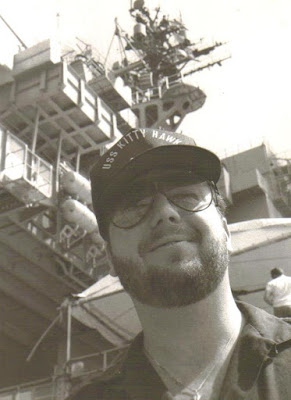
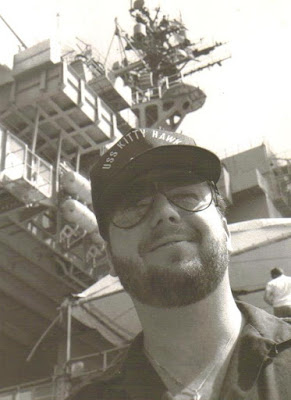
I enlisted in the U.S. Navy in 1970 when I was 17. I reported to the USS Kitty Hawk after two weeks leave after graduating from Boot Camp in 1970.

Prior to shoving off to Southeast Asia for the aircraft carrier’s 5th Vietnam War cruise and serving on “Yankee Station” in the Gulf of Tonkin off the coast of North Vietnam, and visiting port of calls in Hawaii, Subic Bay in the Philippines, Sasebo, Japan and Hong Kong, the aircraft carrier was undergoing a major overhaul in Bremerton, Washington.  

With memories of the new carrier that I saw at the commissioning in my head, I was somewhat disappointed as I looked up at the ship and walked along the port side of the ship tied to the pier.

The aircraft carrier looked to be in major disarray. The Kitty Hawk was undergoing an overhaul, and the ship was being taken apart and put back together.  

But things soon looked up. Rather than being assigned to mess cook duties, a rough and dirty job, like other new sailors, a petty officer in personnel who hailed from Philadelphia took pity on me and assigned me to Special Services. I performed a variety of duties there, but my main job was to assist in the running of the shipboard TV and radio cable throughout the ship. The Kitty Hawk was the first warship to have cable TV and radio.

After some weeks aboard the carrier, I took a break one day and left the ship to go for a hot dog and a soda. When I returned to the pier sometime later, I discovered that the aircraft carrier was gone.

I was in shock. I sat down on a shipping crate, looked at the vacant pier and pondered my fate. I heard much talk about the carrier sailing to San Deigo once the overhaul was completed, but I didn’t recall anyone saying that this day was the day.

I thought of what the penalty was for missing ship’s movement, which I knew was a serious offense. I was worried. I was a seaman apprentice, “lower than whale shit,” as the saying goes. Could I be busted in rank? Tossed in the brig? Kicked out the Navy?

But mostly I was embarrassed. I didn’t want to be ridiculed and thought of as a stupid “Boot.”

I thought of myself as a street-smart South Philly kid, and although I had only been in the Navy a few months, I thought I knew a lot about the Navy. I learned a good bit about the Navy from my Navy veteran father, my many conversations with former and active-duty sailors, and from my voracious reading about the Navy.

Yet here I was sitting on the dock of the bay like the Otis Reading song, wondering where my ship had gone.

I was about to turn myself in to the first Navy chief I saw, when I saw the Kitty Hawk coming back.

 I was elated.     

The tugboats helped the carrier return to the pier and backed the aircraft carrier in, stern first. Apparently, the carrier had pulled out to go to wider water so the ship could maneuver and then return to the pier and be tied up on the starboard side.   

As my terror subsided, a joke ran though my head - the ship's captain realized I was not aboard, and he turned the carrier around to come back and get his missing seaman apprentice.  

I then thought of the expression, “missing the boat.”

For a brief awful time, I thought I did in fact miss the boat.

I would not tell anyone this story for 20 years.


You can read my other sea stories, vignettes, and humor pieces via the below link:    

Paul Davis On Crime: Sea Stories: Vignettes, Short Stories And Humor Pieces About My Time In The U.S. Navy 


Saturday, March 9, 2024

Tuesday, October 11, 2022

Newest Aircraft Carrier USS Gerald R. Ford And Strike Group Departed For First Deployment

The U.S. Navy’s newest aircraft carrier, the USS Gerald Ford, set sail on her first deployment. 

The Gerald Ford’s public affairs office put out a press release on the deployment.

NORFOLK, Va. - The first-in-class aircraft carrier USS Gerald R. Ford (CVN 78), flagship of the Gerald R. Ford Carrier Strike Group (GRFCSG), departed from Naval Station Norfolk on its first deployment to conduct operations and training exercises alongside NATO allies and partners throughout the Atlantic Ocean.

“This deployment is an opportunity to further advance the operational capabilities of the Ford and demonstrate the advantages that Ford and Carrier Air Wing (CVW) 8 bring to the future of naval aviation, to the region and to our allies and partners,” said Rear Adm. Greg Huffman, commander of Carrier Strike Group (CSG) 12. “Now more than ever, it is increasingly important for the United States Navy to reinforce our relationships with our allies and partners as we contribute to promote a peaceful, stable, and conflict-free Atlantic region.”

You can read the rest of the press release via the below link:

Gerald R. Ford Carrier Strike Group Departs for First Deployment > United States Navy > News-Stories

Wednesday, June 1, 2022

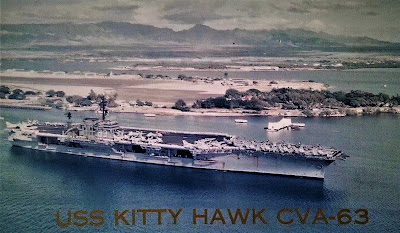
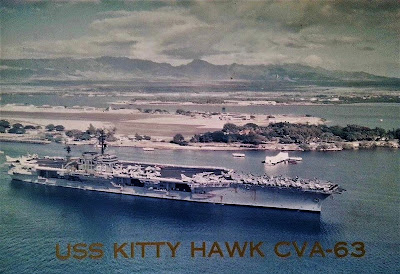
Final Voyage Of The Aircraft Carrier Kitty Hawk Ends

This is truly a sad day for the former sailors, airmen, and Marines who served on the USS Kitty Hawk over the years. 

I'm one of them.

The once great aircraft carrier has arrived at her final destination at Brownsville, Texas, where she is scheduled to be dismantled for scrap metal. 

As I've noted here before, my late father took me to the Philadelphia Navy Yard for the USS Kitty Hawk's commissioning in 1961. 

In 1970, when I was 17, I reported aboard the Kitty Hawk. I served for two years on the aircraft carrier and was aboard for the warship's 5th Vietnam cruise, serving on "Yankee Station" in the Gulf of Tonkin in the South China Sea off North Vietnam.     

During the 1970-1971 WESTPAC cruise, the Kitty Hawk made port of calls to Honolulu, Hawaii, Subic Bay in the Philippines, Sasebo, Japan, and Hong Kong.   

The Kitty Hawk returned to Philadelphia in 1987 for an overhaul. I was then the civilian administrative officer for a Defense Department command that oversaw the contractors hired for the overhaul, so I went aboard my old ship several times during her Philadelphia stay. 

For all of the military who served aboard her and the civilian yardbirds who worked on her, the USS Kitty Hawk will be remembered fondly. 

For nearly half a century, from April 29, 1961 to May 12, 2009, the USS Kitty Hawk projected American power around the world and protected America in war and peace. The USS Kitty Hawk will be remembered well in American History.  

You can read an earlier post on the USS Kitty Hawk via the below link:

Paul Davis On Crime: On Yankee Station: A Look Back At The Aircraft Carrier USS Kitty Hawk During The Vietnam War, 1970-1971 

Thursday, November 11, 2021

Sailors Hunting Sharks In Loch Fyne

As I’ve noted here before, after serving two years on the aircraft carrier USS Kitty Hawk in 1970-1971 during the Vietnam War, I was separated from the Navy.

I went on to study journalism at Penn State, but I dropped out due to a lack of money. I took a job as a DOD civilian at the Defense Personnel Support Center in South Philadelphia, but as I was bored and did not see an immediate future as a writer, I re-upped and returned to the Navy in 1974. 

Serving on the USS Kitty Hawk two years prior, I had some unique experiences. The aircraft carrier sailed to Southeast Asia for a WESTPAC cruise and served on “Yankee Station” in the Gulf of Tonkin off the coast of North Vietnam during the final years of the Vietnam War.

We worked long and hard hours while on Yankee Station as our aircraft flew combat air sorties, taking the war to the Communist North. Air combat operations were fast-paced and precarious as the carrier launched and recovered aircraft around the clock. 

I had an admin job in the radio communications division, and I served on a Damage Control Team. The teams were called out to fight fires and quell other emergencies. With vast amounts of jet fuel, bombs, missiles and rockets on board, an accident or a fire on a carrier can be a truly deadly affair, which we saw happen on the USS Forrestal and other carriers during the war.  

The long Yankee Station line periods were broken up by memorable port of calls to Hong Kong, Sasebo, Japan, and frequent visits to Subic Bay in the Philippines. No one who encountered the bizarre times in the wide-open city of Olongapo will ever forget it.    

I certainly have not.

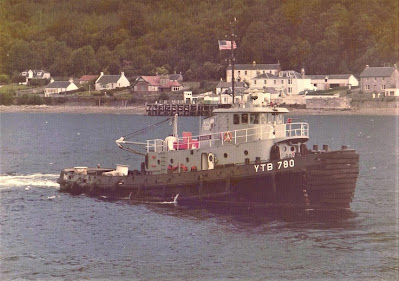
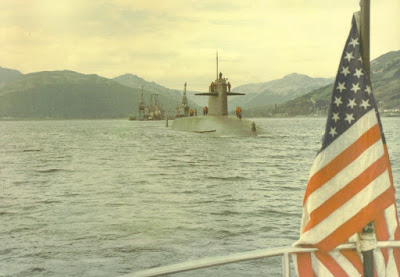
After re-enlisting, I reported to the Norfolk, Virginia naval base to await my orders. I hoped to receive orders to another carrier that would cruise the Mediterranean, or “Med,” but I received orders to the USS Saugus (YTB-780), a Navy harbor tugboat attached to Submarine Squadron 14 (SUPRON 14) at the U.S. nuclear submarine base at Holy Loch, Scotland. 

I went from serving on one of the largest warships in the U.S. Navy to one of the smallest boats. 

I reported aboard the tugboat in January of 1974. I regretted immediately my decision to return to the Navy – what the hell was I thinking? I went from a boring but easy job in a comfortable government office to doing hard physical work aboard a Navy tugboat while enduring the wet and cold Scottish winter.

But looking back after all these years, I achieved what I had set out to do, which was to have some interesting travel experiences and a bit of adventure.

During the Cold War years, Submarine Squadron 14, called "Site One," consisted of the USS Canopus, a 644-foot-long ship called a submarine tender, a floating dry dock that could accommodate submarines, and a large barge with a super crane. All were anchored in the middle of the loch.

Submarines reported to Site One from the sea before and after their patrols and tied up to the anchored submarine tender. The submarines received supplies, maintenance and repairs at the floating Navy base. The base also had several small boats that tied up to the barge.

Two of the boats were 100-foot harbor tugboats, which were the workhorses of the bustling naval base.

The crew consisted of a chief petty officer and twelve other enlisted sailors.   

The USS Saugus and the USS Natick (YTB 760) towed ships, oil barges, submarines and other craft in, out, and around the site. The tugboats also put out fires and broke up oil slicks. Most days during those two years I was a cold and wet sailor working on the deck of the tugboat at the floating submarine base.

The work was hard, physical and dangerous, but we were proud of our small boat and line-handling skills. Working with the rugged and independent crew on the tugboat felt like I was serving in McHale's Navy, one of my favorite TV shows from my youth. 

I worked on deck, stood helm watches while at sea, stood security watches in port, and during my second year onboard I was the boat's supply petty officer.

The Saugus, along with the USS Natick, were often sent to sea to rendezvous with submarines for medivacs, classified missions and transfers of the Commodore and his staff. We would throw over a short brow to the submarine and the Commodore and his staff walked precariously across the brow from the pitching, rolling and bobbing tugboat to the submarine. Once aboard, the submarine submerged.

Under the sea was calm, but it was certainly not calm on the surface. The tugboat then served as a target for the submarine’s torpedoes. In the exercises, the unarmed torpedoes were aimed to pass near us.

After the torpedo passed us, we had to go and retrieve them, which was like someone shooting a gun at you and you then had the further indignity of picking up the shells for the shooter.

Retrieving the torpedoes was not an easy task in winter, as both the tug and the tip of the torpedo bobbed up and down in the rough sea at different intervals. We went to the tug’s fantail and attempted to bring in the torpedo with a thick wire lasso. It often took several attempts before we lassoed the long torpedo.

Once the wire took hold, we used our hydraulic capstan to twirl the line up and in, bringing the torpedo out of the sea into the air, where it swung mightily from the rocking of the boat and the strong winds. We threw another line on the back of the torpedo and with some difficulty, we brought the torpedo to rest on the fantail.           

I recall in the summer of 1975 we were ordered to sail to Loch Fyne to pick up a floating torpedo that was spotted by local fishermen. Normally, the fishermen haul in the American torpedo, which had a message on it that read “If found, call U.S. Navy and claim award.” For some reason, the fishermen were not able to retrace this torpedo, but they called the U.S. Navy.

A squadron officer ordered our chief to assemble his crew and head out to Loch Fyne and bring in the torpedo. The chief, whom I nicknamed “Chief Cool,” as he rarely spoke and had a deadpan face much like the silent film comedian Buster Keaton, was not happy with being called out on an early Saturday morning, as he was hung over and thought the mission was a bullshit one.

I had the weekend duty with another deckhand and an engineman, so I was onboard, but the chief called the rest of the crew in.

When everyone reported aboard, the chief told us to get out to Loch Fyne and cruise around, and if we saw the torpedo, haul it in. But don’t look too hard, he added. With that, the chief retired to his cabin and went to sleep.

It was a beautiful sunny and warm day as we entered Loch Fyne. The sea was calm and clear and there was a soft breeze.

Loch Fyne, which means “Loch of the Vine” in Scottish Gaelic, is off the Firth of Clyde and located on the west coast of Argyll, Scotland. 

Loch Fyne was teaming with wild life on that summer day. As we cruised along slowly, we saw dolphins, porpoises and various fish in the water. Flocks of seagulls and other birds formed an air force that flew overhead.

We also saw a huge number of large dorsal fins protruding from the water. The dorsal fins belonged to basking sharks, a huge, fierce-looking creature that resembles a great white shark.

The basking shark (Cetorhinus maximus) is the world’s second largest shark, but despite its size and looks, the shark is quite docile and passive and eats plankton rather than people. The small-brained creatures are called basking sharks due to their swimming slowly and feeding near the surface, which makes them appear to be “basking” in the sun.

The average basking shark weighs more than ten thousand pounds and grows to about twenty-six feet long.

As we cruised among the many dorsal fins, we were all out on deck snapping photos of the huge sharks. Most of us would later show the photos and neglect to mention that the sharks were harmless.

I don’t know who first had the idea, but someone at the helm in the pilothouse decided to ram one of the sharks. As we were cruising slowly, and the tug’s bow was swathed in rubber, the shark was not harmed. Everyone laughed as the shark dashed away from the tug, and we went on to bump several of the sharks in the loch.    

After a bit, most of the crew left the pilothouse, leaving me and a seaman whose name I don’t recall. The seaman decided to turn the tug towards another fin in the loch. I felt the bump as the tug shook from the encounter.   

“Oh, shit!” I heard the seaman say.

I looked towards the seaman at the helm and beyond him out of the pilothouses’ starboard window. I saw 50-feet of white underbelly as a huge creature breached the sea just off the tug.

I grabbed the tug’s big wheel and swung it to port sharply. The boat seemed to lift from the water with the maneuver just as a huge wave enveloped the pilothouse as the creature crashed back into the sea.

The seaman stood there in shock. He managed finally to say, “I didn’t know a shark could jump that high out of the water.”

“That wasn’t a shark, you fucking idiot,” I said. “You rammed an orca – a killer whale.”

I knew that an orca could punch a hole in the hull and sink us, so I was happy to see the killer whale swim away from us. 

We failed to find the torpedo.

As I noted above, I went back into the Navy seeking more travel experiences and a bit of adventure.

While serving in Scotland for two years, I had some unique adventures in Holy Loch and out in the Irish Sea. And during my time off, I traveled all over the United Kingdom and visited Italy, Spain and France.

I also spent a day at Loch Fyne among basking sharks and a killer whale.

Note: You read my other sea stories, vignettes, humor pieces and short stories via the below link:

Paul Davis On Crime: Sea Stories: Vignettes, Short Stories And Humor Pieces About My Time In The U.S. Navy  


Wednesday, October 13, 2021

Happy 246th Birthday To The United States Navy From One Who Stood The Watch


 Happy 246th Birthday to the United States Navy.  

The American Navy was born in Philadelphia, like me, and the Navy has served and protected America faithfully since the country’s beginnings. 

I’ve “stood the watch,” as the Navy puts it, serving two years on the aircraft carrier USS Kitty Hawk in 1970-1971 during the Vietnam War. I later served two years on the Navy tugboat USS Saugus at the U.S. nuclear submarine base at Holy Loch, Scotland. 

You can take the proverbial boy out of the Navy, but you can’t take the Navy out of the boy.    

The U.S. Navy offers the below on her 246th birthday:

The 13 October 1775 resolution of the Continental Congress established what is now the United States Navy with “a swift sailing vessel, to carry ten carriage guns, and a proportionable number of swivels, with eighty men, be fitted, with all possible despatch, for a cruise of three months….” After the American War of Independence, the U.S. Constitution empowered the new Congress “to provide and maintain a navy.” Acting on this authority, Congress established the Department of the Navy on 30 April 1798. 

In 1972, Chief of Naval Operations Admiral Elmo R. Zumwalt authorized official recognition of 13 October as the birthday of the U.S. Navy. Since then, each CNO has encouraged a Navy-wide celebration of this occasion “to enhance a greater appreciation of our Navy heritage, and to provide a positive influence toward pride and professionalism in the naval service.” 

13 October 2021 will mark the Navy's 246th Birthday. The central theme of this year’s 246th Navy Birthday and Heritage week is “Resilient and Ready”, which speaks to the Navy’s history of being able to shake off disaster, such as the loss of a ship or a global pandemic, and still maintain force lethality and preparedness. It allows the messaging to showcase readiness, capabilities, capacity, and of course the Sailor—all while celebrating our glorious victories at sea and honoring our shipmates who stand and have stood the watch. 

God Bless America and the U.S. Navy.