Showing posts with label Navy tugboat. Show all posts

Monday, October 28, 2024

A Sea Story: A Look Back At American Sailors Hunting Sharks In Loch Fyne

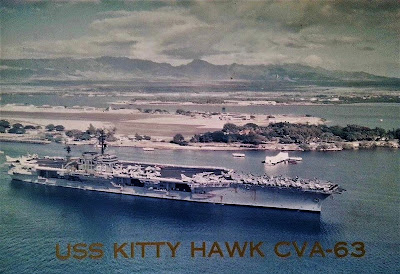
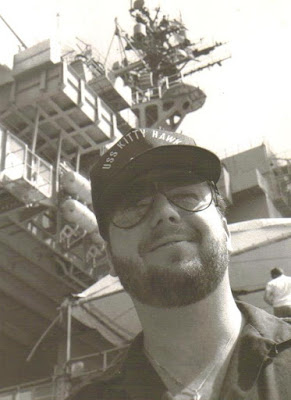
As I’ve noted here before, after serving two years on the aircraft carrier USS Kitty Hawk in 1970-1971 during the Vietnam War, I was separated from the Navy.

I went on to study journalism at Penn State, but I dropped out due to a lack of money. I took a job as a DOD civilian at the Defense Personnel Support Center in South Philadelphia, but as I was bored and did not see an immediate future as a writer, I re-upped and returned to the Navy in 1974. 

Serving on the USS Kitty Hawk two years prior, I had some unique experiences. The aircraft carrier sailed to Southeast Asia for a WESTPAC combat cruise, serving on “Yankee Station” in the Gulf of Tonkin off the coast of North Vietnam during the final years of the Vietnam War.

We worked long and hard hours while on Yankee Station as our aircraft flew combat air sorties, taking the war to the Communist North. Air combat operations were fast-paced and precarious as the carrier launched and recovered aircraft around the clock. 

I had an admin job in the Communications Radio Division, and I served on a Damage Control Team. The teams were called out to fight fires and quell other emergencies. With vast amounts of jet fuel, bombs, missiles and rockets on board, an accident or a fire on a carrier can be a truly deadly affair, which we saw happen on the USS Forrestal and other carriers during the war.  

The long Yankee Station line periods were broken up by memorable port of calls to Hong Kong, Sasebo, Japan, and frequent visits to Subic Bay in the Philippines. No one who encountered the bizarre times in the wide-open city of Olongapo will ever forget it.  

I certainly have not.

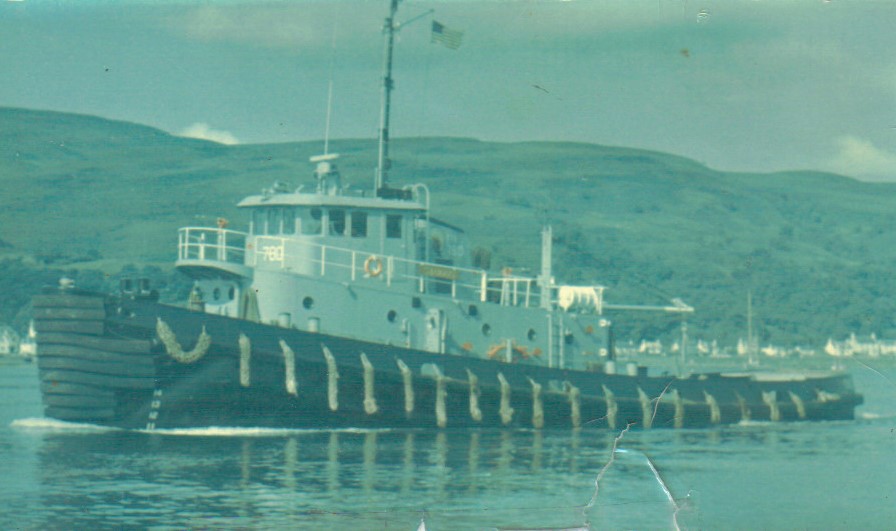
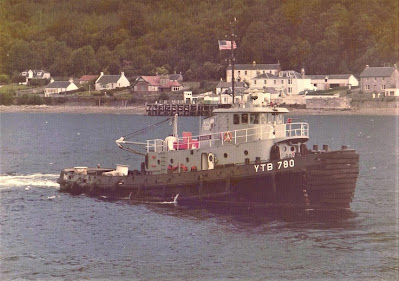
After re-enlisting, I reported to the Norfolk, Virginia naval base to await my orders. I hoped to receive orders to another aircraft carrier that would cruise the Mediterranean, called the “Med” by American sailors, but I received orders to the USS Saugus (YTB-780), a Navy harbor tugboat attached to Submarine Squadron 14 (SUPRON 14) at the U.S. nuclear submarine base at Holy Loch, Scotland. 

I went from serving on one of the largest warships in the U.S. Navy to one of the smallest boats. 

I reported aboard the tugboat in January of 1974. I regretted immediately my decision to return to the Navy – what the hell was I thinking? I went from a boring but easy job in a comfortable government office surrounded by pretty girls to doing hard physical work aboard a Navy tugboat while enduring the wet and cold Scottish winter.

But looking back after all these years, I achieved what I had set out to do, which was to have some interesting travel experiences and a bit of adventure.

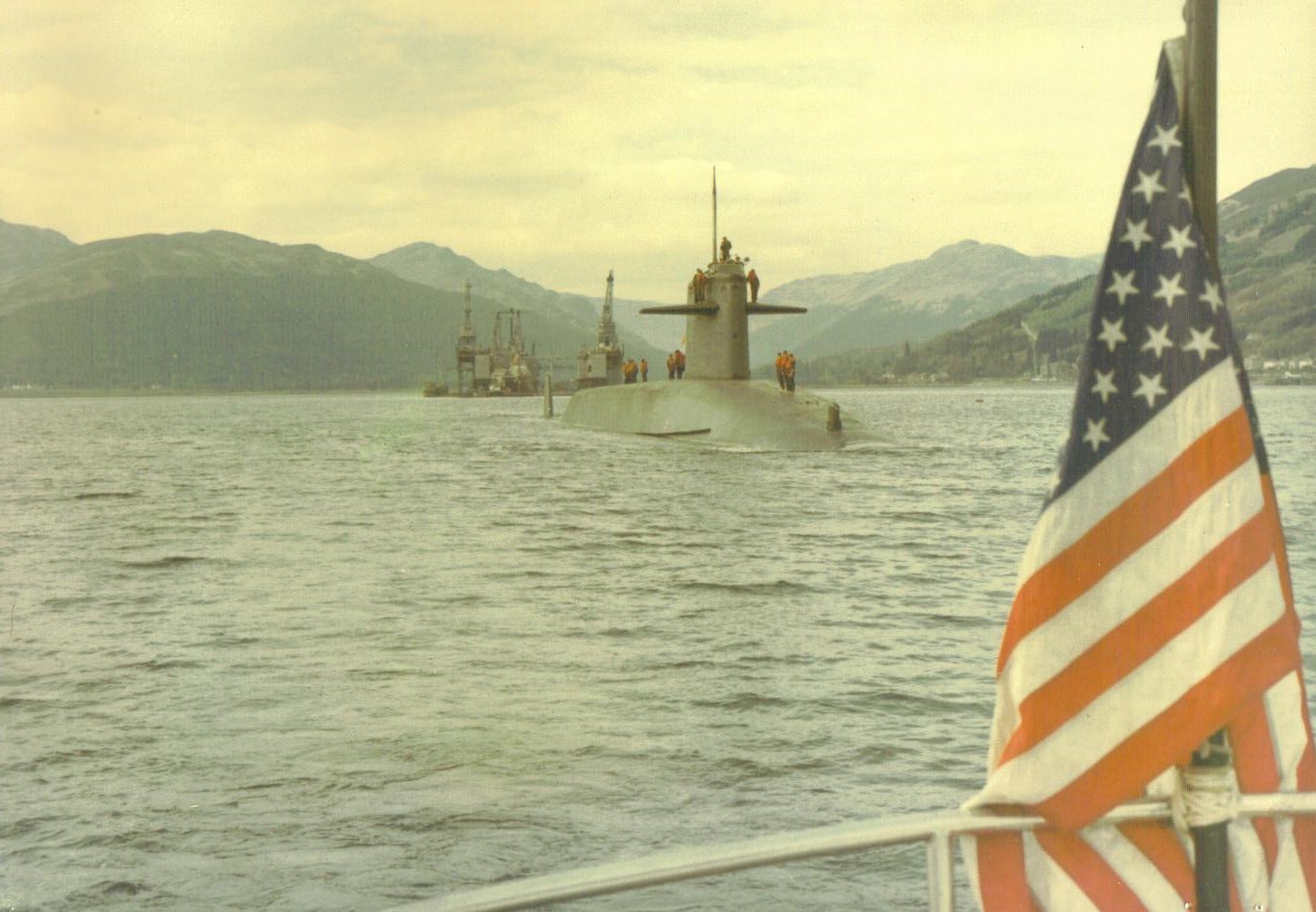
During the Cold War years, Submarine Squadron 14, called "Site One," consisted of the USS Canopus, a 644-foot-long ship called a submarine tender, a floating dry dock that could accommodate submarines, and a large barge with a super crane. All were anchored in the middle of the loch.

Submarines reported to Site One from the sea before and after their patrols and tied up to the anchored submarine tender. The submarines received supplies, maintenance and repairs at the floating Navy base. The base also had several small boats that tied up to the barge.

Two of the boats were 100-foot harbor tugboats, which were the workhorses of the bustling naval base.

The crew consisted of a chief petty officer and twelve other enlisted sailors.   

The USS Saugus and the USS Natick (YTB 760) towed ships, oil barges, submarines and other craft in, out, and around the site. The tugboats also put out fires and broke up oil slicks. Most days during those two years I was a cold and wet sailor working on the deck of the tugboat at the floating submarine base.

The work was hard, physical and dangerous, but we were proud of our small boat and line-handling skills. Working with the rugged and independent crew on the tugboat felt like I was serving in McHale's Navy, one of my favorite TV shows from my youth. 

I worked on deck, stood helm watches while at sea, stood security watches in port, and during my second year onboard I was the boat's supply petty officer.

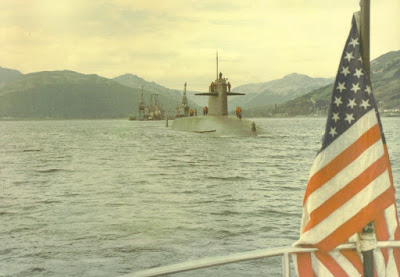
The Saugus, along with the USS Natick, were often sent to sea to rendezvous with submarines for medivacs, classified missions and transfers of the Commodore and his staff. We would throw over a short brow to the submarine and the Commodore and his staff walked precariously across the brow from the pitching, rolling and bobbing tugboat to the submarine. Once aboard, the submarine submerged.

Under the sea was calm, but it was certainly not calm on the surface. The tugboat then served as a target for the submarine’s torpedoes. In the exercises, the unarmed torpedoes were aimed to pass near us.

After the torpedo passed us, we had to go and retrieve them, which was like someone shooting a gun at you and you then had the further indignity of picking up the shells for the shooter.

Retrieving the torpedoes was not an easy task in winter, as both the tug and the tip of the torpedo bobbed up and down in the rough sea at different intervals. We went to the tug’s fantail and attempted to bring in the torpedo with a thick wire lasso. It often took several attempts before we lassoed the long torpedo.

Once the wire took hold, we used our hydraulic capstan to twirl the line up and in, bringing the torpedo out of the sea into the air, where it swung mightily from the rocking of the boat and the strong winds. We threw another line on the back of the torpedo and with some difficulty, we brought the torpedo to rest on the fantail.          

I recall in the summer of 1975 we were ordered to sail to Loch Fyne to pick up a floating torpedo that was spotted by local fishermen. Normally, the fishermen find and haul in the American torpedo, which had a message on it that read “If found, call U.S. Navy and claim award.” For some reason, the fishermen did not find this torpedo.

A squadron officer ordered our chief to assemble his crew and head out to Loch Fyne and bring in the torpedo. The chief, whom I nicknamed “Chief Cool,” a stern man who rarely spoke and had a deadpan face much like the silent film comedian Buster Keaton, was not happy with being called out on an early Saturday morning, as he was hung over and thought the mission was a bullshit one.

I had the weekend duty with another deckhand and an engineman, so I was onboard, but the chief called the rest of the crew in.

When everyone reported aboard, the chief told us to get out to Loch Fyne and cruise around, and if we saw the torpedo, haul it in. But don’t look too hard, he added. With that, the chief retired to his cabin and went to sleep.

It was a beautiful sunny and warm day as we entered Loch Fyne. The sea was calm and clear and there was a soft breeze.

Loch Fyne, which means “Loch of the Vine” in Scottish Gaelic, is off the Firth of Clyde and located on the west coast of Argyll, Scotland. 

Loch Fyne was teaming with wildlife on that summer day. As we cruised along slowly, we saw dolphins, porpoises and various fish in the water. Flocks of seagulls and other birds formed an air force that flew overhead.

We also saw a huge number of large dorsal fins protruding from the water. The dorsal fins belonged to basking sharks, a huge, fierce-looking creature that resembles a great white shark.

The basking shark (Cetorhinus maximus) is the world’s second largest shark, but despite its size and looks, the shark is quite docile and passive and eats plankton rather than fish and people. The small-brained creatures are called basking sharks due to their swimming slowly and feeding near the surface, which makes them appear to be “basking” in the sun.

The average basking shark weighs more than ten thousand pounds and grows to about twenty-six feet long.

As we cruised among the many dorsal fins, we were all out on deck snapping photos of the huge sharks. Most of us would later show the photos and neglect to mention that the sharks were harmless.

I don’t know who first had the idea, but someone at the helm in the pilothouse decided to ram one of the sharks. As we were cruising slowly, and the tug’s bow was swathed in rubber, the shark was not harmed. Everyone laughed as the shark dashed away from the tug, and we went on to bump several of the sharks in the loch.    

After a bit, most of the crew left the pilothouse, leaving me and a seaman whose name I don’t recall. The seaman decided to turn the tug towards another fin in the loch. I felt the bump as the tug shook from the encounter.   

“Oh, shit!” I heard the seaman say.

I looked towards the seaman at the helm and beyond him out of the pilothouses’ starboard window. I saw 50-feet of white underbelly as a huge creature breached the sea just off the tug.

I grabbed the tug’s big wheel and swung it to port sharply. The boat seemed to lift from the water with the maneuver just as a huge wave enveloped the pilothouse as the creature crashed back into the sea.

The seaman stood there in shock. He managed finally to say, “I didn’t know a shark could jump that high out of the water.”

“That wasn’t a shark, you fucking idiot,” I said. “You rammed an orca – a killer whale.”

I knew that an orca could punch a hole in the hull and sink us, so I was happy to see the killer whale swim away from us. 

By the way, we failed to find the torpedo.


As I noted above, I went back into the Navy seeking more travel experiences and a bit of adventure.

While serving in Scotland for two years, I had some unique adventures in Holy Loch and out in the Irish Sea. And during my time off, I traveled all over the United Kingdom and visited Italy, Spain and France.

I also spent a day at Loch Fyne among basking sharks and a killer whale. 

Note: You read my other sea stories, vignettes, humor pieces and short stories via the below link:

Paul Davis On Crime: Sea Stories: Vignettes, Short Stories And Humor Pieces About My Time In The U.S. Navy  

Thursday, March 28, 2024

Tugboats Left Before Ship Reached Baltimore Bridge. They Might Have Saved It.

As I watched the film of the container ship crash into the Francis Scott Key bridge in Baltimore Harbor yesterday, I asked myself one question. 

Where are the tugs?

I served on a U.S. Navy harbor tugboat at the American nuclear submarine base at Holy Loch, Scotland in 1974-1975. 

Our tug, the USS Saugus (seen in the bottom photos), escorted submarines and surface ships in and out of the Loch. We sailed alongside the ships and were prepared to push and pull the subs and ships to safety in the event that they lost navigational power. 

Tugboats also perform this function in harbors around the world.

Emily Coz and Trevor Hughes at USA Today offer a piece on the Baltimore tugboats. 

As investigators work to determine what caused the hulking Dali container ship to topple Baltimore’s Francis Scott Key bridge in a matter of seconds on Tuesday, maritime experts around the country are pointing to what could have stopped it.

Tugboats.

These small but mighty vessels tow and push ever-larger ships through channels and help them where their own propulsion systems – or lack thereof – cannot. They are standard equipment in ports worldwide and especially useful to help ships with docking and undocking.

On Tuesday, a pair of tugboats operated by McAllister Towing and Transportation did just that, helping the Dali unmoor itself from the main terminal at the Port of Baltimore and orient the ship toward the open waters.

But they broke away before the massive ship navigation under the bridge, as is common practice. Minutes later, the Dali appeared to lose power and propulsion, sending the craft adrift and directly into one of the bridge’s support columns. The steel-truss bridge immediately collapsed into the frigid Patapsco River.

The accident is igniting debate over the proliferation of “megaships” that fuel today’s commercial transportation industry and whether port protocols have ramped up to safely accommodate them. Although the Dali is average-sized compared to many of these behemoths, the devastation it caused in Baltimore was formidable.

Had the tugboats accompanied the ship all the way under the bridge, some experts said, they might have been able to stop, slow or steer it away from danger.

Such a scenario should be standard operating procedure in all ports, said Capt. Ashok Pandey, a master mariner and associate professor of maritime business at the Massachusetts Maritime Academy. But he said the industry’s reliance on tugs has waned over the years as technological advancements gave many ships the ability to maneuver through channels independently.

Technology is great, Pandey said, until it fails.

You can read the rest of the piece via the below link:

Tugboats left before ship reached Baltimore bridge. They might have saved it. (aol.com)


Sunday, March 12, 2023

A Sea Story: A Look Back At American Sailors Hunting Sharks In Loch Fyne

As I’ve noted here before, after serving two years on the aircraft carrier USS Kitty Hawk in 1970-1971 during the Vietnam War, I was separated from the Navy.

I went on to study journalism at Penn State, but I dropped out due to a lack of money. I took a job as a DOD civilian at the Defense Personnel Support Center in South Philadelphia, but as I was bored and did not see an immediate future as a writer, I re-upped and returned to the Navy in 1974. 

Serving on the USS Kitty Hawk two years prior, I had some unique experiences. The aircraft carrier sailed to Southeast Asia for a WESTPAC combat cruise, serving on “Yankee Station” in the Gulf of Tonkin off the coast of North Vietnam during the final years of the Vietnam War.

We worked long and hard hours while on Yankee Station as our aircraft flew combat air sorties, taking the war to the Communist North. Air combat operations were fast-paced and precarious as the carrier launched and recovered aircraft around the clock. 

I had an admin job in the Communications Radio Division, and I served on a Damage Control Team. The teams were called out to fight fires and quell other emergencies. With vast amounts of jet fuel, bombs, missiles and rockets on board, an accident or a fire on a carrier can be a truly deadly affair, which we saw happen on the USS Forrestal and other carriers during the war.  

The long Yankee Station line periods were broken up by memorable port of calls to Hong Kong, Sasebo, Japan, and frequent visits to Subic Bay in the Philippines. No one who encountered the bizarre times in the wide-open city of Olongapo will ever forget it.  

I certainly have not.

After re-enlisting, I reported to the Norfolk, Virginia naval base to await my orders. I hoped to receive orders to another aircraft carrier that would cruise the Mediterranean, called the “Med” by American sailors, but I received orders to the USS Saugus (YTB-780), a Navy harbor tugboat attached to Submarine Squadron 14 (SUPRON 14) at the U.S. nuclear submarine base at Holy Loch, Scotland. 

I went from serving on one of the largest warships in the U.S. Navy to one of the smallest boats. 

I reported aboard the tugboat in January of 1974. I regretted immediately my decision to return to the Navy – what the hell was I thinking? I went from a boring but easy job in a comfortable government office surrounded by pretty girls to doing hard physical work aboard a Navy tugboat while enduring the wet and cold Scottish winter.

But looking back after all these years, I achieved what I had set out to do, which was to have some interesting travel experiences and a bit of adventure.

During the Cold War years, Submarine Squadron 14, called "Site One," consisted of the USS Canopus, a 644-foot-long ship called a submarine tender, a floating dry dock that could accommodate submarines, and a large barge with a super crane. All were anchored in the middle of the loch.

Submarines reported to Site One from the sea before and after their patrols and tied up to the anchored submarine tender. The submarines received supplies, maintenance and repairs at the floating Navy base. The base also had several small boats that tied up to the barge.

Two of the boats were 100-foot harbor tugboats, which were the workhorses of the bustling naval base.

The crew consisted of a chief petty officer and twelve other enlisted sailors.   

The USS Saugus and the USS Natick (YTB 760) towed ships, oil barges, submarines and other craft in, out, and around the site. The tugboats also put out fires and broke up oil slicks. Most days during those two years I was a cold and wet sailor working on the deck of the tugboat at the floating submarine base.

The work was hard, physical and dangerous, but we were proud of our small boat and line-handling skills. Working with the rugged and independent crew on the tugboat felt like I was serving in McHale's Navy, one of my favorite TV shows from my youth. 

I worked on deck, stood helm watches while at sea, stood security watches in port, and during my second year onboard I was the boat's supply petty officer.


The Saugus, along with the USS Natick, were often sent to sea to rendezvous with submarines for medivacs, classified missions and transfers of the Commodore and his staff. We would throw over a short brow to the submarine and the Commodore and his staff walked precariously across the brow from the pitching, rolling and bobbing tugboat to the submarine. Once aboard, the submarine submerged.

Under the sea was calm, but it was certainly not calm on the surface. The tugboat then served as a target for the submarine’s torpedoes. In the exercises, the unarmed torpedoes were aimed to pass near us.

After the torpedo passed us, we had to go and retrieve them, which was like someone shooting a gun at you and you then had the further indignity of picking up the shells for the shooter.

Retrieving the torpedoes was not an easy task in winter, as both the tug and the tip of the torpedo bobbed up and down in the rough sea at different intervals. We went to the tug’s fantail and attempted to bring in the torpedo with a thick wire lasso. It often took several attempts before we lassoed the long torpedo.

Once the wire took hold, we used our hydraulic capstan to twirl the line up and in, bringing the torpedo out of the sea into the air, where it swung mightily from the rocking of the boat and the strong winds. We threw another line on the back of the torpedo and with some difficulty, we brought the torpedo to rest on the fantail.         


I recall in the summer of 1975 we were ordered to sail to Loch Fyne to pick up a floating torpedo that was spotted by local fishermen. Normally, the fishermen find and haul in the American torpedo, which had a message on it that read “If found, call U.S. Navy and claim award.” For some reason, the fishermen did not find this torpedo.

A squadron officer ordered our chief to assemble his crew and head out to Loch Fyne and bring in the torpedo. The chief, whom I nicknamed “Chief Cool,” a stern man who rarely spoke and had a deadpan face much like the silent film comedian Buster Keaton, was not happy with being called out on an early Saturday morning, as he was hung over and thought the mission was a bullshit one.

I had the weekend duty with another deckhand and an engineman, so I was onboard, but the chief called the rest of the crew in.

When everyone reported aboard, the chief told us to get out to Loch Fyne and cruise around, and if we saw the torpedo, haul it in. But don’t look too hard, he added. With that, the chief retired to his cabin and went to sleep.

It was a beautiful sunny and warm day as we entered Loch Fyne. The sea was calm and clear and there was a soft breeze.

Loch Fyne, which means “Loch of the Vine” in Scottish Gaelic, is off the Firth of Clyde and located on the west coast of Argyll, Scotland. 

Loch Fyne was teaming with wildlife on that summer day. As we cruised along slowly, we saw dolphins, porpoises and various fish in the water. Flocks of seagulls and other birds formed an air force that flew overhead.

We also saw a huge number of large dorsal fins protruding from the water. The dorsal fins belonged to basking sharks, a huge, fierce-looking creature that resembles a great white shark.


The basking shark (Cetorhinus maximus) is the world’s second largest shark, but despite its size and looks, the shark is quite docile and passive and eats plankton rather than fish and people. The small-brained creatures are called basking sharks due to their swimming slowly and feeding near the surface, which makes them appear to be “basking” in the sun.

The average basking shark weighs more than ten thousand pounds and grows to about twenty-six feet long.

As we cruised among the many dorsal fins, we were all out on deck snapping photos of the huge sharks. Most of us would later show the photos and neglect to mention that the sharks were harmless.

I don’t know who first had the idea, but someone at the helm in the pilothouse decided to ram one of the sharks. As we were cruising slowly, and the tug’s bow was swathed in rubber, the shark was not harmed. Everyone laughed as the shark dashed away from the tug, and we went on to bump several of the sharks in the loch.    

After a bit, most of the crew left the pilothouse, leaving me and a seaman whose name I don’t recall. The seaman decided to turn the tug towards another fin in the loch. I felt the bump as the tug shook from the encounter.   

“Oh, shit!” I heard the seaman say.

I looked towards the seaman at the helm and beyond him out of the pilothouses’ starboard window. I saw 50-feet of white underbelly as a huge creature breached the sea just off the tug.

I grabbed the tug’s big wheel and swung it to port sharply. The boat seemed to lift from the water with the maneuver just as a huge wave enveloped the pilothouse as the creature crashed back into the sea.

The seaman stood there in shock. He managed finally to say, “I didn’t know a shark could jump that high out of the water.”

“That wasn’t a shark, you fucking idiot,” I said. “You rammed an orca – a killer whale.”

I knew that an orca could punch a hole in the hull and sink us, so I was happy to see the killer whale swim away from us. 

By the way, we failed to find the torpedo.

As I noted above, I went back into the Navy seeking more travel experiences and a bit of adventure.

While serving in Scotland for two years, I had some unique adventures in Holy Loch and out in the Irish Sea. And during my time off, I traveled all over the United Kingdom and visited Italy, Spain and France.

I also spent a day at Loch Fyne among basking sharks and a killer whale. 

Note: You read my other sea stories, vignettes, humor pieces and short stories via the below link:

link:

Paul Davis On Crime: Sea Stories: Vignettes, Short Stories And Humor Pieces About My Time In The U.S. Navy  

Wednesday, October 13, 2021

Happy 246th Birthday To The United States Navy From One Who Stood The Watch


 Happy 246th Birthday to the United States Navy.  

The American Navy was born in Philadelphia, like me, and the Navy has served and protected America faithfully since the country’s beginnings. 

I’ve “stood the watch,” as the Navy puts it, serving two years on the aircraft carrier USS Kitty Hawk in 1970-1971 during the Vietnam War. I later served two years on the Navy tugboat USS Saugus at the U.S. nuclear submarine base at Holy Loch, Scotland. 

You can take the proverbial boy out of the Navy, but you can’t take the Navy out of the boy.    

The U.S. Navy offers the below on her 246th birthday:

The 13 October 1775 resolution of the Continental Congress established what is now the United States Navy with “a swift sailing vessel, to carry ten carriage guns, and a proportionable number of swivels, with eighty men, be fitted, with all possible despatch, for a cruise of three months….” After the American War of Independence, the U.S. Constitution empowered the new Congress “to provide and maintain a navy.” Acting on this authority, Congress established the Department of the Navy on 30 April 1798. 

In 1972, Chief of Naval Operations Admiral Elmo R. Zumwalt authorized official recognition of 13 October as the birthday of the U.S. Navy. Since then, each CNO has encouraged a Navy-wide celebration of this occasion “to enhance a greater appreciation of our Navy heritage, and to provide a positive influence toward pride and professionalism in the naval service.” 

13 October 2021 will mark the Navy's 246th Birthday. The central theme of this year’s 246th Navy Birthday and Heritage week is “Resilient and Ready”, which speaks to the Navy’s history of being able to shake off disaster, such as the loss of a ship or a global pandemic, and still maintain force lethality and preparedness. It allows the messaging to showcase readiness, capabilities, capacity, and of course the Sailor—all while celebrating our glorious victories at sea and honoring our shipmates who stand and have stood the watch. 

God Bless America and the U.S. Navy.   


Wednesday, June 16, 2021

A Little Humor: Scottish Lasses

As I’ve noted here before, I served on the USS Saugus (YTB-780), a Navy harbor tugboat assigned to  the U.S. nuclear submarine base at Holy Loch, Scotland in 1974-1975. 

I was not crazy about the cold, damp and rainy winter weather or the rough seas when the tugboat ventured into the Irish Sea, but I liked the open and friendly Scottish people – especially the “wee Scottish lasses.” 

The U.S. dollar was in good shape in the early 1970s, so from a Scot point-of-view, American sailors were rich. We were also considered to be generous, buying the girls drinks, food and gifts. Most Scottish young men considered us to be overly generous, as they could not compete with the cash-heavy “Yanks.”   

I spent some time at the U.S. Enlisted Men’s Club and the local pubs in the nearby town of Dunoon, but as I thought there were too many sailors there, and I was a South Philly city kid, I mostly took the ferry and train to Glasgow. 

I had a friend on the tug named Billie Bob Rutledge. He was a Southern country boy, so I took him with me to Glasgow one weekend to show him the city’s bright lights and vibrant night life. 

We visited a Glasgow club and sat at a table. After we were served our drinks, I took out a pack of Marlboro cigarettes and laid them on the table. 

“I thought you smoke cigars, not cigarettes,” Rutledge said. 

“I don’t smoke cigarettes,” I replied. 

“Then why…?” 

“Count to ten,” I told him. 

On the count of four, a pretty young girl came over to our table and asked me, “Are those American cigarettes?” 

“Yes,” I replied. “Do you want one?” 

She nodded and accepted a cigarette. I lit it for her and asked to sit down and have a drink with us. She sat down at our table and motioned for her girlfriend to come over and join us. 

Rutledge and I had a fine time that night with the two Scottish lasses. Rutledge later told me that he was amazed at my somewhat cheap but effective way to attract Scottish girls. 

Of course, Scottish men resented Americans like me. Going back to World War II, when Americans were stationed in the U.K. en masse, the Brits have considered American troops to be ostentatious.

One British wit in WWII complained about the presence of American servicemen, stating famously, “They’re oversexed, overpaid and over here.” 

I recall a story about Brit troops in England in WWII watching the Disney film “Bambi.” 

When Bambi’s mother calls out for Bambi in the film, a Brit soldier yelled out, “She’s probably out with a fooking Yank!”


Friday, June 11, 2021

A Little Humor: Speaking Scot At Holy Loch

In 1974 I returned to the U.S. Navy after two years of broken service. I received orders to report to the USS Saugus (YTB-780), a Navy harbor tugboat assigned to the U.S. nuclear submarine base at Holy Loch, Scotland.

I had hoped to receive orders to a 7th Fleet aircraft carrier that would take me back to Southeast Asia, having previously served on the aircraft carrier USS Kitty Hawk during the Vietnam War.  

My second choice was an aircraft carrier that was cruising the Mediterranean Sea, but the Navy issued me orders to report to a tugboat in Scotland.

I found it curious that when I originally enlisted in the Navy in 1970, I had requested duty on a 50-foot Swift Boat in South Vietnam, but received orders to an aircraft carrier. Then in 1974, I requested an aircraft carrier, but I received orders to a 100-foot tugboat.

I was not looking forward to the cold Scottish winters, but as I was Scot-Welch on my father's side, and I was interested in British culture, history and literature, I was resigned to spending the next two years in Bonnie Scotland.           

When I first arrived in Scotland, I met a man on a ferry who asked me if I was a "Yank" (a name the Scots called Americans) and had I just arrived. 

“Yes,” I replied. 

“Tis a shame you didn’t come yesterday. The sun was shining.” 

Is that a rare occurrence?” I asked with a sarcastic tone. 

“In Scotland, aye.” 

I discovered that he was right. I also discovered that for a newly arrived American, the Scottish accent can be difficult. 

Later that week, I recall sitting at a table in a pub with another sailor and a couple of girls. 

One of the girls was talking about a birthday present her father had given her. 

I took this as a cue for one of my old jokes, “For my 17th birthday my father gave me a set of luggage – packed.” 

The joke got a laugh, and I ordered another round for our table. 

One of the pretty Scottish girls leaned in towards me and asked, “Can I have one of your kisses?” 

As I was about to kiss her, it thankfully dawned on me that she was referring to my luggage joke and had actually asked me for one of my "cases." 

Nearly two years later, I was on a train heading to Inverness in the North of Scotland when a woman sitting across from me looked out the field of flowers we were passing and asked me if the flowers were the famous Scottish Heather. 

“Yes,” I replied. 

“I’m from Chicago,” the woman said. “Have you ever been to America?” 

“I am an American,” I said, a bit taken aback. 

A few months later, as I was nearing the end of my two-year tour in Scotland, the tugboat crew was watching a comical TV commercial for a bag of crisps (what Americans call potato chips – chips in Scotland are French Fries). 

In the commercial a befuddled Englishman goes into a Scottish pub and asks for directions to a hotel. 

The burly Scot bartender gave the Englishman the directions and the Englishman looked perplexed. 

“Ah,” the bartender said, realizing the Englishman did not understand his Scottish accent, “Allow me to translate…” 

“Shit!” I said to my fellow tug crew members. “I understood him the first time." 

It was time to return to America. 

Note: You can read an earlier post on Holy Loch, Scotland via the below link: 

Paul Davis On Crime: Site One: A Look Back At The American Nuclear Submarine Base At Holy Loch, Scotland