Wednesday, August 11, 2010

Hawaiian Spy: Former Northrop Engineer Convicted of Passing Classified Information to the Communist Chinese

*
A federal jury in Hawaii on Monday convicted Noshir S. Gowadia (seen in the above photo) of crimes related to passing classified information to the Communist Chinese.
*
Below is the Justice Department's release:

Hawaii Man Convicted of Providing Defense Information and Services to People’s Republic of China/Former B-2 Bomber Engineer Helped PRC Design a Stealthy Cruise Missile
*
WASHINGTON – A federal jury in U.S. District Court for the District of Hawaii today found Noshir S. Gowadia, age 66, of Maui, guilty of five criminal offenses relating to his design for the People’s Republic of China (PRC) of a low signature cruise missile exhaust system capable of rendering a PRC cruise missile resistant to detection by infrared missiles.
*
The jury also convicted Gowadia of illegally communicating classified information on three other occasions and unlawfully exporting technical information on those three occasions, illegally retaining defense information, and filing false tax returns for the years 2001 and 2002. The jury acquitted Gowadia of three other offenses alleging illegal communication of information to the PRC.
*
The verdict was announced by David Kris, Assistant Attorney General for National Security, and Florence T. Nakakuni, U.S. Attorney for the District of Hawaii. The verdict followed six days of deliberation and a 40-day trial in the District of Hawaii.
*
“Mr. Gowadia provided some of our country’s most sensitive weapons-related designs to the Chinese government for money. Today, he is being held accountable for his actions. This prosecution should serve as a warning to others who would compromise our nation’s military secrets for profit. I commend the many prosecutors, analysts, and agents - including those from the FBI and the Air Force - who were responsible for this investigation and prosecution,” said Assistant Attorney General Kris.
*
“The United States entrusts people with important and sensitive information critical to our nation’s defense. Today’s verdict demonstrates that there is a serious consequence to betraying that trust,” said U.S. Attorney Nakakuni.
*
“The FBI will continue to pursue anyone who treats America's national security as a commodity to be sold for personal enrichment,” said Charlene Thornton, Special Agent in Charge of the Honolulu Field Office of the FBI.
*
“This case is a superb example of interagency cooperation with one single goal in mind: to protect Americans from harm. The successful prosecution of Mr. Gowadia for espionage and other crimes highlights the many contributions of AFOSI personnel and our partner organizations worldwide,” said Colonel Keith Givens, Vice Commander, Headquarters, U.S. Air Force Office of Special Investigations.
*
Gowadia was first arrested in October 2005 on a criminal complaint alleging that he willfully communicated national defense information to a person not entitled to receive it. He was charged with additional violations in a 2005 indictment, a 2006 superseding indictment and a 2007 second superseding indictment.
*
According to information produced during the trial, Gowadia was an engineer with Northrop Grumman Corporation from approximately 1968 to 1986, during which time he contributed to the development of the unique propulsion system and low observable capabilities of the B-2 Spirit bomber (seen in the below photo), sometimes referred to as the “Stealth” bomber.
*
*
Gowadia also continued to work on classified matters as a contractor with the U.S. government until 1997, when his security clearance was terminated.
*
Evidence at the trial revealed that from July 2003 to June 2005, Gowadia took six trips to the PRC to provide defense services in the form of design, test support and test data analysis of technologies for the purpose of assisting the PRC with its cruise missile system by developing a stealthy exhaust nozzle and was paid at least $110,000 by the PRC.
*
The jury convicted Gowadia of two specific transmissions of classified information: a PowerPoint presentation concerning the exhaust nozzle of a PRC cruise missile project and an evaluation of the effectiveness of a redesigned nozzle, and a computer file providing his signature prediction of a PRC cruise missile outfitted with his modified exhaust nozzle and associated predictions in relation to a U.S. air-to-air missile.
*
The prosecution also produced evidence which documented Gowadia’s use of three foreign entities he controlled, including a Liechtenstein charity purportedly for the benefit of children, to disguise the income he received from foreign countries.
*
In addition to demonstrating that Gowadia under-reported his income and falsely denied having control over foreign bank accounts for the two tax years involved in his convictions, the evidence at trial revealed that Gowadia had not paid any income tax since from at least 1997 until 2005 when he was arrested.
*
Chief U.S. States District Judge Susan Oki Mollway set sentencing for Nov. 22, 2010. At that time, Gowadia faces the following maximum terms of imprisonment.
*
Life imprisonment for each of two counts of willfully communicating classified national defense information to the PRC with the intent that it be used to the advantage of the PRC or to the injury of the United States.
*
Ten years imprisonment for each of three counts of willfully communicating classified national defense information to persons not entitled to receive it in the PRC and elsewhere, and one count of illegally retaining defense systems information at his Maui residence.
*
Ten years imprisonment for each of four counts of exporting technical data related to a defense article without an export license (in violation of the Arms Export Control Act).
*
Five years imprisonment for one count of conspiracy to violate the Arms Export Control Act.
Ten years imprisonment for one money laundering charge based on proceeds from the Arms Export Control Act violations.
*
Three years imprisonment for each of two counts of filing false tax returns for the years 2001 and 2002.
*
This case was investigated by the FBI, the U.S. Air Force Office of Special Investigations, the Internal Revenue Service’s Criminal Investigation Division, U.S. Customs and Border Protection, U.S. Immigration and Customs Enforcement and the State Department’s Directorate of Defense Trade Controls.
*
The case was prosecuted by Assistant U.S. Attorney Kenneth M. Sorenson of the U.S. Attorney’s Office for the District of Hawaii and Senior Trial Attorney Robert E. Wallace Jr., of the Counterespionage Section of the Justice Department’s National Security Division.

Tuesday, August 10, 2010

My Crime Beat Column: A Critical Look at 100 Must-Read Thrillers


As I’ve noted here before, I believe thrillers are an art form. Thrillers are like jazz to literary fiction’s classical music.

I devoured thrillers when I was a teenager and I still read and love them today.

So I was very interested in reading Thrillers: 100 Must-Reads (Oceanview), edited by thriller writer David Morrell and critic Hank Wagner.

The book offers interesting essays by noted thriller writers on 100 selected thrillers deemed “must-reads” by the International Thriller Writers (ITW) organization. With each selection, the essayist offers a short biographical passage on the thriller’s author and provides an historical and literary perspective to the selected thriller.

Any list of best (or worst) of anything is open to debate, and this list of must-read thrillers is no exception. But the essays here are well written and thought provoking, even if I didn’t agree with the writer or the selection.

Storytellers were thrilling their audiences before we learned to write, David Hewson, a British thriller writer, notes in his introduction to the book.

“Today, thrillers provide a rich literary feast embracing a wide variety of worlds - the law, espionage, action-adventure, medicine, police and crime, romance, history, politics, high-tech, religion, and many more,” wrote Hewson in his introduction to Thrillers: 100 Must-Reads.

“But old or new — and this vibrant field never remains still — all thrillers share certain characteristics. Like Homer trying to keep his audience captive while telling his tale in ancient Greece, thriller authors are constantly aware that their readers want them to provide the sudden rush of emotions: the excitement, suspense, apprehension, and exhilaration that drive the narrative, sometimes subtly, with peaks and lulls, sometimes at a constant, breakneck pace. By definition, if a thriller does not thrill, it is not doing its job.

“But thrillers are also intensely human stories, allegories that find truths in fiction in order to tell us more about the world we inhabit and the kind of people we are,” Hewson explained. “The thriller is the oldest kind of story — rooted in our deepest hopes and fears, for ourselves, those we love, and the world around us.”

According to the editors, Morrell and Wagner, the 100 thrillers were chosen on the basis of the impact each had on the genre.

“Did the author contribute a new subject, direction, character, and/or technique that had a lasting effect?” the editors asked. “Did a work make such an impression that it had that it was frequently imitated?”

One may be surprised to see Homer or Shakespeare included in this book, but the essayists explain why the classics have all of the elements of a thriller. Some other selections, such as Edgar Rice Burroughs’ Tarzan of the Apes and H. G. Wells’ The War of the Worlds, may also surprise the thriller reader.

I was pleased to see Rudyard Kipling’s Kim included, as this was perhaps the first spy thriller I read. My father had a bookcase in our living room that held many of the children’s classics. I read them all at a very young age, but Kim was a special favorite. This was a thriller that grabbed my young mind and imagination.

In the early 1960s I saw Sean Connery as James Bond in the film Dr No and I quickly read the Ian Fleming thrillers. I discovered that the novels were darker and more complex than the films and I remain a Fleming aficionado today.

I’m glad that the editors included Fleming’s great Cold War thriller From Russia With Love. Raymond Benson, who authored several of the Bond continuation novels, wrote the essay about the thriller.

Benson wrote that Fleming created a new genre with the “fantasy” spy novel. I don’t agree with this label. From Russia With Love is a realistic and hard-edged 1957 novel that I would stack up against any of the other Cold War thrillers.

A World War II naval intelligence officer and a journalist before and after the war, Fleming knew crime and espionage. Although he wrote unabashedly entertaining thrillers, most of his ideas were in fact based on true events. On occasion, Fleming noted, a news story would “lift a corner of the veil” and reveal the real world of espionage

“Everything I write has a precedent in truth,” Fleming wrote.

Although some of Fleming’s other thrillers included fantastic elements, his novels were always grounded in reality (unlike the silly films). For example, Goldfinger’s plot to rob Fort Knox of America’s gold reserves may seem fantastic, but then a story comes out that reveals that Gustav Steinhauer, a German spy before and during WWII, plotted to blow up the gold reserves at the Bank of England.

There are also essays on other Brit thriller writers and wonderful thrillers that I grew up with. There is an essay on Eric Ambler’s A Coffin for Dimitrios, an essay on Somerset Maugham’s Ashenden of the British Agent, and an essay on Graham Greene’s The Third Man.

On the American side, there is an essay on America’s answer to Graham Greene, Charles McCarry.

Hank Wagner wrote an essay on McCarry’s great thriller The Tears of Autumn. There is also an essay on Richard Condon’s The Manchurian Candidate. The police thriller is represented here by Joseph Wambaugh’s great satiric novel, The Choir Boys.

I particularly enjoyed reading about several thrillers I knew only from the film adaptation. I have to now pick up copies of the thrillers these films were based on.

Of course, with 100 thrillers, I can’t list or comment on them all, but if you love thrillers, Thrillers: 100 Must-Reads: you will want to read and have in your library.

My Philadelphia Inquirer Review Of James Lee Burke's 'The Glass Rainbow'


James Lee Burke's Cajun Cop, Dave Robicheaux, deals with a gusher of violence in the 18th installment in the series of crime thrillers featuring the New Iberia, Louisiana detective.

You can read my review in of the novel in The Philadelphia Inquirer below:


Friday, August 6, 2010

Nonsense Sells: Bad Spy Thriller, Good Spy Thriller

*
Joseph C. Goulden, the author of The Death Merchant, wrote an interesting review of two spy thrillers in The Washington Times.
*
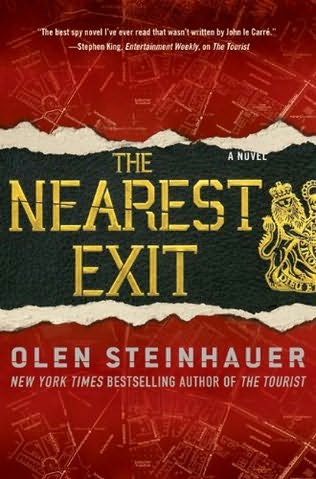
Goulden dismisses Olen Steinhauer's The Nearest Exit and calls the poor novel "a truly odious piece of political pornography."
*
Goulden laments Steinhauer's (and a good number of other spy thriller writers') lack of knowledge about the real world of espionage.
*
"Unfortunately for reality, publishers dote on writers adept at concocting off-the-wall "thrillers" that read like rantings from a psychiatric ward. Why? Nonsense sells," Goulden (seen in the below photo) wrote in his review.
* *
There are, however, Goluden notes, writers in the intelligence genre who make a point of knowing something about their subject mater before siting down at the word processor.
*
A King of the pack is Frederick Forsyth (seen in the below photo).
*
*
"The difference between Mr. Forsyth and the aforementioned imaginative hacks is that he does his homework and relies on factual research, not simply whatever nutty conspiracy nonsense should waft his way," Goulden wrote.
*
Goulden goes on to highly praise Forsyth's latest thriller, The Cobra.
*
You can read Goulden's review via the below link:
*
*
*
I interviewed Goulden for my piece on the International Spy Museum and the myth, the mystique and the history of espionage for Counterterrorism magazine.
*
You can read the piece via the below links:
*
*
*

Tuesday, August 3, 2010

My On Crime & Security Column: From Dillinger to Modern Stick-Up Men, Armed Robbers are Truly Public Enemies


The online business magazine Businessknowhow.com published my On Crime & Security column today.

My column covers armed robbery, the Hollywood glamorization of this violent crime, and criminals, such as we saw in the film Public Enemies. I also offered some tips on how to prevent armed robbery.

You can read my column via the below link:

www.businessknowhow.com/security/preventrobbery.htm
Also below is a link to my Crime Beat column on Dillinger:

http://www.pauldavisoncrime.com/2009/07/due-dillinger-look-back-at-americas_08.html

Retired Lt. General William G. Boykin Says that Islam's Primary Objective is Conquest

*
W. Thomas Smith at Guns & Patriots offers a frank and interesting interview with retired U.S. Army Lt. General William G. Boykin.
*
Boykin, former Deputy Undersecretary of Defense for Intelligence, and the former commander of the Army's super secret, elite special operations group, Delta Force, tells Smith that "Islam is not a religion, but a totalitarian way of life with a religious component."
*
You can read the interview via the below link:
*
http://www.humanevents.com/article.php?id=38329
*
*
I interviewed Lt. General Boykin a while back for Counterterrorism magazine. You can read my interview via the below link:
*
http://pauldavisoncrime.blogspot.com/2009/05/counterterrorism-q-with-ltg-jerry.html

Sunday, August 1, 2010

Richard Sorge: The Soviet's Spy in World War II Japan


The Weider History Group's web site http://www.historynet.com/ offers an interesting piece on Richard Sorge, the Soviet's spy in Japan in World War II. The piece was written by Stuart D. Goldman.

Working under the cover of a German journalist, the half-German, half-Russian Sorge reported to the GRU, Soviet military intelligence. His spy ring was eventually rolled up by the Japanese and he was hanged in 1944.

You can read the piece via the below link:

http://www.historynet.com/the-spy-who-saved-the-soviets.htm

I read a good book on Sorge a while back called Target Tokyo: The Story of the Sorge Spy Ring by Gordon W. Prange. If you're interested in Sorge, espionage and World War II, you'll find this book fascinating.


Sorge has often been compared to Ian Fleming's fictional secret agent James Bond and some state that Fleming based Bond on Sorge.

Although Sorge, like Sidney Reilly, the British spy, was a womanizer and a somewhat glamorous spy, I don't believe that Ian Fleming based Bond on the communist agent.

Fleming based Bond on the British Navy commandos and secret agents he met while serving as a World War II British naval intelligence officer. Fleming also infused Bond with a good bit of his own personality.

Fleming, of course, knew of Sorge and his accomplishments as a wartime spy. Sorge is considered to be one of the greatest spies of the 20th Century.

In 1965 the Soviets declared Sorge a Hero of the Soviet Union and commemorated his life with stamp (see below).


You can read more about espionage (and crime) via the link below to my old blog at GreatHistory.com.
*
http://greathistory.com/members/pauldavisoncrime/blogs/recent-posts