Showing posts with label spy thrillers. Show all posts

Wednesday, July 30, 2025

Yesterday's Spy Writer: My On Crime Fiction, True Crime & Thrillers On The New Batch Of Len Deighton's Reissued Paperback Spy Thrillers

When I was a teenager back in the 1960s, I was a huge fan of crime and spy thrillers (and I remain so today). 

I was weaned on Ian Fleming, and after he died in 1964 and I had read all of his James Bond novels and short stories, I looked for other spy thrillers to read, especially British spy thrillers. 

I read and enjoyed Eric Ambler, Graham Greene and John le Carre. I also read another British spy thriller writer named Len Deighton. 

Deighton’s protagonist in his first series of spy thrillers, in contrast to Ian Fleming’s high-living James Bond, was a working-class smart aleck. 

Deighton employed a first-person unnamed narrator for The Ipcress File and the other early thrillers. I liked the Deighton narrator and his sardonic voice. I also liked Deighton's clever plots and his vivid descriptions of characters, places, things and food (Deighton is an accomplished cook).   

When Michael Caine portrayed the unnamed spy in the 1960s film versions of The Ipcress FileFuneral in Berlin and Billion Dollar Brain, Caine suggested to the producers that they call him Harry Palmer. I thought Michael Caine nailed the character, and I enjoyed the films nearly as much as Deighton's novels.     

Over the years I’ve read nearly all of Deighton’s novels, including his WWII military history novels and his clever alternative history novel, SS-GB, which takes place in a post-WWI Briton that the Nazis have defeated and now occupy. 

A book cover with bullets on the ground

AI-generated content may be incorrect.

Deighton, today at 96, must be pleased that Grove Atlantic is reissuing his novels. I have copies of the reissued The Ipcress Files, Funeral in Berlin, and SS-GB, three of my favorite Deighton thrillers, and I recently reread them. I believe they hold up nicely after all these years. 

And this August Grove Atlantic will reissue Deighton’s Yesterday's Spy, Billion Dollar BrainAn Expensive Place to Die and Spy Story

Grove Atlantic offers descriptions of the upcoming reissued thrillers: 

Steve Champion as a flamboyant businessman, former leader of an anti-Nazi network in the Second World War and a man surrounded by mysteries. There are rumors he is still in the spying business. The Department is nervous, so Champion’s oldest wartime ally is sent to the South of France to investigate. 

It’s time to re-open the file on Yesterday’s Spy ($17 paperback, 224 pages; ISBN: 978-0-8021-6325-7; Aug. 12, 2025), even if that could mean killing an old friend.

A person standing at a machine

AI-generated content may be incorrect.

Billion Dollar Brain ($17 paperback; 304 pages; ISBN: 978-0-8021-6327-1; Aug. 12, 2025) is a classic spy thriller of lethal computer-age intrigue and a maniac’s private cold war, featuring the unnamed narrator from The IPCRESS File. He travels from the bone-freezing winter of Helsinki, Riga and Leningrad to the stifling heat of Texas, and soon finds himself tangling with enemies on both sides of the Iron Curtain.   

In An Expensive Place To Die ($17 paperback; 240 pages; ISBN: 978-0-8021-6323-3; Aug. 12, 2025), an unnamed spy is sent to Paris to deliver a file of nuclear secrets to a French doctor but soon finds himself sucked into a twilight world of sex, blackmail and hidden motive, where friend and enemy become indistinguishable.  

A book cover with a ship and text

AI-generated content may be incorrect.

After six weeks in a nuclear submarine gathering computer data on Soviet activity, the mysterious, bespectacled spy known as Patrick Armstrong is desperate to return home in Spy Story ($17 paperback; 224 pages; ISBN: 978-0-8021-6319-6; Aug. 12, 2025). But when he arrives at his London flat, it appears to be occupied by someone who looks just like him—and he finds himself propelled into the heart of a conspiracy stretching from the remote Scottish Highlands to the Arctic ice. 

A person in a chair with his hand on his head

AI-generated content may be incorrect.

Grove Atlantic also offers a brief bio of Len Deighton (seen in the above photo from the 1960s): 

At the Royal College of Art his teachers called him subversive, but it was his first novel — The Ipcress File — that sealed his reputation as an iconoclast. Ian Fleming called it his “Book of the Year.” Through humor, characters with real depth, and impeccable research, Len Deighton’s original voice revolutionized the modern spy thriller. 

The enormous success of The Ipcress File and the subsequent Harry Palmer spy films made Michael Caine an international star. Bomber (perhaps his greatest novel) calmly and powerfully narrates the horror of war. SS-GB, a dystopian alternative history of the Nazi occupation of Britain, challenges us to think about how we relate to authoritarian government. 

Deighton is best remembered for Cold War spy novels with defiant, working-class heroes, including the famed Bernard Sampson series and the Pat Armstrong Quartet. Deighton’s work has entered the zeitgeist and that influence can be seen today from Motörhead’s album “Bomber,” to Austin Powers’ glasses, to references to his work in the films of Quentin Tarantino.

Born in 1929, Deighton is acclaimed as not just one of the greatest thriller writers of the 20th Century but a military historian, cookery writer, and graphic artist. His extraordinary career spanned four decades, selling over 30 million books, being published in 20 languages, and never falling out of print. 

Sunday, December 5, 2021

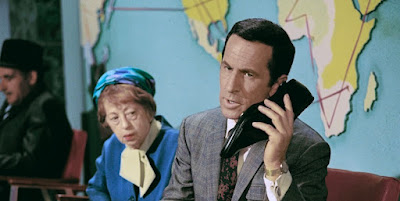
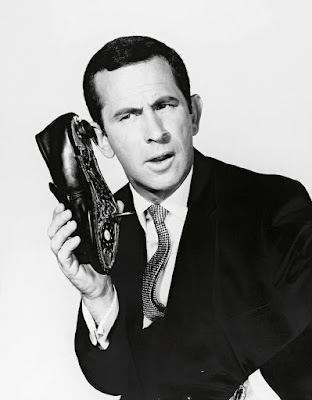
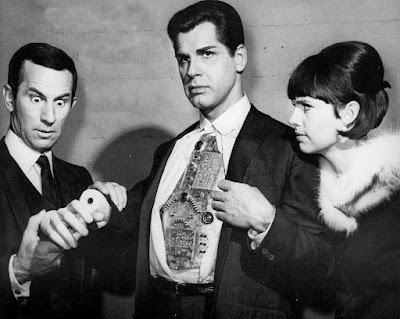
A Look Back At Mel Brooks and Buck Henry's Groundbreaking Spy Comedy TV Series, 'Get Smart'

When I was a teenager back in the 1960s, I was a huge fan of the James Bond films, TV’s Secret Agent and other spy thrillers.  

I also loved Get Smart, the Mel Brooks and Buck Henry TV spy comedy series. 

Olivia Rutigliano at Crimereads.com offers a look back at the funny and clever series.       

In the first few moments of the black-and-white pilot episode of Get Smart, the camera hangs over an audience in a concert hall—Symphony Hall, the narrator tells us, in Washington D.C. Somewhere in the city is the headquarters for a secret counter-espionage organization known as “CONTROL.” And as the camera moves around the audience, capturing the group in evening dress watching in rapt silence as the orchestra plays, the narrator informs us, that somewhere in the audience “is one of CONTROL’s top employees, a man who lives a life of danger and intrigue, a man who has been carefully trained never to disclose the fact that he is a secret agent.” 

At that very moment, in the middle of the concert hall, a phone rings. It’s a loud, jangly telephone ring, the kind from a mid-century rotary phone, and it echoes throughout the venue. 

Watching this scene in the twenty-first century, it might not seem so jarring; how often have we sat inside crowded theaters and had our viewing experiences disturbed by the loud ringing of a phone? But this episode is from 1965, and so when the phone goes off in the middle of the theater, the patrons look around incredulously. A man stands up and hastily exists the theater and when he does, the ringing travels with him, out into the hall. 

Ducking into a supply closet, he takes off his right shoe and removes the bottom, revealing a tiny, compact phone receiver with built-in rotary dial along the sole. “This is Smart,” he says into the shoe (which it is, but then he elaborates): “Maxwell Smart… Agent 86.” He learns from his boss that the evil organization KAOS is up to a nefarious plan, and so promises to get right down to headquarters. 

Of course, this will take a moment, because in the course of answering his shoe-phone, he has unwittingly locked himself in the closet. 

You can read the rest of the piece via the below link:

Get Wise to Get Smart ‹ CrimeReads

You can also watch a Get Smart clip about “the Cone of silence” from the first episode via the below link:

Get Smart - Cone of Silence (from episode 1) - YouTube


Friday, June 11, 2021

The Cooling Of John le Carré

 As I noted in my Washington Times review of a biography of the John le Carre, I’ve been a reader and admirer of Mr. le Carre since the 1960s, although I don’t subscribe to his leftist views and his anti-Americanism. 

His later novels are not as good as his earlier ones, in my view, as they are marred by his political shrillness. Yet I continue to read Mr. le Carre because he is, after all, a fine writer. 

Michael J. Lewis at the New Criterion offers a piece on the late spy novelist. 

John le Carré died at the age of eighty-nine last December, a good thirty years after the end of the Cold War that his spy novels chronicled. He certainly knew whereof he wrote. As a British intelligence agent stationed in West Germany at the height of the Cold War, he had an insider’s view of two of its key crises: the shocking creation of the Berlin Wall on a single day in August 1961, and the defection to Moscow of Kim Philby in early 1963. Those events provided the raw material for his best books. The Spy Who Came in from the Cold (1963) begins and ends with the shooting of agents trying to cross the Berlin Wall. Tinker, Tailor, Soldier, Spy (1974) was the story of a Philby-like “mole” who successfully burrowed himself into the topmost echelons of the secret service. 

Despite le Carré’s political turn, which became painfully anti-English and anti-American, I continued to read every new novel the week it came out. What made these and le Carré’s other dozen-odd Cold War novels so remarkable is their distinctive point of view, which is not that of a glamorous jet-setting spy like Ian Fleming’s James Bond (introduced in 1953 with Casino Royale) but that of the colorless bureaucrat working behind a desk. 

Le Carré’s rejoinder to Bond was the laughably unglamorous George Smiley. Short, pudgy, and nearsighted, he was a devotee of seventeenth-century German poetry and the perpetual dupe of his lovely but straying wife. But he was not lacking in courage, having worked undercover in Nazi Germany. A Murder of Quality, le Carré’s second novel, gives a deft sketch: “Looks like a frog, dresses like a bookie, and has a brain I’d give my eyes for. Had a very nasty war. Very nasty indeed.” 

Smiley’s bureaucratic world—that of tiresome interviews and equally tiresome debriefings, of battered iron desks and shabby damp raincoats—is essentially that of le Carré himself, who did his spying under diplomatic cover, first in the British embassy in Bonn and later as Consul in Hamburg. He did his writing undercover as well; protocol required him to conceal his real name, David Cornwell, under a penname, for which he chose the French for “the square.” For much of his career he maintained the polite fiction that he had been a minor diplomatic functionary; not until 1993 did he formally concede that he had indeed been an intelligence officer, something that had been obvious to the whole world from the beginning. 

… Some were affronted by the new and strident note of anti-Americanism of books like Absolute Friends, whose “politicised ranting” startled even the left-wing Guardian: “in the scheme of this novel there is no other villain in the modern world than America.” Others were dismayed by what seemed to be an increasingly flat and schematic characterization. 

… Le Carré seemed to have lost what had been his strong suit, his gift for suggesting the unspoken transactions that take place beneath an intimate conversation—the resentments, manipulations, tacit understandings—the conversation that is at once negotiation, interrogation, and seduction. 

You can read the rest of the piece via the below link:

The cooling of John le Carré by Michael J. Lewis | The New Criterion 


You can also read my Washington Times reviews of John le Carre’s books via the below links:


Saturday, May 8, 2021

My Crime Beat Column: A Look Back At The First James Bond Film, 'Dr. No'

On this day in 1963 American film viewers were introduced to Ian Fleming's iconic character, Bond, James Bond, as the late great actor Sean Connery introduced himself on screen, in Dr. No. 

As a pre-teen growing up in South Philadelphia in 1963, my crowd went to the Colonial movie theater every Saturday afternoon no matter what film was playing.

One afternoon, as I sat in the third row with my friends, a black and white image of the inside of a gun barrel came up on the screen and a man walked by, twirled and fired his gun. Red blood poured down on the barrel. I was hooked. 

At this point in my life, I had not heard of Ian Fleming, James Bond or Dr. No. I loved the film, loved the actor who portrayed Bond, Sean Connery, and I loved the character of James Bond. I’ve been a James Bond fan and an Ian Fleming aficionado ever since. I
an Fleming and the Bond novels and films sparked my teenage interests in exotic travel, espionage, crime, history, and of course, women.          

The introduction of Connery’s Bond, clad in a tuxedo at a gambling casino, stating his name as “Bond,” - cue the Bond theme as he lit a cigarette - “James Bond,” was just terrific. 

For this young movie fan, I had never seen a movie character as cool. And it only got better as the film continued.

There are so many other iconic scenes in the film, such as the three Jamaican blind beggars (Three Blind Mice) turning on the British intelligence chief and shooting him with handguns equipped with suppressors, the tarantula crawling up Bond as he lay in bed, Bond shooting Professor Dent in cold blood, Honey coming out of the ocean, sexy in her white bikini complete with a knife on a belt, Dr No sneaking up behind Bond and stating “One million dollars” in answer to his question of how much his criminal haunt cost, and Dr No describing his backstory and evil plot during dinner. 

I returned to the Colonial many more times and watched Dr. No again and again. 

The first Bond film was atmospheric, thrilling, action-packed, suspenseful, clever and sexy. It is not a perfect film, but it had all of the ingredients I would rediscover when I later saw the second Bond film, From Russia With Love, and soon after began to read Ian Fleming’s James Bond novels.

When I read Dr. No, I was sorry that the film makers did not use the deadly obstacle course Dr. No designed to test a man’s pain limit but I was glad they passed on filming Bond’s fight with a giant squid, which was a bit much. I’m also sorry that they didn’t show how Honey’s pain test of being tied down while crabs crawled over her. In the novel, I liked the irony that a simple island girl knew more about Jamaican crabs than the brilliant scientist Dr. No, as she knew they wouldn’t harm her. 

The film only showed Bond crawling through the vent system over heated plates and then hit with a current of water (which cooled the plates, thank you), and only showed Honey tied down with crabs around her.

Dr No’s director, Terence Young, a former WWII tank commander, was a stylish and sophisticated man, like Ian Fleming. He took Sean Connery under his wing and dressed him and taught how to act as James Bond. (Young later directed From Russia With Love and Thunderball). 
 

In addition to Sean Connery, the film has a fine cast with the beautiful Ursula Andress as Honey, Joseph Wiseman as Dr No, John Kitzmiller as Quarrel, Anthony Dawson as Professor Dent, and of course, Bernard Lee as M and Lois Maxwell as Moneypenny. 

I’d like to edit the film and remove the cringe-worthy line in which Bond orders Quarrel to “fetch my shoes,” (the line did not appear in the novel as Bond respected Quarrel, who also appeared in Fleming’s earlier novel, Live and Let Die) and edit out some of the film’s mistakes. 

The film’s editor, Peter Hunt, who later directed one of the best films in the series, On Her Majesty’s Secret Service, said that in the 1960s, directors and editors had no idea that viewers would one day own personal copies of the film and would watch it time and time again, picking up on the mistakes. He said they glossed over mistakes, thinking that the one-time viewer would not catch them.


Ian Fleming (seen in the above photo with Sean Connery on the Dr. No set) reportedly initially described the film based on his novel as “Dreadful, simply dreadful."  

He also initially disapproved of Connery, a working-class Scotsman, as Bond. But he later warmed to him, writing in a letter to a friend that Connery had the right physique for Bond and that the actor was a fine man. 

Much has been made of the fact that when Fleming wrote Bond’s premature obituary in You Only Live Twice, he noted that the character was half Scot and half Swiss. Many people believe this was due to Connery’s performance, and perhaps this was partly true, but Fleming was Scottish himself (although he grew up mostly in London), and he gave Bond many of his personal attributes.    

Although he knew Bond was made for the movies, Fleming could not have realized just how successful the film series would be, and that the films would ensure that future generations of readers, millions of them, would go on to read his novels. 

I was one.    

You can watch a video clip from Dr No where Connery introduces himself via the below link:  


You can listen to the cool James Bond theme song via the below link:

James Bond 007 Theme Tune (original) - YouTube

And you can watch a documentary film on the making of Dr. No via the below link:  

Inside Dr. No Documentary - YouTube 


Wednesday, December 23, 2020

Collection Of Great Spy Stories: My Washington Times 'On Crime' Column On Otto Penzler's 'The Big Book Of Espionage'

 The Washington Times published my On Crime column on Otto Penzler’s Big Book of Espionage. 

I’ve loved spy thrillers since I was a teenager, and I’ve always loved short stories, so I was pleased that Otto Penzler has edited “The Big Book of Espionage Stories.”  

Otto Penzler, the president and CEO of MysteriousPress.com and the owner of the Mysterious Bookshop in New York City, is the editor of previous fine anthologies, such as “The Big Book of Reel Murders: Stories That Inspired Great Crime Films” and “The Big Book of Pulps.”  

This collection of espionage stories covers WWI, WWII, the Cold War and beyond. Included is W. Somerset Maugham’s “The Hairless Mexican,” Eric Ambler’s “The Army in the Shadows,” Ian Fleming’s “For Your Eyes Only,’ Charles McCarry’s “The End of the String,” and other terrific spy stories. 

“Espionage has been called the second oldest profession, and with good reason,” Mr. Penzler writes in the introduction. “Sun Tzu’s ‘The Art of War,’ a famous textbook on waging an effective war, devoted a great deal of significance to espionage and the creation of a secret spy network. All warfare is deception, he stated, and “Be subtle! Be subtle!” he intoned, and “use your spies for every kind of business.” It was published in 510 BC. 

“The craft of espionage has fascinated people ever since stories were told, whether orally, on the printed page as journalism or fiction, or on a screen. The secrecy, manipulation, deception, and potential danger combine to produce an aura of romance and adventure to the enterprise. 

“Those who are actually involved in the world of espionage and counterespionage have quite a different view, recognizing and accepting the fact that it is mostly boring work, gathering information from technical journals, computers, overlong reports, and often self-serving memos, then analyzing the staggering mountain of information in order to filter out the tiny nuggets of data that may add a worthwhile grain of gold to a dossier that may never be used for any serious purpose.” 

But Mr. Penzler notes that once espionage stories get into the hands of creative authors, much of the dull work is ignored, and the more colorful work is highlighted and embellished. He writes that W. Somerset Maugham’s “Ashenden, or The British Agent,” the 1928 book of connected short stories about espionage in World War I, marked the birth of the realistic espionage story in which ordinary people are caught up in extraordinary circumstances. 

... “It can be no surprise that there is a long history of real-life espionage agents employing the secrets of their surreptitious trade, embellishing and fictionalizing them for the printed page,” Mr. Penzler writes. “W. Somerset Maugham, Ian Fleming, John le Carre, and Graham Greene had worked for the Secret Service, and so did Charles McCarry (1930–2019), who spent eleven years as a deep cover agent for the Central Intelligence Agency in Europe, Asia, and Africa.” 

Ian Fleming’s character James Bond, Mr. Penzler writes, has challenged Sherlock Holmes as the world’s most recognizable crime fighter. 

You can read the rest of the column below or via the below link:

https://www.washingtontimes.com/news/2020/dec/23/book-review-the-big-book-of-espionage/ 


You can also read my spy story, Cat Street, via the below link:

Paul Davis On Crime: My Crime Fiction: "Cat Street"  

Thursday, July 23, 2020

William Boyd: The Spies Who Lived Here: How I Found James Bond’s Precise Address


British novelist William Boyd, who wrote the James Bond continuation novel, Solo, tracked down what may been the London addresses of Ian Fleming’s fictional secret agent James Bond, as well as the London address of John le Carre’s fictional spymaster George Smiley, in a piece in the London Times Literary Supplement, TLS.

I am in London. In Chelsea to be precise, at the entrance to Wellington Square off the King’s Road, where I am being interviewed for the French radio station RTL – à distance sociale – about James Bond. The reason why we’re at Wellington Square is because this is where James Bond lived. Obviously, James Bond is a fictional character and didn’t actually live anywhere. However, it is strange how in the case of some fictional characters a kind of reality begins to take over their lives, as if they really did live and breathe, had an actual address and a mortgage.

I point out to the interviewer that, a few yards across the King’s Road from where we’re standing, almost directly opposite, is the entrance to Bywater Street. Believe it or not, I tell him, another famous fictional spy, John le Carré’s George Smiley, lived in Bywater Street. This extraordinary coincidence causes some excited consternation and we stop recording and cross the road. In Bywater Street, we start recording again. “George Smiley lived here? Amazing. What number?” the interviewer asks. Number 9, I say. You see what I mean.

I suppose the most famous fictional abode for a character is Sherlock Holmes’s 221b, Baker Street. James Bond’s address and George Smiley’s have yet to achieve the same legendary status, but give them time. When I came to write my James Bond continuation novel, Solo (2013), I set myself the task of re-reading all of Ian Fleming’s Bond novels in chronological order, pen in hand, making notes, with the idea that all the texture and detail in the new novel would be classic Bondiana, sourced in Fleming..

There is another significant reason why Wellington Square might have proposed itself as a suitable address for Bond. In the late 1940s and early 50s Fleming was the Foreign Manager for the Sunday Times, a person of power and influence at the newspaper. During this period, the chief book reviewer for the Sunday Times was Desmond MacCarthy, a central member of the Bloomsbury Group. As it happened, MacCarthy and his wife Molly lived in Wellington Square. They were legendary entertainers and their home became a kind of salon. Cyril Connolly was one of MacCarthy’s young protégés and a regular at the soirées – and, what’s more, Connolly and Fleming were close friends. All three were Old Etonians, incidentally.

The circumstantial evidence is compelling. It is highly probable that Fleming went to one or more of the MacCarthys’ parties in Wellington Square, either through his own connections with MacCarthy via the Sunday Times or as a friend of Connolly. MacCarthy died in 1952, the year before Casino Royale was published, though it wasn’t until Moonraker, three years later, that Bond’s Chelsea flat received its first mention.

…The MacCarthy house is to be found in the eastern corner of Wellington Square. Bond’s flat, according to Fleming, was on the ground floor and was described in From Russia, with Love (1957) as having “a long big-windowed sitting room”. The ground-floor window of the MacCarthy house fits that description perfectly. One other sliver of circumstantial evidence I would offer is that, in the same novel, Bond’s sitting room is described as “book-lined”. Most readers wouldn’t think of James Bond as an intellectual but books would certainly be the most prominent aspect of the MacCarthy house’s decor. In fact, Fleming took pains to stress Bond’s wide reading, despite the fact that Bond (Eton and Fettes) had no tertiary education. Bond makes reference to many books and writers in the novels: Eric Ambler, Lafcadio Hearn, John Milton, Ralph Waldo Emerson, Edgar Allan Poe, Sheridan le Fanu and Rupert Brooke among others. Bond is a very well-read spy.

You can read the rest of the piece via the below link:


Thursday, April 23, 2020

The Poet Laureate Of The CIA: My Washington Times 'On Crime' Column On A Look Back At Spy Novelist Charles McCarry


The Washington Times published my On Crime column on the late spy novelist Charles McCarry.

I wonder what the late, great spy novelist Charles McCarry would make of the COVID-19 outbreak and the Chinese connection, be it the Wuhan “wet markets” or the science labs near Wuhan.

McCarry, who died last year at the age 88, set his 2013 novel “The Shanghai Factor” in China.

“China, hidden and mysterious, has always interested me,” McCarry said in an interview with Publisher’s Weekly. “I’ve written about it in other novels before ‘The Shanghai Factor,’ and in order to save the life of my series hero, Paul Christopher, locked the poor fellow up for 10 years in a one-prisoner jail in a desert in Xianjing province.”

In “The Shanghai Factor,” the narrator, a 29-year-old American intelligence officer in China, explained how he first encountered a Chinese woman named Mei. “One day, as I pedaled along Zhonghan Road, she crashed her bicycle into mine. In those days I was new to the life as a spy, so my paranoia wasn’t yet fully developed, but I immediately suspected that this was no accident. My first thought was that Chinese counterintelligence had sniffed me out and sent this temptress to entrap me. Then I took a look at the temptress and wondered why I should mind.”

Later in the novel, McCarry writes, “I was sure from the start that she was on duty, that she reported everything, that she had bugged my room. The funny thing was, she never asked for information, never probed.”

Mei, McCarry wrote, showed no curiosity about his past history or life.

“Probably this was because she had been briefed about this matter by the folks at Guoanbu, the Chinese intelligence service (within Headquarters called “MSS,” short for Ministry of State Security) and had no reason to ask.”

I enjoyed “The Shanghai Factor,” as I have his other novels, including “The Tears of Autumn” which in my view is his finest novel. This brilliant novel covers the assassination of President Kennedy and the Vietnam War, and although I don’t subscribe to the conspiracy he portrays in the novel, I recommend highly this most interesting and insightful spy novel.

McCarry knew something about espionage, having served as a deep cover CIA officer for 10 years in the 1950s and 1960s. The New Republic called Charles McCarry “the poet laureate of the CIA.” He has also been called the American John le Carre, a spy novelist he is often compared to.

You can read the rest of the column below or via the below link:


Thursday, March 19, 2020

My Washington Times 'On Crime' Column On Ben Macintyre On Ian Fleming And James Bond


The Washington Times published my weekly On Crime column on Ben Macintyre’s take on the late, great thriller writer Ian Fleming and his iconic character James Bond.

With the release of latest James Bond film “No Time to Die” postponed from April to November due to the COVID-19 outbreak, millions of Bond fans around the world will have to be content to watch the older Bond films, or perhaps they should go back to the original source — Ian Fleming’s James Bond novels.

They could also read some of the many books written about the popular character and his creator, such as two fine biographies of the late Ian Fleming, John Pearson’s “The Life of Ian Fleming” and Andrew Lycett’s “Ian Fleming: The Man Behind James Bond.”

Ben Macintyre, a columnist for the London Times and the author of “The Spy and the Traitor: The Greatest Espionage Story of the Cold War,” (which I reviewed in these pages) “A Spy Among Friends: Kim Philby and the Great Betrayal” and “Agent Zigzag: A True Story of Nazi Espionage, Love and Betrayal,” also wrote an interesting book called “For Your Eyes Only: Ian Fleming and James Bond.”

He wrote the book in 2008 as a companion to the Imperial War Museum exhibition that was held to celebrate the centenary of Ian Fleming’s birth. The exhibition examined the late thriller writer and his fictional character in historical context. The exhibition also looked at Ian Fleming’s experiences as a naval intelligence officer in World War II and how they informed his plots and characters.

Ben Macintyre was chosen to write the companion book because of his nonfiction books on espionage and his many columns on Ian Fleming and James Bond, including one column that revealed that there was a Nazi plot to rob the Bank of England, which perhaps inspired Ian Fleming to use a similar plot to rob Fort Knox in his great thriller “Goldfinger.”

Ian Fleming admitted his plots in the novels were fantastic (the films much more so), but he also said they were often based on the real world of intelligence.  

I recall Ben Macintyre telling me that his book on Fleming and Bond was a personal investigation of two lives, one real and one fictional.     

You can read the rest of the column below or via the below link:


https://www.washingtontimes.com/news/2020/mar/18/ben-macintyre-on-ian-fleming-and-james-bond/ 

Note: The below photos are of Ben Macintyre, Ian Fleming. Sean Connery as James Bond in Dr. No, and Ian Fleming as a WWII naval intelligence officer:


Tuesday, November 27, 2018

Trained To Protect Foreign Dignitaries, Hunt Fugitives, And Write Tom Clancy Novels: How A US Marshal Inherited An Iconic Spy Fiction Series


CrimeReads.com offers a piece by thriller writer Marc Cameron (seen in the above photo) that looks back on his youth and former career as a police officer and a U.S. Marshall as he continues writing about Tom Clancy’s character Jack Ryan in Oath of Office.
A few years ago, at my thirtieth high school reunion, my wife and I sat beside a friend of mine named Merri—a girl on whom I had a massive crush my freshman year.
“You know what I remember about Marc?” Merri said to my wife in her honeyed Texas accent.
I braced myself.

“He always wanted to be a spy…”
Merri could have made a worse revelation. My wife already knew I was odd in college, so the fact that I was odd in high school was not news.
I can’t remember a time when I wasn’t reading, writing, or imagining adventure stories. My aunt sent me a box of Hardy Boys mysteries when I was eight, and I burned through those by the time I hit the fourth grade. By middle school, there was usually a Fleming or Forsyth on my nightstand—along with assorted notebooks filled with my attempts to write stories of my own. The Hunt for Red October came out about the time I joined the police department, and I quickly added Tom Clancy to my reading pile.

As a would-be writer, I read with a pencil, noting story structure and interesting turns of phrase. Plot ideas inspired by other books and my own work escapades filled countless legal pads. I felt certain that the fistfights, foot chases, and high-speed pursuits I was involved with would somehow, someday, end up in a novel.
When I was a green detective, a savvy Texas Ranger helping me with my first homicide investigation told me to write down everything I observed, even stuff that didn’t seem important at the time. It was excellent advice for a detective—and a writer. I chased bad guys during work hours and banged away on my Smith Corona typewriter during my off time. I’d piled up a sizable stack of rejection letters by the time I left the PD for a position as a deputy US marshal. Tom Clancy’s The Cardinal of the Kremlin had just come out in paperback and I took a copy with me for my four-month stay at the Federal Law Enforcement Training Center near Brunswick, Georgia.

… I’ve always had a vivid imagination, but I never imagined that I’d someday have the opportunity to carry on writing Tom Clancy’s iconic characters. One of the plots of last year’s Power and Empire let me explore what John Clark might do if faced with similar circumstances to those in Without Remorse.

In The Cardinal of the Kremlin, Clancy (seen in the below photo) wove plenty of interesting technical information into the story, but Cardinal is at its core, a book about spies, the case officers who handle them, and the counter intelligence operatives who hunt them. My aim was to give Oath of Office that same flavor.

Over the years since high school, I was fortunate to have a job that let me drive fast, carry a gun, and fight a bad guy or two—experiences that were invaluable to my writing. Despite my dreams from back when I had that crush on Merri, I never did get to be spy. But, thanks to this new job writing about Jack Ryan, John Clark, Mary Pat Foley, and countless other Clancy characters, I get to come up with stories for some of the best.

You can read the rest of the piece via the below link:


Saturday, September 22, 2018

A Look Back At Eric Ambler, The Father Of The Modern Thriller


As a teenager in the 1960s I devoured crime and spy thrillers. I especially loved the British spy thriller writers, such as Ian Fleming, Graham Greene, Len Deighton, Frederick Forsyth and John le Carre.
And I’ve read, and reread, nearly all of Eric Ambler’s fine thrillers, especially The Mask of Dimitrios, one of my favorite thrillers.
Neil Nyren at CrimeReads.com offers a look back at this late, great thriller writer.
Eric Ambler was the father of the modern thriller. That’s a big statement, but you don’t need to take my word for it.  John Le Carré called him “the source on which we all draw,” and Len Deighton, “the man who lit the way for us all.”  Frederick Forsyth said he was the man “who took the spy thriller out of the gentility of the drawing room and into the back streets where it all really happened,” and Graham Greene declared him simply “unquestionably our best thriller writer.” He won many Edgar and CWA Dagger awards, including lifetime achievement honors from both, and in 1981, was made an officer of the Order of the British Empire.
Before Ambler, international thrillers tended to be dominated by such writers as John Buchan, Herman Cyril McNeile (known as “Sapper”), and their many imitators. These books were often rousing adventures, but filled with improbabilities, both of plot and character, plus a hearty jingoism and a well of right-wing, Old World prejudice that would curl your hair today.
Ambler was having none of it. The villains were totally implausible, he wrote in his memoir, titled with typical Amblerian double-meaning, Here Lies, and the hero “could be a tweedy fellow with steel-grey eyes and gun pads on both shoulders or a moneyed dandy with a taste for adventure. He could also be a xenophobic ex-officer with a nasty anti-Semitic streak. None of that really mattered. All he really needed to function as hero was abysmal stupidity combined with superhuman resourcefulness and unbreakable knuckle bones.”
Ambler’s heroes, especially in his brilliant run of between-wars novels published between 1936 and 1940, are very unexceptional sorts, the quintessence of ordinary people caught up in extraordinary circumstances. They are often engineers or journalists or writers who stumble unexpectedly into danger through a combination of bad judgment and bad luck, and then have no choice but to try to dig themselves out of it on their own, because no one is likely to help them. They are often solidly middle class, raised in a world of black-and-white certainties that they discover has been completely obliterated by an infinite variety of grays.

You can read the rest of the piece via the below link: