Monday, January 23, 2023

Happy 86th Birthday To Joseph Wambaugh, Former LAPD Detective Sergeant And The Author Of Classic Police Novels

Happy 86th birthday to Joseph Wambaugh, former LAPD detective sergeant and best-selling author of classic police novels such as The New CenturionsHollywood Station and The Choirboys, as well as classic true crime books such as The Onion FieldEchoes in the Darkness, and The Blooding.   


You can read my Counterterrorism magazine Q&A with Joseph Wambaugh via the below link:

Paul Davis On Crime: My Q&A With Former LAPD Detective Sergeant And Best-Selling Author Joseph Wambaugh

You can also read my Philadelphia Weekly Crime Beat column on Joseph Wambaugh via the below link: 

 Paul Davis On Crime: Do You Love Cops? Read Joseph Wambaugh. Do You Hate Cops? Read Joseph Wambaugh: My Philadelphia Weekly 'Crime Beat' Column On LAPD Detective Sergeant Turned Best-Selling Author Joseph Wambaugh 

And you can read my Washington Times On Crime column on Wambaugh and The Onion Field via the below link:

Paul Davis On Crime: My Washington Times On Crime Column: A Look Back At Joseph Wambaugh's 'The Onion Field'

Sunday, January 22, 2023

My Crime Fiction: 'Crime Boat'

The below short story originally appeared in American Crime Magazine last year. 

Crime Boat 

By Paul Davis

Back in 2009, I called the bold bank robbers in South Philadelphia the 'Cook Crooks' in my crime column in the local paper.  

I called them the Cook Crooks, as the armed bank robbers wore a mask and a tall, white and pleated chef’s hat as they held up bank employees at gunpoint in a series of bank robberies in South Philadelphia. 

I interviewed FBI Supervisory Special Agent Michael Virgillo at the time, as he headed up the task force committed to capturing the armed criminals. He agreed that the chef’s hat threw off witnesses. 

“They all described the chef hats in great detail, but they could not describe anything else about the bank robbers,” Virgillo told me. “The hats were an attention grabber.” 

Two weeks ago, I received a call from a local defense attorney who told me he was calling on behalf of his client, who was serving a long federal prison term at FCI Fairton in Fairton, New Jersey. He said his client read my weekly newspaper column and wanted to talk to me about the series of bank robberies in the mid-2000s. 

I ventured from my South Philly home to Fairton, New Jersey and entered the mid-security level federal prison. I was escorted to an interview room, where John Kelly was waiting for me. He was younger than me, but he looked older, as he was rail-thin, gray and had a long, creased face. I shook his hand, took out my pen, notebook and tape recorder and laid them on the table between us, and then sat down. 

Kelly was one of the Cook Crooks. He said he read my weekly column, and like me, he was from South Philadelphia. Also, like me, he served in the U.S. Navy, although his service was some years after mine. 

Kelly wasted no time and went right into his story. 

Kelly, Pat Collins and Bob Reilly were boyhood friends and '2 Streeters.' While in high school they belonged to an Irish American street corner gang on Second Street in South Philadelphia. Kelly was a lean teenager with sandy hair, Reilly was short and wiry with light brown hair, and Collins was tall, dark and muscular. 

Kelly was a quiet, unassuming young man and Reilly was good-natured and funny, but their leader, Collins, was a tough, vicious, and intelligent teenager. Collins planned the small-time burglaries and armed stick-ups that the trio committed in their last year of high school. They committed the crimes as much for fun and excitement as they did for the money. They were never caught and none of the young men had a police record. 

After the three graduated high school, Kelly joined the U.S. Navy and served as a coxswain (pronounced cox’s’n) in charge of the captain’s small boat, called a 'gig,' on a guided missile frigate in the Mediterranean Sea. Reilly joined the Carpenters’ Union and Collins worked odd jobs until he was old enough to join the Philadelphia Police Department. 

After leaving the Navy, Kelly became a bank guard, Reilly worked as a carpenter on construction sites in Philadelphia, and Collins worked as a patrolman, cruising the streets of South Philly’s 3rd District. 

Collins remained a crook, even though he wore a policeman’s uniform. He took bribes, stole money and drugs from crime scenes, and extorted money from low-level criminals. When he felt Internal Affairs investigators closing in on him, he resigned abruptly from the police department. 

Collins rekindled his friendship with Kelly and Reilly. He was pleased that Kelly was a bank guard. He asked Kelly for the best time and day to rob the bank where he served as a guard. 

On the day of the planned robbery, Kelly called in sick and sat behind the wheel of a stolen car as Collins and Reilly went into the bank, waving handguns and shouting while wearing masks and the tall chef’s hats. 

They gathered up the money from the tellers and walked calmly out to the car. They climbed in and Kelly drove off. 

The bank robbery went off smoothly, just as Collins planned, and Collins’ idea of wearing chef’s hats made them all laugh. The trio went on to rob several more banks, and the TV news and newspapers made them out to be something of a curiosity due to the chef’s hats. 

The Philadelphia Police and the FBI were not amused. 

With his share of the illegal money, Collins bought a house with a dock in Wildwood, New Jersey and a 42-foot Silverton white fishing boat. Reilly, the carpenter, built a secret compartment in the boat’s cabin to hold the bulk of the trio’s stolen money.  

Collins named the fishing boat 'Crime Pays.' Reilly thought that was funny, but Kelly was concerned that the name would draw unwanted attention towards them. Collins replied that as an ex-cop, he could get away with the name. 

Collins loved to go to sea with his partners, although he knew nothing about boats or the sea. Kelly urged Collins to take the Coast Guard's small boat course, but Collins never did. He used Kelly, the former sailor, to take the boat out and Collins learned the basics from watching Kelly. Once out at sea, Collins would discuss their robbery plans as they drank beer and downed shots of whiskey.   

Things went on smoothy for several years, until they robbed a bank on Oregon Avenue in South Philadelphia. Exiting the bank, Collins slammed into a uniformed policeman who was coming in. The young policeman saw the mask and the chef’s hat on Collins' head, and he pulled his Glock service firearm out of its holster. Collins, who had his gun in his hand, shot the police officer in the head, killing him. 

Although Collins was a former cop, he felt no guilt in killing the police officer. As he later told his partners, it was kill or be killed. 

The TV news and the newspapers no longer treated the bank robbers as a curiosity, as they were now vicious cop killers. Kelly and Collins headed to Wildwood, New Jersey to hide out, and Reilly headed to his cabin in the Pocono Mountains to lay low until things calmed down. But even after several months, things did not calm down for the cop killers. 

In Wildwood, Collins asked Kelly to take Crime Pays out to sea. Collins cut the engine and told Kelly that he wanted to sell his South Philly and Wildwood houses and then take the boat to Florida, where he had a third home. He wanted Kelly and Reilly to join him in Florida.  

Kelly objected, as he had a wife and young son in South Philly. Collins, who had already sent his girlfriend to Florida, told Kelly to leave his family and then send for them later. 

Kelly, the usually quiet and compliant one, said no firmly. He said they should contact Reilly and they should evenly split up the money and then go their separate ways. 

Collins, stone-faced and silent, pulled out a .25 semi-automatic Beretta from his pants pocket and shot Kelly in the chest. Kelly’s hands gripped his chest, cried out in pain, and then collapsed on the deck. Collins placed the Beretta back in his pocket, lifted Kelly up and slipped him overboard into the ocean. Collins started the boat and headed back to shore. 

Once back at the boat dock, Collins cleaned the boat thoroughly. He got on the phone and told a friend in real estate to sell his Philadelphia and New Jersey homes. He then called Reilly and told him to meet him in Florida. 

“Oh, by the way, John’s dead,” Collins told Reilly. 

“Shit. What happened?” 

“He died of heart failure.” 

“He had a bad heart?” 

“No. His heart failed when my bullet pierced it."

“What?” 

“Just an old joke. Meet me at my Florida house next Tuesday.”

But the meeting never took place, as Kelly, a fit and healthy man, survived the gunshot wound and several hours floating in the ocean. He was discovered bobbing in the sea and rescued by a U.S. Coast Guard cutter. 

While recovering in the hospital, Kelly asked to see the FBI. He confessed to the FBI agents of his involvement in the bank robberies and explained that Collins murdered the police officer and tried to murder him.

He told the FBI where they could find Collins in Florida and Reilly in the Poconos. 


Now sitting in Fairton prison, Kelly told me he felt bad about informing on Reilly, but he thought he was saving his life. Surely, Collins would have shot him as well. 

“I always knew Pat was a cold-hearted prick, but I didn’t think he would try to kill me,” Kelly said. 

As for Collins, Kelly asked me if I remembered what happened in 2012. 

“No, what?” 

“Hurricane Sandy,” Kelly replied. “Pat owned a boat, but he was no fucking sailor. The dummy sailed Crime Pays right into the path of Hurricane Sandy." 

Kelly said that according to the Coast Guard, the boat went down somewhere off Cape May, New Jersey during the powerful and devastating hurricane. 

"Pat washed up ashore dead, but Crime Pays sunk with all that money aboard.” 

“Well," I said. "I guess crime doesn’t always pay.”  

© 2022 By Paul Davis

Friday, January 20, 2023

My Crime Fiction: 'The Small Timer'

The below short story, my first published crime fiction, originally appeared in The Orchard Press Online Mystery Magazine in 2002: 

The Small Timer

 By Paul Davis

The shooting victims were discovered at 9 o'clock that night in an old warehouse along the Delaware River in South Philadelphia. 

I was on a "ride-along" with a Philadelphia police sergeant when his car radio alerted us to the triple homicide. The sergeant, Bill Francini, was the subject of a column that I was writing for the local paper. Not wearing a seat belt, I braced myself as Francini raced for the river. 

Arriving at the crime scene some ten minutes later, Francini pulled into a vacant space among a dozen hastily parked police vehicles. Francini ushered me around to the side of the warehouse bay, where I would not be violating the official crime scene, yet I could observe Philly’s finest do their work. 

Francini called out to his lieutenant and introduced me. The lieutenant looked at me sharply, perhaps placing me from the photo that ran with my column, and then simply nodded. He took his sergeant by the arm, and they entered the warehouse. 

From my vantage point I was able to see the three dead men in the center of the warehouse bay. All were dressed casually. A short, elderly man lay crumpled with his squat legs twisted under his torso. A snarl appeared to be etched across his face and a gunshot wound was visible just above his right ear. 

The second victim had been a big and heavy man. I’m no little guy, but this guy was truly big. He lay face up and stretched out across the ground. He died with a dumbfounded expression on his face, just below the large wound on his forehead. The third victim sat in an upright position against a wooden crate. Like the other two, he had a gunshot wound to the head. His face retained a goofy grin that looked familiar to me. 

I heard one of the crime scene investigators from South Detectives tell the newly arrived homicide detective that an anonymous caller had dialed 911 and reported the shooting. The scene looked like a professional execution, organized crime style, so the detectives called the city's organized crime intelligence squad and asked for someone to come and help ID the bodies. 

When a detective named McCollum from the squad arrived some 15 minutes later, he quickly walked among the three bodies, sidestepping the spent shell casings and blood puddles. He immediately identified the short, older man - the one the detectives with their usual black humor had nicknamed "Grouchy" - as James "Jimmy First Nickel" Martin. Martin was a known associate of the local mob in his capacity as a receiver of stolen goods. 

McCollum identified the second victim, nicknamed "Dopey," as Joey Aurelio, a strong-arm enforcer for Martin. The third victim, nicknamed "Happy," was dismissed as some small timer, as McCollum, the organized crime expert, had never seen him before. 

"Hey, McCollum," one of the detectives shouted, "This guy should be happy – he’s still alive!" 


A month later I entered the Federal Building in Center City Philadelphia and rode the elevator up to the 8th floor. I stood before the FBI’s receptionist, who was securely housed behind a sheet of protective glass. I told her that I had an appointment with Special Agent Frank Kaplan. I had come to interview Kaplan’s protected witness, Harry Sullivan - a.k.a. "Happy." 

I had been granted an exclusive interview with the sole survivor of the warehouse murders, who was now a star witness for the prosecution in the upcoming federal murder and racketeering trial of Francis "Frankie Raven" Ravelli, a particularly vicious mob captain of a particularly vicious crew of thieves, extortionists and hit men. 

Sullivan had granted me an interview, as he liked my column on the warehouse murders, and we knew each other from the old neighborhood. 

I joined the Navy on my 17th birthday and traveled to Southeast Asia about the same time the 20-year-old Sullivan was heading to state prison for the first of his many periods of incarceration. Years later, I would see him at neighborhood bars and clubs, and he would play the criminal insider, feeding me tips for my column. He liked to show me off to his cronies. 

He was quite impressed with the notion that I had become a writer. Of course, the only other writers he knew were number writers. 

Kaplan came out to the reception area and directed me to a vacant office where I saw Sullivan sitting at a conference table. Sullivan’s head was adorned with a turban bandage, and he used a cane to navigate his way back to his chair after he stood and came forward to shake my hand. I sat on the other side of the table, laid my tape recorder down and took out my notebook and pen. I threw out some obligatory questions about his health and his family before I launched into asking him a series of questions about the events that led up to the warehouse murders.


Harry Sullivan was a small-time thief. He was in his early 50s, slightly built with a drawn, pock-mocked face that was framed with longish, unruly and scruffy blond hair. Despite his looks and his profession, he was not a drug addict. Sullivan barely managed to make a proper living from his small time stealing and he often had to supplement his illicit income with a straight job. Despite his failure as a criminal, he yearned to be an arch-criminal, like Willie Sutton the old bank robber. 

Sullivan wanted to be respected. 

Sullivan’s graduation to the big time came on the day he happened to witness a head-on collision between a Volvo and a city trash truck. The driver of the Volvo was killed instantly, and the city workers were unhurt but badly shaken. Sullivan was one of the first to come to the aid of the Volvo driver, but seeing that he was beyond it all, Sullivan's criminal instincts kicked in and he lifted the man’s brown leather satchel from the front passenger seat. 

Sullivan slipped away and sprinted the two city blocks to his apartment. Once there, alone in his kitchen, Sullivan broke the lock on the satchel and dropped the contents on the kitchen table. He cried gleefully at the sight of the assortment of diamonds spread across his table. Sullivan surmised that the accident victim had been a diamond salesman or courier. 

Later, after he calmed down, he placed his haul into a large paper shopping bag and walked three blocks to Jimmy First Nickel’s appliance store. Even though Martin had a reputation of being somewhat tight with his money – hence the nickname that indicated he retained the first nickel he ever earned – Sullivan knew that he was mobbed-up and he was the man to see. 

Martin was sitting behind the counter, talking to his much younger and pretty girlfriend Gloria when Sullivan walked in. He handed Martin the bag and told him how he came to be in possession of the diamonds. Martin, a short, heavy man in his 70s, breathed hard as he rose from his chair and came around the counter to lock the door and hang the closed sign. 

Martin ran his hand through the sparse gray strands of hair that were slicked back across his head as he looked into the bag. Sullivan stood there feeling awkward, smiling a goofy smile at the strikingly beautiful, dark-haired girl. She returned his smile with a cold look of boredom. 

"I’m impressed Harry," Martin said. "This is some piece of work here. Lemme make a call and see if I can unload it tonight." 

Martin mumbled into the phone for a few minutes and then announced that he had arranged a meeting with "the Man." Sullivan felt a surge of perverse pride of a professional thief, but he was also felt fearful of entering the world of big-time crime. 

"I don’t know, Jimmy," Sullivan whined. "I think it’s better wit you as the go-between." 

"Harry, this is the big time! There must be $100,000 worth of diamonds in this bag," Martin exclaimed. "The Man wants to meet you personally." 


A few hours, a few beers later, Martin and Sullivan drove in silence to a riverside warehouse. Once inside, Martin introduced Sullivan to a large man named Joey, who lumbered towards them, his hand placed on a gun in the waistband of his slacks. Sullivan knew instantly that this was no major league buyer. He knew that Martin had gotten a bone crusher to help steal his diamonds. 

In desperation, assuming Joey had planned to kill him, Sullivan scooped a handful of the diamonds from the bag and flung them towards Joey’s face. Sullivan then dove for some stacked crates half-heartily, fully expecting to be shot and killed. 

The blast sounded like heavy artillery in the open warehouse bay. Sullivan, surprised not to be dead, scampered up and saw that Joey was stretched out. He also saw two young dark guys, neat dressers, who looked like a hundred guys Sullivan knew from the bars and clubs of South Philly. 

One held a large semi-automatic handgun, a Beretta, Sullivan guessed. The other held a shotgun, which was now trained on Martin. Getting a better look, he realized that the one with the Beretta was Frankie Raven. 

Ignoring Sullivan on the ground, Ravelli smiled cruelly as he held his Beretta to Martin’s head. 

"We’re your life-long partners, Jimmy. Didja think ya could cut us out of this deal?" 

"No, no, please," Martin cried. "I was jes introducing a couple of guys, its small time." 

"That’s not what Gloria told me, ya fuckin’ weasel," Ravelli said as he fired into Martin’s head. 

Martin dropped down to the ground like a hangman’s weight bag. Ravelli then walked slowly with a pronounced South Philly strut to where Sullivan rested against a crate. 

"I know you. You’re a small timer from Donny’s bar," Ravelli said. 

"I’m no small timer," Sullivan scoffed. "This was my job." 

"When you’re right, you’re right," Ravelli said coolly. He lifted the Beretta and pulled the trigger. 


Kaplan brought us another refill of coffee just as we were finishing up the interview. Sullivan sat in his chair puffing on one of a long string of cigarettes that he had smoked while telling his story to me. 

"You know why I really want to testify against Ravelli?" Sullivan asked. 

"Well, for starters, I would think his shooting you," I said in response. "And I know Frankie, he will certainly finish the job if given the opportunity." 

"Yeah, yeah, sure. But I really want to get up in court and put that bastard away," Sullivan said. "I want him and everybody else to know that I’m no small timer." 


Frankie Raven received a life sentence. Quote the judge, Frankie Raven, nevermore. Sullivan was booked into the federal witness protection program and was moved out west somewhere. 

As he wished, Sullivan received his moment of glory, his proverbial 15 minutes of fame. But I had to laugh when I spied what my editor placed over my column about the trial. 

"Small Timer Testifies Against Mob Boss." 

© 2002 Paul Davis  

Thursday, January 19, 2023

My Crime Fiction: 'The Big Move'

The below short story originally appeared in The Orchard Press Online Mystery Magazine in 2009: 

The Big Move

 By Paul Davis


Dominic Fortino was forced to serve out many after school detentions in the school’s small library.

Fortino was ordered to detention again on this particular day due to his attempt to push Mr. Pidot’s desk out of a second story classroom window.

Jonathan Pidot was a pompous, dumpy young man of 28 with an oversized head, wispy light hair, and huge ears that turned bright red when he became angry or frustrated. His cartoon character looks and high-pitch squeak of a voice made him the perfect foil for teenage class clowns.

He was the most hated teacher in Thomas Junior High School in South Philadelphia during the mid-1960s.

Pidot spent much of the day complaining about the excessive heat coming off the radiators in his classroom. Although it was 30 degrees outside, it was close to 90 degrees in the classroom. Pidot threw open the classroom’s oversize windows to let in the cold air, but it didn’t help much. The students were hot, but many of them were glad that the biology test scheduled for that day was postponed due to the heat and Pidot’s fit over the heat.

At one point Pidot told the class that he was going to confront the custodian and walked out of the classroom. Fortino and a few other students jumped out of their seats, picked up Pidot’s desk and attempted to push it out the window.

Although the open window was wide, the old, wooden desk jammed in the widow frame, with half of the desk and two legs dangling over the Johnson Street pavement. The more they tried to push the desk through the window, the more it wedged firmly into the frame.

Someone called out that Pidot was coming and the students rushed back to their seats. Fortino ignored the warning as he was determined to push the desk out of the window with his brute force.

“What are you doing? Are you insane?” Pidot screamed in disbelief as he entered the classroom.

Pidot was not amused by the prank, but the students’ laughter was heard throughout the school. Pidot’s large ears were flaming red as he shrieked insults at Fortino.

Fortino sat down in his seat calmly. He was impassive throughout Pidot’s verbal assault, as he was twice Pidot’s size, and he feared no one. “Big Dom,” as Fortino was known, was a teenager, but he looked like a forty-year-old man. Make that a large, tough, and rugged 40-year-old.

Winded from screaming at Fortino, Pidot threw up his hands in disgust and stormed out the classroom. He charged down the hall and bounced down the stairs to the vice principal’s office on the first floor of the school.

Later in the vice principal’s office Fortino told her that he never intended to push Pidot’s desk out of the window. It was just a joke. The vice principal was not amused. She placed Fortino on suspension and ordered him to return to school in a week’s time with his parents.

Pidot was not satisfied with the punishment and he insisted that Fortino also serve detention. Pidot was big on detention. The vice principal agreed and instructed Fortino to report to detention after classes.

At detention that afternoon in the library Pidot ordered Fortino to read something — anything. A book was out of the question, so Fortino picked up a magazine and glanced at the photos simply to placate Pidot, who sat nearby grading papers and muttering.

The “desk in the window” stunt became a huge joke throughout the school. Even the custodian, who had to dislodge the desk from the window frame, laughed about it. Like the students, the custodian hated Pidot.

The stunt so irritated Pidot that with the vice principal’s permission he formed a teacher’s committee with the goal of identifying and removing the school’s 12 most disruptive students.

Of course, Fortino was one of the designed “12 Most Wanted.” 

I was another.

I was a class clown and I used to crack jokes and offer sarcastic asides during class. I always received a good laugh when I would mimic Pidot’s catch phrase, “Is this a joke?” Pidot would often utter this phrase when students did not meet his so-called high standards of learning.

Other students picked up on my impression and when Pidot walked through the halls one would always hear several students in falsetto voices say “Is this a joke?” This infuriated Pidot and he knew I was the originator.

I was an idea man as well. I pulled my own stupid stunts, but I also conceived of pranks and mischief that Fortino and others went on to commit on my suggestion. In fact, I must now admit that it was I who suggested we push Pidot’s desk out the window. I hated Pidot and the feeling was mutual.

Pidot and his committee came up with the "Pidot Plan," which called for teachers to watch the designated 12 Most Wanted, catch us, one-by-one, in the act, and then transfer us to Daniel Boone, which was a special disciplinary school for young hoodlums.

Pidot told his fellow teachers that Fortino, for example, was not only disruptive; he was incapable of learning. One teacher on the committee, Mr. Rockland, disagreed.

Ronald Rockland was a short fireplug of a man with short-cropped gray hair. He was a tough, no-nonsense history teacher. We all thought he was a cool guy, and no one would have dared to push his desk out of a window.

Rockland, who encouraged my dream of becoming a writer, along with my English teacher, Mrs. Brancato, must have felt there was some hope for me, as he took me aside and warned me about the Pidot Plan. He advised me to stay out of trouble.

I continued to pull stunts, of course, but I was careful not to get caught. Although I had in turn warned my fellow 12 Most Wanted about the Pidot Plan, Fortino and nine other guys would eventually be kicked out of school and shipped off to Daniel Boone. 

Of the 12 Most Wanted, only Mike Rossini, who, amazingly, was a straight-A-student, and me, a class clown, minor hoodlum and marginal student, went on to graduate Thomas Junior High School.

I loved my three years at Thomas, even if I didn’t learn much there. I had a lot of fun goofing off throughout school, which is probably why I’m not a millionaire doctor living in Gladwyne today.

And Pidot, I recently discovered, was wrong about Fortino. He was capable of learning.

That afternoon in the school’s library Fortino sat and looked at magazine photos of a luxury high-rise apartment in Center City Philadelphia. He stared at the photos of a wealthy couple’s splendid furniture, electronic equipment and art. He was impressed.

Fortino was so impressed that he vowed to one day steal it all.

Along with Fortino and most of our South Philly street corner gang, I dropped out of high school in the late 1960s. I enlisted in the Navy when I was 17 in 1970 and I sailed off to Southeast Asia on an aircraft carrier. Fortino was sent up the river the same year. 

Fortino spent most of his late teens and early twenties incarcerated, and he later became a member of the local mob.


I had not seen “Big Dom” Fortino in many years so I was somewhat taken aback when I was contacted by his lawyer. Fortino was sitting in a federal cell waiting to testify against his fellow criminals. He told his lawyer that he wanted to offer me an exclusive interview before he entered the Witness Protection Program and left Philadelphia.

According to the lawyer, Fortino read my column in the local paper. Well, I suppose he may have glanced at my column photo, but knowing that he was not big on reading, I doubted that he actually read my column.

I met with Fortino in the Federal Detention Center, located across the street from the Federal Courthouse in Philadelphia. Big Dom had grown even bigger since our last meeting. He was now a massive, muscular guy, wide as a truck, and he had a face that only a hatchet could love. Fortino stood up and welcomed me with a rib-breaking hug and a couple of hard slapping thuds on the back.

We sat down on chairs facing each other across a table. I set out my notebook, pen and tape recorder on the table, and Fortino launched straight away into his story.


Fortino was a member of a rough crew that worked out of John Doe’s Bar & Grill in South Philadelphia. He had a reputation as a capable burglar and a vicious and effective strong-arm guy. He and his crew hit stores and warehouses at night. Fortino’s mob captain, Joseph “Joe Darts,” Argentieri, ran a major bookmaking and loan sharking operation out of John Doe’s. Fortino, with his killer-reputation and killer-looks, collected gambling and loan shark debts for Argentieri.

When a doorman for a Center City high-rise apartment building fell behind in his gambling debts, Fortino recalled his school days and saw an opportunity to fulfill his dream of looting a high-rise, luxury apartment. 

The doorman, Bill Canfield, was a lean, hawk-faced, 50-year-old. He was a fast-talking, ingratiating, compulsive, degenerate gambler. To clear some of his dept and remain healthy, Canfield agreed to assist Fortino.

Canfield identified the richest tenant in the building as John Joyce, a 62-year-old real estate developer. Joyce was a balding, tall, thin, almost frail man, who wore large glasses on his pinched face. He lived alone in his vast apartment, and Canfield told Fortino that Joyce entered the lobby early every Sunday morning after spending Saturday night at a girlfriend’s home.

When Joyce walked into the lobby that one Sunday morning Fortino walked up to him and rammed the four-inch barrel of a .357 Smith & Weston revolver in his side. He forced Joyce into the elevator and they rode up to his apartment. With the gun barrel laid up against Joyce’s temple, Fortino had Joyce unlock the door and disable the alarm system once they were inside. Fortino called down and had his crew come up to the apartment. The four-man crew, dressed as moving men, carried dollies, hand trucks and other moving equipment.

With swift and quiet efficiency, the four experienced men moved every stick of furniture and household item out of the apartment. They moved the load into the freight elevator and then out into a large moving truck that was parked in the back of the building. If anyone happened to see the crew at work, they would assume that a tenant was moving out of the building.

Joyce sat still in a dinning room chair, too frightened to speak or move, as the crew moved all of his belongings out the door.

“A rich guy like you should eat more,” Fortino said as he lifted Joyce from the chair with ease. The chair was the last stick of furniture in the apartment, and Fortino handed it to one of his crew. The large apartment was now empty save for Joyce and Fortino.

Joyce was forced to take the elevator down to the garage with Fortino at his side, and they drove off in Joyce’s Lincoln Town Car, one of three cars that he had parked in the garage. They drove off towards North Philadelphia, while the moving truck drove off in the opposite direction towards a wholesale candy warehouse in South Philly.

Fortino swung the car to the curb near a subway stop on Broad Street. Fortino was stealing the car as well, so he told Joyce to get out and take the subway home.

“Call the cops when you get home and say you was robbed,” Fortino said as he pushed Joyce out of the car. “Say you found the place cleaned out when you got there. Got me?”

Joyce nodded in agreement.

“Hey, you’ll collect big-time on the insurance,” Fortino said with a grin. “Go rob those guys.”

Then Fortino abruptly turned cold and menacing and yanked Joyce back into the car. “But if you ever tell the cops about me or my guys, you’ll end up fuckin’ dead. Ya got me?”

Joyce again nodded in agreement and Fortino shoved him out into the street and drove off.

Joyce initially followed Fortino’s instructions, but as this was a bold crime, the detectives were persistent in their questioning. Joyce finally broke down and told the detectives the true story. But Joyce, still fearing retribution from the mad, giant criminal, claimed he could not identify any of the crooks, even though Fortino’s photo was one of the mug shots laid before him.

A University of Penn graduate student who believed his superior intellect would ensure that he made a killing on sports betting — but didn’t — was coerced into working for Fortino. Alec Pines, called “Smart Alec” by the crooks, was a grubby-looking nerd who appeared out of place among the rough-hewn, but better dressed hoodlums. Fortino wanted Pines to report to the candy warehouse so he could identify and place a value on the art, antique furniture and any other items of special value.

This was a big score for Fortino. “Joe Darts” Argentieri, a slim, dapper, silver-haired man of 60, was proud and happy as Pines added up the estimated value of the score.

Argentieri and Fortino discussed “moving” – the criminal term for the profitable disposal of stolen items — the contents of the lavish apartment. Argentieri said he knew some people in New Jersey who would be very interested in the haul.

“This is a big fuckin’ score,” Argentieri told Fortino. “You’ll get a lotta respect for this work, I gotta tell ya, and you're gonna make us a lotta fuckin’ money.”


This would have been a perfect score had not one of Fortino’s crew been arrested by the FBI. The FBI pinched Steven Fritts for federal drug charges unrelated to the apartment job. With a growing family and a growing drug-habit, Fritts feared doing hard time in prison.

So he gave up Big Dom.

He told the FBI about the apartment job and the location of the warehouse. The FBI and the Philadelphia Police raided the warehouse. They also hit John Doe’s and arrested Fortino and his crew.

Despite his record as a poor student, Fortino did the math. As he was in his late 50s, he knew he might die in prison.

So he gave up Joe Darts.

Fortino was a gold mine of information concerning the local mob, and he confessed to aiding Argentieri in the murder of two rivals five years prior. He offered to tell the FBI and the Philly detectives where the bodies — or to be precise, the body parts — were buried. The Assistant U.S. Attorney was very happy with Fortino, and she arranged a very good deal for him.


So there we were in the Federal Detention Center. Fortino told me that his wife and young son were already out of state, safe in the Witness Protection Program. He said he would join them when he finished his testimony.

Fortino said that he was thankful that before the FBI went out and arrested Argentieri, the FBI agents escorted Fortino to his home, where he, his wife and his brother-in-law loaded up a truck with all of their household belongings for the trip out of state.

“Nobody suspected a thing. We were in and out in two hours,” Fortino said proudly. “After all, I know how to fuckin’ move furniture.”

© 2009 By Paul Davis  

Tuesday, January 17, 2023

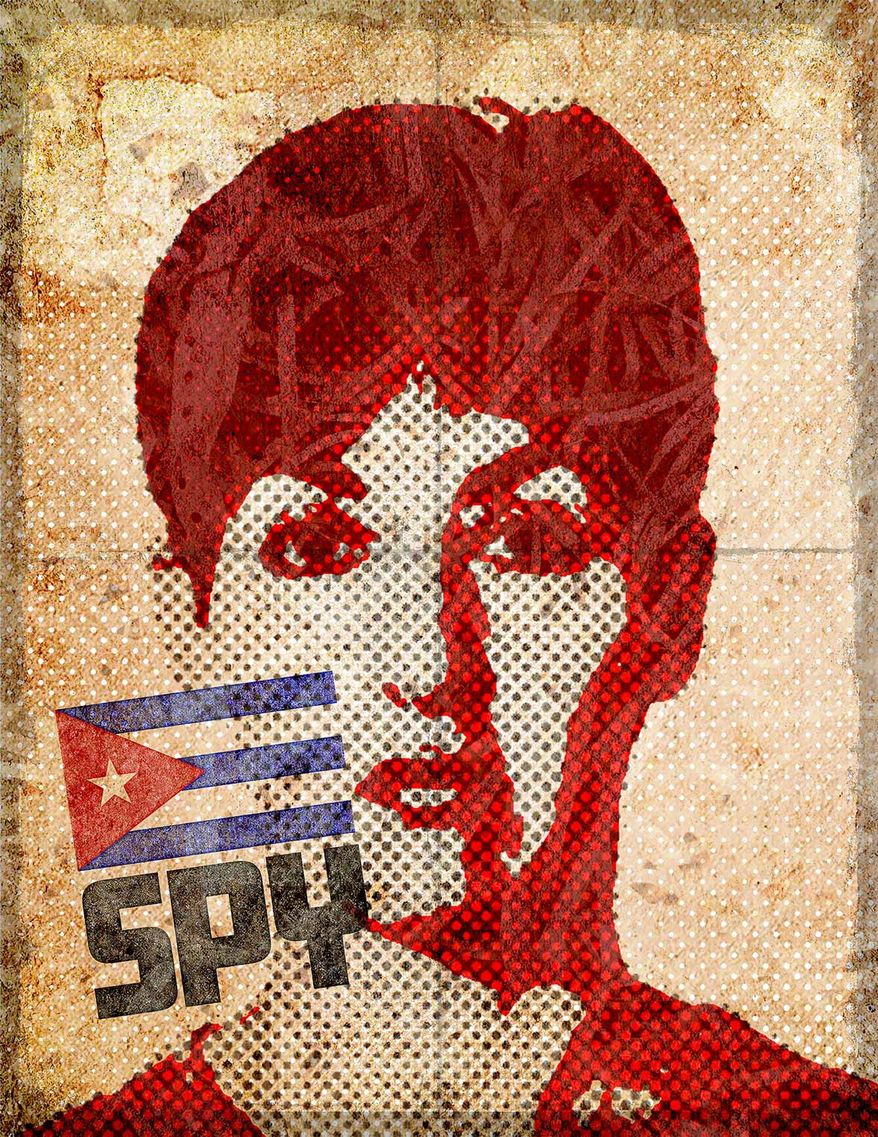
Unrepentant Spy For An Unrepentant Regime: Traitor Ana Montes A Stark Reminder Of Cuba’s threat

 Jose R. Cardenas offers his take on Ana Montes in a piece in the Washington Times (where my On Crime column regularly appears). 

The release this month of former U.S. intelligence analyst and Cuba spy Ana Belen Montes from federal prison after serving an absurdly lenient 20-year sentence is a stark reminder of the ongoing threat the island’s regime poses to U.S. interests, not only regionally but globally.

Ms. Montes — a “true believer” — was unrepentant upon her release for her treachery on behalf of the Castro regime, just as the regime remains unrepentant about its six-decade record of human rights abuses and asymmetrical warfare against the U.S.

In a statement after her release, she said, in part: “I encourage those who wish to focus on me to focus instead on important issues, such as the serious problems facing the Puerto Rican people or the U.S. economic embargo against Cuba. “Who in the last 60 years has asked the Cuban people if they want the United States to impose a suffocating embargo that makes them suffer?” 

This from an individual who, in her espionage career, betrayed some 450 U.S. operatives, sabotaged a top-secret satellite program, undermined U.S. policy in Central America, distorted the U.S. government’s views on Cuba, and leaked U.S. military information that led to the 1987 death of Sgt. Gregory Fronius, a U.S. Green Beret killed in El Salvador. 

Now that Ms. Montes gets to spend the remainder of her life in freedom on the beaches of Puerto Rico, it is important to draw the right lessons from this whole sordid episode. 

You can read the rest of the piece via the below link:

 Ana Belen Montes: Unrepentant spy for an unrepentant regime - Washington Times

You can also read below my Philadelphia Inquirer review of Scott W. Carmichael's True Believer: Inside the Investigation and Capture of Ana Montes, Cuba's Master Spy.


Monday, January 16, 2023

Italy Arrests Sicilian Mafia Boss Matteo Messina Denaro

The New York Post reports that Italy has captured their number one fugitive, convicted Mafia boss Matteo Messina Denaro (seen in the above photo). 

He was arrested on Monday at a private clinic in Palermo, Sicily, after 30 years on the run, according to the Italian paramilitary police. 

You can read the piece via the below link:

Cosa Nostra boss Matteo Messina Denaro arrested after 30 years on the run (nypost.com)

Saturday, January 14, 2023

FBI Raises Awareness During National Human Trafficking Prevention Month

 The FBI released the below information:

January is National Human Trafficking Prevention Month. Human trafficking involves the use of force, fraud, or coercion to obtain some type of labor or commercial sex act. For cases involving victims under the age of 18, it is not necessary to prove force, fraud, or coercion. Every year, many adults and children are trafficked worldwide, with more than 1,675 pending FBI cases as of January 2023.

The FBI investigates all forms of human trafficking, regardless of the victim’s age or nationality. In fiscal year 2022, the FBI initiated 668 human trafficking investigations. Human trafficking is not restricted to one area of the United States. All 56 FBI field offices have reported incidents. The largest percentage and greatest number of sex trafficking victims recovered in the United States are U.S. citizens. Conversely, the largest percentage of labor trafficking victims recovered in the U.S. are non-U.S. citizens.

Human trafficking victims can be held captive through force, fraud, or physical or psychological coercion. Warning indicators of human trafficking include:

  • Victims work in the same place they live;
  • Poor living conditions;
  • They let someone else speak for them;
  • They are not in possession of their own travel or immigration documents;
  • There are locks on the outside of doors where they live, rather than inside;
  • They are constantly watched and guarded by someone;
  • Their boss takes their pay or threatens them;
  • They are lied to about the work they are to perform;
  • They are not free to leave.

Approximately 90 percent of the FBI’s human trafficking cases involve sex trafficking, and the remainder involve labor trafficking. However, labor trafficking may involve a greater number of victims.

“Human trafficking isn’t always a violent crime—but it is always a devastating crime that is happening with shocking frequency right here in the United States,” said FBI Springfield Field Office Special Agent in Charge David Nanz. “In instances of labor trafficking, victims are lured with promises of good jobs and fair wages but find themselves working in inhumane conditions for little to no pay. They may appear to be housekeepers or nannies, restaurant or agriculture workers, often working behind the scenes outside the watchful eye of law enforcement. The FBI asks anyone who suspects human trafficking to report it immediately.”

People who are or believe they may be victims of human trafficking may call the National Human Trafficking Hotline at 888-373-7888. More information is available on the National Human Trafficking website. You may also report an incident of human trafficking or suspected human trafficking to FBI Springfield at 217-522-9675 or submit an anonymous tip.