Showing posts with label Sidney Lumet. Show all posts

Friday, April 5, 2024

Once A Prince Of The City: A Look Back At Robert Leuci, Crime Writer & Former NYPD Detective

In a recent conversation with a Philadelphia detective, I mentioned Prince of the City, a fine police drama directed by Sidney Lumet. 

The detective, who is much younger than I, did not know about the 1981 film, or the true story of the late Robert Leuci (seen in the above and below photos). 

Back in 2009, I interviewed Robert Leuci, the subject of the film and Robert Daley’s true crime book. 

You can read my Crime Beat column on Robert Leuci below:     

Robert Leuci, the former New York City detective who was the subject of the book and film Prince of the City, is a crime writer who lives in Rhode Island, far from the mean streets of New York City.

Robert Daley’s Prince of the City: The True Story of a Cop Who Knew Too Much, was a first-rate true crime book and Sidney Lumet’s film based on the book with Treat Williams portraying Leuci when he was a young detective, and a member of the elite narcotics Special Investigating Unit (SIU), was brilliant and haunting.


The SIU narcotics detectives had city-wide jurisdiction and little supervision over their selected cases, which was unusual in a bureaucracy like the New York Police Department (NYPD). These “Princes of the City” were the most aggressive and talented detectives in the war on drugs in the 1960s and 1970s. And some of them were corrupt.

Leuci, as he recounts in his memoir All the Centurions: A New York Cop Remembers His Years On the Street - 1961-1981 (Harper), committed acts of corruption, but he came forward and volunteered to make cases for the prosecutors (including a young Rudolph Giuliani) against corruption in the criminal justice system.

He was not, he stresses, caught in a criminal act and forced to do so, which is the path taken by so many crooked cops and assorted criminals.

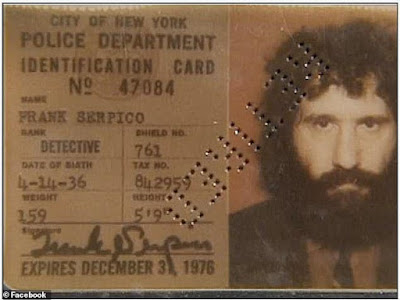
And he says he was not an oddball and outcast like Frank Serpico, the NYPD undercover narcotics cop who was the subject of both the book and film Serpico. Leuci said he was all cop. He belonged.

He wanted to go after corrupt lawyers, political fixers and judges, but tragically for Leuci; he was ultimately forced by prosecutors to also testify against his former partners and other cops. 

Leuci, now 68, retired from the NYPD in 1981. In addition to his memoir, he writes crime novels.
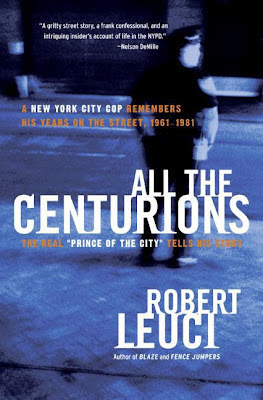
I contacted Leuci and talked to him about drugs, organized crime, crime fiction, and his life as a cop and a writer. Below is my Q&A with him:

Davis: I read two of your novels, Odessa Beach and Captain Butterfly and I read your memoir All the Centurions. I thought they were very good. 

LeuciOdessa Beach and Captain Butterfly are my early books. My later books are much better.

Davis: I’ll have to read them as well.

Leuci: My favorite is Fence Jumpers. It’s a bit autobiographical. For Odessa Beach I spent about nine months at Brighten Beach among the Russian immigrants. That was fun.

Davis: Was that as a detective or later as a writer?

Leuci: It was after I retired. I wanted to write something about these Russian immigrants, whom I found fascinating. I lived down there and wrote the book. Russian guys have been around since 1979. They left the old Soviet Union and were allegedly going to Israel, but they never got there. They are mostly Jews, but they were not Jewish in any sense. They knew nothing about Judaism and they knew nothing about Karl Marx. They were not communists, they were just Russians. They were tough guys. A lot of them were ex-prisoners who had been in jail for all sorts of different reasons. The first wave that first came here were some of the toughest guys you would want to meet. They are very violent and they are into almost everything. They are much more powerful today than the Italians.

Davis: Have the Russians become the bigger organized crime element in the country?

Leuci: For a hundred years, Italian organized crime held sway in the streets in all the big cities, especially in eastern cities, and some in the west. New York alone had five major crime families. They were all over the place and they controlled drugs, gambling, prostitution, and a lot of stuff. But they’re done, pretty much.

Davis: Italian organized crime is still active around the country, including here in Philadelphia – I’m part-Italian and I live in South Philly - but you’re right, their influence has greatly diminished. 

Leuci: I know a lot of people like to say that organized crime kept crime down, and without organized crime, disorganized crime would take over the streets, but these guys were responsible for most of the drugs that were in the streets. They were responsible for a lot of that street crime. I write about this in Fence Jumpers

Davis: Have you written about anything other than crime?

Leuci: No, I’ve thought about it, but crime is what I know. 

Davis: I find crime to be one of the most interesting of human endeavors. 

Leuci: There can be a lot of really good things in a crime novel.

Davis: I truly liked Prince of the City, both the book and the film. Were the book and film accurate? Is there anything that you would change if you could?

Leuci: I had a certain amount of input there, but not a whole lot. The book was written by Bob Daley, who is a wonderful writer and a good friend, and then it was turned into a film by Sidney Lumet, who is a wonderful film director who made Serpico and Network and other wonderful movies. 

But you know it was not exactly an uplifting movie. I’ve never sat through the entire movie, but I saw bits and pieces of it - it’s too hard for me. People still say to me why did you do this? What was the reason? It’s not really explained very well in the book, and it’s not explained at all in the movie. I mean it sort of gives you an idea of why I got involved in that investigation, but it was hard to do it, I suppose. In All the Centurions, I really do explain what brought me to that place and why I did what I did. I’m not sure it was a great decision, by the way. 

Davis: That’s my next question. Do you think you did the right thing by coming forward?

Leuci: Certainly, at the time. I was probably on the verge of a nervous breakdown, and I didn’t even realize it. I was a bit loony and all kinds of things were going on in my life. I was very depressed about the work I was doing in the police department. I went into the police department because I very much wanted to be a cop. 

I found myself within a short period of time, after five or six years, behaving in ways that were foreign to my nature. I was behaving in ways that were much like the people I was investigating. It made me sick, and it started to make me crazy. The people I cared most about were the other cops I worked with, and most of them were great guys, but they were crooks. We all rationalize our behavior. It made sense to me at the time, but when I really thought about it and really took it all apart, I realized it was so hypocritical and so opposed to anything I believed in. I should have quit or transferred to another unit, but I didn’t do that and I got caught up in this crazy investigation that was a horror in many ways. It was a decision that changed my life certainly, and maybe changed it for the better in some ways, but the price I paid and the price that other people paid for my fucking feeling sorry for myself, was way too high.

Davis: Are there different levels of corruption? Is there a difference between a cop taking a meal and a cop taking drug money?

Leuci: For years many cops believed there was “clean money” like gambling, and “dirty money” like drugs, but the problem with that kind of mentality is that most of the money really comes out of drugs. It ends up in one big circle. I would never sell drugs. I would never sell to an informant. I had a line that said I would never cross. A lot of guys I worked with said they would never cross that line, but a lot of guys did. You can’t draw those lines; it’s beyond your control. You shouldn’t do that. Once you do it you’ve screwed yourself. It’s a sensual world you’re working in. It really rubs off on you. There is no cop born, ever, that changed the street. But the street has changed every single cop.

Davis: Drugs are rampant today, and they fuel many other crimes. Can you tell us what it was like to a narcotics detective in your day in New York?

Leuci: There was a heroin epidemic in the 1960s, 1970s, and part of the 1980s. The drug of choice was heroin, not cocaine or crack cocaine. Heroin killed thousands of drug addicts. The 60s and the 70s were a crazy time, and when you added this drug, it made the whole world seem topsy-turvy. But there was less violence as that drug doesn’t produce violence. People go out and rob to get the drug, but heroin is an opiate. It makes people tired, it makes them sleep. Heroin addicts are not threatening people. When the drug of choice changed to crack cocaine it became extremely violent. That drug produces violence and paranoia. Meth is another violent drug. 

Davis: I’ve long been interested in your era, as I was a young guy then, and I read Robin Moore’s The French Connection in 1969 and went on to read a lot of books and see a lot of films about crime in New York, including Prince of the City, and your books. In your era the SIU produced many legendary detectives like Eddie Egan, Sonny Grosso, and Joe Nunziata. Nunziata was an interesting man who came to a tragic end with his suicide. Even though he was apparently corrupt, my heart went out to him and his family when I saw Prince of the City.

Leuci: Joe Nunziata looked like Dean Martin. He was a very handsome, a very gregarious guy. He was all those things. There were a lot of good things about him, and I was one of his big admirers. Joe made some big mistakes. We all did. I think the film did him justice. I talk to his son every now and again. Papa's Game is a great book that tells the story of that time and the French Connection rip-off. That was the most horrendous thing imaginable.

Davis: Yes, after confiscating all that heroin in the French Connection case, the biggest drug bust at the time, someone simply stole it from the NYPD property room. Did you know the people written about in Papa's Game, the criminal Vincent Papa and Detective Frank King?

Leuci: I knew Frank King pretty well. Frank King was a good cop in a lot of ways, but he was thoroughly corrupt. He was a gangster as a cop. 

Davis: How are you treated by law enforcement officers today? 

Leuci: It depends on where they are and who they are, what generation they are from. I lecture at every police department in the country, with the exception of New York, on corruption, ethics and morality. The cops are very nice. But what old school guys say, and it’s true, is that you violated something that can’t be forgiven. When you turn in a cop for whatever reason, it’s unforgivable. I understand it as I come from that generation. That has changed nowadays. It exists in cases of police brutality, but I think that if there is a cop out there who is going off on his own and doing corrupt things, other cops will report it. Police today have different kinds of education, background and world views. I don’t think you can get away with that kind of stuff today.

Davis: I have one last question about your era. Did you see the film American Gangster? It has been reported that the corrupt detective was based on you.

Leuci: I won’t go see it. I read the magazine piece and this guy has got to be kidding. Josh Brolin called me up and said he was playing me in a movie. I said you’re not playing me.

Davis: Did you know the Black heroin dealers Frank Lucas or Nicky Barnes?

Leuci: I never worked in Harlem, and I didn’t know Lucas. I worked in Brooklyn.

Davis: I talked to a retired DEA agent who worked in New York at the time, and he said the movie was false and Lucas is a liar. Lucas never did any of that stuff he claimed. When he was caught, he ratted out his gang and family members, but he never made any cases against corrupt cops or DEA agents. The writers and filmmakers naively believed everything Lucas told them. 

Leuci: The people who wrote that spent no time doing any kind of research on it. They had this great story and they turned it into a movie. This guy Jacobson, who wrote the magazine piece and wrote the screenplay, is totally full of shit. I had federal protection during the time he was talking about. I know the detective he was talking about, a guy named Albano. He was a real bad guy who worked Harlem. He was involved with the French Connection case. But if they didn’t spend any time trying to get it straight, if they didn’t get my story straight, how can they get the rest of that movie straight?

Davis: Do you think Lucas used your name because you are known? 

Leuci: Yes, of course. My daughter wanted to sue, but I said no.

Davis: They didn’t use your name, but they used your street name “Babyface.”

Leuci: No, when he gives Lucas his card, that’s my name on it. 

Davis: I didn’t catch that.

Leuci: I’ve never seen it, but people told me about it. I was working for Giuliani at the Southern District of New York, and if any of that was true, Giuliani would have crucified me. Those guys should be ashamed of themselves. It’s all bullshit. 

Davis: One of the things I liked in your memoir was your portrayal of Sean Connery, one of my favorite actors. You wrote that at a party people were smoking pot and Connery told them to respect you and stop. “This man is a police officer.” I can hear his commanding voice.

Leuci: Sean Connery is a very straight shooter. He was very kind to me when I was out of my level in Hollywood with these characters. He was very supportive. Some guys started smoking pot in front of us and he got pissed off.

Davis: Who influenced you as a writer?

Leuci: Robert Stone is a big influence, and he is my mentor. I like Joseph Wambaugh, Dennis Lehane, Richard Price. There are so many writers that I really like.

Davis: Any last thoughts? 

Leuci: I’ve written seven books, taught at the University of Rhode Island for ten years, and I’ve lectured around the world. I’m a much more complicated character than you see in the movie. 

Note: Below are photos of Treat Williams from the 1981 film Prince of the City


Wednesday, February 22, 2023

Once A Prince Of the City: A Look Back At Robert Leuci, Crime Writer & Former NYPD Detective


In a recent conversation with a Philadelphia detective, I mentioned Prince of the City, a fine police drama directed by Sidney Lumet. The detective, who is much younger than I, did not know about the 1981 film, or the true story of the late Robert Leuci (seen in the above and below photos). 

Back in 2009, I interviewed Robert Leuci, the subject of the film and Robert Daley’s true crime book. 

You can read my Crime Beat column on Robert Leuci below:     

Robert Leuci, the former New York City detective who was the subject of the book and film Prince of the City, is a crime writer who lives in Rhode Island, far from the mean streets of New York City.

Robert Daley’s Prince of the City: The True Story of a Cop Who Knew Too Much, was a first-rate true crime book and Sidney Lumet’s film based on the book with Treat Williams portraying Leuci when he was a young detective, and a member of the elite narcotics Special Investigating Unit (SIU), was brilliant and haunting.

The SIU narcotics detectives had city-wide jurisdiction and little supervision over their selected cases, which was unusual in a bureaucracy like the New York Police Department (NYPD). These “Princes of the City” were the most aggressive and talented detectives in the war on drugs in the 1960s and 1970s. And some of them were corrupt.

Leuci, as he recounts in his memoir All the Centurions: A New York Cop Remembers His Years On the Street - 1961-1981 (Harper), committed acts of corruption, but he came forward and volunteered to make cases for the prosecutors (including a young Rudolph Giuliani) against corruption in the criminal justice system.

He was not, he stresses, caught in a criminal act and forced to do so, which is the path taken by so many crooked cops and assorted criminals.

And he says he was not an oddball and outcast like Frank Serpico, the NYPD undercover narcotics cop who was the subject of both the book and film Serpico. Leuci said he was all cop. He belonged.

He wanted to go after corrupt lawyers, political fixers and judges, but tragically for Leuci; he was ultimately forced by prosecutors to also testify against his former partners and other cops. 

Leuci, now 68, retired from the NYPD in 1981. In addition to his memoir, he writes crime novels.

I contacted Leuci and talked to him about drugs, organized crime, crime fiction, and his life as a cop and a writer. Below is my Q&A with him:

Davis: I read two of your novels, Odessa Beach and Captain Butterfly and I read your memoir All the Centurions. I thought they were very good. 

LeuciOdessa Beach and Captain Butterfly are my early books. My later books are much better.

Davis: I’ll have to read them as well.

Leuci: My favorite is Fence Jumpers. It’s a bit autobiographical. For Odessa Beach I spent about nine months at Brighten Beach among the Russian immigrants. That was fun.

Davis: Was that as a detective or later as a writer?

Leuci: It was after I retired. I wanted to write something about these Russian immigrants, whom I found fascinating. I lived down there and wrote the book. Russian guys have been around since 1979. They left the old Soviet Union and were allegedly going to Israel, but they never got there. They are mostly Jews, but they were not Jewish in any sense. They knew nothing about Judaism and they knew nothing about Karl Marx. They were not communists, they were just Russians. They were tough guys. A lot of them were ex-prisoners who had been in jail for all sorts of different reasons. The first wave that first came here were some of the toughest guys you would want to meet. They are very violent and they are into almost everything. They are much more powerful today than the Italians.

Davis: Have the Russians become the bigger organized crime element in the country?

Leuci: For a hundred years, Italian organized crime held sway in the streets in all the big cities, especially in eastern cities, and some in the west. New York alone had five major crime families. They were all over the place and they controlled drugs, gambling, prostitution, and a lot of stuff. But they’re done, pretty much.

Davis: Italian organized crime is still active around the country, including here in Philadelphia – I’m part-Italian and I live in South Philly - but you’re right, their influence has greatly diminished. 

Leuci: I know a lot of people like to say that organized crime kept crime down, and without organized crime, disorganized crime would take over the streets, but these guys were responsible for most of the drugs that were in the streets. They were responsible for a lot of that street crime. I write about this in Fence Jumpers. 

Davis: Have you written about anything other than crime?

Leuci: No, I’ve thought about it, but crime is what I know. 

Davis: I find crime to be one of the most interesting of human endeavors. 

Leuci: There can be a lot of really good things in a crime novel.

Davis: I truly liked Prince of the City, both the book and the film. Were the book and film accurate? Is there anything that you would change if you could?

Leuci: I had a certain amount of input there, but not a whole lot. The book was written by Bob Daley, who is a wonderful writer and a good friend, and then it was turned into a film by Sidney Lumet, who is a wonderful film director who made Serpico and Network and other wonderful movies. 

But you know it was not exactly an uplifting movie. I’ve never sat through the entire movie, but I saw bits and pieces of it - it’s too hard for me. People still say to me why did you do this? What was the reason? It’s not really explained very well in the book, and it’s not explained at all in the movie. I mean it sort of gives you an idea of why I got involved in that investigation, but it was hard to do it, I suppose. In All the Centurions, I really do explain what brought me to that place and why I did what I did. I’m not sure it was a great decision, by the way. 

Davis: That’s my next question. Do you think you did the right thing by coming forward?

Leuci: Certainly, at the time. I was probably on the verge of a nervous breakdown, and I didn’t even realize it. I was a bit loony and all kinds of things were going on in my life. I was very depressed about the work I was doing in the police department. I went into the police department because I very much wanted to be a cop. 

I found myself within a short period of time, after five or six years, behaving in ways that were foreign to my nature. I was behaving in ways that were much like the people I was investigating. It made me sick, and it started to make me crazy. The people I cared most about were the other cops I worked with, and most of them were great guys, but they were crooks. We all rationalize our behavior. It made sense to me at the time, but when I really thought about it and really took it all apart, I realized it was so hypocritical and so opposed to anything I believed in. I should have quit or transferred to another unit, but I didn’t do that and I got caught up in this crazy investigation that was a horror in many ways. It was a decision that changed my life certainly, and maybe changed it for the better in some ways, but the price I paid and the price that other people paid for my fucking feeling sorry for myself, was way too high.

Davis: Are there different levels of corruption? Is there a difference between a cop taking a meal and a cop taking drug money?

Leuci: For years many cops believed there was “clean money” like gambling, and “dirty money” like drugs, but the problem with that kind of mentality is that most of the money really comes out of drugs. It ends up in one big circle. I would never sell drugs. I would never sell to an informant. I had a line that said I would never cross. A lot of guys I worked with said they would never cross that line, but a lot of guys did. You can’t draw those lines; it’s beyond your control. You shouldn’t do that. Once you do it you’ve screwed yourself. It’s a sensual world you’re working in. It really rubs off on you. There is no cop born, ever, that changed the street. But the street has changed every single cop.

Davis: Drugs are rampant today, and they fuel many other crimes. Can you tell us what it was like to a narcotics detective in your day in New York?

Leuci: There was a heroin epidemic in the 1960s, 1970s, and part of the 1980s. The drug of choice was heroin, not cocaine or crack cocaine. Heroin killed thousands of drug addicts. The 60s and the 70s were a crazy time, and when you added this drug, it made the whole world seem topsy-turvy. But there was less violence as that drug doesn’t produce violence. People go out and rob to get the drug, but heroin is an opiate. It makes people tired, it makes them sleep. Heroin addicts are not threatening people. When the drug of choice changed to crack cocaine it became extremely violent. That drug produces violence and paranoia. Meth is another violent drug. 

Davis: I’ve long been interested in your era, as I was a young guy then, and I read Robin Moore’s The French Connection in 1969 and went on to read a lot of books and see a lot of films about crime in New York, including Prince of the City, and your books. In your era the SIU produced many legendary detectives like Eddie Egan, Sonny Grosso, and Joe Nunziata. Nunziata was an interesting man who came to a tragic end with his suicide. Even though he was apparently corrupt, my heart went out to him and his family when I saw Prince of the City.

Leuci: Joe Nunziata looked like Dean Martin. He was a very handsome, a very gregarious guy. He was all those things. There were a lot of good things about him, and I was one of his big admirers. Joe made some big mistakes. We all did. I think the film did him justice. I talk to his son every now and again. Papa's Game is a great book that tells the story of that time and the French Connection rip-off. That was the most horrendous thing imaginable.

Davis: Yes, after confiscating all that heroin in the French Connection case, the biggest drug bust at the time, someone simply stole it from the NYPD property room. Did you know the people written about in Papa's Game, the criminal Vincent Papa and Detective Frank King?

Leuci: I knew Frank King pretty well. Frank King was a good cop in a lot of ways, but he was thoroughly corrupt. He was a gangster as a cop. 

Davis: How are you treated by law enforcement officers today? 

Leuci: It depends on where they are and who they are, what generation they are from. I lecture at every police department in the country, with the exception of New York, on corruption, ethics and morality. The cops are very nice. But what old school guys say, and it’s true, is that you violated something that can’t be forgiven. When you turn in a cop for whatever reason, it’s unforgivable. I understand it as I come from that generation. That has changed nowadays. It exists in cases of police brutality, but I think that if there is a cop out there who is going off on his own and doing corrupt things, other cops will report it. Police today have different kinds of education, background and world views. I don’t think you can get away with that kind of stuff today.

Davis: I have one last question about your era. Did you see the film American Gangster? It has been reported that the corrupt detective was based on you.

Leuci: I won’t go see it. I read the magazine piece and this guy has got to be kidding. Josh Brolin called me up and said he was playing me in a movie. I said you’re not playing me.

Davis: Did you know the Black heroin dealers Frank Lucas or Nicky Barnes?

Leuci: I never worked in Harlem, and I didn’t know Lucas. I worked in Brooklyn.

Davis: I talked to a retired DEA agent who worked in New York at the time, and he said the movie was false and Lucas is a liar. Lucas never did any of that stuff he claimed. When he was caught, he ratted out his gang and family members, but he never made any cases against corrupt cops or DEA agents. The writers and filmmakers naively believed everything Lucas told them. 

Leuci: The people who wrote that spent no time doing any kind of research on it. They had this great story and they turned it into a movie. This guy Jacobson, who wrote the magazine piece and wrote the screenplay, is totally full of shit. I had federal protection during the time he was talking about. I know the detective he was talking about, a guy named Albano. He was a real bad guy who worked Harlem. He was involved with the French Connection case. But if they didn’t spend any time trying to get it straight, if they didn’t get my story straight, how can they get the rest of that movie straight?

Davis: Do you think Lucas used your name because you are known? 

Leuci: Yes, of course. My daughter wanted to sue, but I said no.

Davis: They didn’t use your name, but they used your street name “Babyface.”

Leuci: No, when he gives Lucas his card, that’s my name on it. 

Davis: I didn’t catch that.

Leuci: I’ve never seen it, but people told me about it. I was working for Giuliani at the Southern District of New York, and if any of that was true, Giuliani would have crucified me. Those guys should be ashamed of themselves. It’s all bullshit. 

Davis: One of the things I liked in your memoir was your portrayal of Sean Connery, one of my favorite actors. You wrote that at a party people were smoking pot and Connery told them to respect you and stop. “This man is a police officer.” I can hear his commanding voice.

Leuci: Sean Connery is a very straight shooter. He was very kind to me when I was out of my level in Hollywood with these characters. He was very supportive. Some guys started smoking pot in front of us and he got pissed off.

Davis: Who influenced you as a writer?

Leuci: Robert Stone is a big influence, and he is my mentor. I like Joseph Wambaugh, Dennis Lehane, Richard Price. There are so many writers that I really like.

Davis: Any last thoughts? 

Leuci: I’ve written seven books, taught at the University of Rhode Island for ten years, and I’ve lectured around the world. I’m a much more complicated character than you see in the movie.


Monday, January 6, 2020

Serpico: My Washington Times 'On Crime' Column: A Look Back At Former NYPD Detective Frank Serpico


The Washington Times ran my On Crime column on Frank Serpico.

You can read the column via the below link or via the below text: 


Monday, January 6, 2020 - For many, the patron saint of whistleblowers is Frank Serpico, the former NYPD detective who reported police corruption in the late 1960s and early 1970s. 

Frank Serpico was profiled in a documentary film in 2017 and he was made world-famous as the subject of Sidney Lumet’s film, “Serpico,” which starred Al Pacino as the whistleblowing cop. The film was based on Peter Maas’ 1973 true crime book, “Serpico.”


“Serpico — this apparent hippie, womanizer, hedonist — had dared to do the unheard-of, the unpardonable, in police circles,” Maas wrote in his book. “Having solemnly sworn to uphold the law, he elected to do just that, to enforce it against everybody — and not, in the grand tradition of even the personally honest policeman, against everybody except other cops. He would not go along with the graft, the bribes, the shakedowns, and he refused to look the other way.


“With that decision, Serpico became unique. He was the first officer in the history of the Police Department who not only reported corruption in its ranks, but voluntarily, on his own, stepped forward to testify about it in court.”


Because of his reports and testimony, the New York mayor set up the Knapp Commission, which investigated police corruption. Frank Serpico was then ostracized by many of his fellow officers and his life was threatened. He was later shot in the face by a drug dealer during a raid and he retired from the NYPD due to his injuries.


I asked Frank Serpico how accurate the book and film were.


“The book was very accurate, but it left out a few things for whatever reason and the film was accurate according to the corruption,” Frank Serpico told me. “But there were a couple of scenes where the director and actor took license.


“I was told that Al Pacino was more me than I was, but he over-acted, like the scene where he was up against the wall showing his shield and saying, I’m a cop, I’m a cop. Certain scenes I found embarrassing.”


Did he believe that he had been set up by other cops when he was shot in the face?


“No, I never intimated that, but that is a good question. Where was my 10-13? (Call for Officer Needs Assistance). I was left there bleeding to death and they never called a 10-13. When I got out of the hospital I went to Internal Affairs and demanded to see the report. The call was a signal 10-10, (Investigate Shots Fired), which came from a civilian.


“I had the perp covered and I had my snub-nosed pointed in his stomach and my hand and shoulder jammed in the door. I turned to the cops I was with and asked them what the hell they were waiting for? I turned back and I was hit. I returned fire, hitting the perpetrator.”


He said he was left bleeding to death on the tenement floor until patrol officers drive him to the hospital.


Frank Serpico continues to speak out against police corruption. He said many cops come up to him and say that the film inspired them to become police officers. He is gratified that his story inspires good officers and that is his legacy. The culture that permeates corruption hasn’t changed, he said, but there are good cops out there who have taken up the torch.


“I don’t believe in the term ‘crooked cop,’ there is no such thing,” he said. “You are either a cop or you’re a crook. They are crooks in police uniforms. Some of these guys are cowards and hide behind the police shield and they call honest cops like me oddballs. Police corruption does not occur in a vacuum. It needs to be fertile ground for criminal-minded seedlings to take root. The myth that the department corrupts these innocent, civic-minded individuals is bogus. You must have larceny in your heart to begin with.


“You don’t become a cop to become rich,” Frank Serpico said. “You become a cop to serve the public.”


Although I don’t agree with Frank Serpico on some broader issues, I believe that he had and has the courage of his convictions.


• Paul Davis’ On Crime column covers true crime, crime fiction and thrillers.


Friday, December 15, 2017

American Hero Or The Biggest Rat In NYPD History? New Documentary Explores The Controversial Legacy Of The Late Robert Leuci, Whose Turn Undercover Led To More Than 50 Indictments of 1970s New York Cops


Sheila Flynn at the Daily Mail offers a piece on a new documentary about the late Robert Leuci, the former NYPD detective who testified about police corruption and was portrayed in Robert Daley’s  true crime book, Prince of the City, which was later made into a film by director Sidney Lumet.


The unlikely duo met at a barbecue in Rhode Island, a young Norwegian student of photojournalism and a former NYPD detective who exposed massive corruption within the force in the 1970s. Magnus Skatvold had no idea who Bob Leuci was when he was first introduced to him, considering the New York native a ‘fast-talking … very kind, very charismatic grandfather that was just the center of attention and telling stories and being very interested in everybody.’

They struck up a friendship, and the more that Skatvold learned about Leuci, the more fascinated he became. Their relationship eventually sowed the seeds for a new documentary, which was just awarded the prestigious Pitch Perfect Award at DOC NYC film festival – a prize given to a work-in-progress during a daylong pitch event.

Blue Code of Silence is currently a 60-minute rough cut, directed by Skatvold and Gregory Mallozzi, telling the story of how Leuci brought down New York City’s most corrupt police unit – at a grave personal cost. Skatvold interviewed and collaborated with Leuci, who tragically died during the making of the film, as well as family members, friends and people connected with the story.

Leuci had agreed in the 1970s to cooperate with the Knapp Commission, which had been formed by New York Major John V. Lindsay following whistleblower revelations by other legendary NYPD officers. The commission aimed to investigate corruption within the system; Leuci, heavily entrenched in a narcotics unit and tainted by participation himself, agreed to go undercover – but insisted on exposing the whole system and not just cops.

You can read the rest of the piece via the below link:


You can also read my Q&A with Robert Leuci via the below link:

Monday, May 4, 2015

Once N.Y's 'Prince Of The City,' Robert Leuci Found True Calling As Writer In R.I.


Andy Smith at the Providence Journal offers a piece on Robert Leuci.

SOUTH KINGSTOWN, R.I. — Robert Leuci is 75 now, an adjunct professor teaching writing at the University of Rhode Island. He's written six novels, a memoir, a play, short stories, screenplays. He hasn't been a New York City cop since 1981.

But for some, he'll always be the Prince of the City, the corrupt cop who ultimately decided to expose the rot within law enforcement. In 1978, retired New York Deputy Commissioner Robert Daley told Leuci's story in his book "Prince of the City." In 1981, Sidney Lumet adapted the book into a movie of the same title, starring Treat Williams.

He looks back at his former self with mixed emotions, at best: "I have no respect for that character," he said. "There's no excuse for some of the things I did in those days ... I have five grandchildren now. They're going to read about the guy who was a corrupt cop in his day." But Leuci identifies not as a cop, or an ex-cop, but as as a writer.

You can read the rest of the piece via the below link:

http://www.providencejournal.com/article/20150503/ENTERTAINMENTLIFE/150509883/13986/LIFESTYLE

You can also read my interview with Robert Leuci via the below link:

http://www.pauldavisoncrime.com/2009/05/once-prince-of-city-interview-with.html

Monday, April 11, 2011

Prince Of The City: A Look Back At Sidney Lumet's Powerhouse Crime Film


As director Sidney Lumet died Saturday, I watched one of his finest films again last night.

Prince of the City is a gritty and realistic crime film. Treat Williams and Jerry Orbach lead Lumet's  outstanding cast in this powerhouse film.

The 1981 film is based on Robert Daley's outstanding 1978 true crime book about Robert Leuci, an elite NYPD detective who voluntarily went undercover to fight corruption in the legal system, targeting lawyers and political fixers, but in the end he is forced to testify against his fellow detectives. 

You can view the beginning of the outstanding film via the below link:

http://www.youtube.com/watch?v=m_0sqtcUKp0

I interviewed Robert Leuci a while back and you can read the Q & A with the retired detective-turned crime writer via the below link:

http://pauldavisoncrime.blogspot.com/2009/05/once-prince-of-city-interview-with.html

The Late Film Director Sidney Lumet's Career In Clips


The Guardian's web site offers a series of video clips from the films of director Sidney Lumet, who died Saturday.

The video clips include The Hill, starring Sean Connery (seen in the above photo), Network, Serpico and Lumet's last film, Before the Devil Knows You're Dead.

You can view the video clips via the below link:

http://www.guardian.co.uk/film/2011/apr/10/sidney-lumet-career-director-clips  

You can also read an earlier post on Sidney Lumet, which included his obituary in The Los Angeles Times, via the below link:

http://pauldavisoncrime.blogspot.com/2011/04/prince-of-city-himself-new-york-film.html

Saturday, April 9, 2011

A Prince Of The City Himself: New York Film Director Sidney Lumet Dies


Sidney Lumet, the New York director of scores of fine films, died today. He was 86.

Although I didn't always agree with his worldview, I love many of his films, such as his masterpiece, Network.

Lumet made mostly crime dramas. I love Serpico, Q & A, Night Falls on Manhattan, Dog Day Afternoon and many others. I believe Prince of the City is another of his masterpieces.

Prince of the City is based on the true story of a New York City undercover detective who testifies against his fellow detectives. Lumet's work with Treat Williams, Jerry Orbach and the other fine actors in the cast make this police drama a powerhouse of a film.

Prince of the City is a classic crime film, in my view.

(The photo above shows Treat Williams on the left with director Sidney Lumet).

I also loved his work with one of my favorite actors, Sean Connery. Lumet directed Connery in the crime dramas The Anderson Tapes, Family Business, and a little known but great film called The Offense.

Lumet also directed Connery in one of his finest performances in the military prison film, The Hill. 

Sidney Lumet left behind a fine body of work.

You can read Lumet's obituary in The Los Angeles Times via the below link:

http://www.latimes.com/news/obituaries/la-me-sidney-lumet-20110410,0,5850102,full.story