Thursday, March 19, 2015

Sherlock Holmes Creator Sir Arthur Conan Doyle Was The Victim Of A Police Conspiracy


Alison Flood at the British newspaper the Guardian offers a piece on how the late Sir Arthur Conan Doyle, the author of the Sherlock Holmes stories, was the victim of a police conspiracy.

Sherlock Holmes would never have stood for this: newly discovered documents show that the Staffordshire police fabricated evidence to try to discredit Arthur Conan Doyle’s investigation into the curious case of George Edalji, a Birmingham solicitor accused of maiming horses and sending poison-pen letters at the turn of the 20th century.

In a printed report discovered in a collection of letters, chief constable of Staffordshire police, GA Anson, admits attempting to discredit Doyle by creating an elaborate ruse. This involved him fabricating a letter to the writer signed “A Nark, London” and setting up various informers to make Conan Doyle believe the letter had been sent by one Royden Sharp, the man the Sherlock Holmes creator had tapped for the so-called “Great Wyrley Outrages”.

“This letter is very well known to writers on the subject, and this document proves the letter was sent by Anson to Conan Doyle to try and discredit him,” said Sarah Lindberg of Bonhams, which today put the report up for auction alongside 30 autographed letters from Doyle about the case, 24 of which are to Anson. “The new evidence was a total fabrication planted by Anson, and all part of an elaborate ruse involving Sharp.”

You can read the rest of the piece via the below link:

http://www.theguardian.com/books/2015/mar/18/arthur-conan-doyle-set-up-by-police-fabricated-letters

My Crime Beat Column: The American Film Institute's Top Movie Heroes And Villains


On June 3rd the American Film Institute (AFI) offered their top 50 heroes and 50 villains in cinema in a three-hour television special.

The character of Atticus Finch, the principled and idealistic lawyer in To Kill a Mockingbird," played by Gregory Peck, was voted the greatest hero in 100 years of American film history. The character of Dr. Hannibal "The Cannibal" Lecter, the brilliant and psychotic murderer, played in several films by Anthony Hopkins, was voted the greatest villain.

AFI is an organization dedicated to advancing and preserving the art of film, television and other forms of the moving image. AFI trains filmmakers, provides film preservation leadership and advances new digital technologies in movie making.

The AFI director and CEO, Jean Picker Firstenberg, said the 100 heroes and villains list may be one of the most thought provoking to date. The special follows five previous television installments on AFI’s centennial celebration of American film. The previous TV specials included AFI’s 100 Years–100 Movies, 100 Stars, 100 Laughs, 100 Thrills, and 100 Passions.

"We hope these top 50 heroes and villains lists will inspire movie lovers to acquaint and reacquaint themselves with these amazing and often complex characters in American film," Firstenberg said.

Last November, AFI sent out a ballot with 400 nominated screen characters to a jury of 1, 500 leaders from the creative film community, as well as to film critics and historians. The jurors were asked to choose 50 heroes and villains from an extensive list of characters from James Bond to The Wicked Witch of the West.

AFI’s criteria for a hero are he or she must be a mythic figure or an ordinary person who prevails in extreme circumstances. Heroes should dramatize a sense of morality, courage, and purpose, which AFI says is often lacking in our everyday world. AFI said that heroes should do what is good, just and right, and even though they may be ambiguous or flawed characters, they often sacrifice themselves to show humanity. AFI defines a hero as a single character, a duo or a team of characters.

AFI’s criteria for a villain are a man or woman who can be horrifically evil, not merely sleazy or grandiosely funny, but who are usually complex, moving and tragic. Their wickedness of mind, selfishness of character and will to power are sometimes masked by beauty and nobility. Like the heroes, the villains can be a single character, a duo or a team of characters.

Both heroes and villains should have made a mark on American society in matters of style and substance. The characters should elicit strong reactions across time, enriching America’s film heritage and inspiring artists and audiences today. The characters appeared in feature length films that are English language film with significant creative and/or financial productions elements from the United States.

I smell a fix with AFI’s choice of Atticus Finch as the number one hero. Peck, who recently died, was one of AFI’s founders and they presented him with a lifetime achievement award a few years back. Although Peck gave a fine performance, the character would not have been on my top 50 list.

But then best and worst lists, like artistic awards, are very subjective. I agree with George C. Scott’s view. Scott, upon refusing the Oscar for his great performance in Patton, said it was like lifting up two great paintings and pronouncing "and the winner is…"

But in the spirit of AFI, I submit here my personal list of my top three movie heroes and my top movie villains, which you may or may not agree with.

My top three movie heroes:

The Duke. AFI voted for characters rather than the actors who portrayed them, and John Wayne’s character Rooster Cogburn from True Grit came in at number 36, but John Wayne essentially played himself in nearly all of his great film roles. He mostly portrayed larger than life frontier lawmen and military men who fought for American justice and freedom. Although he never served a day in uniform and combat (he was also never a western frontier lawman), Wayne offered an original and unique American character that was much admired and emulated. He remains a hero today, many years after his death.

I recently read Robin Moore’s The Hunt For Bin Laden: On the Ground With Special Forces in Afghanistan. In the book, Moore relates how many of today’s Green Berets first decided they wanted to be members of the Army’s Special Forces after seeing John Wayne as a Green Beret in his pro-Vietnam war movie, The Green Berets. The film was based on Robin Moore’s 1964 novel.

In Wayne’s last film, The Shootist, Wayne’s character, John Books, an old legendary gunfighter dying of cancer, offered his personal code to life by: "I won’t be wronged, I won’t be insulted, and I won’t be laid a hand on. I don’t do these things to other people, and I require the same from them."

Although Wayne was planning a final film, Beau John, Wayne, like Books, was dying of cancer and the cancer would take his life before he could begin filming. It seems fitting, however, that The Shootist would be his final film. The Duke, in my view, is the only clear choice for the number one American movie hero.


Bond, James Bond. Mr. Bond made AFI’s list, coming in at number three behind Atticus Finch and Indiana Jones, but he is number two on my list. The James Bond films feature a British character created by a British writer, Ian Fleming, but the films qualify as Americans produce the much imitated film series.

The early Sean Connery-James Bond films influenced America and the entire world. Coming on the scene in 1962’s Dr No, Connery’s Bond, the suave, deadly secret agent with the license to kill, was, and still is, the coolest character in the movies.


Philip Marlowe. Raymond Chandler’s wise cracking private detective made AFI’s list, coming in at number 32, but he is number three on my list. As portrayed by Humphrey Bogart in The Big Sleep, Marlowe was a modern white knight and an incorruptible tough guy. James Garner, Robert Montgomery and Robert Mitchum also portrayed Marlowe in later films.

My top three film villains:


Auric Goldfinger: Goldfinger was the third James Bond thriller and appeared in 1964. Ian Fleming’s gold-loving megalomaniac villain, portrayed by German actor Gert Frobe, set the standard for all future Bond film villains as well as the villains in many other films. Goldfinger so loved gold that he painted women in gold paint for his pleasure as well as for his displeasure. Who can forget how he had Jill Masterson killed by covering her entire body in gold paint? As Bond explained to M later in London, it was all right to paint your body as long as you left a patch clear for your skin to breathe. Goldfinger didn’t.

At his stud farm in Kentucky, Goldfinger briefed a collection of American organized crime leaders on his bold plan to rob Fort Knox, the gold suppository of the United States. "Man has climbed Mount Everest, gone to the bottom of the ocean," Goldfinger told the gangsters. "He’s fired rockets at the moon, split the atom, achieved miracles in every field of human endeavor – except crime!"

Bond, who spied on the hoods’ congress briefing, corrected Goldfinger by saying that the nerve agent Delta 9 was fatal and not a sleeping agent as Goldfinger told the gangsters. "You’ll kill 60,000 people uselessly," Bond said.

"Hah, American motorists kill that many every two years," Goldfinger replied coldly.

Goldfinger was a truly unforgettable movie bad guy.


The Goodfellas. These criminals rank as my number two pick. "Jimmy the Gent" Conway and Tommy Devito, portrayed by Robert De Niro and Joe Pesci, were vicious gangland murderers in Martin Scorsese’s gritty and realistic Goodfellas.

The film, based on the book Wiseguy by Nicholas Pileggi, told the true story of Henry Hill, a thief and hustler who ran with a New York City gang of thieves and killers. The crew members include two psychopaths named Devito and Conway.
 
Conway was based on a very real criminal named James "Jimmy the Gent" Burke, who was the feared leader of the criminal crew. Devito was based on Thomas "Two-Gun Tommy" DeSimone.

The vicious beating and stomping of another mob member by Devito and Conway in Henry Hill’s bar is unforgettable.

Thinking that the gangster, a rival named "Billy Bats," is dead, the goodfellas stop off at Devito’s mother’s house to get a shovel to bury him. While the beaten, battered and still alive Bats lay in the trunk of Hill’s car, the trio enjoy a late night dinner with Devito’s mother. Later, when they discover that Bats is still alive, they viciously stab and shoot him to death as he lay in the trunk.

"Trunk Music," the gangsters call it.

The film, in my view, is the best crime film ever made. It explodes the myth of honor among thieves and the romantic notion of loyalty and kinship in Cosa Nostra. The film explodes the myth of the glamour of organized crime. What you see are a group of greedy, petty, violent, and not very bright criminals who easily turn on one another. The film is both funny and brutal, and it is an accurate portrayal of the real world of crime.


Harry Lime. Harry Lime is my pick for the number three film villain. Harry Lime, portrayed By Orson Welles in The Third Man, is a great evil character. Lime is a post-World War II black marketer who masterminds a plot to sell diluted penicillin to hospitals, which contributes to the death of many children.

Lime is unseen and only talked about for roughly half of the film and when he is finally introduced, we see only Lime’s face in the shadows, briefly lit in a dark alley in Vienna. Lime is seen quickly in profile, with a wry, smug and self-satisfied look on his face. He is, as one reviewer called him, "a charming monster."

When Lime confronts his old friend Holly Martins, played by Joseph Cotton, Lime excuses his actions in a now famous speech.

"In Italy, for 30 years under the Borgias they had warfare, terror, murder and bloodshed, but they produced Michelangelo, Leonardo da Vinci and the Renaissance," Lime explained. "In Switzerland, they had brotherly love. They had 500 years of democracy and peace, and what did that produce? The cuckoo clock."

The Carol Reed film, which was written by the great thriller writer Graham Greene, is a classic. The film, made richer by the black and white film noir style and the Anton Karas zither music, is truly unforgettable.

Do you agree or disagree with my picks?


Note: The above column originally appeared in The Orchard Press Online Mystery Magazine in 2003. 

Wednesday, March 18, 2015

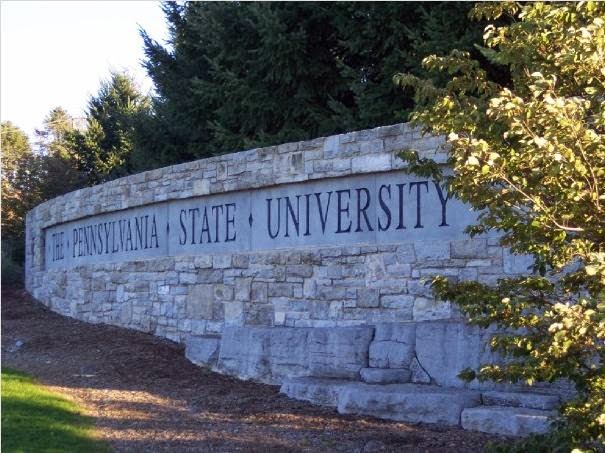
Unrepentant Radical Bomber Bill Ayers Being Paid To Speak At Penn State


Dom Giordano at the Philadelphia Inquirer offers a piece on Penn State hiring unrepentant radical bomber Bill Ayers to speak to students.

Penn State University, which is trying to get past a lot of scandal baggage, is about to add several more big bags. Penn State is paying Bill Ayers a substantial sum to come and speak at Penn State.

Ayers will speak on March 19 and 20, and one topic will be the so called "School-to-Prison Pipeline."

Ayers, of course, was one of the leaders of the Weather Underground, a radical group that opposed the Vietnam War and bombed buildings, resulting in property damage and death. The death came on Feb. 16, 1970, when the group exploded a nail bomb at a San Francisco police station, killing police Sgt. Brian McDonnell.

The Ayers group also attacked the home of New York Supreme Court Justice John M. Murtagh, who was presiding over the pretrial hearings of members of the Black Panther Party over a plot to blow up New York landmarks with Molotov cocktails. I've interviewed Murtagh's son and he recounted the horrors his family faced.

Probably the most infamous Weather action involved three members who were killed when a bomb they were making blew up in their faces in a Greenwich Village townhouse. They had packed the bomb with nails and had planned to explode it at a noncommissioned officers' dance at Fort Dix, N.J., in order to kill military members, their wives and girlfriends.
 
This is the guy whom Penn State wants to pay thousands of dollars to inspire their students. This unrepentant punk, who has never apologized for these violent actions, will be treated as an esteemed, diverse voice. In what logical world do we bestow respect (and thousands of dollars in speaking fees) to a criminal and domestic terrorist to lecture on a major university campus?

You can read the rest of the piece via the below link:

http://www.philly.com/philly/opinion/20150318_Recovering_from_Sandusky__PSU_faces_another_controversy.html


US Air Force Veteran Charged With Attempting To Provide Material Support To ISIL


The U.S. Justice Department released the below information:

U.S. Attorney Loretta E. Lynch of the Eastern District of New York, Assistant Attorney General for National Security John P. Carlin, Assistant Director in Charge Diego G. Rodriguez of the FBI’s New York Field Office and Commissioner William J. Bratton of the New York City Police Department announced that yesterday, a federal grand jury in New York City returned a two-count indictment charging Tairod Nathan Webster Pugh, an American citizen and veteran of the U.S. Air Force, with attempting to provide material support to the Islamic State of Iraq and the Levant (ISIL), a foreign terrorist organization, and obstruction and attempted obstruction of justice. 

The defendant will be arraigned on the indictment tomorrow, March 18, at 11 a.m. before U.S. District Judge Nicholas G. Garaufis of the Eastern District of New York.

“Born and raised in the United States, Pugh allegedly turned his back on his country and attempted to travel to Syria in order to join a terrorist organization,” said U.S. Attorney Lynch.  “We will continue to vigorously prosecute extremists, whether based here or abroad, to stop them before they are able to threaten the United States and its allies.”  U.S. Attorney Lynch extended her grateful appreciation to the FBI’s Joint Terrorism Task Force (JTTF), which comprises a large number of federal, state, and local agencies from the region.  U.S. Lynch also thanked U.S. Customs and Border Protection, the U.S. Attorney’s Office of the District of New Jersey, the Asbury Park, New Jersey Police Department and the Neptune, New Jersey, Police Department for their assistance.

“Pugh, an American citizen and former member of our military, allegedly abandoned his allegiance to the United States and sought to provide material support to ISIL,” said Assistant Attorney General Carlin.  “Identifying and bringing to justice individuals who provide or attempt to provide material support to terrorists is a key priority of the National Security Division.”

“As alleged, Pugh, an American citizen, was willing to travel overseas and fight jihad alongside terrorists seeking to do us harm,” said Assistant Director in Charge Rodriguez.  “U.S. citizens who offer support to terrorist organizations pose a grave threat to our national security and will face serious consequences for their actions.  We will continue to work with our partners, both here and abroad, to prevent acts of terrorism.  This investigation demonstrates the importance of law enforcement coordination and collaboration here and around the world.”

“We thank the members of the NYPD Joint Terrorism Task Force and our Federal law enforcement partners for their work in this case and for their tireless efforts to identify threats of terrorism here and abroad,” said Commissioner Bratton.  “It is this type of collaboration that results in swift investigative work to stop individuals such as this from making any further contribution to terrorist organizations such as ISIL.”

As alleged in the complaint, indictment and other court filings, the defendant served in the Air Force as an avionics instrument system specialist and received training in the installation and maintenance of aircraft engine, navigation and weapons systems.  After leaving the Air Force, the defendant worked for a number of companies in the United States and Middle East as an avionics specialist and airplane mechanic.  The defendant lived abroad for over a year before his arrest in this case.

Earlier this year, weeks after being fired from his last job as an airplane mechanic based in the Middle East, the defendant attempted to join ISIL.  On Jan. 10, 2015, the defendant traveled from Egypt to Turkey in an effort to cross the border into Syria to join ISIL and fight violent jihad.  Turkish authorities denied the defendant entry, however, and sent him on a return flight to Egypt.

 Upon his arrival in Egypt, the defendant was carrying multiple electronic devices, including four USB thumb drives that had been stripped of their plastic casings and an iPod that had been wiped clean of data.  The defendant also had a cellular telephone that contained, among other things, a photograph of a machinegun.  The defendant was soon thereafter deported to the United States.
On Jan. 14, 2015, JTTF agents obtained a search warrant for the defendant’s electronic devices, including his laptop computer.  Subsequent exploitation of the laptop revealed, among other things, the following:
  • recent internet searches for “borders controlled by Islamic state”,
  • recent internet searches for “who controls kobani,” “kobani border crossing,” and “jarablus border crossing,” all references to Syrian cities under ISIL’s control near the Turkish border,
  • a chart of crossing points between Turkey and Syria indicating the areas on the Syrian side of the border controlled by ISIL and other groups, and
  • internet searches for “Flames of War,” an ISIL propaganda video, as well as downloaded videos, including one showing ISIL members executing prisoners.
The defendant was arrested pursuant to a federal complaint on Jan. 16, 2015, in Asbury Park, New Jersey, and he has been in custody ever since.  After the defendant’s arrest, JTTF agents seized and later obtained warrants to search two backpacks that the defendant had when he was overseas.  Agents recovered from the backpacks, among other things: two compasses, a solar-powered flashlight, a solar-powered power source, shards of broken USB thumb drives, a fatigue jacket and camping clothes.

If convicted, the defendant faces a maximum sentence of 35 years in prison.  The charges in the indictment are merely allegations, and the defendant is presumed innocent unless and until proven guilty.

The government’s case is being prosecuted by Assistant U.S. Attorneys Samuel P. Nitze and Tiana A. Demas, with assistance provided by Trial Attorneys Larry Schneider and Andrew Sigler of the National Security Division.

Tuesday, March 17, 2015

Philly Rogue Cops Case


Veteran reporter Ralph Cipriano is covering the rogue cops case in Philadelphia federal court for bigtrial.net.

They haven't picked a jury yet but the lawyers in the rogue cops case are already going at it.

Assistant U.S. Attorney Anthony J. Wzorek today challenged defense lawyer Michael J. Diamondstein on his claim that the government may have perpetrated a fraud on a grand jury by putting a witness on the stand who perjured himself.

Turning toward Diamonstein and speaking in a loud voice, Wzorek told the defense lawyer, "We look forward to answering that." The prosecutor told Diamondstein that he and the other defense lawyers in the case could put Wzorek on the witness stand to see if those charges were true.

The prosecutor's baiting of the defense lawyers did not go over with U.S. District Court Judge Eduardo C. Robreno.

"Address the court," the judge snapped at
the prosecutor. Diamonstein, who represents former Police Officer John Speiser, started the ruckus on Sunday when he filed a  motion seeking to quash the federal indictment of his client under the RICO act. In his motion, Diamonstein charged that perjury committed by a witness identified as "C.C." was "easily and readily identifiable by the government's agents."  But the feds chose to willfully ignore it, exhibiting a "reckless disregard for the truth," Diamondstein charged.

Clearly those were fighting words to Wzorek.

 
You can read the rest of the piece via the below link:

http://www.bigtrial.net/2015/03/prosecutor-gets-hot-under-collar-judge.html#more

And you can read Ralph Cipriano's earlier rogue cops case post via the below link:

http://www.bigtrial.net/2015/03/rogue-cops-say-federal-witness-perjured.html

Note: On assignment for The Journal of Counterterrorism & Homeland Security, I had gone out with Philadelphia Narcotics Field Unit South just prior to the arrest of the narcotics officers currently on trial. I spoke to Lt. Robert Otto, the unit's supervisor, on a Southwest Philly street after his officers raided a drug house. Otto was also the supervisor of the accused officers, and that night he offered to allow me to accompany those very officers at a later date.

Of course, with their arrest, it was not to be.

I don't know if the accused officers are guilty or not, but I do know that the overwhelming majority of Philly cops are good, honest officers.

You can read my piece on the Philly narcotics unit via the below link:

http://www.pauldavisoncrime.com/2012/05/chasing-drugs-guns-and-violence-night.html

Philadelphia Police Renaming Valor Medal For Slain Officer


The Philadelphia Inquirer reports on the Philadelphia Police Department renaming their Valor Medal for Officer Robert Wilson III (seen in the above photo).

Officer Wilson was killed in the line of duty during a shoot out with armed robbers.

You can read the piece via the below link:

http://www.philly.com/philly/news/breaking/20150314_ap_d5307d9fa5be48b686ab19d5bbd3c7e5.html

You can also read an earlier post on Officer Wilson via the below link:

http://www.pauldavisoncrime.com/2015/03/he-redefined-what-hero-is-all-about.html

Below are two photos of Officer Wilson's funeral in Philadelphia.


Note: The above photos were released by the Philadelphia Police Department.

Monday, March 16, 2015

My Crime Beat Column: The King Of Tartan Noir: Ian Rankin And the Scottish Crime Scene


While laid-up in the hospital for more than a month with severe nerve and spine damage, I had the opportunity to do a good bit of reading. In the batch of books I asked my family to bring in to the hospital were a couple of Ian Rankin’s crime novels.

I enjoy Rankin’s Inspector Rebus novels partly because they are well written and interesting, and partly because they take place in Scotland.

I served on a Navy harbor tugboat at the U.S. nuclear submarine base at Holy Loch, Scotland in 1974 and 1975. Back then, Ian Rankin was only a "wee lad," as they say in Scotland.

Being of Scot-Welsh blood on my father’s side, I felt quite at home there. In addition to the blood tie, I was and am a student of history and I’ve always been interested in Scottish and British history. We share a "special relationship" with the United Kingdom. The United States and the United Kingdom have been close allies through the two world wars and right up to our current war on terrorism.

I traveled all over Scotland during my Navy tour of duty, from Inverness in the Highlands to the capital city of Edinburgh in the Lowlands. I also kept a weekend flat (apartment) in Glasgow.

The country has God-awful winter weather and the food is much too bland for my taste when compared to the Italian food I was raised on in South Philadelphia (my mother was Italian), but I found the Scots to be a friendly and charming people. I also found the country to be nearly crime-free, at least by American standards.

Even so, as a serious student of crime, I followed what there was of a crime scene. Through a girlfriend, I met a police constable and over many a pint we had many discussions about crime in Scotland. He also drove me about the city of Glasgow when off duty and pointed out places and people of interest.

To return the favor, I often spoke of American organized crime, which fascinated him. I also met some local toughs and a few "villains" (what the British call criminals) while pub-crawling through Glasgow and Edinburgh.

Although many years have passed since I left Scotland, I’m still interested in the country and the people.
 
Which brings me to Ian Rankin and Detective Inspector John Rebus of the Lothian and Borders Police in Edinburgh. Rankin’s character has battled Scottish street crime bosses like Morris Gerald "Big Ger" Cafferty, serial killers and corrupt politicians and business people. He also fights his police bosses. They know him to be an effective investigator, yet he often goes too far in his pursuits and ruffles official feathers.

Rebus is a troubled character. He experiences guilt for his failed marriage and his failure as a father to his only daughter. He finds some solace in music, excessive smoking and drinking - and in his job as a detective. He is a loner with few friends among the police.

Although I’m generally bored with the too typical troubled, maverick loner cop who breaks rules (and laws) in crime fiction, Rankin’s Rebus seems fresh and different.
 
Rebus is a veteran of a British army parachute regiment and served in Northern Ireland during the "troubles" there. He became a member of the elite commando group, the Special Air Service (SAS), but later resigned. His army bosses arranged to find him employment as a policeman.

American crime writer James Ellroy called Rankin "The King of Tartan Noir," and according to a leading British newspaper, Rankin has been praised not only for his gritty realism, but also for his exceptional depiction of contemporary Scotland. Rankin covers much more than the crime scene. He covers the various worlds of government, business, the clergy and the working people of Scotland.

"Edinburgh is the perfect setting for crime writing," Rankin has said. "It has a split personality – on the one hand it is the city of history and museums and royalty, but at the same time there is this feeling that behind the thick walls of those Georgian townhouses there are all sorts of terrible things happening."

Rankin was born in 1960, graduated from the University of Edinburgh and published his first Rebus novel, "Knots & Crosses," in 1987. He has gone on to become the United Kingdom’s number one best-selling crime writer. His newest novel, "A Question of Blood," will soon be published in the U.S.

So if you’re interested in reading a series of crime novels with a setting other than New York City or LA, I heartily recommend Ian Rankin.
 
Note: The above column originally appeared in The Orchard Press Online Mystery Magazine in 2003.