Showing posts with label Reuters. Show all posts

Tuesday, April 19, 2016

Why Computers May Never Replace Human Spies


Peter Apps at Reuters offers a piece on why computers may never replace human spies.

If legendary British spy-turned-KGB mole Kim Philby was alive to offer arrested U.S. Navy officer Edward Lin advice — regardless of his guilt or innocence — we know what it would be.
Despite repeatedly coming under suspicion, Philby fed British and American secrets to Moscow for three decades before ultimately defecting in 1963. His survival, he told officers of the East German Stasi spy service in 1981, was partly down to organizational ineptitude and his privileged position as a member of Britain’s ruling class.
But it was also, he said, simply down to the fact that when challenged, he always maintained his innocence. Even when confronted with incriminating evidence in his own handwriting, he simply denied having anything to do with it.
“All I had to do really was keep my nerve,” said Philby according to a recording found by the BBC and published this month. “So my advice to you is to tell all your agents that they are never to confess.”
For Taiwanese-American Lieutenant Commander Lin, it may already be too late for that. The United States government remains remarkably tight lipped — for now, it remains unclear whether he is suspected of spying for mainland China or only Taiwan. All that is known for sure is that he faces charges of espionage, attempted espionage and a charge of patronizing a prostitute.
Lin was a member of an elite U.S. Navy reconnaissance aviation unit flying from Hawaii and said to operate some of the most sophisticated equipment and sensitive missions in the Pacific.

You can read the rest of the piece via the below link:

http://blogs.reuters.com/great-debate/2016/04/14/why-computers-may-never-replace-human-spies/

Thursday, July 30, 2015

A Writer In Training: Ian Fleming The Journalist


Tom Cull at ianfleming.com tours London and examines Ian Fleming's career as a journalist, before he found fame as the author of the James Bond thrillers.

On a quiet Sunday in the City of London recently, I re-traced some of Ian Fleming’s old haunts during his journalism and banking days, including what used to be the Reuters building at The Royal Exchange. It occurred to me that it was here that Ian Fleming got his first taste of writing professionally. Throughout his career, journalism formed an important part of his research and inspiration, before finally becoming a way to remain ‘part of the action’ after the war.
His well-documented 2 month break in Jamaica to write his James Bond novels was a feat of discipline and economy; writing quickly and accurately and never looking back, trusting totally in his technique. Many writers, including the prolific Raymond Chandler, found this timetable astonishing. He asked Ian in an interview in 1958 how he could write so quickly with all the other things that he did, and remarked that the fastest book he ever wrote was in 3 months. So, from where did Ian Fleming acquire this skill?
...When an intriguing assignment came up in Stalin’s Russia, to report on a court case involving British construction workers (tantamount to a show trial), Fleming was called up. His ‘smattering of Russian’ and the fact that the regular Reuters Moscow correspondent might have had his Russian sources compromised meant that this was Ian’s big break. It was also his first exposure to the dark underbelly of Soviet communism that would pique his interest in cloak and dagger matters and mark Russia out as the political bĂȘte noire for the West. His reporting again impressed his peers. He turned in articles on tight deadlines. Ian described his training at Reuters as giving him a “good, straightforward style,” and there he learned to write fast and accurately because at Reuters “if you weren’t accurate you were fired, and that was the end of that.”  

Saturday, June 20, 2015

U.S. Employee Data Breach Tied To Chinese Intelligence

 
The Communist Chinese are tied to the computer hacking of the U.S. Office of Personnel Management (OPM), Newsweek reports.
 
SAN FRANCISCO (Reuters) - The Chinese hacking group suspected of stealing sensitive information about millions of current and former U.S. government employees has a different mission and organizational structure than the military hackers who have been accused of other U.S. data breaches, according to people familiar with the matter.
 
While the Chinese People's Liberation Army typically goes after defense and trade secrets, this hacking group has repeatedly accessed data that could be useful to Chinese counter-intelligence and internal stability, said two people close to the U.S. investigation. 
 
Washington has not publicly accused Beijing of orchestrating the data breach at the U.S. Department of Homeland Security's Office of Personnel Management (OPM), and China has dismissed as "irresponsible and unscientific" any suggestion that it was behind the attack.
          
Sources told Reuters that the hackers employed a rare tool to take remote control of computers, dubbed Sakula, that was also used in the data breach at U.S. health insurer Anthem Inc last year.
 
You can read the rest of the piece via the below link:
 

Monday, June 15, 2015

Sex, Lies And Debt Potentially Exposed By U.S. Data Hack


A story in the Philadelphia Inquirer reports on the suspected Communist Chinese computer hack of the U.S. Office of Personnel Management (OPM).

WASHINGTON (Reuters) - When a retired 51-year-old military man disclosed in a U.S. security clearance application that he had a 20-year affair with his former college roommate's wife, it was supposed to remain a secret between him and the government.

The disclosure last week that hackers had penetrated a database containing such intimate and possibly damaging facts about millions of government and private employees has shaken Washington.

The hacking of the White House Office of Personnel Management (OPM) could provide a treasure trove for foreign spies.

 
The military man's affair, divulged when he got a job with a defense contractor and applied to upgrade his clearance, is just one example of the extensive potential for disruption, embarrassment and even blackmail arising from the hacking.
    The man had kept the affair secret from his wife for two decades before disclosing it on the government's innocuously named Standard Form 86 (SF 86), filled out by millions of Americans seeking security clearances.

    His case is described in a judge's ruling, published on the Pentagon website, that he should keep his security clearance because he told the government about the affair. His name is not given in the administrative judge's decision.

The disclosure that OPM's data had been hacked sent shivers down the spines of current and former U.S. government officials as they realized their secrets about sex, drugs and money could be in the hands of a foreign government.

You can read the rest of the story via the below link:

http://www.philly.com/philly/news/nation_world/20150615_Reuters_Report_KBN0OV0CC_Sex__lies_and_debt_potentially_exposed_by_U_S__data_hack.html
 

Wednesday, July 3, 2013

Prosecution Wraps Up Case In WikiLeaks Court-Martial Of PFC Bradley Manning


Reuters offers a piece on the court-martial of U.S. Army PFC Bradley Manning.


You can read the piece by visiting the Voice of America web site via the below link:

http://www.voanews.com/content/prosecution-manning-wikileaks-court-martial/1693972.html

Note: PFC Bradley Manning appears above in the U.S. Army photo.

Monday, December 31, 2012

Award Buoys Novelist Elmore Leonard To Write Again


Kurt Anthony King at Reuters offers a piece on one of my favorite writers, the great crime novelist Elmore Leonard.

As he struggled writing his forthcoming book, "Blue Dreams," best-selling American author Elmore Leonard thought his 47th novel would probably be his last.

Then, inspiration came in the form of a medallion.

Leonard won the National Book Foundation's Medal for Distinguished Contribution to American Letters in November, joining such U.S. literary luminaries as Toni Morrison, John Updike, Gore Vidal and Norman Mailer.

Now, the award has given Leonard, 87, the vigor and motivation to write at least two more books, he told Reuters in an interview at his home in Bloomfield Village, Michigan, in suburban Detroit.

"I don't have any reason to quit," he said. "I still enjoy writing."

You can read the rest of the piece via th below link:

http://www.reuters.com/article/2012/12/31/us-books-elmoreleonard-idUSBRE8BU0A820121231

Wednesday, November 28, 2012

Lunch With James Bond Creator Ian Fleming And A Look Back At His Time As A Journalist For Reuters


With the success of the new James Bond film Skyfall a good number of magazines and newspapers have offered articles on James Bond's creator, the late great thriller writer Ian Fleming.

Joshua Rothamn at The New Yorker offers a piece on the lunch New Yorker writer Geoffrey Hellman had with Ian Fleming in 1962.

It’s a little hard to believe, but the first James Bond movie, “Dr. No,” was released more than a half-century ago, on October 5, 1962. At that time, Ian Fleming, the writer of the James Bond novels, was fifty-three. In April of that year (when Daniel Craig, it’s worth pointing out, was negative five), The New Yorker’s Geoffrey Hellman met Fleming for lunch at the Pierre (now the Taj). Fleming was in New York to visit his publishers. He’d stopped en route between his vacation house, in Jamaica (where Dr. No also has a hideaway) and his home in London.

You can read Joshua Rothman's piece and link to Geoffrey Hellman's 1962 piece via the below link:

http://www.newyorker.com/online/blogs/backissues/2012/11/lunch-with-ian-fleming-bond-at-fifty.html

John Entwisle also offers an interesting piece on Ian Fleming's time as a young journalist for Reuters.

Ian Fleming was the man behind Bond. Born in 1908, he died in 1964 at the age of 56.

From 1945 to 1959, he worked as Foreign Manager for Kemsley (later Thomson) newspapers. But early in the 30s, when still a young man, he was a Reuters journalist.

Fleming never forgot his time with Reuters. He frequently recalled those years in interviews, describing the British newsagency as “a very good mill”. “The training there gives you a good, straightforward style” he said.

In February 1988, retired Reuters journalist, Basil Chapman, wrote an excellent account of Fleming’s time with the company for its then house-magazine ‘Reuters World’.

You can read the piece via the below link:

http://blog.thomsonreuters.com/index.php/ian-fleming-the-reuters-journalist-who-gave-us-all-a-run-for-our-money/

Wednesday, August 15, 2012

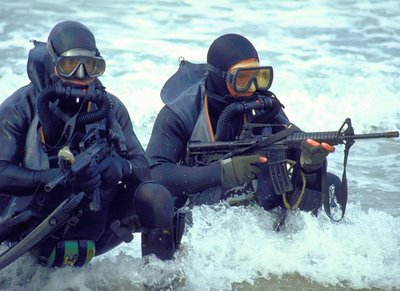
Former Navy SEALs And Intelligence Officers 'Swift Boat' Obama Over Leaks And Taking Credit For Killing Bin Laden


Mark Hosenball at Reuters offers a 22-minute video and a short piece on the start of a media campaign by former intelligence officers and Special Operations veterans that aims to stop senior administration leaks for politcal gain.
*
A group of former U.S. intelligence and Special Forces operatives is set to launch a media campaign, including TV ads, that scolds President Barack Obama for taking credit for the killing of Osama bin Laden and argues that high-level leaks are endangering American lives.
Leaders of the group, the Special Operations OPSEC Education Fund Inc, say it is nonpartisan and unconnected to any political party or presidential campaign. It is registered as a so-called social welfare group, which means its primary purpose is to further the common good and its political activities should be secondary.
*
In the past, military exploits have been turned against presidential candidates by outside groups, most famously the Swift Boat ads in 2004 that questioned Democratic nominee John Kerry's Vietnam War service.
*
The OPSEC group says it is not political and aims to save American lives. Its first public salvo is a 22-minute film that includes criticism of Obama and his administration. The film, to be released on Wednesday, was seen in advance by Reuters.
*
"Mr. President, you did not kill Osama bin Laden, America did. The work that the American military has done killed Osama bin Laden. You did not," Ben Smith, identified as a Navy SEAL, says in the film.
*
You can watch the 22-minute video via the below link to Foxnews.com:
*
http://nation.foxnews.com/navy-seals/2012/08/15/navy-seals-ready-swift-boat-obama?cmpid=NL_FiredUpFoxNation
*
Note: Mark Hosenball used the term "Special Forces," which is only the U.S. Army group, when I believe the correct term for all military Special Operators is "Special Operations." 

Thursday, July 19, 2012

William Boyd Focuses On Psychoanlysis, Wartime Intelligence

 
Bernard Vaughan at Reuters interviews author William Boyd.

For more than 30 years, author William Boyd has won acclaim for writing complexly plotted page-turners often set in unique historical milieus, from World War One-era East Africa to 1936 Los Angeles.

His latest novel, "Waiting for Sunrise," features Lysander Rief, a young British actor seeking treatment from a disciple of Sigmund Freud for a sexual problem in pre-World War One Vienna before becoming entangled in the opaque world of wartime intelligence.

Boyd spoke with Reuters about the book, his writing process and his recent agreement with the estate of Ian Fleming to write the next James Bond novel.


You can read the rest of the piece at the Chicago Tribune via the below link:

http://www.chicagotribune.com/entertainment/sns-rt-us-books-boydbre86i0ck-20120719,0,3670066.story