Showing posts with label Thrilling Cities. Show all posts

Thursday, January 30, 2025

James Bond Author's Lost Writing Will Finally Be Published This Year

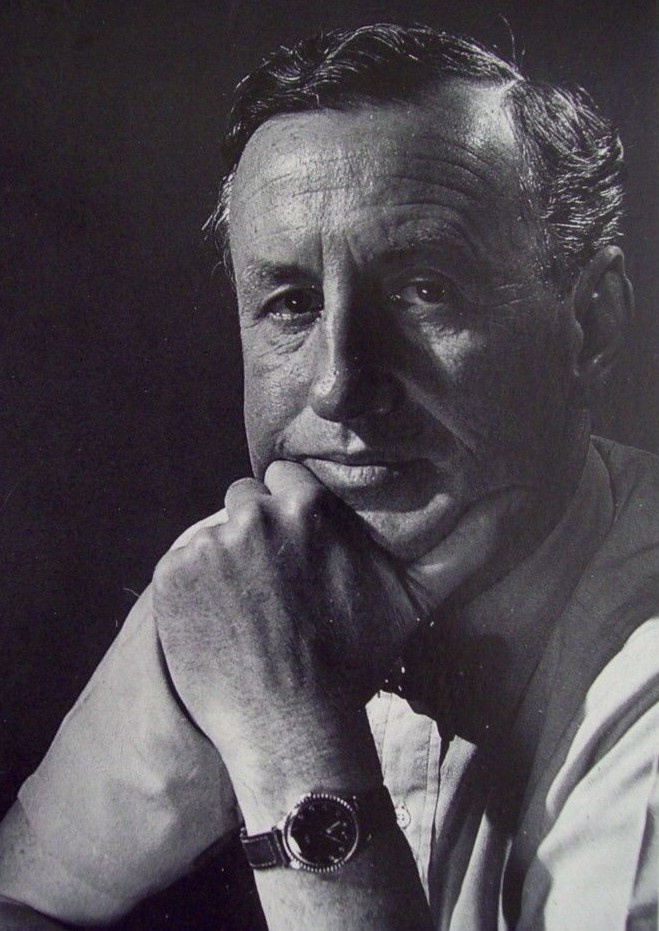
 I’ve been an Ian Fleming aficionado since I was a kid in the early 1960s and saw Dr. No. I’ve read all of Ian Fleming’s novels and short stories, and much of his journalism.

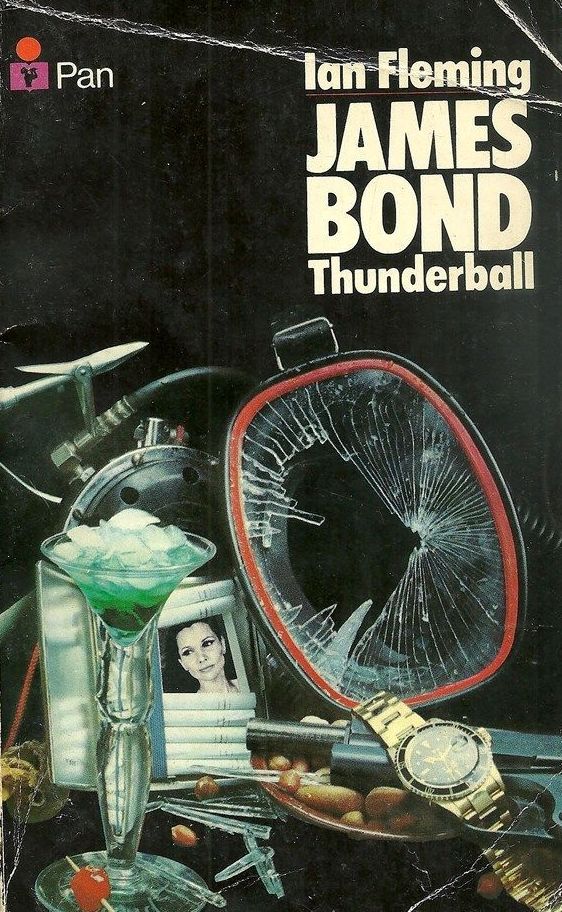
I’m especially fond of his travel book, Thrilling Cities, which I caried with me while serving in the U.S. Navy on an aircraft carrier during the Vietnam War, and later on a Navy tugboat at the U.S. nuclear submarine base at Holy Loch, Scotland. I visited many of the cities he covered a decade before in the book.

So I was pleased to learn that a new book will be published that features his journalism.

Ryan Britt at Men’s Journal reports that a new collection of James Bond author Ian Fleming’s journalism will be published in May.

In terms of fiction, Ian Fleming only ever published one book that wasn't a James Bond book; the 1964 children's book, Chitty Chitty Bang Bang. But, as a journalist and essayist, Fleming was prolific. In fact, his career as a journalist in the 1930s predated much of his other work in both the military, and later, as an author. But, outside of the 1963 collection Thrilling Cities, Fleming's nonfiction has been basically impossible to find. 

Until now. Just announced by Ian Fleming Publications, a new nonfiction collection of the author's writing is coming in May of 2025. The title is Talk of the Devil, and the book will feature Fleming's reviews and journalism for The Sunday Times, his travel journalism not previously featured in Thrilling Cities, WWII reporting, plus, unpublished letters between Fleming and Raymond Chandler. An official press release also confirmed that Talk of the Devil will "feature newly-unearthed articles that have not been available for over half a century."

You can read the rest of the piece via the link below:

James Bond Author's Lost Writing Will Finally Be Published This Year - Men's Journal


Tuesday, May 28, 2024

On This Day In History Ian Fleming, The Creator Of James Bond, Was Born

On this day in 1908 the late, great thriller writer Ian Fleming, the creator of James Bond, the world’s most famous fictional spy, was born. 

Fleming died of a heart attack at age 56 in 1964. 

As History.com notes, Ian Lancaster Fleming was born into a well-to-do family in London on May 28, 1908.

"As an adult, he worked as a foreign correspondent, a stockbroker and a personal assistant to Britain’s director of naval intelligence during World War II–experiences that would all provide fodder for his Bond novels. The series of novels about the debonair Agent 007, based in part on their dashing author’s real-life experiences, spawned one of the most lucrative film franchises in history.  

"The first Bond book, Casino Royale, was published in 1953. In all, Fleming wrote 12 novels and two short story collections about Agent 007, which together sold more than 18 million copies. According to The New York Times: “Bond himself, Fleming said, was ‘a compound of all the secret agents and commandos I met during the war,’ but his tastes– in blondes, martinis ‘shaken, not stirred,’ expensively tailored suits, scrambled eggs, short-sleeved shirts and Rolex watches–were Fleming’s own. But not all the comparisons were ones the author liked to encourage. Bond, he said, had ‘more guts than I have’ as well as being ‘more handsome. 

"The first Bond film, Dr. No, was released in 1962; it starred the Scottish actor Sean Connery in the title role. Connery played Bond in six films altogether; From Russia With Love (1963) and Goldfinger (1964) were the only ones made during Fleming’s lifetime. Since that time, five other actors—George Lazenby, Roger Moore, Timothy Dalton, Pierce Brosnan and Daniel Craig—have played the superspy in some two dozen films from EON Productions."


You can read three of my Crime Beat columns on Ian Fleming via the below links: 

Paul Davis On Crime: My Crime Beat Column: The Ian Fleming and James Bond Phenomenon

Paul Davis On Crime: My Crime Beat Column: A Look Back At Ian Fleming's Iconic James Bond Character


Sunday, May 28, 2023

On This Day In History Ian Fleming, The Creator Of James Bond, Was Born

On this day in 1908 the late, great thriller writer Ian Fleming, the creator of James Bond, the world’s most famous fictional spy, was born. 

Fleming died of a heart attack at age 56 in 1964. 

As History.com notes, Ian Lancaster Fleming was born into a well-to-do family in London on May 28, 1908.

"As an adult, he worked as a foreign correspondent, a stockbroker and a personal assistant to Britain’s director of naval intelligence during World War II–experiences that would all provide fodder for his Bond novels. The series of novels about the debonair Agent 007, based in part on their dashing author’s real-life experiences, spawned one of the most lucrative film franchises in history.  

"The first Bond book, Casino Royale, was published in 1953. In all, Fleming wrote 12 novels and two short story collections about Agent 007, which together sold more than 18 million copies. According to The New York Times: “Bond himself, Fleming said, was ‘a compound of all the secret agents and commandos I met during the war,’ but his tastes– in blondes, martinis ‘shaken, not stirred,’ expensively tailored suits, scrambled eggs, short-sleeved shirts and Rolex watches–were Fleming’s own. But not all the comparisons were ones the author liked to encourage. Bond, he said, had ‘more guts than I have’ as well as being ‘more handsome. 

"The first Bond film, Dr. No, was released in 1962; it starred the Scottish actor Sean Connery in the title role. Connery played Bond in six films altogether; From Russia With Love (1963) and Goldfinger (1964) were the only ones made during Fleming’s lifetime. Since that time, five other actors—George Lazenby, Roger Moore, Timothy Dalton, Pierce Brosnan and Daniel Craig—have played the superspy in some two dozen films from EON Productions."

You can read three of my Crime Beat columns on Ian Fleming via the below links: 

Paul Davis On Crime: WWII's Great Deception Plan: My Crime Beat Column On Ian Fleming And 'Operation Mincemeat'

Paul Davis On Crime: My Crime Beat Column: The Ian Fleming and James Bond Phenomenon

Paul Davis On Crime: My Crime Beat Column: A Look Back At Ian Fleming's Iconic James Bond Character


You can also read my Counterterrorism magazine piece on Ian Fleming in WWII via the below link: 

Paul Davis On Crime: My Piece On The 30 Assault Unit, The British WWII Commando Group Created By Ian Fleming, The Creator Of James Bond


Sunday, August 12, 2018

Taking The Path Through Japan Once Trodden By Ian Fleming And James Bond


"You only live twice. Once when you are born, and once when you look death in the face," Ian Fleming wrote in his 1963 James Bond thriller, You Only Live Twice.

As a young sailor stationed on an aircraft carrier off the coast of Vietnam in 1971, I reread Ian Fleming’s You Only Live Twice, which takes place in Japan, as well as Fleming’s London Sunday Times piece on Japan in his book Thrilling Cities, in anticipation of our upcoming R&R visit to Sasebo, Japan.

As an Ian Fleming aficionado, I was thrilled to see some of the sights Ian Fleming saw during his visit to Japan a decade earlier.  

Damian Flanagan at the Japan Times follows in the footsteps of Ian Fleming, as the late, great thriller writer traveled through Japan in 1962 while researching his Bond novel, You Only Live Twice.

Tasked to trace the route across Japan that Ian Fleming, the author of James Bond, took in 1962 — and which Bond himself largely follows in Fleming’s penultimate 007 novel “You Only Live Twice” (1964) — it was suggested I could experience the same route but with modern sensibilities.

In truth, if you wish to follow the two-week trip Fleming took across Japan — beginning in Tokyo and winding your way down to Kyushu — you can assuredly do so, either in one go or knocked off in discrete sections. You can visit nearly all of the places that Fleming went to and see the eternal sights that he did: the Mikimoto pearl fisheries and the Grand Shrines of Ise on the Kii Peninsula; the Nijo Jinya and Shimabara brothel district in Kyoto; and take a ferry ride from the city of Kobe along the islands of the Seto Inland Sea to the “hells” of Beppu, to finally arrive at the magnificent caldera of Mount Aso in Kyushu before taking in Fukuoka on a bullet train back to Tokyo.

You can do all of that and take the Bond novel with you — filling your head with Secret Service adventures and 1960s style — and, as a Bond aficionado, I would heartily encourage you to do so. But to what extent can you experience Japan today in the same raw, intense manner that Fleming did back in 1962?
… As in the Bond novels, death and sex were the two main features of Fleming’s Kyoto tour. Besides the singing floors, he took a keen interest in the workings of the Shimabara brothel district and how it catered to visiting dignitaries in the Edo Period (1603-1868).
On his trip, Fleming had two travel companions: Richard Hughes (an internationally renowned journalist, Japan expert and spy) and Torao “Tiger” Saito (an architect, editor and the model for “Tiger Tanaka,” the head of the Japanese Secret Service, in “You Only Live Twice”), who had carefully prepared the itinerary for him.

Hughes referred to the experience as “the most instructive, enjoyable, crowded, leisurely, lively and hilarious trip I ever made in thirteen long and happy years of residence in Japan.” “Sayonara to James Bond,” a chapter in his memoirs, has the air of a travel classic, a kind of “Three Men in Japan” of amiable hijinks and mutual warmth.

You can read the rest of the piece via the below link: 
Note: The top photo shows Sean Connery as James Bond in the film You Only Live Twice. The above photo show Ian Fleming and Richard Hughes in Japan. 

Monday, May 28, 2018

On This Day In History Ian Fleming, Creator Of James Bond, Was Born


On this day in 1908 Ian Fleming, the creator of James Bond and author of From Russia With Love, Goldfinger, Dr No and other classic thrillers, was born.


You can read my Crime Beat columns about Ian Fleming’s life and work via the below links:


You can also read my Counterterrorism magazine piece on Ian Fleming’s WWII experience as a naval intelligence officer via the below link:


Monday, January 9, 2017

Ian Fleming's 'Thrilling Cities' On BBC Radio 4


The James Bond website MI6, not to be confused with the British intelligence agency, reports that BBC Radio 4 is offering a reading of Ian Fleming's travel book, Thrilling cities.

In 1959, Ian Fleming, the creator of James Bond, was commissioned by the Sunday Times to explore some of the world's most exotic cities. Travelling to the Far East and then to America, he left the bright main streets for the back alleys, abandoning tourist sites in favour of underground haunts, and mingling with celebrities, gangsters and geishas. The result is a series of vivid snapshots of a mysterious, vanished world.
Fleming wrote, 'On November 2nd, armed with a sheaf of visas...one suitcase...and my typewriter, I left humdrum London for the thrilling cities of the world. All my life I have been interested in adventure and abroad. I have enjoyed the frisson of leaving the wide, well-lit streets and venturing up back alleys in search of the hidden, authentic pulse of towns. It was perhaps this habit that turned me into a writer of thrillers.'
In today's episode, Fleming flies to Hong Kong - the most vivid and exciting city he had ever experienced. He enjoys a massage at the hands of an expert, and his senses are enchanted by the smells of the streets at night - from the 'exciting dash of sandalwood' in a joss-stick factory to the scent of frying onions and 'sweet perspiration'.
Read by Simon Williams
Abridged by Mark Burgess
You can read the rest of the piece and link to BBC 4 via the below link:
https://www.mi6-hq.com/news/ian-fleming-s-thrilling-cities-on-bbc-radio-4-this-weekend-
170107 
You can also read my Crime Beat column on Thrilling Cities via the below link:

Wednesday, March 20, 2013

Through A Thriller-Writer's Eye: Ian Fleming's Nonfiction books 'Thrilling Cities' And 'The Diamond Smugglers' Are Available On Amazon


The James Bond web site MI6 reports that the two Ian Fleming nonfiction - non James Bond - books are now available on Amazon.

Reprints of two of Ian Fleming's non-007 publications are now available in the USA from Amazon Publishing, the same imprint that re-released his James Bond novels in paperback in 2012. Travelogue "Thrilling Cities" (1963) and "The Diamond Smugglers" (1957) will be published in the US on 26th March 2013.
 
Thrilling Cities

Join the creator of James Bond on an adventurous tour of the world's most exciting, exotic and sinful cities.

"On November 2nd armed with a sheaf of visas...one suitcase...and my typewriter, I left humdrum London for the thrilling cities of the world..."

In 1959, Ian Fleming, the creator of James Bond, was commissioned by the Sunday Times to explore fourteen of the world's most exotic cities. Fleming saw it all with a thriller writer's eye. From Hong Kong to Honolulu, New York to Naples, he left the bright main streets for the back alleys, abandoning tourist sites in favour of underground haunts, and mingling with celebrities, gangsters and geishas. The result is a series of vivid snapshots of a mysterious, vanished world.
 
The Diamond Smugglers

The fantastic true story of the world's greatest smuggling racket, as told by the creator of James Bond.
 
"One day in April 1957 I had just answered a letter from an expert in unarmed combat writing from a cover address in Mexico City, and I was thanking a fan in Chile, when my telephone rang."

The Diamond Smugglers is the true story of an operation responsible for smuggling millions of pounds worth of precious gems out of Africa. Ian Fleming, creator of James Bond, drew on interviews with the reluctant hero of the diamond companies' counter-attack to explore the world of the real master criminals of his time. The result rivals Fleming's greatest spy novels.
 
You can read this piece and others on Ian Fleming and James Bond at www.mi6-hq.com 
 
You can also read my Crime Beat column on Fleming's Thrilling Cities and The Diamond Smugglers, as well as my interview with Fergus Fleming, Ian Fleming's nephew and a director of Ian Fleming Publications (IFP), via the below link:
 

Wednesday, February 13, 2013

Bond's Books: Andrew Lycett's TLS Review Of Ian Fleming: The Bibliography

 
Andrew Lycett, the author of the outstanding Ian Fleming biography, Ian Fleming: The Man Behind James Bond, reviewed Jon Gilbert's Ian Fleming: The Bibliography for the Times Literary Supplement.
 
James Bond never reads much more than Scarne on Cards and the occasional thriller. However, his creator, Ian Fleming, was a serious bibliophile, who in a little known parallel existence founded the leading trade magazine The Book Collector, ran the upmarket Queen Anne Press, which published his friends Evelyn Waugh and Patrick Leigh Fermor, and put together an extraordinary collection of books which “made things happen”. He provided the largest number of privately owned books to the prestigious Printing and the Mind of Man exhibition mounted at the British Museum and Earls Court in 1963, the year before his premature death.
 
It is fitting that his own literary output should now be commemorated in a lavish bibliography. Raise the martini glass to a meticulous compiler, Jon Gilbert, who works for Adrian Harrington in London, and to the publisher, the self-same Queen Anne Press, recently resurrected by his family.

Diehard enthusiasts will be disappointed to find no definitive information on The Black Daffodil, the book of poems Fleming wrote as a young man, but subsequently disowned (he had all copies burnt). However, most readers will relish Gilbert’s documentation of Fleming’s written output from his schoolboy scribblings in the Wyvern (the “ephemeral” he produced at Eton) to pieces for the Sunday Times and 007 spin-offs for high-paying American magazines such as Playboy and Holiday. Along the way there were fourteen books featuring Bond; Chitty Chitty Bang Bang for children; and non-fiction works such as Thrilling Cities.

You can read the rest of the review via the below link:

http://www.the-tls.co.uk/tls/public/article1212275.ece

You can also read about the book at ILAB.org via the below link:

http://www.ilab.org/eng/documentation/864-ian_fleming_the_bibliography_-_late_october_launch_announced_by_adrian_harrington_ltd__and_queen_anne_press.html

"Ian Fleming is best known as the creator of James Bond, an icon of 20th century popular culture”, says author Jon Gilbert, “but he was also a journalist, publisher, travel writer, motor enthusiast, card player, accomplished golfer and noted bibliophile. Much has been written about Fleming and his legendary creation, but until now there has been no serious bibliographical account of his published work.”

Saturday, November 24, 2012

My Crime Beat Column: A Samurai Sword Story, An American Thriller About Japan, Crime, War, Obligation And Honor


I have long been interested in firearms and edged weapons. I have a small collection of guns, knives and swords that adorn my basement office’s walls and bookcase shelves, alongside my photos, maps and other mementos of my travels and my time in the U.S. Navy.

My keen interest in weapons does not imply that I have visions of attacking a high school or shopping mall. Like most hunters, target shooters and collectors, I see weapons as fine instruments, historical artifacts and tools for self-defense.

The American gun culture, it seems to me, is based on the fact that our freedoms were won and have been preserved by our proficiency of firearms and other weapons and our willingness to use them in our defense. Ask the Nazis, ask the Imperial Japanese.

I recall visiting Japan as an 18-year-old sailor while stationed aboard the USS Kitty Hawk in 1971. The aircraft carrier was temporarily relieved from combat operations off the coast of Vietnam and we sailed to Sasebo, Japan for our scheduled R&R period.

The Japanese had been my father’s bitter enemy. He served as an Underwater Demolition Team (UDT) frogman in the Pacific during WW II. The old chief participated in some grueling and bloody battles on the Japanese-held beaches and islands, yet he held no rancor against the Japanese and he appeared to be as excited as I was about my visit to the Land of the Rising Sun.

I became particularly interested in Japan in 1965 when I read Ian Fleming’s thriller You Only Live Twice. Although as a teenager I enjoyed the 1967 film, starring Sean Connery as James Bond, I thought the movie was a bit silly. The film’s only saving grace was the tremendous screen presence of Connery and the music soundtrack by the great John Barry. I was disappointed that the film makers did not make use of the novel’s fantastic plot or tap into the cultural differences between the West and Japan, as Fleming did so well in his book.

I prepared for my visit to Japan by re-reading the novel, reading a couple of travel books that I picked up and I had my ever-ready "travel bible," which included a chapter on Japan. My travel bible was an old paperback edition of Ian Fleming’s Thrilling Cities.

The book was a collection of travel articles Fleming wrote for the London Sunday Times in 1959 and 1960. The articles were compiled in a book in 1963 and the cover art featured a suitcase with four travel stickers attached. One sticker portrayed a girl in a bikini, another was an Ace of Spades playing card, the third was the skull & crossbones symbol for poison, and the last was a semi-automatic pistol. Cool, I thought.

Written above the suitcase was the beckoning call to "Join the creator of James Bond on an adventure-charged visit to the world’s most EXCITING, EXOTIC and SINFUL cities."

Shortly after the carrier docked in Sasebo, I boarded a train bound for Nagasaki. Out of uniform and wearing my Hong Kong-tailored black suit with an open-collared shirt, a friend and I visited some of the cultural spots in the city and then we moved on to the local bars. Walking up a narrow street while barhopping, I spotted a small store that could have been an antique shop or a pawn shop, but I had no idea as the signs were in Japanese. But what I spied in the shop window quickly drew me in.

In the center of the window was an old and glorious set of Samurai swords. I didn’t know anything about Samurai swords at the time, other than the cursory knowledge I gleaned from the books I read, but these swords looked authentic to me. I bowed to the proprietor, an elderly man, and I pulled out a handful of Yen, pointing towards the swords in the window.

His response was in Japanese, spoken softly as he continued to bow up and down. I bowed back, having read somewhere that the more you bow, the more humble and polite you are. Of course, the proprietor was always two bows ahead, as he had a lot more practice at this than I, and I had consumed a good bit of Sake before entering into negotiation.

Thankfully, a young woman customer spoke English and she politely informed me that the swords were not for sale. She explained that the swords belonged to the proprietor’s ancestors. I bowed again, twice, and quickly bowed out of the store.

It would take another 25 years before I finally bought a set of Samurai swords for my collection.

So it was with some interest that I picked up Stephen Hunter’s The 47th Samurai. The thriller features Hunter’s character Bob Lee "Bob the Nailer" Swagger, a former U.S. Marine sniper from the Vietnam War. Hunter has written several novels about Bob Lee and his father Earl Swagger, a WW II-era Marine who won the Medal of Honor on Iwo Jima. Earl Swagger became an Arkansas state trooper after the war and was killed in the line of duty when Bob Lee was a young boy.

Both Bob Lee and Earl are rugged individuals with a more than a proficient knowledge of firearms and a strong sense of justice and personal honor.

Hunter has written several novels that featured Bob Lee, such as Black Light and Point of Impact – recently made into the film Shooter. Hunter has also written novels featuring Earl Swagger in his time, including Hot Springs and Havana.

In The 47th Samurai Hunter features both father and son in alternating chapters in a story about a Japanese Officer’s sword, which Earl obtained after his heroic action in taking out a Japanese pill box single-handily on Iwo Jima.

A stoic man not interested in war souvenirs, he generously gives the sword to a young, dispirited Marine officer who was wounded in the fighting. Many years later, a retired Colonel in Japan’s Self Defense Forces, the son of the late Japanese officer, visits the 60- year-old Bob Lee in Idaho and asks him for the return of the sword.

Bob Lee Swagger tells the retired Colonel that his father rarely discussed the war and he does not have the sword. But the idea of returning the sword becomes something of a quest and Swagger hunts the sword down and then travels to Japan to return it to the Colonel.

As it turns out, the sword is discovered to be much more valuable than either Swagger or the Japanese Colonel knew. The valuable, historical sword attracts the attention of a Yakuza assassin with illusions of grandeur and a wealthy Japanese porn film mogul.

Swagger, who feels a strong bond and a strong sense of obligation to the Japanese Colonel – two former soldiers whose fathers fought bravely against one another - takes on the Yakuza. Although he was once a master sniper, he quickly learns how to use a sword in place of a rifle in his battle with Japan’s organized crime group.

Hunter hated Tom Cruise’s film The Last Samurai (so did I), and he said he wrote this novel as a rebuke to the film. The idea that an American can quickly master Japanese swordsmanship and defeat Japanese Samurai in a sword fight was plain silly. Swagger, who at 60 is still strong and athletic, learns to adequately handle a sword, but he is no match for the masters who have studied and trained for years and years. He has to use good, ole American ingenuity – he cheats.

The novel is an excellent thriller, worthy, I think, to sit beside other Western thrillers based in Japan, such as You Only Live Twice and James Clavell’s Shogun. Hunter does his research and the characters and events of the novel are exciting and extraordinary, yet they are also authentic and believable.

Stephen Hunter is an interesting writer. He’s the Washington Post’s movie critic and films play a big part in the book with Swagger watching the classic Japanese Samurai films as part of his training. Where in previous books Hunter’s interest and knowledge of firearms is apparent, in this book his research is applied to Japanese history, culture and Japanese swordsmanship.

Hunter has told interviewers that he knew he wanted to be a writer since he was 10-years-old and his interest in firearms also developed early. He recalls watching a TV episode of Dragnet in which the TV cops break out the big guns for a shoot-out. Unfortunately for the young Stephen Hunter, his father, a university professor, disapproved of firearms and would not allow them in the house. His father later became a murder victim.

Hunter served in the state-side Army for two years and he later became a reporter with The Baltimore Sun. He said he went through a period of "creepy liberalism" and sang the liberal song of banning all guns. Then he happened to see a magazine with a gun on the cover and he realized his "inner gunslinger," as Mary Carole McCauley of The Baltimore Sun so aptly put it. Hunter soon purchased his first gun.

Heavily influenced by Ernest Hemingway (he calls himself Hemingway lite), he wrote his first novel in 1980. That novel was called The Master Sniper and it featured a WW II German sniper. He later read a book about Marine Gunnery Sgt. (Ret) Carlos N. Hathcock, who was a legendary sniper during the Vietnam War, and Hunter based his Bob Lee Swagger character on Hathcock.

I like Hunter’s attitude towards so-called serious literature. "To me "Literature" means a book without a gunfight," he told McCauley.

Or a sword fight, I might add.

Note: The column originally appeared in the Orchard Press Online Mystery Magazine in 2007.

Tuesday, November 20, 2012

My Crime Beat Column: Inspiring Bond


A good number of distinguished people died in 2003. Foremost among them, I believe, was Bob Hope, a comedic giant that I truly loved.

Another man who died in 2003 was distinguished due to his incredible military exploits in World War II. According to his obituaries, he may have also inspired Ian Fleming to go on and create one of the most popular and enduring fictional characters in the world. I’m referring, of course, to Bond, James Bond.

Retired Royal Navy Lieutenant Commander Patrick Dalzel-Job, who died at the age of 90 last October in Plockton, Scotland, was a genuine hero during World War II. He commanded one of the intelligence-assault teams devised by Ian Fleming, then a Royal Navy Commander and personal assistant to the Director of Naval Intelligence, Admiral John Godfrey.

Fleming organized and led a naval commando group called the 30 Assault Unit. The commandos went ashore on raids with orders to seize Nazi documents, equipment and other vital military intelligence. Fleming called the intelligence-gathering group his "Red Indians."

According to Dalzel-Job’s obit in the British newspaper The Guardian, "He could ski backwards, navigate a midget submarine, and undertake the riskiest parachute jumps. His Second World War exploits are the epitome of derring-do behind enemy lines."

"And like Bond," The Guardian added, "he sometimes defied authority,"

The Guardian told the story of how Dalzel-Job was sent to Norway. Ordered not to mix with civilians, he went on to save an entire town from a Nazi reprisal-bombing raid by evacuating them in fishing boats. He would have been court-marshaled had it not been for the King of Norway awarding him a Knights Cross of St Olaf First Class for his actions.

Dalzel-Job once said in an interview that Fleming told him he was a role model for Bond, but as another member of Fleming’s unit noted, Dalzel-Job didn’t make a fuss about it.

Dalzel-Job never read the novels or saw any of the films and he also claimed that unlike the womanizing Bond, he loved only one woman in his life.

Dalzel-Job published a memoir in 1991 called From Artic Snow To Dust of Normandy. I’ve not yet read it, but it’s on a list of desired books that I’ve given to Tom Jakubowski, a lieutenant colonel in army intelligence and a history buff. His hobby - his quest - is to hunt down old, arcane and out-of-print books for a small number of friends and coworkers. He goes after hard to find books with the same determination and intensity that Delta commandos employ in their hunt for bin Laden. I hope to soon have Dalzel-Job’s book in my hands (as I hope that Delta will soon have bin Laden.)

I won’t defend the comic book character that James Bond has become in the film series, but the more realistic Bond character in the novels was based on the many commandos Fleming met in WWII.

Dalzel-Job was the type of man Fleming admired, but in my view, he was not the sole influence.

Fleming also based his character on people like Sidney Reilly and Richard Sorge; two suave, womanizing and tough secret agents in espionage history.

As Fleming said in an interview before his death in 1964, Bond was a man of action, a cipher, and simply a blunt instrument in the hands of the government. But Fleming said he also infused Bond with his own "quirks and characteristics."

Dalzel-Job and men like him inspired Fleming to create a character that went on to inspire millions upon millions of readers and film goers. As readers of this column know, I was one of them.

I saw the movies and read the books as a teenager in the 1960s and they sparked my life-long interest in crime, espionage and terrorism.

The novels and movies also sparked my interest in travel. With a burning desire to see the world, I enlisted in the U.S. Navy when I was 17 years old. Over the years, I’ve met many others who have been similarly influenced by Fleming. 

More than 50 years ago Ian Fleming went to war and came across some extraordinary men, one of whom was Patrick Dalzel-Job. Fleming, having spent six years in naval intelligence during WWII, claimed that he would one day write the "spy story to end all spy stories."

Fleming's fictional character was an extraordinary man. According to Bond's SMERSH file in Fleming's novel From Russia With Love, Bond was an all-round athlete; expert pistol shot, boxer and knife-thrower.

To the Soviet general looking at his photographs, Bond appeared to be a handsome, dangerous-looking man who possessed the qualities of decision, authority and ruthlessness.

"He looks a nasty customer," General Grubozaboyschikov, the head of SMERSH, said before issuing Bond's death warrant.

In the novels Bond fought the good fight against Nazis, the Soviet Union's "Evil Empire," international criminal organizations and terrorists. He was a ruthless killer, but he killed not for greed, revenge or to satisfy a sickness. Agent 007 with the license to kill killed the enemies of the free world under specific orders from the British government.

As George Orwell reportedly said, "People sleep peaceably in their beds at night only because rough men stand ready to do violence on their behalf." Bond, like the WWII commandos Fleming knew, was a rough man. 

Today, rough men (and some women) are operating in places like Iraq and Afghanistan. They are policing the mean streets and they are patrolling the skies, the oceans and the waterways of the world.

Ian Fleming's novels and the films they spawned have thrilled and inspired generation after generation of readers and film goers around the world. Fleming wrote unabashedly to entertain, but his novels were powerful and they formed a very strong bond with his readers.

You can learn more about Ian Fleming by reading The Life of Ian Fleming by John Pearson and Ian Fleming: The Man Behind James Bond by Andrew Lycett.

If you have not read the Ian Fleming thrillers, I heartily recommend them. They are much better than the films. And if have not reread the novels in some years, I recommend you revisit the spy stories to end all spy stories.

Note: The above column originally appeared in the Orchard Press Online Mystery Magazine in 2004.

Thursday, October 29, 2009

My Crime Beat Column: Through a Thriller-Writer's Eyes: The Life & Work of Ian Fleming & My Q & A With Fergus Fleming


Last year was the centenary of Ian Fleming (1908-1964). It was a very good year for the creator of Bond, James Bond.

To celebrate his life and work, a good number of events took place in the United Kingdom, the U.S. and around the world.

As his family-run web site, http://www.ianfleming.com/, noted, the year’s highlights included the publication of Devil May Care, the new Bond continuation novel written by Sebastian Faulks (I gave the book a mixed review in the Philadelphia Inquirer) and a major exhibition celebrating Fleming’s life at the Imperial War Museum in London. More than 100,000 people visited the exhibition, which was called For Your Eyes Only - Ian Fleming and James Bond. The exhibition will run until April of this year.

The United Kingdom issued Royal Mail stamps in Fleming’s honor last year and events, books, and numerous articles in newspapers, magazines and Internet publications praised Fleming and celebrated his life, legacy and the impact of his fictional character James Bond.

The year 2008 also saw the release of the Bond film Quantum of Solace. Although I was not totally thrilled with the non-stop slam-bam action, I was glad that the producers have returned to making Fleming/Bond thrillers, rather than the camp action-comedies of earlier years.

Since the publication of Casino Royale in 1953 more than than 100 million Bond novels have been sold. Last year Penguin published new hardback editions of Fleming’s books. Also last year, Queen Anne Press published a limited high quality edition of Fleming’s complete works.

Fleming wrote 17 books: 12 Bond thrillers, two volumes of Bond short stories, a book of travel journalism, Thrilling Cities; a nonfiction account of the diamond trade, The Diamond Smugglers; and the children’s book Chitty-Chitty, Bang-Bang. The publisher also added Talk of the Devil, a posthumous collection of rarely seen material, including some unpublished material. The title, according to the publisher, was taken from a list that Fleming kept in his notebook.

Fleming’s travel book Thrilling Cities, a collection of pieces on the most interesting cities in the world that originally appeared in the Sunday Times of London, was reprinted this year. The introduction was written by travel writer Jan Morris.

“The essays in Thrilling Cities were originally written as journalism, but display the kind of patrician literary defiance, peculiar I think to himself, that gave the Bond novels their style,” Morris wrote in the introduction.

“They are a very unorthodox kind of travel writing; Fleming was rich, he was fashionably connected, he was famously successful, he was a man of cultivated and urbane tastes and he didn’t give a damn,” Morris wrote.

”He was not out to thrill his readers, most of them Bond addicts by then, with his evocations and often severe critiques of places around the world; he was out to inform and entertain himself. Not often for him the museum or the guided tour: he traveled in the spirit of 007, with an eye for the slinky and the significant, in places where the martinis were shaken not stirred (or was it vice versa?), and all life could be viewed with a cool raised eyebrow.”

With his interest in crime and espionage, Fleming interviewed Charles “Charlie Lucky” Luciano, the exiled prince of American organized crime, in Naples. In Berlin, he interviewed a Cold War spy, and in other cities he interviewed detectives, crooks, journalists, authors and other interesting people. This is not your typical travel book.

I carried a paperback copy of Thrilling Cities with me throughout my time in the U.S. Navy in the early and mid-1970s. I was thrilled that I was able to visit many of the cities Fleming visited and wrote about two decades before me.

“All my life I have been interested in adventure, and, abroad, I have enjoyed the frisson of leaving the wide, well-lit streets and venturing up back alleys in search of the hidden, authentic pulse of towns,” Fleming wrote in his introduction. “It was perhaps this habit that turned me into a writer of thrillers and by the time I made the journeys that produced these essays, I had certainly got into the way of looking at people and places and things through a thriller-writer’s eye.”

The Diamond Smugglers, a nonfiction account of a smuggling ring, was also reissued. The book’s introduction was written by Ian Fleming’s nephew, Fergus Fleming.

“The Sunday Times had acquired a manuscript from an ex-MI5 agent named John Collard who had been employed by De Beers to break up a diamond smuggling ring,” Fergus Fleming wrote in his introduction to the book.

“Fleming, whose Diamonds Are Forever had been one of the hits of 1956, was invited to bring it to life. Treasure, travel, cunning and criminality: here were the things he loved. Flying to Tangier - home to every shade of murky dealing - he spent ten days interviewing Collard, for whom he had already prepared the romantic pseudonym “John Blaize” and the equally romanticized job description of “diamond spy.”

Fergus Fleming goes on to describe Ian Fleming’s disappointment in the book, noting that De Beers wanted material to be cut from the book and they threatened legal action if it were not. “It was a good story until all the possible libel was cut out,” Ian Fleming said at the time.

“Yet if The Diamond Smugglers was a disappointment to its author it still contains flashes of Fleming-esque magic,” Fergus Fleming wrote in the introduction. “More than forty years later it remains something of a conundrum: a journalistic chore that its author disliked but which nevertheless became a best-seller and very nearly his first film; a book that is neither travelogue nor thriller but contains the discarded hopes of both; a tale of international intrigue…”

Fergus Fleming took note of a sentence his uncle wrote in the opening paragraph: “One day in April 1957 I had just answered a letter from an expert in unarmed combat from a cover address in Mexico City, and I was thanking a fan in Chile, when my telephone rang.”

And now in 2009, his nephew writes “If you’re given a line like that you can only read on.”

I contacted Fergus Fleming and asked him about his uncle’s life and work.

DAVIS: Would you explain your personal and professional relationship with Ian Fleming?

FLEMING: Personally, I am his nephew. Professionally, I am a Director of Ian Fleming Publications (IFP), the company which manages his literary estate. Also, with my cousin Kate Grimond, I am the co-publisher of Queen Anne Press, the firm of which he was once Managing Director. I’m the son of Richard, Ian’s younger brother. My cousin and co-publisher Kate is the daughter of his older brother Peter.

DAVIS: Are you old enough to have known him?

FLEMING: I don’t remember meeting Ian - he died when I was five years old - but his books were on the family shelves and of course every new Bond film was a must-see.

DAVIS: Can you tell us about your professional background?

FLEMING: My background is unglamorous. Having trained as an accountant and barrister I worked as a furniture maker before becoming a writer and editor at Time-Life Books. Since the 1990s I have written several works of narrative nonfiction, including Barrow's Boys, Killing Dragons and Ninety Degrees North.

DAVIS: Please tell us about the Queen Anne series of Fleming’s novels and the compilation of Fleming’s journalistic pieces, Talk of the Devil?

FLEMING: Talk of the Devil is a collection of rarely seen material, some of it unpublished. The contents are mainly journalistic but they also include two short stories. One of them, A Poor Man Escapes, is Ian’s earliest known attempt at fiction. The other, The Shameful Dream, was written in 1951 and has as its hero a journalist named Bone - a year and a letter-change later the hero would be Bond. For fuller details, see our web site, http://www.queenannepress.com/ The book is restricted currently to the Centenary Edition but it will be available as a single volume sometime in the future.

DAVIS:: I read The Diamond Smugglers and Thrilling Cities again and I enjoyed them. I thought the new editions and covers were smart-looking. Would you please tell us about the genesis of these non-fiction books and why they’ve been reprinted again?

FLEMING: They are pieces of extended journalism that were first published by The Sunday Times in the late 1950s. Of the two, Thrilling Cities is probably the most entertaining but The Diamond Smugglers was something of a hit at the time - remarkably, it was the first of Ian’s books to be optioned (by Rank). They have been reissued by IFP not only to mark the centenary but because they are good books in their own right which have been overshadowed by the more glamorous Bond novels.

DAVIS: Ian Fleming’s Centenary, 2008, was a good one, I thought. What were the highlights for you?

FLEMING: Yes, the Centenary Year was excellent, its highlights many and varied. The Ian Fleming Gala evening was outstanding. My personal favorite was the launch of Sebastian Faulkes’ Devil May Care.

DAVIS: Considering Ian Fleming’s WWII service as a naval intelligence officer and his father’s death in WWI and his brother’s death in WWII, do you think he would have been pleased with the Imperial War Museum tribute to him?

FLEMING: Ian would definitely have been pleased with the Imperial War Museum exhibition. He was brought up in the shadow of WWI, served in WWII and created a fictional spy for the Cold War. He never forgot that his father and brother had died defending their country. The Imperial war Museum was therefore a perfect place to celebrate his life and works.

DAVIS: I believe thrillers are an art form, with thrillers being like jazz to literary fiction’s classical music. I also believe that Fleming was a first-class thriller writer. Although he said numerous times that he unabashedly wrote the Bond books as entertainment and wrote primarily for money and personal pleasure, he was also a serious craftsman who took thriller-writing seriously. Do you agree?

FLEMING: I couldn’t comment on the jazz/classical analogy! I agree that Ian wrote for a living and avoided any hint of pretentiousness. He drew a sharp line between those who called themselves “authors” and those who called themselves “writers,” numbering himself in the later. In a 1960s Who’s Who entry he described himself as having written “several novels of suspense.” In my view he wrote novels not of suspense but sensation. In this respect he took his job seriously and at the same time made money and had a lot of fun.

DAVIS: Has a new writer been selected to pen a new James Bond continuation novel? Do you have input into the selection? If so, may I suggest that you pick a thriller writer this time. Frederick Forsyth would be my pick.

FLEMING: No comment on the next Bond author. But Frederick Forsyth is an interesting idea.

DAVIS: I first read Fleming’s thrillers when I was about 11 or 12 in the 1960s after I saw the first couple of Sean Connery-Bond films. I became a Fleming aficionado then and I remain one today. When did you first read the Bond thrillers and what did you initially think of them?

FLEMING Like you I first read the Bond books aged 11-12, but in the early 70s. I thought they were excellent (naturally) and re-read them constantly for the next four years. Then didn’t them up again until 2005. What struck me the second time around was how colorful, vibrant and dramatic they were.

DAVIS: What do you think of the Bond films?

FLEMING: The films are very good and very entertaining but after a while one tends to assume they are the be-all and end-all of Bond. This is probably why the books seemed so fresh on a second approach.

DAVIS: In re-reading The Diamond Smugglers and Thrilling Cities I was struck by Ian Fleming’s droll sense of humor. One criticism I always see of Fleming is that the Bond books lack humor. Granted that the book Bond does not have the sophomoric, flippant sense of humor of the movie Bond, but there are pieces of humor in the books. For example, From Russia With Love has a character named Darko Kerim who has a good sense of humor. And when Tatiana asks Bond why British men don’t use perfume like Russian men, Bond replies “We wash.” What can you tell us about Fleming’s sense of humor in the thrillers and in his nonfiction?

FLEMING: Yes, he had a sense of humor. But he had to keep it low-key lest he compromise the seriousness of Bond’s profession. His nonfiction is more humorous but equally dry and self-deprecating.

DAVIS: I’ve read that an Ian Fleming film biography is in the works. Do you know anything about the film? I understand that Leonardo DiCaprio’s production company owns the rights. I hope he is not planning on portraying Fleming. What actor would you pick?

FLEMING: A Fleming film biography is news to me. It would be interesting if he was played by a complete stranger.

DAVIS: If Ian Fleming were alive today, what do you think he would think of his still-growing popularity?

FLEMING: If Ian was alive today he would be amazed and delighted to find he had such a large body of fans. Many thanks on his behalf - and keep turning the pages.