Showing posts with label National Security Agency. Show all posts

Saturday, March 17, 2018

Nominee For Top NSA Post Shares Views With Senators At Confirmation Hearing


Army Sgt. 1st Class Jose Ibarra at the DoD News offers the below piece:

WASHINGTON, March 15, 2018 — President Donald J. Trump’s nominee to serve as the next director of the National Security Agency today promised to defend the nation and secure the future as he testified before lawmakers during his confirmation hearing here.

Lt. Gen. Paul M. Nakasone (seen in the above official photo), the commander of U.S. Army Cyber Command, spoke before the Senate Select Committee on Intelligence, which is considering his nomination to succeed retiring Navy Adm. Michael S. Rogers as NSA director.

Ensuring Security

“The safeguard of our national secrets, the safeguard of our capabilities is one of the most important things the next director will continue to address,” Nakasone said, “My intent is to look to ensure the security of the enterprise and the security of the network initiatives that NSA has undertaken to date are timely, are accurate, are on target to ensure that we continue to have the safeguard of our national treasures,” he said.

He emphasized two elements that will help ensure national security.

The first focus, he said, is “continuing to hire great people that work at the NSA, not only hiring them, but also training them, developing them and ensuring that their long-term careers with the NSA are well-tended-to.”

Secondly, he said, the agency needs to continue to look at control mechanisms to provide the ability to safeguard networks and secure the environment.

If confirmed to the post, Nakasone will assume the current dual-hat arrangement of leading both U.S. Cyber Command and the NSA.

Strong Public-Private Partnership

The general emphasized the importance of working with the private sector on technology to secure the future and to continue to attract the best and the brightest to serve.

“If confirmed, I know that a strong public-private partnership will be needed to ensure this country benefits from the leading-edge technology being developed and implemented today and into the future,” Nakasone said, adding that the agency’s mission and technological advances are what sets the NSA apart from the public sector and helps to attract young talent.

“We have to continue broad abilities to continue to recruit from a very diverse population -- academia, and industry, [and] within inside our government,” Nakasone said, noting he admires the agency’s ability to look at a broad range of capabilities, including people who have disabilities, and to provide the necessary infrastructure that will support them.

Securing the Future

Nakasone addressed security concerns ranging from Russian and Chinese cyber threats to private-sector encryption platforms to soldiers wearing geolocation devices. He also touched on insider threats and how to reconsider looking at networks, data and weapons systems.

“Ten, 15, 20 years ago, we were concerned about what we said on phones. Today we’re concerned about what our soldiers wear, where they’re talking, where they’re able to be monitored,” he said. “This is indicative of how we have to approach the future. We are technologically informed -- we also have to be informed for operational security as well.”   

Friday, June 16, 2017

Fort Meade To Celebrate 100 Years Of Secrecy, Cybersecurity And Military Innovation


I began doing security work for the U.S. Navy in 1970 while serving as a young sailor aboard the USS Kitty Hawk as the aircraft carrier was stationed on “Yankee Station” off the coast of Vietnam during the war.

Back then we joked that the ultra-secret NSA stood for “No Such Agency,” rather than the National Security Agency.

Some years later, while serving as the civilian administrative officer for a Defense Department command in Philadelphia, I oversaw and coordinated security programs for the command and I worked with and was trained by NSA. I visited NSA headquarters at Fort Meade and I was impressed with the professionalism and patriotism of NSA’s military and civilian employees.

NSA is far better known by the public today. 

As a writer, I recently attended former NSA director and retired Air Force General Michael Hayden’s talk at the Philadelphia World Affairs Council. Previous to the event, I read his book, Playing to the Edge: American Intelligence in the Age of Terror.

General Hayden (seen in the below photos), also a former CIA director, offered a frank and interesting discussion of modern intelligence work and spoke of how NSA responded to the 9/11 terrorist attack on the World Trade Center and the Pentagon.

I covered the event for Counterterrorism magazine and I’ll post the piece when it comes out

So with my interest in NSA, I was pleased to read Emma Ayers' Washington Times piece on the 100 year anniversary of Fort Meade, home to NSA and other commands.

The hub of U.S. cybersecurity, Fort George G. Meade in Anne Arundel County, Maryland, remains the game-changer in defense that it has been since its inception.

To celebrate, Fort Meade is hosting a public gala Saturday that will include a visual walk-through of its history.

“For 100 years, from saddles to cyberspace, Fort Meade has been the home to Doughboys and Hello Girls of World War One, Patton and Eisenhower as they established our first tank corps, the National Security Agency, and now: US CYBER Command,” Army Col. Tom Rickard, the fort’s garrison commander, said in a statement to The Washington Times. “Through the years, Fort Meade has always been a key installation for our national defense.”

It makes sense, then, that the 5,000-acre fort was named for the Union general who helped win the Battle of Gettysburg, which turned the tide of the Civil War.

Nestled along Interstate 295, the Army base has changed the tide of the Maryland job market. It is the state’s No. 1 employer, with 55,568 employees — nearly twice as many as the Pentagon. Some 138,000 people enter the base daily, and the average household income for the area is more than $84,000.

You can read the rest of the piece via the below link:


Friday, September 5, 2014

Islamic State Using Leaked Snowden Info To Evade U.S. Intelligence


Rowan Scarborough at the Washington Times offers a piece on how NSA leaker Edward Snowden has aided terrorists.

A former top official at the National Security Agency says the Islamic State terrorist group has “clearly” capitalized on the voluminous leaks from former NSA contractor Edward Snowden and is exploiting the top-secret disclosures to evade U.S. intelligence.

Bottom line: Islamic State killers are harder to find because they know how to avoid detection.

Chris Inglis was the NSA's deputy director during Mr. Snowden’s flood of documents to the news media last year. Mr. Snowden disclosed how the agency eavesdrops, including spying on Internet communications such as emails and on the Web’s ubiquitous social media.

Asked by The Washington Times if the Islamic State has studied Mr. Snowden's documents and taken action, Mr. Inglis answered, “Clearly.”

You can read the rest of the piece via the below link:

http://www.washingtontimes.com/news/2014/sep/4/islamic-state-using-edward-snowden-leaks-to-evade-/

Wednesday, June 4, 2014

Before Snowden: A Look Back At NSA Spy Robert Lipka - My Q & A With Former FBI Special Agent John W. Whiteside III


The Journal of Counterterrorism & Homeland Security International published my interview with former FBI Special Agent John W. Whiteside III (seen in the bottom photo), the author of Fool's Mate: A True Story of Espionage at the National Security Agency.

John Whiteside wrote about the investigation, arrest and conviction of NSA spy Robert Lipka (seen in the below photo), who looked (and acted) like the creepy Newman character on the TV show Seinfeld.    


You can read my interview below links:


Note: You can click on the above to enlarge. 

Saturday, April 5, 2014

Admiral Rogers Takes Over Top NSA, Cyber Command Posts


Jim Garamone at the American Forces Press Service offers the below piece:

FORT MEADE, Md., April 3, 2014 - Navy Adm. Michael S. Rogers assumed command of U.S. Cyber Command and became director of the National Security Agency and the Central Security Service during a ceremony here today.

He succeeds Army Gen. Keith B. Alexander, who retired last week, in all three posts. Previously, Rogers was commander of the Navy's 10th Fleet, the service's cyber arm. He has already been confirmed by the Senate.

Michael G. Vickers, undersecretary of defense for intelligence, said Rogers is the right man for the job during a challenging time, and that the NSA has been central to America's national security.

"The work is not done," he said. "The security challenges we face today are complex and growing, our adversaries are determined. And when the lives of our nation's citizens are at stake, failure is not an option."

Rogers called for a moment of silence during today's ceremony for "our Army teammates who are facing a great tragedy at Fort Hood."

The admiral takes the reins at a time of tremendous turmoil in the intelligence community, as thousands of documents published on Wikileaks and others released by former NSA contractor Edward Snowden detailing highly classified NSA surveillance operations have caused an uproar. Rogers alluded to that when he said friends told him, "Congratulations, I guess," when they heard of his new job.

But the still youthful-looking admiral said he had no compunction about taking the posts, "because I believe in the mission of the National Security Agency and I believe in the mission of the United States Cyber Command."

The admiral noted that for his entire naval career, he has been associated with cyber warriors and he stressed his faith in the men and women of NSA and Cybercom.

"I believe in you," he said. "I've had the honor of working with many of you for almost my entire adult life. I love the people I've had the pleasure of serving with and I am honored to be a member of your team."

Rogers said he has known for a long time that he was being groomed for the jobs he assumed today.

"I'm aware of what the department has invested in me," he said. That, he added, led him to his final reason for wanting the job.

He said he told his wife, Dana, "Now it's payback time. What kind of leader, what kind of teammate would I be if I turned my back? I don't pretend for a minute that I'm the only person who could do this job. But this is the time for payback, I am not going to owe them."

Rogers stressed that the key to success in the future will be about partnerships.

"The most important partnership for all of us will be that between U.S. Cyber Command and the National Security Agency," he said. "We need each other to execute our missions. That's why we're together the way we are, that's why we have the structure, and I believe in that structure."

Partnership must extend beyond DOD, the admiral said. The organizations must strengthen partnerships with the FBI, the Homeland Security and Justice departments and the director of national intelligence, "but even more broadly than that," he said.

Rogers also said he wants greater cooperation with partner nations. The organizations work closely with Great Britain, Canada, Australia and New Zealand, he noted, but he said he wants to work with a broader world of partner and allied nations. "The key to success, I believe, in the [signals intelligence] and cyber worlds of the 21st century is all about building strong collaboration and being good partners," he said.

He noted that these are challenging times for the organizations. "I love challenges," he said, "because I believe that challenge and change represents opportunity, and I love opportunity."

The organizations have the opportunity to create "something even better, that's focused not only on the challenges of today, but what people will need in five to 10 years to succeed," the admiral said.

Rogers said he will squarely accept the challenge of regaining the trust of some Americans "who don't believe us," and he pledged to "engage in a dialogue with the citizens of our nation about what we do and why we do it."

There has not been a discussion about the role of NSA with the public, he acknowledged. "We live in a world of great risk," he said. "There are individuals, groups out there who, if they had their way, we would not longer exist as a nation. The very values and ideals that we represent are offensive to them and stand against everything they believe in. We need to be mindful of that, and we can't forget."

Rogers said there will be strict adherence to law and policy in the cyber world. "There are no shortcuts here, teammates," he said. "The nation places its trust in us. It has given us great resources and it counts on us to do the right thing, the right way to defend them."

Americans don't know the specifics of what the organizations do, "but they want to trust us," Rogers said. "If we make mistakes we will stand up and hold ourselves accountable and responsible," he added.

Thursday, February 27, 2014

NSA Watchdog: Snowden Should Have Come To Me


Darren Samuelsohn at Politico.com offers a piece on the National Security Agency's Inspector General, who says that NSA leaker Edward Snowden should have come to him.

The National Security Agency’s top watchdog slammed Edward Snowden on Tuesday for failing to follow official protocol in relaying his concerns about wayward intelligence gathering and also faulted Congress for not vetting the details of post-9/11 surveillance programs.

“Snowden could have come to me,” George Ellard, the NSA’s inspector general, said during a panel discussion hosted by the Georgetown University Law Center.

Ellard, making his first public comments in seven years working for NSA, insisted that Snowden would have been given the same protections available to other employees who file approximately 1,000 complaints per year on the agency’s hotline system.

“We have surprising success in resolving the complaints that are brought to us,” he said.

In Snowden’s case, Ellard said a complaint would have prompted an independent assessment into the constitutionality of the law that allows for the bulk collection of Americans’ telephone metadata. But that review, he added, would have also shown the NSA was within the scope of the law.

“Perhaps it’s the case that we could have shown, we could have explained to Mr. Snowden his misperceptions, his lack of understanding of what we do,” Ellard said.

And if Snowden wasn’t satisfied, Ellard said the NSA would have then allowed him to speak to the House and Senate intelligence committees.

You can read the rest of the piece via the below link:

http://www.politico.com/story/2014/02/nsa-inspector-general-edward-snowden-103949.html

You can also visit the NSA IG page via the below link:

http://www.nsa.gov/about/oig/ 

Note: I've said this from the beginning of the Snowden scandal. For a good number of years during my time as a Defense Department civilian employee, one of my assigned security duties was investigating and reporting on DoD Inspector General "Hotline" complaints. Mr. Ellard is correct, but I don't believe that Snowden was interested in righting wrongs. I believe he was interested in his own glory.

Thursday, February 13, 2014

A Thief And A Creep: NSA Leaker Snowden Stole Password From NSA Coworker


Veteran journalist Michael Isikoff at NBCnews.com offers a piece on the NSA's investigation into how NSA leaker Edward Snowden was able to access so much classified material.

According to the NSA, Snowden lied, tricked and betrayed a coworker into giving him his classified system password.

A civilian NSA employee recently resigned after being stripped of his security clearance for allowing former agency contractor Edward Snowden to use his personal log-in credentials to access classified information, according to an agency memo obtained by NBC News.

In addition, an active duty member of the U.S. military and a contractor have been barred from accessing National Security Agency facilities after they were “implicated” in actions that may have aided Snowden, the memo states. Their status is now being reviewed by their employers, the memo says.
 
The Feb. 10 memo sent to congressional intelligence and jusiciary committees this week, provides the first official account of a sweeping NSA internal inquiry aimed at identifying intelligence officials and contractors who may been responsible for one of the biggest security breaches in U.S. history. The memo is unclassified but labeled “for official use only.”   
 
While the memo’s account is sketchy, it suggests that, contrary to Snowden’s statements, he used an element of trickery to retrieve his trove of tens of thousands of classified documents: “At Snowden’s request,” the civilian NSA employee, who is not identified by name, entered his password onto Snowden’s computer terminal, the memo states.
 
“Unbeknownst to the civilian, Mr. Snowden was able to capture the password, allowing him even greater access to classified information,” the memo states.
 
You can read the rest of the piece via the below link:
 

Friday, January 17, 2014

A Pre-9/11 Mindset: Obama Leads From Behind On NSA


Gary Schmitt at the Weekly Standard offers his take on the president's speech on NSA.

Thankfully, President Obama is not a doctor.  If he was and you happened to visit him in his office and mentioned that you were worried about the potential for lung cancer, he’d immediately put you under, open you up, and pull out a lung—or, at least, that’s the logic that seems to be guiding his decisions on NSA’s collection programs.  Yes, no one has found any evidence that NSA has broken the law, invaded constitutionally-protected privacy rights, or is about to.  But never mind, it’s the very possibility that someday, somehow, NSA will jump the tracks that requires the president now to unduly complicate the use of what he admits has been an important counterterrorism tool.

On the domestic front, the president has decided to modify substantially the 215 metadata collection program in which American telephony data (numbers called, numbers called from, and length of call) is currently stored in bulk by NSA and examined there to look for connections to foreign terrorists and terrorist organizations—all of which is done under the supervision of both congressional committees and the Foreign Intelligence Surveillance Court (FISC).  Starting now, however, the president will have the Justice Department go to the court for every discrete query of the database.  This is in contrast to the current process by which NSA can query the telephony database in any instance where an already FISC-approved, reasonably suspected terrorist number comes up on its screen.  Obviously, having to get court pre-approval for what have been a couple hundred queries annually will slow down the effort, make it far more burdensome and, in spirit, as former NSA and CIA director Michael Hayden recently said, return us to “a pre-9/11 mindset.”

... If there is any good news coming from the president’s speech it’s that he didn’t accept any of the presidential panel’s even wilder recommendations about breaking up NSA into offensive and defensive components—a sure fire way of making both less effective—nor did the president adopt perhaps the panel’s silliest recommendation of all: telling NSA to stop looking for ways to defeat encryption systems that, needless to say, terrorists, criminals, and rogue states might want to use.

You can read the rest of the piece via the below link:

http://www.weeklystandard.com/blogs/obama-leads-behind-nsa_774826.html

Friday, January 3, 2014

Snowden, Defector


The editors at National Review respond to the New York Times' call for amnesty for NSA leaker Edward Snowden.

The New York Times has called for the U.S. government to offer amnesty to Edward Snowden, the NSA contractor who broke his oath to that same government and has severely damaged the work it does to keep the U.S. safe.

A tiny proportion of Snowden’s disclosures, if any at all, have concerned unequivocally illegal work by the U.S. government. Regarding the NSA’s infamous metadata program, the Times relies on a federal judge’s ruling that it is probably unconstitutional — but another federal judge has disagreed.

That metadata system is overseen by Congress and is regularly reviewed by a classified federal court.

It is possible the Supreme Court will strike down the program, but the constitutional precedent from 1974’s Smith v. Maryland regarding metadata is quite clear. The Times’ favored ruling, which argues that Smith has been invalidated by technological advances, is much less convincing, and in any case has to be heard by the nation’s highest court.

... What is most striking about Snowden’s leaks is the sheer amount of them that have nothing to do with Americans’ privacy at all. Snowden stole and has now helped publish documents that lay out the entirety of the U.S.’s classified budget, detail American-run intelligence programs abroad that have no effect on the privacy of those protected by our laws, and reveal the intelligence work of our allies, too. Regardless of the efficacy of the programs that may now be halted, exposing reams of data on the work of U.S. intelligence agencies sets their work back years, and leaves America less safe.

... Snowden hasn’t exposed clearly illegal work by the U.S. government that he couldn’t have shed light on or halted any other way. (He claims to have spoken to NSA superiors, which they deny, and that is just one of the possible avenues.) He should therefore be punished like anyone else who breaks his oath to keep classified information secret.

You can read the rest of the piece via the below link:

http://www.nationalreview.com/article/367464/snowden-defector-editors

NSA Intelligence-Gathering Programs Keep Us Safe


Former CIA deputy director John McLaughlin explains why we need the NSA in a piece in the  Washington Post.

It’s time we all came to our senses about the National Security Agency (NSA). If it is true, as many allege, that the United States went a little nuts in its all-out pursuit of al-Qaeda after the Sept. 11, 2001, attacks, it is equally true that we are going a little nuts again in our dogged pursuit of the post-Snowden NSA.

Those who advocate sharply limiting the agency’s activities ought to consider that its work is the very foundation of U.S. intelligence.    

I don’t mean to diminish the role of other intelligence agencies, and I say this as a 30-year veteran of the Central Intelligence Agency who is “CIA” through and through. But in most cases, the NSA is the starting point for determining what holes need to be filled through other means of intelligence-collection. That’s because its information on foreign developments is so comprehensive and generally so reliable. It is the core of intelligence support to U.S. troops in battle. Any efforts to “rein in” the agency must allow for the possibility that change risks serious damage to U.S. security and the country’s ability to navigate in an increasingly uncertain world.

You can read the rest of the piece via the below link:

http://www.washingtonpost.com/opinions/nsa-intelligence-gathering-programs-keep-us-safe/2014/01/02/0fd51b22-7173-11e3-8b3f-b1666705ca3b_story.html?wpisrc=nl_opinions

Friday, November 8, 2013

Is This The Behavior Of A Hero Whistleblower, Or A Thief, Spy And Traitor?: Edward Snowden Duped NSA Co-Workers To Get Passwords


The New York Post offers a piece on the despicable behavior of  Edward Snowden, a man hailed as a hero and whistle blower by some, but who, in my view, is simply a thief, a spy, and a traitor.

Former U.S. National Security Agency contractor Edward Snowden used login credentials and passwords provided unwittingly by colleagues at a spy base in Hawaii to access some of the classified material he leaked to the media, sources said.

A handful of agency employees who gave their login details to Snowden were identified, questioned and removed from their assignments, said a source close to several U.S. government investigations into the damage caused by the leaks.

Snowden may have persuaded between 20 and 25 fellow workers at the NSA regional operations center in Hawaii to give him their logins and passwords by telling them they were needed for him to do his job as a computer systems administrator, a second source said.

The revelation is the latest to indicate that inadequate security measures at the NSA played a significant role in the worst breach of classified data in the super-secret eavesdropping agency’s 61-year history.

You can read the rest of the story via the below link:

http://nypost.com/2013/11/08/snowden-duped-coworkers-to-get-passwords/

Tuesday, November 5, 2013

Media Reports Mischaracterize What NSA Does, Says Director


Cheryl Pellerin at the American Forces Press Service offers the below piece:

WASHINGTON, Nov. 4, 2013 - Media reports detailing secret National Security Agency collection of data from companies such as Google and Yahoo from overseas data centers mischaracterize what NSA does, the agency's director said in an Oct. 31 speech to an audience at the Baltimore Council on Foreign Affairs.

The reporting, which began last week, was based on documents stolen from NSA and periodically leaked to the media beginning this summer by former NSA information technology contractor Edward Snowden.

"There are some recent articles -- recent meaning this morning -- about our collection operations that mischaracterize exactly what we do and how we do it," Army Gen. Keith B. Alexander said.

NSA is a global organization, noted the general, who also commands U.S. Cyber Command.

"In order to understand what the terrorists are doing, in order to handle those foreign intelligence issues that we get, we have to have collection," he said. "But it is not targeted against a company. ... These are [data] flows that you would expect our agency to go after and to work with our partners."

Alexander said that when NSA works with foreign partners, the agency follows U.S. law and the laws of the partner's country.

"We have to follow both, and where it says to protect a U.S. person's data, we do that, and [the foreign partner has] to do that too, wherever we partner," the general said.

"That's a huge step forward, ... and it's all to collect the data that we need -- not targeting specific companies, although some data we do collect from some of those companies, because terrorists are using that and you expect us to get that," he said.

Alexander said he spoke with a group of chief executive officers last week who told him that "they keep getting spun in the papers with what's going on, and it's hurting their business."

The NSA director also said the companies' reputations are being hurt unjustly with the public, because they're being compelled by court orders through what NSA calls the FAA 702 program to produce emails and other records of suspected foreign agents.

The FISA Amendment Act 702, or FAA 702 -- FISA refers to the Foreign Intelligence Surveillance Act -- authorizes electronic surveillance to collect foreign intelligence information. The act also created the Foreign Intelligence Surveillance Court, which oversees FBI requests for surveillance warrants against suspected foreign intelligence agents inside the United States.

Because such court orders are infrequent, the companies want to be able to make these numbers public "so the American people and the rest of the world know this is a small number analogous to what other countries would do in law-enforcement type programs," Alexander said.

"These aren't relationships where industry is coming up and dumping data on our doorstep," the general added. "It is compelled by a court order, [and] ... we need to get that out. We're working with the companies and the Department of Justice so the American people will know exactly what is shared in volume."

Another NSA collection effort leaked by Snowden is the business record FISA program, or Section 215 of the Patriot Act, which consists of the bulk collection of U.S. and other phone records into a database overseen by NSA.

"In there we put all our phone numbers -- the to-from, the date, time and the duration of the call -- and that's it. No names, no content, no emails. We don't need that," Alexander explained.

"We're looking from the foreign side. Are one of those numbers talking to one of those things that we see in Iraq or Afghanistan or somewhere out there?" he added. "All we need to do is tell the FBI that the number in the States ... is talking to something that is a true threat to this country. The FBI uses their authorities to take it from there."

An example of how the two programs work took place in 2009, Alexander said, when the NSA got insights from some of its collection in Pakistan under FAA 702.

"We lawfully intercepted an email [in which] there were discussions about recipes, weddings and a bomb ... so we shared that with the FBI. In that email was a [telephone] number, and the FBI came back and said the number is Najibullah Zazi and is associated with this al-Qaida person," he said.

"Given that number, and only that number, we were able to look into the business record FISA and see a number in New York and a number in Raleigh, N.C., and another number, ... and we were able to tell the FBI that number in New York was extremely important," the general added. "They had insights to parts of that already, but we could tell them that there were terrorist groups associated with these numbers."

Bosnian immigrant Adis Medunjanin was connected to the number in New York, Alexander said, and he and Najibullah Zazi were planning a mass attack on the New York City subway that would have been the biggest attack since 9/11.

"The great FBI, in a matter of six days, stopped the whole thing, because they had the intelligence and we had the tools and the insights to stop it," he added.

In October alone, the general said, 2,336 people were killed and 1,510 were injured in Pakistan, Afghanistan, Syria, Iraq and Nigeria in terrorist acts.

"Over the past decade, we've had no mass casualties here, and that's not by accident. That's not luck, that's great work, great partnership, and the tools that we need to prevent terrorist acts," he added.

"We have to have intelligence," Alexander said. "We have to have partnerships, we have to work together, and we believe we can defend the country and protect our civil liberties and privacy."

Monday, October 28, 2013

Spying Is The One Thing Obama's Doing Right


The New York Post's editorial board says that spying is the one thing that the president is doing right.

Give President Obama a round of applause.

He seems to be doing a good job on at least one front in the War on Terror: spying. And we’re not being sarcastic.

True, we don’t often applaud Obama’s policies, especially when it comes to fighting terrorists.

But when so many foreign leaders are whining about US National Security Agency surveillance, it suggests the president must be doing something right.

Complaints such as those German Chancellor Angela Merkel reportedly raised in a “furious” call to the White House were sparked by disclosures about NSA data collection targeting perhaps the leaders themselves. Other allies angry over US spying include France, Mexico and Brazil.

But what did these leaders expect? At the Brandenburg Gate during the 2008 campaign, Obama promised a cheering crowd he represented a new era of “allies who will listen to each other.”

You can read the rest of the piece via the below link:

http://nypost.com/2013/10/27/spying-is-the-one-thing-obamas-doing-right/

Saturday, October 26, 2013

Everybody Spies on Allies - Get Over It


Max Boot at the New York Post offers a piece on the leaks that claim the National Security Agency spies on allies.

I have a word of advice for American allies outraged by alleged NSA spying on their leaders: Grow up. That means you, Germany. You too, France. And you, Brazil. Mexico, too. Also the EU and the UN.

Does the National Security Agency spy on your leaders? Probably. Do you spy on leaders of allied states including the United States? Probably. You just don’t have the resources or capability to spy as effectively as the NSA does. But if you did, you would.

Don’t bother denying it. All states subscribe to the principle enunciated by Lord Palmerston, the 19th century British foreign minister and prime minister: “We have no eternal allies, and we have no perpetual enemies. Our interests are eternal and perpetual, and those interests it is our duty to follow.”

In the pursuit of their interests, all states need as much information as possible about the actions and (even harder to fathom) the intentions of other states, even (or perhaps especially) those with whom they are allied at the moment.

You can read the rest of the piece via the below link:

http://nypost.com/2013/10/25/everybody-spies-on-allies/

Friday, August 23, 2013

Surveillance: An American Success Story


Ronald Kessler, veteran journalist and author of several books on the FBI and the CIA, offers a good piece in Politico in defense of surveillance in the name of security.

It’s fine for Democrats and Republicans to target potential voters based on what they buy, whether they attend a church or a synagogue, or whether they subscribe to hunting magazines or contribute to the Sierra Club.

It seems to be fine for Gmail to read our email messages to target us with ads tailored to whether we are about to get married, vote for a certain candidate, or purchase a house.

But what’s not fine, according to many in the media and politicians on the extreme left and extreme right, is for the government to store telephone numbers in case a warrant is needed at some point in the future to uncover the identity of a terrorist plotting to kill thousands of Americans.

Never mind that the 5th U.S. Circuit Court of Appeals has upheld the practice of obtaining telephone call records without a warrant. Never mind that a warrant must be obtained for the FBI to listen to a call. Never mind that no actual abuse has been found.

To be sure, errors — which the National Security Agency (NSA) has itself uncovered — occur, just as newspapers make errors that they correct daily. But no one has been able to cite a case of the government actually “spying on innocent Americans,” a breathless term used freely by the media and critics to imply improper intent.

You can read the rest of the piece via the below link:

http://www.politico.com/story/2013/08/surveillance-an-american-success-story-95828.html

Sunday, August 18, 2013

Former NSA Director Hayden: We Did Not Break Rules


Former NSA Director General Michael Hayden (Ret) spoke to Newsmax.com about the flap over NSA's surveillance program.

Former NSA Director Michael Hayden denied reports that the agency has repeatedly broken privacy rules or exceeded its legal authority in an exclusive interview with Newsmax late Friday.

"If, at any step in the data-collection process, you discover that the signal you're working is a protected signal, you've got to stop," Hayden, a retired Air Force general who directed the National Security Agency from 1999 to 2005, told Newsmax in the interview. "At each step, you've got that requirement: Is this or is this not a communication of someone who is protected by the Fourth Amendment?"

 Based on information provided earlier this summer by former NSA secrets leaker Edward Snowden, The Washington Post published details of an internal audit on Friday that purportedly showed the agency overstepped its authority thousands of times since Congress granted it broad new powers in 2008.

"If, at any step in that process, you think you have a protected communication, you stop and you report it," Hayden countered.
You can read the rest of the piece via the below link:

http://www.newsmax.com/Newsfront/Hayden-Newsmax-NSA-Audit/2013/08/16/id/520888?s=al&promo_code=148EB-1

Note: According to the report, many of the errors were simply typos and cases of overseas suspects bringing their cell phones onto U.S. soil.

I'm not against further oversight of NSA, but I fear that too much oversight and undue criticism of the surveillance program will hamper their important mission - which is to keep Americans safe.

The above NSA photo is an aerial shot of NSA headquarters in Maryland. 

Monday, July 29, 2013

In The Age Of Terrorism, Curtailing NSA Is Madness


Betsy Woodruf at National Review offers a piece on Peter King's criticism of Republicans who supported curtailing the National Security Agency (NSA).

On CNN’s State of the Union this morning, Representative Peter King (R., N.Y.) wasn’t shy about criticizing his Republican colleagues. He told host Candy Crowley that he found it “absolutely disgraceful” that so many House Republicans voted last week to curtail the NSA’s surveillance powers. 

“This is an isolationist streak that’s in our party, it goes totally against the party of Eisenhower and Reagan, Bush,” he said. “I mean, we are a party of national defense. We are a party that did so much to protect the country over the last twelve years.”

You can read the rest of the piece via the below link:

http://www.nationalreview.com/corner/354600/rep-peter-king-rand-paul-madness-betsy-woodruff

Note: Unlike Senator Rand Paul, I think Edward Snowden is a little creep who has given our secrets to the Russians and the Chinese. He ought to be in jail. He would be, if President Obama had the courage to stand up to former KGB agent Vladimir Putin.

Snowden says he is concerned about U.S. government abuse and secrecy and talks about openness and freedom.And he then runs to the Communist Chinese and Russians.

Of course, both the Chinese and Russians are well known for openness and freedom, right? And the Chinese and Russians are not secretive and they don't abuse their citizens, right?

Snowden, like WikiLeaks leaker Army PVC Bradley Manning, is no hero in my view. They both are all about fame, politics and ego.

NSA, along with the rest of the intelligence community, law enforcement and the military, are responsible for thwarting most of the planned terrorism attacks since 9/11.

As a conservative, I'm against government interference in our lives, but we must have government agencies like NSA take security measures to protect us.

In my more than 37 years in the Navy and at the Defense Department, I worked with NSA, visited NSA headquarters, and over the years I received regular briefings and security training by NSA.

Although I'm suspicious of Obama's political appointees, I can attest that the military and civilian workers at NSA are dedicated, hard-working, law-abiding and patriotic.

NSA listens in to phone conversations and reads terrorists' email and also checks out the American citizens who contact them.

Don't want the NSA to read your email?

Then don't correspond with a terrorist in Afghanistan and don't use key security words that light up the NSA computers like "jihad," "death to Americans," "bombing," "shooting" and other fun words.

The NSA surveillance program should be given a once over by Congressional Committees, but to cut the NSA while we are at war with a regrouping al Qaeda is, like Peter King states, madness.  

The American public should be thankful we have them protecting us.        

You can also read a previous post on the NSA via the below link:

http://www.pauldavisoncrime.com/2013/06/security-leaks-have-done-great-harm.html 

Sunday, July 14, 2013

The (Spy) Game's Afoot In Hunt For NSA Leaker Snowden


Rowan Scarborough at the Washington Times offers a piece on the irony of how NSA Leaker Edward Snowden is possibely being hunted by the NSA.

One twist in the fugitive hunt for asylum-seeking Edward Snowden is that the man who has revealed the most secrets about the National Security Agency in history now is undoubtedly one of its chief targets.

A subplot in this international thriller is a cat-and-mouse game: Will the NSA penetrate his communications or will the master leaker outwit all the agency's high-tech gadgets — since he, as well as anyone, knows how they work?

“NSA is probably doing what it does best, which is sweeping the ‘electronicshere’ for communications, voice and data, indicating his next chess move,” former CIA officer Bart Bechtel says. “They may also be looking at known and suspected collaborators.”

A second analyst, a former intelligence operative, says that the same methods Mr. Snowden, an ex-NSA contractor, disclosed in documents leaks to the press are now being turned on him.

You can read the rest of the story via the below link:

http://www.washingtontimes.com/news/2013/jul/13/spy-games-afoot-hunt-nsa-leaker-snowden/ 

Friday, July 5, 2013

Russian Intel And NSA Leaker Edward Snowden


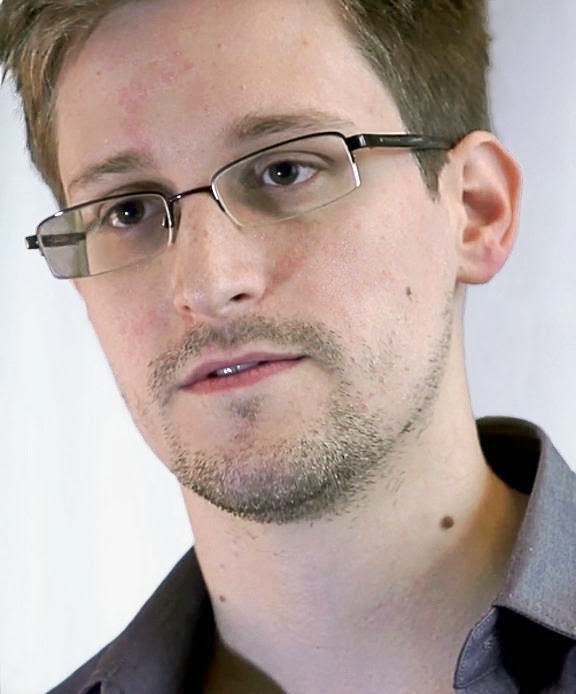
Bill Gertz, the veteran national security corrspondant, offers a piece in the Washington Times on the Russian intelligence service and NSA Leaker Edward Snowden (seen in the above photo).

Russia's SVR intelligence service, successor to the KGB, is behind a coordinated Moscow campaign to exploit the case of former National Security Agency contractor Edward Snowden  by fueling anti-U.S. sentiment in Russia, according to U.S. officials.
 
State-controlled Russian media in recent days actively promoted an online White House petition urging a presidential pardon for Mr. Snowden. Several news websites posted links to the petition.
The media’s reporting and promoting of the petition were assessed by U.S. officials to be part of a Russian government effort against the United States, said officials familiar with intelligence reports.
The covert campaign is part of a major anti-U.S. propaganda and influence program that has been largely ignored by the Obama administration. Instead, the administration has sought to pretend that Russia and the United States are on a path of greater cooperation and harmony under the administration's so-called reset policy.

You can read the rest of the piece via the below link:

http://www.washingtontimes.com/news/2013/jul/3/inside-the-ring-russian-intel-and-edward-snowden/?page=all#pagebreak

Thursday, June 27, 2013

U.S. Loses Secrets, Prestige As Russia, China Protect NSA Leaker


Dave Boyer at the Washington Times reports on the Obama administration's problems with Russia and China over the NSA leaker.

It doesn’t look good when the most powerful man in the world can’t get his hands on one of the most wanted men in the world.

Edward Snowden, the confessed National Security Agency leaker, has eluded U.S. authorities since early June, even as President Obama administration pleaded with officials in China and Russia to send the fugitive back to America.

The traditional rivals of the U.S. have even seemed to enjoy the Obama administration's distress. Russian President Vladimir Putin declared Mr. Snowden “a free man” Tuesday, confirming that Mr. Snowden had been at Moscow's Sheremetyevo International Airport since Sunday. He explicitly refused to comply with the U.S. request to turn over Mr. Snowden, noting that the two countries don’t have an extradition treaty.

The episode is making the U.S. look weak in the eyes of Russia and China, said Leon Aron, a foreign policy analyst at the conservative-leaning American Enterprise Institute.

“From the point of view of the Russians and the Chinese, definitely,” Mr. Aron said. “In their systems, legitimacy comes from being treated with fear and respect. And clearly, they’re choosing not to treat the United States that way.”

You can read the rest of the story via the below link:

http://www.washingtontimes.com/news/2013/jun/25/china-russia-defy-obama-handing-over-snowden/