Showing posts with label Russia. Show all posts

Tuesday, March 8, 2022

U.S. Defense Official Says Russians Reportedly Recruiting Syrian Mercenaries 

 The U.S. Defense Department offers a piece on the Russians recruiting Syrian mercenaries to fight in Ukraine. 

The Russians are reportedly trying to recruit Syrians to sign up and fight in Ukraine, a senior defense official said today. 

"We find that noteworthy that [Russian President Vladimir Putin] believes that he needs to rely on foreign fighters to supplement what is a very significant commitment of combat power inside Ukraine as it is," the official said, noting that Putin has now committed nearly 100% of his combat power into Ukraine, which had been amassed along the border at the start of the war.”

You can read the rest of the piece via the below link:

Defense Official Says Russians Reportedly Recruiting Syrian Mercenaries  > U.S. Department of Defense > Defense Department News

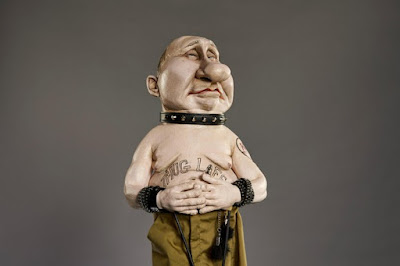
Note: The above is a photo of Putin from the satirical Tv series Spitting Image.  

Monday, January 17, 2022

Russia Trying To Develop Pretext For Ukraine Invasion, DOD Official Says

Jim Garamone at the DOD News offers the below piece: 

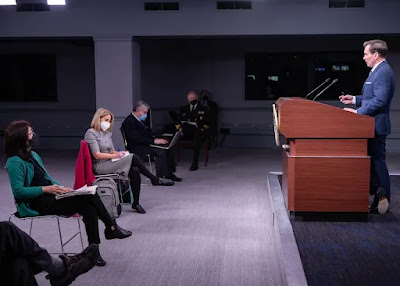
Russia has deployed "a group of operatives" into Ukraine to foment a pretext for another invasion of that country, Pentagon Press Secretary John F. Kirby (seen in the above photo speaking to reporter) said during a news conference today. 

Kirby hastened to say that the U.S. government still believes there is room to solve the problem of the Russian build-up on Ukraine's border diplomatically. "No one wants to see another invasion and incursion of Ukraine," he said. "We still … believe that there's time and space for diplomacy."

Still, if Russia does invade its neighbor, the United States "will continue to provide security assistance to Ukraine to help them better defend themselves," Kirby said. 

Kirby said the Russian operatives are a part of Russia's playbook that was used in 2014 when Russia invaded Crimea and later illegally annexed the area. Kirby could not give many details, but said the United States does "have information that indicates that Russia is already working actively to create a pretext for a potential invasion, for a move on Ukraine."

The Russian operatives are pre-positioned in Ukraine to conduct "what we call a false flag operation — an operation designed to look like an attack on … Russian speaking people in Ukraine, again, as an excuse to go in."

The United States also has information that Russia is fabricating Ukrainian provocations in state and social media as some sort of pretext for invasion, he said. "We've seen this kind of thing before out of Russia," he said. "When there isn't an actual crisis to suit their needs; they'll make one up. So we're watching for them."

There were also cyberattacks on Ukrainian government websites. Kirby said it is too early to attribute those attacks on Russia but noted that it is also in the Russian playbook. 

Kirby wouldn't go into much detail on the operatives themselves but noted that Russia often "hybridizes" their personnel drawing them from their intelligence communities, their security services or their military. 

There are American forces in Ukraine working to advise and assist the Ukrainian military. There are less than 200 Florida National Guardsmen assigned to the mission.  

Kirby said the United States believes Russian President Vladimir Putin has not decided on invasion yet. But if there is an incursion, force protection for American personnel remains paramount. "We will make all the appropriate and proper decisions to make sure that our people are safe in any event," Kirby said.

In Brussels, NATO Secretary General Jens Stoltenberg also said there is room for diplomacy to work. He had met with Russian officials as part of the NATO-Russia Council at the alliance headquarters. "We had a very serious and direct exchange on the situation in and around Ukraine and the implications for European security," he said. "There are significant differences between NATO allies and Russia on these issues. Our differences will not be easy to bridge. But it is a positive sign that all NATO allies and Russia sat down around the same table and engaged on substantive topics."


One Russian demand is that Ukraine not become a member of NATO. 

"Ukraine is a sovereign nation," Stoltenberg said. "Ukraine has the right to self-defense. Ukraine is not a threat to Russia. Russia has the biggest land power in Europe. They are one of two major nuclear powers. They have invested heavily in new, modern capabilities over the last years."

Russia has also said Ukraine threatens Russia. The secretary general said Russia continues to illegally occupy Crimea and controls the separatists in eastern Ukraine. "The whole idea that, … Ukraine threatens Russia is absolutely to put the whole thing upside down," he said. "It is Russia that is the aggressor. It is Russia that has used force and continues to use force against Ukraine.

"This crisis is [the] making of Russia," he continued. "And therefore, it is important that they de-escalate."

Sunday, December 12, 2021

General Keane: Russia, China, Iran View Biden's America As 'Appeasement' Nation That Can Be Taken Advantage Of

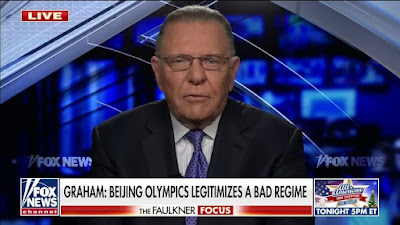
General Jack Keane (retired), one of our best minds on military and foreign affairs, (I wish he were president) appeared on Fox News. 

Fox News senior strategic analyst Gen. Jack Keane argued on "The Faulkner Focus" Thursday that the collapse of Afghanistan was an "accelerant" for America's adversaries to try to take advantage of President Biden's "accommodation" administration as Russian President Vladimir Putin gathers forces on the Ukraine border.


GEN. JACK KEANE: I do believe that this administration is being challenged by Russia, Iran and also China. They're looking at it as an appeasement and accommodation administration that can be taken advantage of. And certainly after the collapse of Afghanistan, that has become an accelerant to our adversaries moving even more earnestly to take advantage of it. Witness what's happening here with 110,000 troops on the [Ukraine] border.


You can watch the full interview via the below link:


Keane: Russia, China, Iran view Biden's America as 'appeasement' nation that can be taken advantage of | Fox News 

Thursday, November 21, 2019

My Washington Times Review Of Martin Cruz Smith's 'The Siberian Dilemma'


The Washington Times published my review of Martin Cruz Smith’s The Siberian Dilemma.

Investigator Arkady Renko is a popular series character enjoyed by crime aficionados ever since readers were first introduced to the Moscow detective in Martin Cruz Smith’s 1981 thriller “Gorky Park.” A fine film based on the novel and starring Lee Marvin and William Hurt as Arkady Renko came out in 1983.

Arkady Renko is an independent and somewhat insubordinate investigator with a dry wit and a strong sense of justice, as well as a strong sense of irony. Throughout the series he has faced dangers and difficulties not only from the criminals he investigates, but also from his superior officers and other apparatchiks in the service of the oppressive and corrupt Communist regime in the Soviet Union.

In “The Siberian Dilemma,” Renko is now an investigator serving under the oppressive and corrupt Vladimir Putin regime. He must contend with crooked politicians, bent cops, criminal gangs, criminal oligarchs — and bears.

At four in the morning, Renko and his partner, Victor, a good detective when he was sober, as Mr. Smith notes, were called to the zoo to help deal with two free and ferocious bears. The zoo director, Victor’s sister, had shot the two bears with tranquilizer darts, but they were still alert and still dangerous.

“Sasha’s eyes were set in a huge pan-shaped head and he studied Arkady as someone who might share his misery. The bear was a towering beast but his customary roar was weakened by alcohol. His mate, Masha, sat on her rump, a half-empty bottle of champagne pressed to her breast. A plaque on the zoo guardrail read ‘Sasha and Masha, American Brown Bear (Ursus arctos horribilis).’ That sounded about right, Arkady thought,” Martin Cruz Smith writes.

“The bears had been released by somebody who had left a poster that declared ‘We Are Animals Too.’ Arkady wasn’t going to dispute this.

“Arkady was an Investigator of Special Cases, and if a bear running loose in the heart of Moscow was not a special case, he didn’t know what was.”     

Renko later faces wild bears and other dangers in Siberia. Prosecutor Zurin, Renko’s boss, sent him to Siberia to deal with a Chechen terrorist held prisoner for attempting to murder the prosecutor in Moscow. Although he assumes that he is being shipped off to Siberia to be out of his boss’ hair, he’s thankful, as his part-time girlfriend, Tatiana Petrovna, a bold and fearless investigative journalist, is in Siberia working on a story for the news magazine Russia Now.

She’s working on a story about Mikhail Kuznetsov, known as the “hermit billionaire.” Russia Now’s editor tells Arkady Renko that Kuznetsov is an idealistic oligarch who spent five years in a Siberian prison for daring to criticize Mr. Putin and his cronies.


You can read the rest of the review via the below link: 

https://www.washingtontimes.com/news/2019/nov/21/book-review-the-siberian-dilemma/ 

Monday, March 19, 2018

Ignatius: Time for Putin Payback


It was no surprise that Russian dictator Vladimir Putin was reelected for another six years, as there is no doubt that the election was truly rigged.

With the brazen attempted nerve agent murder of a former GRU colonel and defector in the United Kingdom and other outrageous acts around the world, the former KGB officer and Russian president is due for a bit of payback, says Washington Post columnist David Ignatius (seen in the below photo), author of The Quantum Spy and other fine spy thrillers.

Russian President Vladimir Putin told NBC's Megyn Kelly this month that in using power, you "must be ready to go all the way to achieve the goals." Now, it seems, Putin has gone all the way too far.

Putin's aggressive use of covert action to settle scores hit an international tripwire after the poisoning of a former Russian spy and his daughter in the quiet British cathedral town of Salisbury. An outraged Britain was joined Thursday by France, Germany and America in condemning the murderous use of the banned Soviet-era toxin known as Novichok.

A joint statement denounced the attack as "the first offensive use of a nerve agent in Europe since the Second World War" and called it "a breach of international law" that comes "against the background of a pattern of earlier irresponsible Russian behavior." That strong language warrants action by NATO and the U.N..

The Trump administration, after a year of mealy-mouthed, temporizing statements, also announced sanctions Thursday against Russia's "malicious cyberattacks." The sanctions, targeting five Russian organizations and 19 people, will have little practical effect beyond those already in place. What matters is that President Trump finally seems to have ended his dubious defense of Putin. "It certainly looks like the Russians were behind it," he said of the poisoning. "We're taking it very seriously."

So how can the U.S. and its closest allies alter Putin's behavior, if they're truly serious about holding Russia to account? The answer, say several former senior CIA officials, is to use America's network of alliances to put Russia under strain. Putin has been playing a weak hand well, but the high cards remain in Western hands.

Russia's greatest vulnerability is its dependence on sales of oil and gas. Here, the U.S. is uniquely positioned for payback.

You can read the rest of the piece via the below link:


Note: My Q&A with David Ignatius will appear in the upcoming issue of Counterterrorism magazine. 

Saturday, March 17, 2018

Frederick Forsyth: EU Needs Britain To Keep Tabs On The Kremlin


Frederick Forsyth, a columnist for the British newspaper the Express and the author of The Outsider: My Life in IntrigueThe Day of Jackal and other classic thrillers, writes about his upcoming thriller and offers his view of Putin, a resurgent Russia and the European Union (EU).

Life can be extremely irritating. About six months ago I came up with a couple of predictions as to what was likely to happen on the world stage before very long. Foolishly for an old codger who swore he was in retirement after my last novel The Kill List and real swansong The Outsider, I mentioned the ideas to my agent. He mentioned it to my publisher and the pair of them went into spasm.

So weeks later I capitulated and agreed to make a real last novel out of it. It all meant a lot of research as usual in order to accrue the authenticity that makes a fictional story almost believable.

The trouble is, it is all happening too fast. And no, it is not Islamic State-style terrorism any more. The new peril is the increasingly aggressive attitude towards the West in general and this country in particular by Vladimir Putin and the Kremlin. The other idea I will keep quiet about lest it also happens before I am ready to write.

Those of the grandpa generation lived through Stalin, Khrushchev, Brezhnev and Andropov. After the reforming Mikhail Gorbachev – who closed down world communism, abolished the Soviet Union, dismantled the KGB and liberated the six European Soviet satellites (who promptly joined the EU) – we thought all threats from Moscow might be over. It was called the Peace Dividend and we thought we could cut back on defense expenditure. So we did: a mistake, it seems.

Russia, despite an economy the size of Italy on a wet Sunday morning, is rearming furiously. The elected dictator (oh yes, it's possible if you rig the elections) is using the new income from oil and gas exports to build or re-fit massive warships, tanks, missiles and bombers. History shows us that when tyrants pile up this weaponry, they end up by using it – to invade or at least threaten.

Putin is slowly rebuilding the inner core of the old USSR. The rebellious Chechnya is back under his thumb, headed by his servant Kadyrov. Belarus does exactly what it is told under its obedient dictator Lukashenko. Crimea has been re-annexed, Ukraine invaded, Georgia, Armenia and Azerbaijan intimidated.

He now threatens the Baltic States. But they are EU and Nato members so we have to defend them. Depend on our EU partners to do that? You might as well whistle Dixie.

You can read the rest of the column via the below link:


You can also read Frederick Forsyth’s previous column on Putin via the below link:

Tuesday, March 6, 2018

'Traitors Always End In A Bad Way. Usually From Drugs In The Street': How Ex-KGB Chief Putin Hinted At The Way Russia Deals With Spies Amid Claims He Would Never Have Forgiven 'Poisoned' Double Agent


Mark Duell at the Daily Mail offers a piece on Russian dictator Putin and the attack on a former Russian spy in the Untied Kingdom.

Russian president Vladimir Putin once hinted at how his country deals with spies by insisting that 'traitors always end in a bad way'.

The former KGB chief's words are all the more chilling as fears build over a poison plot in Wiltshire against Sergei Skripal, a Russian colonel who spied for MI6.

Mr Skripal, 66, was accused of working for MI6 over several years, in particular disclosing the names of several dozen Russian agents working in Europe.

Russian president Vladimir Putin once (left) said 'traitors always end in a bad way'. Fears are building over a poison plot in Wiltshire against former Russian spy Sergei Skripal (right)

Among the Russian agents exposed was the red-haired 'femme fatale' Anna Chapman, and Mr Putin said at the time: 'It is a result of betrayal.

'Traitors always end in a bad way. Usually from a drinking habit, or from drugs, right in the street.'

Mr Skripal was sentenced to 13 years in a high-security prison in 2006, before being freed in a 2010 deal which saw ten Russian sleeper agents expelled from the US.

Mr Skripal retired from military intelligence, often known by its Russian-language acronym GRU. He went on to work at the Foreign Ministry until 2003.

He was arrested in 2004 in Moscow and admitted he was recruited by British intelligence in 1995 and had provided information about GRU agents in Europe, for which he was paid more than $100,000.

Mr Skripal was one of four agents pardoned and released by Moscow in what was said at the time to be the biggest spy swap since the Cold War.

You can read the rest of the piece and watch video clips via the below link:

Monday, January 8, 2018

A Look Back At Mass Murderer Stalin


Veteran journalist and author Joseph C. Goulden reviewed Stephen Kotkin's Stalin for the Washington Times. 

What caused Joseph Stalin to become one of history’s most notorious mass murders? Unlike Adolph Hitler, whose victims were anonymous Jews and other “undesirables” whom he did not know, Stalin’s victims included persons from his inner circle, fellow leaders of the Soviet Communist party.

Such is the grisly story related by Stephen Kotkin, a Princeton University professor, in the second volume of a planned trilogy on the Soviet tyrant. Even readers acquainted with Stalin’s blood-stained career will find sickening details that Mr. Kotkin gleaned from previously secret files. His academic work at times is more terrifying than a Stephen King novel.

“Confessions” that the innocent were forced to sign with their own blood. High officials of Stalin’s “inner circle” watching their wives hauled into captivity for non-existent “crimes against the state.” Stalin scrawling “execute” on a list of thousands of “traitors” which he would review (supposedly) in several hours.

Insecurity apparently ruled Stalin’s psyche. The crown of Vladimir Lenin, who brought communism to Russia, rested uneasily on Stalin’s head. Lenin left a written legacy proclaiming Stalin to be his successor, then waffled somewhat in a later oral statement

Thus Stalin spent his first years as dictator with a slippery grasp on power. His solution: destroy contemporaries (even those who were close friends) who might challenge his right to authority.

Once a few thousand murders established his rule, continuation of the terror was reflexive. As Mr. Kotkin writes, “Tyranny has a circular logic: once a dictator has achieved supreme power, he becomes keener still to hold it, driving him to weed his own ranks of even potential challengers.”

Of the 1.58 million persons arrested 1936-1938, 683,000 were victims of extrajudicial killings. To Stalin, “murder was an administrative tool,” Mr. Kotkin writes. He viewed close associates as comprising a “nest of spies.”

You can read the rest of the piece via the below link:

Monday, December 18, 2017

President Trump Announces New Whole-of-Government National Security Strategy


Jim Garamone at DoD News offers the below piece.

WASHINGTON, Dec. 18, 2017 — President Donald J. Trump today announced a new national security strategy rooted in a whole-of-government approach that stresses the economic might of the United States.

In a written statement, Defense Secretary James N. Mattis called the strategy "clear and comprehensive."

"As the world's most lethal armed force, the men and women of the United States military ensure our diplomats always speak from a position of strength," he said. "Supported by our allies and partners, we will continue to defend our common security interests as we protect America from those seeking to threaten the freedoms we enjoy."

Trump announced the new strategy during a speech at the Reagan Building near the White House. The national security strategy sets the stage for the national defense strategy and the national military strategy.

“With every decision and every action, we are now putting America first,” the president said. “We are rebuilding our nation, our confidence and our standing in the world.”

In addition to the military aspect of national security, the new strategy includes homeland defense, border security, trade policy and economic strength. Still, military power does play a part, and the president noted the $700 billion National Defense Authorization Act he signed last week.

“We are demanding extraordinary strength, which will hopefully lead to long and extraordinary peace,” he said. “We are giving our courageous military men and women the support they need and so dearly deserve.”

ISIS and Other Threats

Trump also spoke about specific threats such as Iran, North Korea, Russia and China, and he touted efforts against the Islamic State of Iraq and Syria.

“Following my trip to the Middle East, the Gulf States and other Muslim-majority nations joined together to fight radical Islamist ideology and terrorist financing,” he said. “We have dealt ISIS one devastating defeat after another. The coalition to defeat ISIS has now recaptured almost 100 percent of the land once held by these terrorists in Iraq and in Syria. Great job.”

To keep this momentum moving, the United States must integrate every dimension of national strength, “and we must compete with every instrument of our national power,” the president said. “With the strategy I'm announcing today, we are declaring that America is in the game, and America is going win.”

Vital Interests

The strategy advances four vital national interests. The first is to protect the American people, the homeland and the American way of life. “We cannot secure a nation if we do not secure our borders,” Trump said. “So for the first time ever, an American strategy now includes a serious plan to defend our homeland.”

In addition, the strategy also calls on America to confront, discredit and defeat radical Islamic terrorism and ideology, and to prevent it from spreading into the United States. “We will develop new ways to counter those who use new domains, such as cyber and social media, to attack our nation or threaten our society,” he said.

The second pillar is economic. “For the first time, American strategy recognizes that economic security is national security,” the president said. “Economic vitality, growth and prosperity at home is absolutely necessary for American power and influence abroad. Any nation that trades away its prosperity for security will end up losing both.”

Preserving Peace Through Strength

Preserving peace through strength is the third pillar of the new strategy. “We recognize that weakness is the surest path to conflict, and unrivaled power is the most certain means of defense,” Trump said. “For this reason, our strategy breaks from the damaging defense sequester. We're going to get rid of that.”

Trump said the strategy calls for a total military modernization, and reversing previous decisions to shrink the force. “It calls for streamlining acquisition, eliminating bloated bureaucracy, and massively building up our military, which has the fundamental side benefit of creating millions and millions of jobs,” he added.

New military domains of space and cyberspace have key roles in the strategy, the president said. “This strategy outlines important steps to address new forms of conflict, such as economic and political aggression, and our strategy emphasizes strengthening alliances to cope with these threats,” he said. “It recognizes that our strength is magnified by allies who share principles and our principles, and shoulder their fair share of responsibility for our common security.”

Advancing American Influence

Finally, the strategy seeks to advance American influence, which begins with building wealth and power at home. “America will lead again,” Trump said. “We do not seek to impose our way of life on anyone, but we will champion the values without apology.”

The United States values strong alliances and partnerships, based on cooperation and reciprocity, the president said. “We will make new partnerships with those who share our goals and make common interests into a common cause,” he added.

“We will pursue the vision we have carried around the world over this past year, a vision of strong, sovereign and independent nations that respect their citizens and respect their neighbors, nations that thrive in commerce and cooperation, rooted in their histories and branching out toward their destinies.”

Monday, October 23, 2017

'Lost Kingdom: The Quest For Empire And The Making Of The Russian Nation' & 'Red Famine: Stalin's War On Ukraine'


Veteran journalist and author Joseph C. Goulden offers a review of Serhii Plokhy's Lost Kingdom and Anne Applebaum's Red Famine in the Washington Times.

In a European continent torn by incessant warfare over the centuries, Ukraine deserves sympathy for its most-abused-state status. As the real estate adage holds, “Location is everything.” And Ukraine has the misfortune to be snuggled against the southeast corner of Russia, historically its prime tormentor.

Two complementary books trace Ukraine’s travails, climaxing with Russia’s brutal seizure of a Ukraine that sought to become an independent nation after the 1991 collapse of communism and the USSR. Russian strongman Vladimir Putin decreed otherwise, and the Red Army crushed Ukrainian hopes for independence.

The Harvard historian Serhii Plokhy, the leading Western scholar on Ukraine, details Moscow’s historic insistence that Russia and its East Slavic neighbors occupy a joint historical space, and essentially comprise a single nation — despite strong language, cultural and religious differences.
Ukraine attempts to retain its independent, medieval Kyvian state over the centuries had off-again/on-again successes. At one point it was amalgamated into Poland.

In the 19th century Russian imperial authorities compromised (in a sense) by creating a tripartite nation composed of three tribes: Great Russian, Little Russian (Ukraine) and Belarusian. Russian revolutions in 1905 and 1917 destroyed the forced alliance, and Ukraine was independent again until the communists seized power after World War I. The “Lost Kingdom” of Mr. Plokhy’s title refers to its involuntary incorporation into the USSR.

Although the reborn-state received swift recognition from many European countries (plus the United States) Lenin moved to reclaim it for the new USSR in January 1918. But would the mostly-peasant regime mesh with the new communist regime? Karl Marx considered peasants “at best an ambivalent asset.” In an 1852 essay he had claimed they were not a class and hence had “no class consciousness”

Lenin was more pragmatic — and even more so because Ukraine had agricultural resources needed by the rest of the USSR. The area’s fertile land and mild climate permitted two grain crops annually, far more than the rest of Russia.

The first scheme was to convert private farms into collective agriculture, run by the state. Lenin put it directly in a 1922 message to colleague Vyascheslav Molotov: “We must teach these people a lesson right now, so that they will not even dare to think of resistance in coming decades.” The dreaded Cheka, the secret police, aided by the Red Army, slaughtered resistant rural leaders by the hundreds. But grain production was not enough to alleviate national shortages.

Thus Stalin and the ruling hierarchy in the early 1930s moved to a more draconian plan: to destroy what remained of Ukrainian culture and to seize the land for the state.


Segue here to Anne Applebaum’s gripping account of the grim years during which Moscow deliberately sought to starve Ukraine into submission. Ms. Applebaum won a Pulitzer Prize for an earlier book, “Gulag”, on the Soviet prison system. “Red Famine” relates a story that is perhaps more cruel, an account of the misery the Communists inflicted on an innocent populace.

The state-evoked famine that stretched over two decades is well-known in USSR history. The consensus of previous historians was that the primary reason for starvation was Stalin’s campaign for collective farms. But having gained access to Ukraine archives, Ms. Appelbaum relates an even more chilling story: that in its latter stages, the motive driving “land reform” was in fact the deliberate obliteration of the Ukrainian people.

You can read the rest of the review via the below link:

Wednesday, May 24, 2017

Defense Intelligence Agency Director Testifies On Top Five Global Military Threats


Cheryl Pellerin at the DoD News offers the below report:

WASHINGTON, May 23, 2017 — North Korea, Russia, China, Iran and extremist organizations are the top five military threats facing the nation, the director of the Defense Intelligence Agency said here this morning.

Marine Corps Lt. Gen. Vincent R. Stewart (seen in the below photo) testified before the Senate Armed Services Committee to discuss worldwide threats. Also testifying today was Daniel R. Coats, director of National Intelligence.

Expanding on the nature of the threats, Stewart said they include a nuclear-capable and increasingly provocative North Korea, a resurgent Russia, a modernizing China, an ambitious regional power in Iran and violent extremist organizations.

The last category encompasses ongoing operations in Afghanistan, Iraq, Syria and elsewhere, the general noted.

“We in DIA call these our no-fail missions because the risk is too high for us to fail in pursuing these missions,” Stewart added.


North Korea’s Trajectory

The world is focused on events in Pyongyang and for good reasons, Stewart told the panel.

“Since assuming power, Kim Jong Un has conducted three nuclear tests and the regime has tested an unprecedented number of ballistic missiles of varying ranges over the past year,” he said.

Despite technical shortfalls, the regime has achieved key milestones in specific systems and engineers get valuable data and insights from each test, Stewart observed.

“If left on its current trajectory, the regime will ultimately succeed in fielding a nuclear-armed missile capable of threatening the United States homeland,” the general said, adding that it’s impossible to say when the capability will be operational but the regime is committed and on a sure path to the capability.

Russia’s Key Objective

Stewart said Russia sees military power as critical to achieving key strategic objective and the nation devotes significant resources to its military modernization program.

“The Russian government seeks to be the center of influence in what it describes as a multi-polar, post-West world order,” he explained.

To support this worldview, he said, Moscow pursues aggressive foreign and defense policies by using a full spectrum of influence and coercion aimed at challenging U.S. interests around the globe.

Out-of-area operations remain a priority as demonstrated by its ongoing deployment to Syria and long-range aviation approaching U.S. airspace.

China’s Military Modernization

China is in the third decade of an unprecedented military modernization program involving weapon systems, doctrine, tactics and training, and space and cyber operations, Stewart said.

The nation now stands firmly as a near-peer U.S. competitor, the general added.

New bases are being built in the South China Sea and Stewart said that evidence suggests the outposts will be used for military purposes.

“A key component of China's strategy for a regional contingency is planning for potential U.S. intervention in a conflict in the region,” he added. “Its navy remains on a course for 350 ships by the year 2020 and anti-access, area-denial capabilities continue to improve.”

Iran’s Regional Security Threat

In Iran, despite sanctions Tehran is putting considerable resources into conventional military priorities such as ballistic and cruise missiles, naval systems, unmanned aerial vehicles and air defense systems that could threaten the U.S. and its interests in the region, Stewart said.

“Iran's conventional military doctrine is designed to protect Iran from the consequences of its assertive regional policy,” he added, noting that policy is spearheaded by the Iranian Revolutionary Guard's Kuds Force and its regional proxy Lebanese Hezbollah, and in concert with certain Iraqi Shia militias and the Houthis, a Shia-led movement.

“We should expect Iran to continue to undermine the current regional security architecture,” the general said, “using terrorist organizations and proxies to complicate U.S. efforts throughout the region.”

Transregional Terrorism

Steady progress is being made against transregional terrorism but there is still a long way to go, Stewart said.

The Islamic State in Iraq and Syria has been diminished in Libya, he added. Soon it will lose control of Mosul and of its capital in Raqqa, which is now nearly isolated by counter-ISIS local fighters.

“We've killed many ISIS and al-Qaida leaders, and numerous terrorist plots have been averted,” Stewart said.

Trend lines are moving in the right direction but the fight will not end soon, he noted, adding that the enemy is highly adaptable and capable, and instability and under-governed territory may give them opportunities to resurge.

“I'm particularly concerned about the long-term impact of returning foreign fighters and the potential for these groups to capitalize on the proliferation of armed unmanned aerial vehicles to do harm to U.S. and our allied interests,” the general said.

Note: In the top Air Force photo taken by Senior Airman Jordan Castelan airmen secure a load of cargo in a C-130H Hercules at Qayyarah Airfield West, Iraq on Feb. 3, 2017. Airmen assigned to the 737th Expeditionary Airlift Squadron delivered 30,000 pounds of cargo to aid in the fight against Islamic State of Iraq and the Levant. 
Sunday, January 8, 2017

Inside The KGB Playbook To Recruit Americans


Michael Weiss at the Daily Beast offers a piece on the old KGB manual used to recruiet Americans during the Cold War.

In studying Americans, our Residency in Italy identified a number of places visited by Americans working in target installations of interest to our Intelligence Service. It was possible to determine that Americans in Rome systematically frequent the same bars, restaurants, and places of recreation. Americans feel almost at home in these places: they drink a great deal, are very free in their conduct and frequently sing. American women, especially the wives of Americans who are away on temporary assignments, drink and have relations with other men.”
There is something almost reassuring in this observation, taken as it is from an old KGB manual on recruiting American agents both inside and outside the United States. 
Quite apart from the unintentional comedy of seeing reproduced such a dime-store psychoanalytic stereotype of the boorish and loud bourgeois abroad—whose repressed housewife of course keeps a secret rendezvous with the decanter and the swarthy Mediterranean neighbor—we have in the current age of Cold War 2.0 a helpful reminder that it used to be difficult for Russian spies to envision the lives of others. 

Today, operatives dispatched by Moscow Center are as likely to wear Breguet timepieces, keep offshore accounts, and educate their children at elite Swiss boarding schools as they are to travel by yacht or private jet to cultivate and run bureaucrats, military brass, CEOs, and real estate moguls in Davos, Chicago, and New York. 
But it wasn’t always so. There was a time, not too long ago, when operatives of the KGB were still servants of the state rather than masters of it.

You can read the rest of the piece via the below link:

http://www.thedailybeast.com/articles/2017/01/07/inside-the-kgb-playbook-to-recruit-americans.html

Thursday, December 1, 2016

Putin's Master Plan To Destroy Europe, Divide NATO, And Restore Russian Power And Global Influence


Veteran journalist and author Joseph C. Goulden offers a good review in the Washington Times of Douglas E. Schoen's Putin's Master Plan to Destroy Europe, Divide NATO, and Restore Russian Power and Global Influence.

A day or so after Soviet Communism collapsed into a pile of rubble, I had a phone chat with a longtime pal, Herbert Romerstein, who knew — and hated — Communism with a fervor unsurpassed in Washington (or perhaps anywhere else).
As dedicated Red-baiters, we gloated a few minutes, then Mr. Romerstein quietly opined, “Before we shall cheer .”
I knew what he was thinking. Could a society constructed by a power-mad dictatorship undergo a permanent reformation? Or, in due course, could we expect more of the same from whoever ended up running Moscow?
The answer, via the book at hand, is one of the more frightening works I have read in years. It convincingly documents how Russian President Vladimir Putin is well into a planned power grab that extends far beyond his stated goal of “restoring Russia as a player on the world stage.”
You can read the rest of the review via the below link:

http://www.washingtontimes.com/news/2016/nov/29/book-review-putins-master-plan-to-destroy-europe-d/

Monday, October 26, 2015

The New Tsar: The Rise And Reign Of Vladimir Putin


Gary Anderson at the Washington Times offers a review of Steven Lee Meyers' The Rise and Reign of Vladimir Putin.  

Some traditional American allies are beginning to view the United States as a nation of lions led by a sheep, and Russia as a nation of sheep led by a lion. For several years now, Russian President Vladimir Putin has consistently outthought and outmaneuvered a seemingly hapless President Obama on the world stage. Perceptions are everything, and Mr. Obama’s foreign policy is in tatters; it is too late to salvage that. The next American president will have to show our allies that our country still has resolve and can be trusted. To do that, our next commander-in-chief must be able to deal firmly with Mr. Putin. If knowing your adversary is key to dealing with him, our next president should read “The New Tsar,” Steven Lee Myers’ biography of Mr. Putin.
Mr. Myers traces Mr. Putin’s rise from the only surviving child of a poor Russian war hero workingman in Leningrad (now St. Petersburg) of the defunct Soviet Union to the leadership of a newly assertive Russia. The author does so in a no-nonsense narrative that largely avoids hyperbole while explaining the development of the psyche of a world leader.
You can read the rest of the piece via the below link: 

Thursday, October 15, 2015

See Putin For Who He Is


Former secretary of state Condoleeza Rice and former secretary of defense Robert M. Gates offer a piece in the Philadelphia Inquirer on Russian leader Putin.

One can hear the disbelief in capitals from Washington to London to Berlin to Ankara and beyond. How can Vladimir Putin, with a sinking economy and a second-rate military, continually dictate the course of geopolitical events? Whether it's in Ukraine or Syria, the Russian president seems always to have the upper hand.

Sometimes the reaction is derision: This is a sign of weakness. Or smugness: He will regret the decision to intervene. Russia cannot possibly succeed. Or alarm: This will make an already bad situation worse. And, finally, resignation: Perhaps the Russians can be brought along to help stabilize the situation, and we could use help fighting the Islamic State.


The fact is that Putin is playing a weak hand extraordinarily well because he knows exactly what he wants to do. He is not stabilizing the situation according to our definition of stability. He is defending Russia's interests by keeping Syrian President Bashar al-Assad in power. This is not about the Islamic State. Any insurgent group that opposes Russian interests is a terrorist organization to Moscow. We saw this behavior in Ukraine, and now we're seeing it even more aggressively - with bombing runs and cruise missile strikes - in Syria. Putin is not a sentimental man, and if Assad becomes a liability, Putin will gladly move on to a substitute acceptable to Moscow. But for now, the Russians believe that they (and the Iranians) can save Assad.

You can read the rest of the piece via the below link:

http://www.philly.com/philly/opinion/20151015_See_Putin_for_who_he_is.html

Note: I covered the former defeense secretary for Counterterrorism magazine when he spoke at the National Constitution Center in Philadelphia.You can also read my piece on Robert Gates via the below link.

http://www.pauldavisoncrime.com/2014/06/a-secretary-at-war-former-defense.html

The above photo of Putin was taken by www.kremlin.ru.

Thursday, July 2, 2015

The CIA Officer Who Recruited His Son To Spy For Russia


Bryan Denson, author of The Spy's Son: The True Story of the Highest-Ranking CIA Officer Ever Convicted of Espionage and the Son He Trained  to Spy for Russia, offers a piece about the former CIA officer, traitor and spy in the Irish Times.

In one of the most bizarre twists in America’s war on terrorism, the CIA assigned veteran operations officer Harold James “Jim” Nicholson to run a counter-terrorism branch in the heart of its Virginia headquarters. This was in 1996, more than five years before the attacks of September 11, 2001, as the Central Intelligence Agency worked around the clock to draw beads on disparate cells of Middle East terrorists - groups that would later coalesce into al-Qaeda.
 
By all appearances, Nicholson’s installment as chief of the Other World Terrorism branch was a clever move to pit one of the agency’s rising stars, a so-called “blue flamer”, in a tilt against terrorists. But the CIA’s installment of Nicholson as chief of the highly specialised counter-terrorism unit came under the most extraordinary of circumstances: He was secretly under investigation for espionage.
 
The FBI and CIA had begun to suspect Nicholson of spying for Russia in the mid-1990s. So those in charge of the joint spy catching operation engineered a plan to get him reassigned from The Farm (the agency’s covert training center, where he taught tradecraft to young spies) to his new position at CIA headquarters so they could keep an eye on him. The FBI secretly installed a tiny surveillance camera above Nicholson’s desk, bugged his home, searched his office and minivan, and tailed him night and day.
 
Their target and his subordinates performed authentic work to identify and defeat foreign terrorist cells. But Nicholson’s hand-picked deputy - CIA officer John Maguire, a veteran counterterrorism operative - secretly served as the eyes and ears of the covert spy catching venture. Maguire reported his boss’s every move to FBI investigators to help them take down the agency’s latest Judas.
 
In my new book (The Spy’s Son: The True Story of the Highest-Ranking CIA Officer Ever Convicted of Espionage and the Son he Trained to Spy for Russia), I point out in Maguire’s own words the outrageous irony of the CIA’s predicament: “We’re on the front end of the (counter-jihadist) spear, and we have a spy that’s the boss.” 
 
You can read the rest of the piece via the below link:
 
 
You can also read veteran journalist and author Joseph C. Goulden's review of The Spy's Son in the Washington Times via the below link:
 

Thursday, June 11, 2015

New Jersey Man Admits Smuggling $65 Million In Sensitive Electronic Components To Russia’s Ministry of Defense, Federal Security Service


The U.S. Justice Department released the below link:

A Mountainside, New Jersey, man today admitted his role in an international procurement network that obtained and smuggled more than $65 million worth of electronics from the United States to Russia in violation of export control laws, U.S. Attorney Paul J. Fishman of the District of New Jersey announced.

Alexander Brazhnikov Jr., 36, a naturalized U.S. citizen born in Moscow, pleaded guilty before U.S. District Court Judge William J. Martini of the District of New Jersey, to an information charging him with one count of conspiracy to commit money laundering, one count of conspiracy to smuggle electronics from the United States and one count of conspiracy to violate the International Emergency Economic Powers Act (IEEPA).

“As he admitted in court, Brazhnikov was responsible for nearly 2,000 illegal shipments of regulated, sensitive electronics components, many of which wound up in the hands of Russian military and security forces,” said U.S. Attorney Fishman.  “He also admitted going to extraordinary lengths to conceal the nature and destination of the shipments, as well to hide the tens of millions of dollars in illegal proceeds generated by the scheme.  Shutting down schemes like this keep all of us safer.”

“Alexander Brazhnikov Jr. significantly undermined the national security of the U.S. by procuring sophisticated, high-tech electronic components and smuggling them into Russia, thereby enhancing the capabilities of the Russian Intelligence Service and contributing to the modernization of both the Russian Military Service and the Russian Nuclear Weapons Program,” said Special Agent in Charge Richard M. Frankel of the FBI’s Newark Division.  “Now, Brazhnikov must face the consequences of his actions and the full power of U.S.  jurisprudence.”

Brazhnikov Jr. was arrested at his home on June 26, 2014, following a joint investigation by the FBI, the U.S. Department of Commerce (DOC) and the U.S. Immigration and Customs Enforcement’s Homeland Security Investigations (ICE-HSI).  From January 2008 through June 2014, he was the owner, chief executive officer and principal operator of four New Jersey microelectronics export companies, each of which were used in the various conspiracies uncovered by the investigation.  Following his arrest, special agents seized $4,075,237 in proceeds related to the charged offenses, as well as real property and other assets valued at more than $600,000.

“Today's plea represents a collaborative effort among law enforcement agencies,” said Special Agent in Charge Sidney Simon of the DOC, Bureau of Industry and Security, Office of Export Enforcement’s New York Field Office.  “I commend our colleagues at the FBI and Homeland Security Investigations for their efforts.  The Office of Export Enforcement will continue to pursue violators of our export control laws by leveraging our unique authorities to protect national security.”
“HSI will use all the resources at its disposal to prevent sensitive and restricted technology from being exported illegally,” said Acting Special Agent in Charge Kevin Kelly of HSI’s Newark Field Office.  “HSI will do all in its power as the principal enforcer of export controls to ensure that sensitive technology doesn’t fall into the wrong hands.”

According to documents filed in this case and statements made in court: Brazhnikov Jr. and his companies are part of a sophisticated procurement network that has surreptitiously acquired large quantities of license-controlled electronic components from American manufacturers and vendors and exported those items to Russia on behalf of Russian business entities that were authorized to supply them to the Ministry of Defense of the Russian Federation, the Federal Security Service of the Russian Federation  (FSB) and Russian entities involved in the design of nuclear warheads, weapons and tactical platforms.

The defendant conspired with his father, Alexander Brazhnikov Sr., owner of a Moscow-based procurement firm whose agents helped initiate the purchase of electronics components from United States vendors and manufacturers on behalf of the conspirators’ clients in Russia.  Brazhnikov Jr. finalized the purchase and acquisition of the requested components from the various distributors, then repackaged and shipped them to Moscow. 

He routinely falsified the true identity of the end-user of the components and the true value of the components in order to avoid filling out required export control forms.  Brazhnikov Jr. purposefully concealed the true destination of the parts that were exported by directing that the shipments be sent to various “shell” addresses in Russia – some of which have been identified as vacant storefronts and apartments – which were established and controlled by the Moscow-based network.  All shipments initially directed to the shell addresses were redirected to a central warehouse controlled by the conspirators’ Moscow-based network.

The funds for the network’s illicit transactions were obtained from the various Russian purchases and initially deposited into one of the conspirators’ primary Russia-based accounts.  Disbursements for purchases were made from that primary Russian account through one or more foreign accounts held by shell corporations  in the British Virgin Islands, Latvia, Marshall Islands, Panama, Ireland, England, United Arab Emirates and Belize and ultimately into one of the defendant’s U.S.-based accounts.  The network’s creation and use of dozens of bank accounts and shell companies abroad was intended to conceal the true sources of funds in Russia, as well as the identities of the various Russian defense contracting firms receiving U.S. electronics components.

The money laundering conspiracy charge to which Brazhnikov Jr. pleaded guilty carries a maximum potential penalty of 20 years in prison and a $500,000 fine.  The smuggling and IEEPA conspiracy charges carry a maximum potential penalty, per count, of five years in prison and a $250,000 fine.  Sentencing is scheduled for Sept. 15, 2015.  Brazhnikov Jr. also agreed to the entry of a forfeiture money judgment of $65 million.

U.S. Attorney Fishman credited special agents of the FBI, under the direction of Special Agent in Charge Frankel in Newark; the DOC, under the direction of Special Agent in Charge Simon, New York Field Office; special agents of ICE-HSI, under the direction of Acting Special Agent in Charge Kelly. 

He also thanked officers from the Union County, New Jersey, Police Department, under the direction of Captain Chris Debbie; and officers of the Mountainside Police Department, under the direction of Police Chief Allan Attanasio, for their important contributions to the investigation.  The U.S. Justice Department’s Office of International Affairs provided assistance with this case.

The government is represented by Assistant U.S. Attorneys Dennis C. Carletta of the U.S. Attorney’s Office National Security Unit, and Peter Gaeta of the office’s Asset Forfeiture and Money Laundering Unit in Newark.

Sunday, June 7, 2015

A New Spy Novelist For Vladimir Putin's World


I enjoyed Red Sparrow, the first spy thriller written by former CIA officer Jason Matthews, so I look forward to reading his second novel, Palace of Treason.

Jeff Stein, the author of a fine nonfiction book about the Vietnam War called A Murder in Wartime, and a writer for Newsweek, offers a piece on Jason Matthews.

The spy was going to be late. In Jason Matthews’s line of work, that was cause for worry. But on this rainy afternoon in Washington, D.C., the former CIA officer was merely dodging traffic, not a Russian trap. And he was rushing to meet a reporter, not a secret agent.
 
But shedding the cloak and dagger, it turns out, isn’t as easy as trading wingtips for Top-Siders. Both Matthews and his wife, Suzanne, also a former CIA secret agent handler, still look over their shoulders for hostile intelligence agents. It comes from three decades of dodging Russian, Chinese and other adversaries’ counterspies.
 
“Yeah, the old habits die hard, proving that there is no such thing as a former ops officer,” jokes Matthews, in town to promote his second, much anticipated spy novel, Palace of Treason. ”Suzanne and I notice cars behind us, we come home from parties with the same assessments of people, we still pick up a phone and think, 'It's tapped.'”  
 
... Like his CIA hero in Red Sparrow, which The New York Times called a “startling debut,” Matthews has shed one identity for another with hardly a stutter step. One day shortly after his 2008 retirement, he picked up a pen and started writing. Out came a thriller that drew widespread, even ecstatic praise, with the inevitable comparisons to not just John le Carré and Ian Fleming but Cormac McCarthy and even T.S. Eliot.  
 
At its center is Dominika Egorova, a once promising ballerina forced into training as a professional seductress by cretinous Kremlin intelligence bureaucrats. Egorova is back, of course, in Palace of Treason, this time at the behest of her handsome, self-effacing, equally idealistic CIA handler and rules-breaking lover Nate Nash, for whom she takes nerve-shattering risks, including a stab at seducing Vladimir Putin, who turns out to be plagued by EDS. (Trust me: This is high dark humor.)
 
You can read the rest of the piece via the below link: